
The paradox of an oversupply and shortage of community cultural centers in residential areas.
When new hamlets and villages were formed after the reorganization, the infrastructure of grassroots cultural institutions fell into a state of "both surplus and shortage". In some places, there was an excess of small, dilapidated cultural centers; in other places, there was a serious lack of standard space for hundreds of households to gather and participate in activities.
The village has five cultural centers, but the people still lack a place for community activities.
According to the plan for reorganizing hamlets and villages in Nghe An province, the total number of hamlets and villages has been reduced from 3,797 to 2,026 units (including 266 hamlets and 1,760 villages), a decrease of 1,771 hamlets and villages. Although 1,598 hamlets and villages meet the prescribed standards (accounting for 78.87%), 428 hamlets and villages still do not. The merger of 2, 3, or even 5 to 7 hamlets and villages into a new unit has transformed many mountainous villages into "super-villages" with populations and areas many times larger than before.
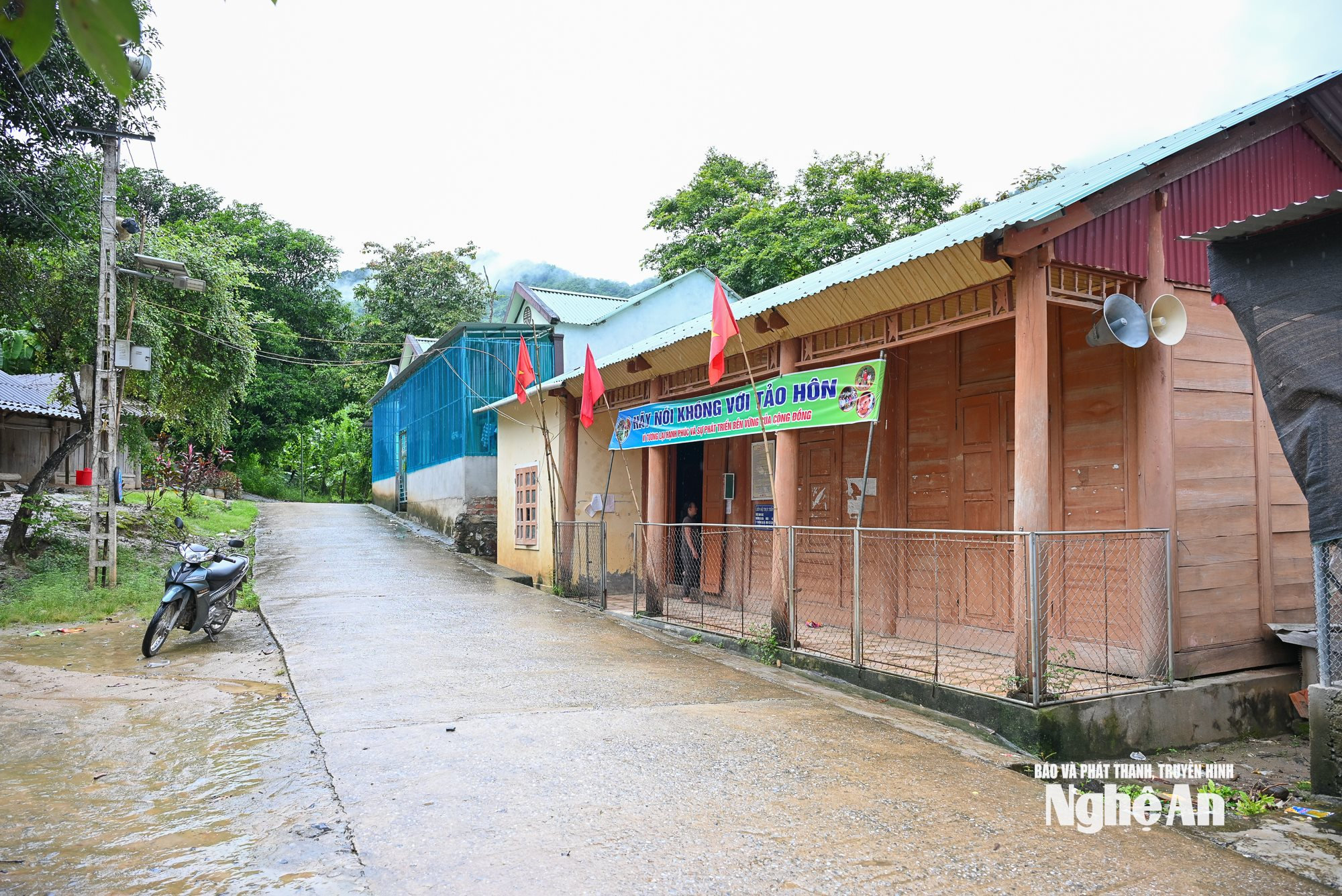
In Tuong Duong commune, after the reorganization, the entire commune was reduced from 26 hamlets to 16 (a reduction of 10 units). With the entire commune now comprising 4,225 households and approximately 18,000 inhabitants, the administrative burden and community needs in the merged hamlets have also increased.
The Luu Son hamlet (Tuong Duong commune) was formed by merging two hamlets, Luu Thong and Pung, with 221 households and nearly 1,000 inhabitants. The hamlet currently has five surplus cultural facilities and infrastructure. Paradoxically, despite their large number, these facilities do not fully meet the functional requirements, area, and usage needs after the merger.
Specifically, in the Luu Phong cluster, there are currently two community centers, one of which was newly built in 2025 but has not yet been handed over. In the old Pung village area, there are three additional facilities: two community centers built in 2004-2005 and 2012, along with a surplus kindergarten facility that is being used as a community center. These facilities are a consequence of the previous merger of Pung village.
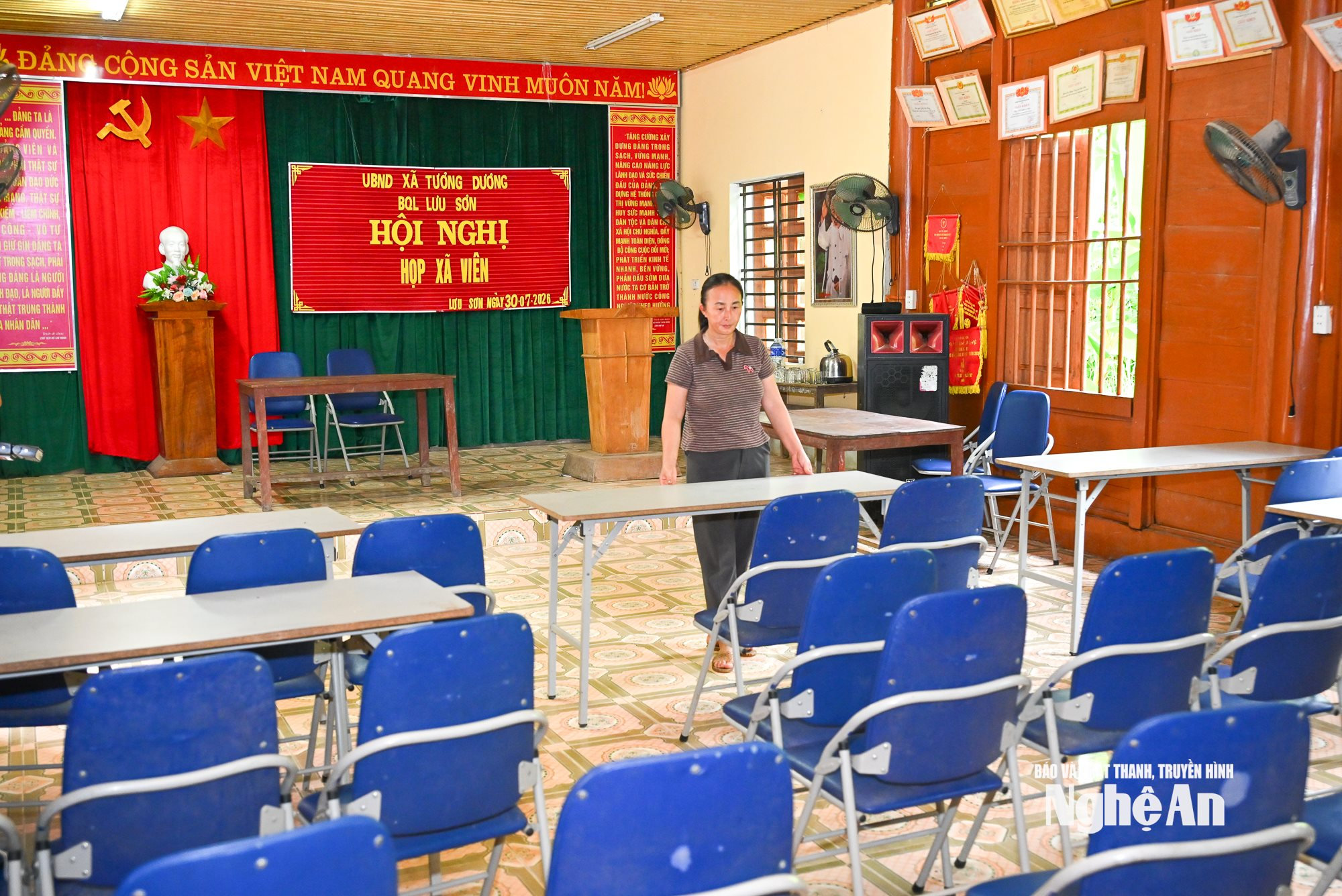
After Luu Thong and Pung merged to form Luu Son village, community activities still had to be maintained in the two residential clusters. Therefore, the village currently has to use two community centers simultaneously to serve the meetings and activities of the people.
Ms. Vu Y Do, Secretary of the Luu Son village Party branch, said: "Before the merger, the Luu Thong cluster only had 62 households with 316 people. Now, after the merger, there are 221 households. The new community center, scheduled for construction in 2025, was initially designed to accommodate only the 62 households of the old Luu Thong cluster, so it cannot accommodate the 221 households of the new village. The old community centers in the Pung cluster are cramped and dilapidated. Whenever the Party branch meets, officials gather at the old Pung village community center. However, when organizing a general meeting of the people, none of the community centers are large enough to meet the needs. The village management board has to organize meetings in a staggered schedule: morning meetings are held in the Pung cluster, and in the afternoon, they travel to the Luu Phong cluster to continue the meeting."
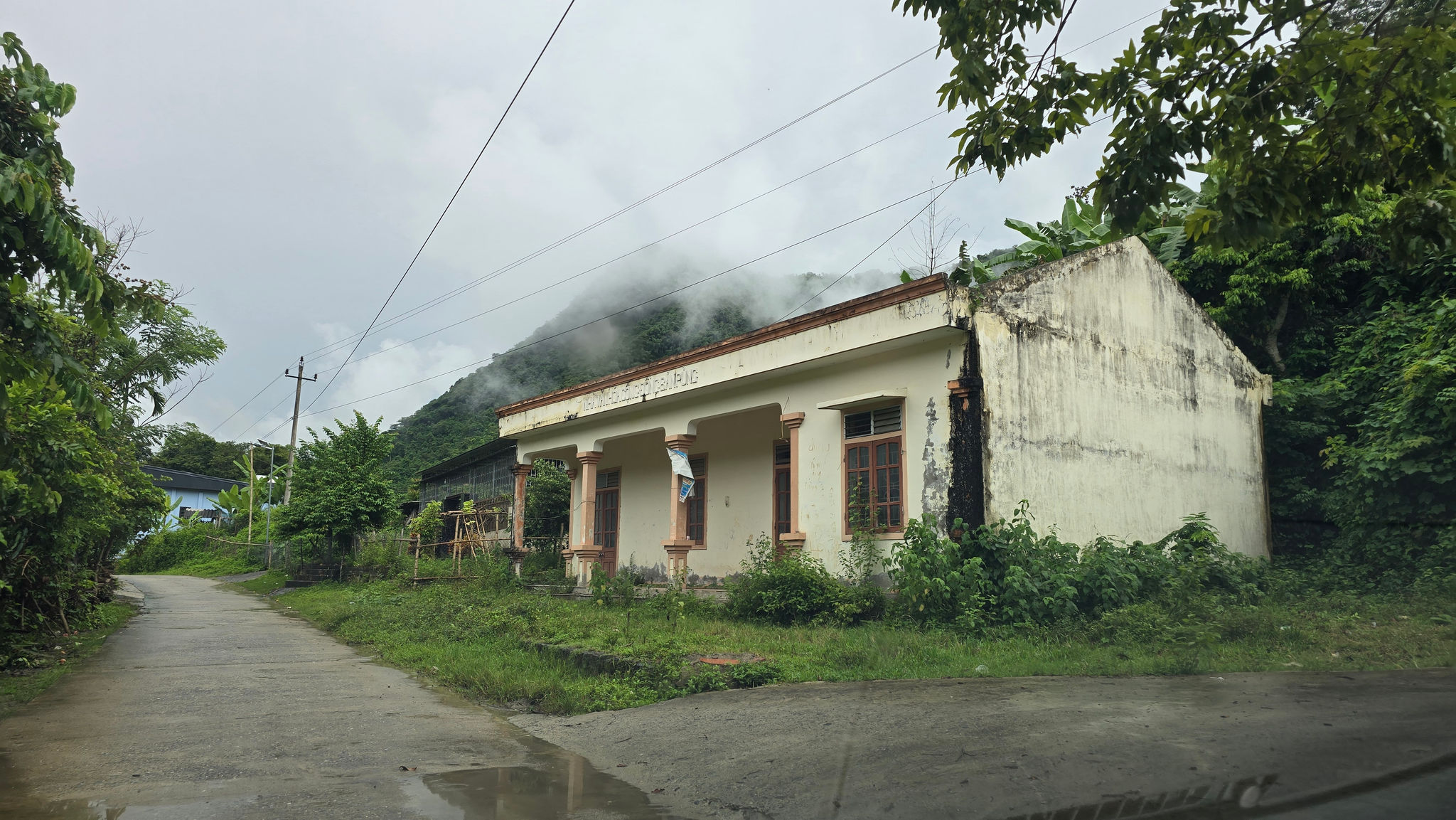
This "both surplus and shortage" situation is not unique to Luu Son; it's common in many other villages in Tuong Duong. For example, in Hoa Binh village, despite having three community centers after mergers, and in Hoa Nam hamlet, which has four (due to multiple mergers), the village's population of nearly 2,000 people (almost 500 households) means there isn't a single hall large enough to accommodate even one-third of the population. Infrastructure resources are scattered, surplus facilities are left unused and deteriorating, while standard community spaces remain completely neglected.
Rent a restaurant for the community meeting.
While geographical distance and steep terrain are the biggest obstacles in mountainous communes, in towns and former district centers like Con Cuong commune, the problem of insufficient land for building cultural centers for merged hamlets and villages remains a long-standing issue.
In Tra Lan village (Con Cuong commune), a community center was recently established by merging the former Block 3 and Block 5. After the merger, Tra Lan village became one of the most populous villages in the area with 361 households and 1,469 inhabitants. However, the current community center used by the village is the former Block 3 meeting hall, which is over 20 years old. The building was constructed between 2000 and 2002 with a mere 65.5 m² area.
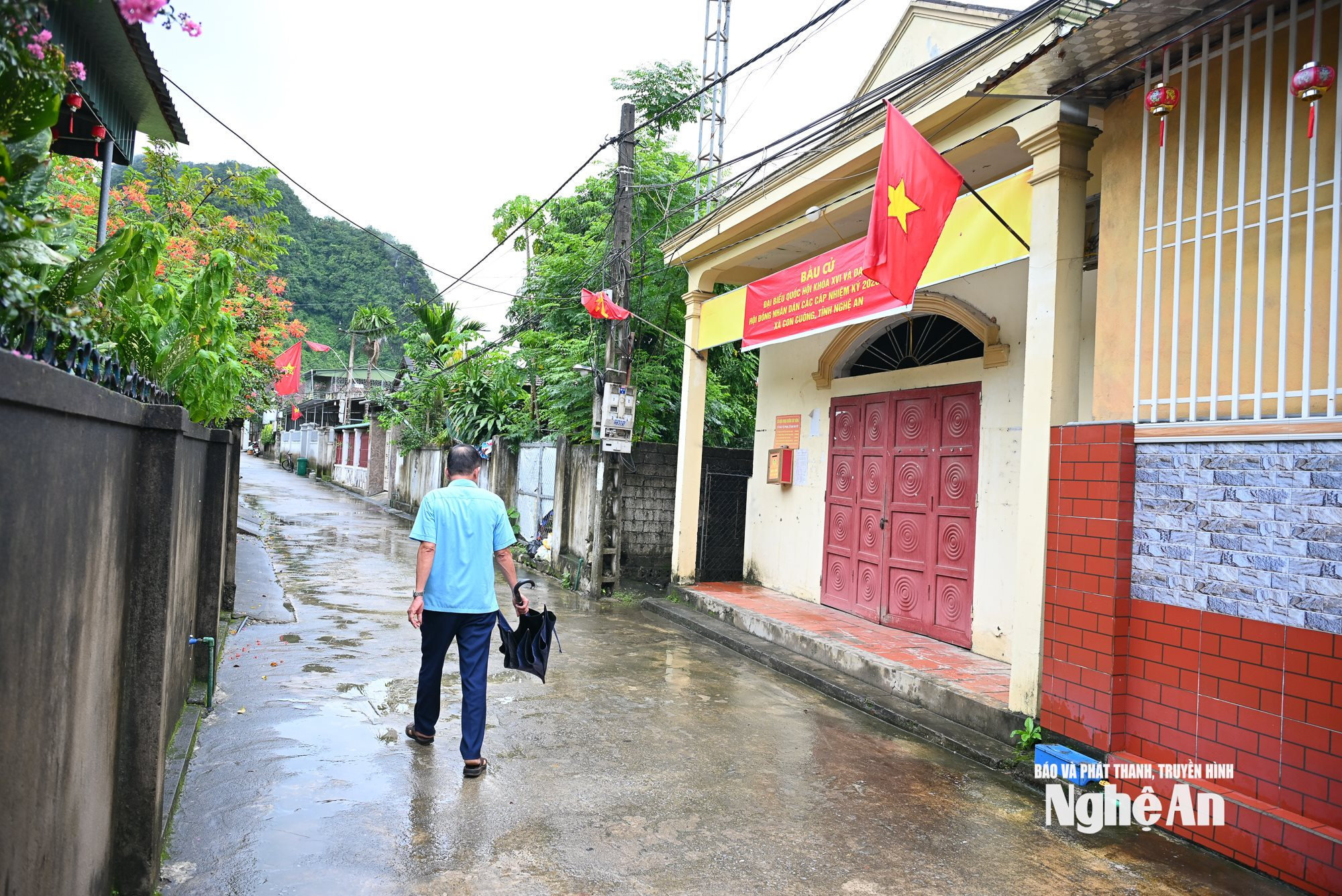
Mr. Nguyen Thanh An, Secretary of the Tra Lan Village Party Branch, shared: "Previously, the old Block 5 alone had 263 households, among the largest in the commune. Now, with the addition of Block 3, it has reached 361 households. This 65.5 m² community center, if crammed with chairs, can only accommodate a maximum of 50-60 people. Normally, we can manage to fit people into Party branch meetings or meetings of representatives from residential groups and social organizations. But recently, when we held the General People's Conference to discuss regulations, village customs, and elect officials after the merger, we were completely helpless."
To resolve this awkward situation, the management board of Tra Lan village had to make an unprecedented decision: to use funds from the people's contribution fund to rent a private restaurant in the area to use as a meeting place for the villagers.
"Each time we rent a space like that, even if the restaurant only charges a subsidized price, it still costs between 1.3 and 2 million VND. The funds contributed by the people to cover common expenses, environmental protection, and visiting the sick... now have to be used to pay for venue rentals for meetings. If this situation continues, with several general meetings every year, what fund can possibly withstand it? We have repeatedly petitioned the authorities at all levels to consider reclaiming or converting surplus office buildings in the area to allocate land for community cultural centers, but we are still waiting," lamented Mr. Nguyen Thanh An.
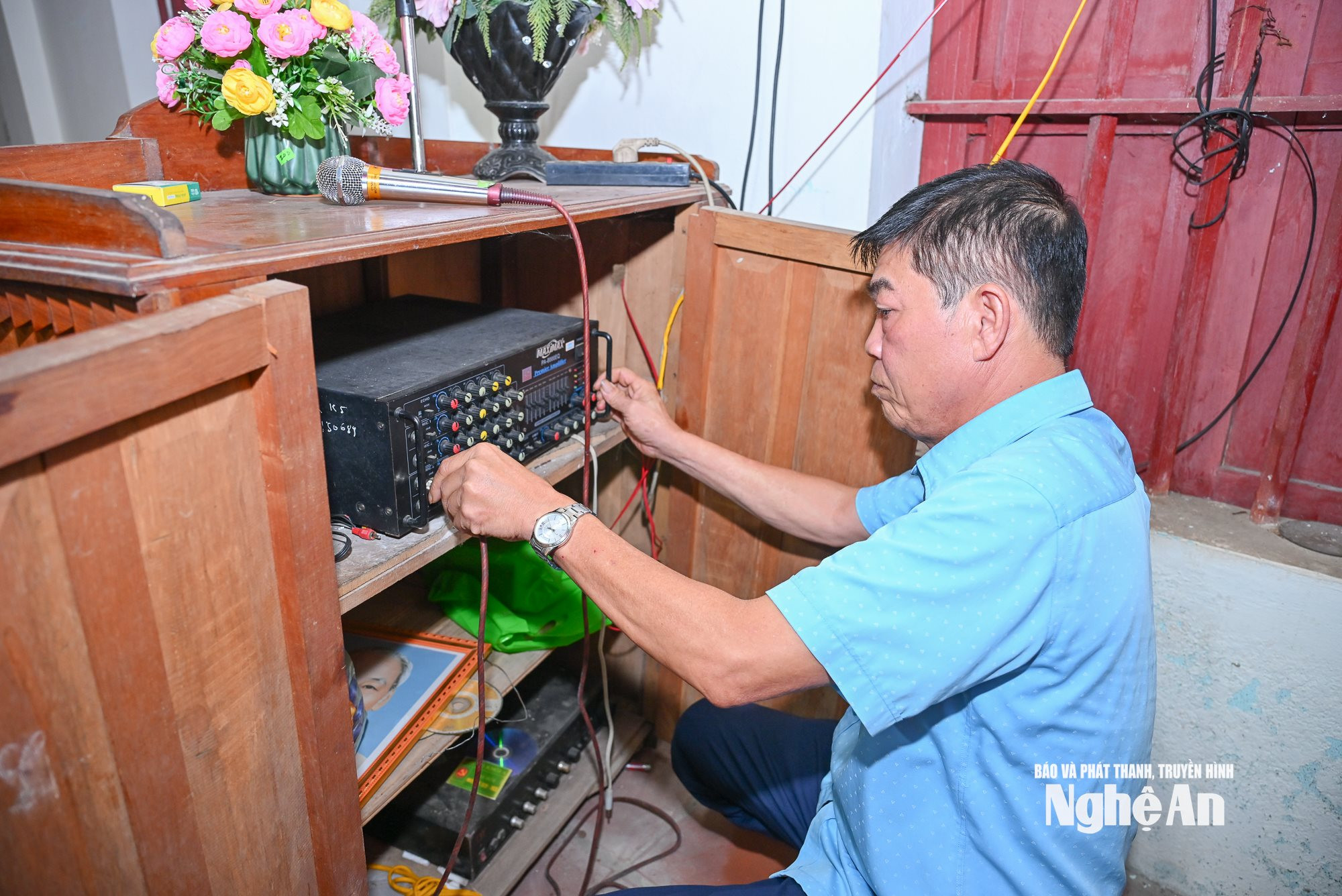
The situation in Tra Lan village and Luu Son hamlet is just two of hundreds of cases demonstrating the disparity between the population size after mergers and the capacity of the existing cultural infrastructure. This is not simply a matter of insufficient seating or people having difficulty attending meetings. The inadequacy of infrastructure also leads to direct consequences, affecting the organization of community activities, as well as the effectiveness and efficiency of local government management and administration.
After the merger, the number of village and hamlet officials decreased sharply, but the workload increased many times over. Having to hold meetings on different shifts meant that village officials had to spend two or three times as much time and effort on the same tasks. In mountainous areas like Tuong Duong, Ky Son, Keng Du, etc., the distance between villages and residential clusters can be kilometers, and traveling on treacherous mountain roads in harsh weather conditions poses many risks for grassroots officials.
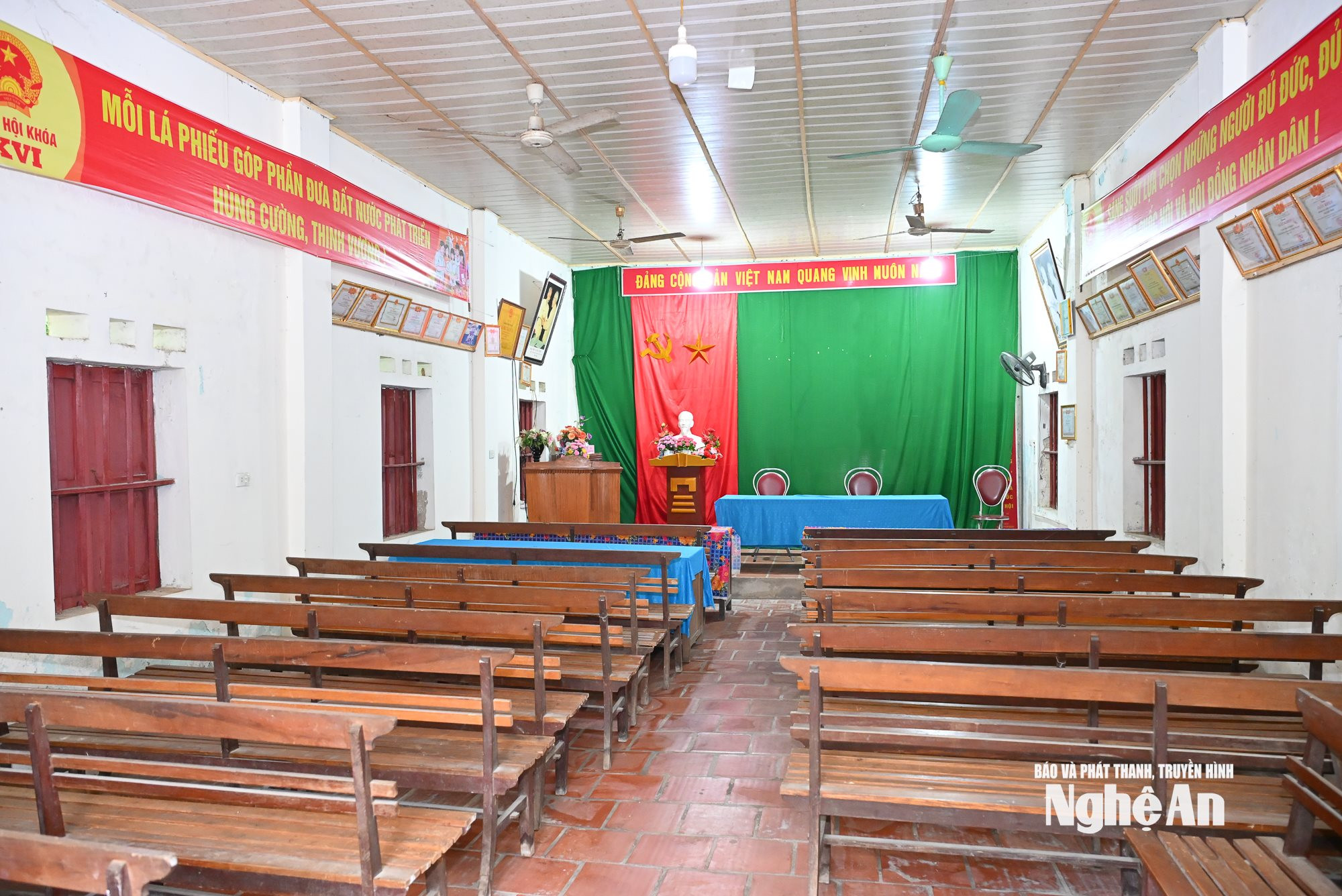
Furthermore, when people cannot sit together in a meeting hall to discuss and deliberate directly, the unity in making community decisions is significantly affected. Separating meetings into old residential clusters easily leads to uneven information reception, and may even foster comparisons and divisions between old and new residential clusters.
While new cultural centers lack sufficient space, hundreds of old cultural centers and surplus kindergartens and primary schools after mergers are in a dilemma: "It's a pity to abandon them, but keeping them is a burden." Due to legal regulations on the management and handling of public assets, the liquidation or repurposing process is very slow. Many abandoned buildings have deteriorated and suffered severe damage, resulting in a huge waste of state and public resources.
Removing the bottlenecks in cultural institutions following the merger of hamlets and villages is an urgent requirement to stabilize social welfare and strengthen national unity. However, given the limited local budget, it is not feasible to simultaneously invest in building new, standard cultural centers for all hamlets and villages. A flexible, synchronized system of solutions and a specific roadmap are needed.


