
New research warns of the impact of LED lights on eyesight.
A new study by British scientists suggests that light from LED lamps may affect visual function. This finding has sparked debate about the impact of indoor lighting quality on human health.
LED lights are becoming a popular lighting source worldwide due to their energy efficiency, long lifespan, and low operating costs. This technology is widely used in everything from home and office lighting systems to car headlights and smart lighting devices.
However, a new study published in the journal Scientific Reports suggests that the use of LED lights may have some undesirable health effects if not combined with light sources that have a fuller spectrum.

In their study, Dr. Edward M. Barrett and Dr. Glen Jeffery of University College London (UCL) found evidence that light from LEDs can impair human vision when not supplemented by another light source containing longer wavelengths.
To assess the impact of LED lighting on the body, the research team conducted color contrast tests on employees working in a UCL building before and after adding incandescent light bulbs to the existing LED lighting system.
The results showed that the visual performance of the participants improved significantly after exposure to light from incandescent bulbs. According to the researchers, this phenomenon may be related to improved activity of mitochondria, the part of the cell that is considered the "power plant."
Mitochondria are responsible for generating approximately 90% of the energy the body needs to sustain vital functions. Previous studies have shown that mitochondria are particularly sensitive to long wavelengths of light, ranging from 660 to 1,000 nanometers, which can stimulate cellular energy production.
Scientists also noted that impaired mitochondrial function is linked to numerous health problems, including genetic disorders, aging, and several serious diseases. Therefore, the research team suggests that the impact of LED lighting on mitochondrial activity could be a significant public health concern requiring further investigation.
LED lights still offer many benefits.
Despite the research findings mentioned above, LED lighting remains a technology with many outstanding advantages.
According to the U.S. Department of Energy, LED lights consume about 75% less electricity than traditional incandescent bulbs and last about 25 times longer. In addition, they generate less heat, do not contain mercury like fluorescent lights, and are considered more environmentally friendly.
The ability to emit only light wavelengths within the visible spectrum of the human eye is what allows LEDs to achieve such high energy efficiency. However, this is also a factor that researchers believe could differentiate them from natural light.
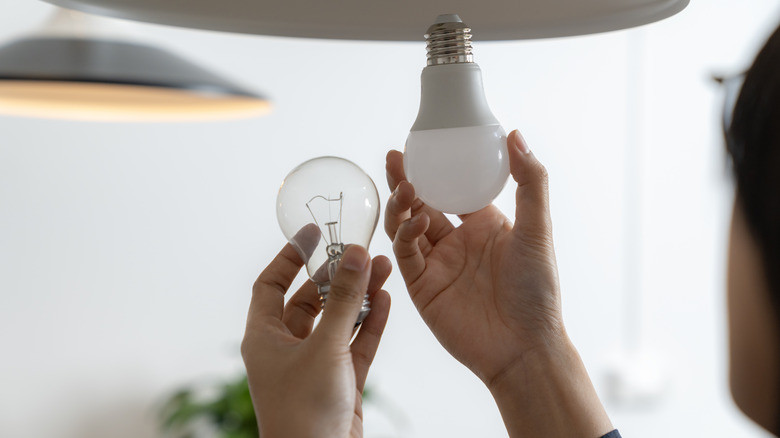
During evolution, humans adapted to sunlight, which has a very wide wavelength range, from about 300 to 2,500 nanometers. Meanwhile, the human eye can only see light in the range of about 380 to 780 nanometers. Although we cannot observe longer wavelengths, the body can still be biologically affected by them.
According to the research team, LEDs primarily emit light in the visible spectrum, approximately 350-650 nanometers. This helps limit energy waste at wavelengths invisible to the human eye, but at the same time reduces the amount of long-wavelength light that cells can utilize in certain biological processes.
With most people spending a significant amount of time studying and working indoors, the quality of artificial light sources is becoming an increasingly important factor. The study authors suggest that, in addition to improving energy efficiency, future lighting technology development should also focus more on the biological effects of light on human health.
However, the results of this study are only preliminary scientific evidence. To clearly determine the extent of LED lighting's impact on health and vision, scientists believe that more large-scale studies under different usage conditions are needed before drawing definitive conclusions.


