
Facebook addiction affects the nervous system.
Numerous cases of schizophrenia, mental disorders, and depression have been identified in individuals who frequently used Facebook.
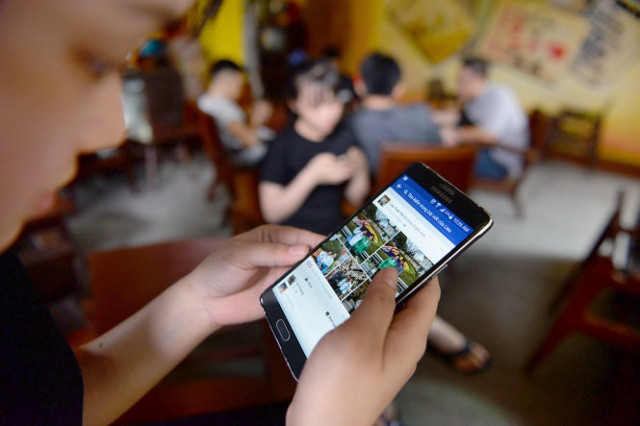 |
| Facebook addiction can easily lead to depression - Photo: HUU KHOA |
If you've tried to cut down on Facebook without success, feel anxious if you're banned, or use it so much that it's negatively impacting your life and work, then you might be addicted!
Having seizures because they weren't allowed to access Facebook.
The Institute of Mental Health, Bach Mai Hospital (Hanoi) held a press conference on Facebook addiction on the afternoon of July 21st after many cases of schizophrenia, mental disorders, and depression treated at the institute recently were found to have frequent Facebook use.
After successfully treating their mental illness, the patient overcame their Facebook addiction.
According to doctors, there is currently no disease called Facebook addiction, so there is no medication to treat it. Treatment mainly focuses on psychological therapy and addressing any accompanying mental health issues (if any).
According to Mr. Nguyen Doan Phuong, director of the Institute of Mental Health at Bach Mai Hospital, three months ago, the hospital treated a 14-year-old male patient from Hanoi who suffered dissociative seizures after his parents confiscated his phone and prevented him from accessing the internet.
The family reported that for a long time, the child had been using their phone to access Facebook for about 10 hours a day. Every time they came home from school, they would go straight to their room to play Facebook without paying attention to their surroundings, leading to a decline in academic performance and disrupted sleep-eating and eating schedules. When their phone was confiscated, they became withdrawn and experienced frequent seizures.
Upon examination at the hospital, she was diagnosed with dissociative disorder, experiencing auditory hallucinations that compelled her to use Facebook frequently.
After receiving treatment for the above condition, I also overcame my Facebook addiction.
Facebook addiction is related to... low self-esteem.
Ms. Le Thi Thu Ha, from the Institute of Mental Health, Bach Mai Hospital, recounted a case where a student, around 20 years old, studying at a major university in Hanoi, was addicted to social media and the internet in general and had to be hospitalized for depression. The consequences of Facebook addiction include insomnia, leading to depression, or vice versa.
This problem also creates a "vicious cycle," because excessive use of Facebook leads people to neglect real life and focus only on the virtual world, causing eating and sleeping disorders, and exacerbating mental health issues.
According to Dr. Ha, clinical examinations and numerous studies suggest a correlation between depression, low self-esteem, and Facebook addiction.
The reason is that people with such personalities often turn to Facebook as a place to express themselves when they don't dare to do so in real life, and they tend to use Facebook frequently.
But on the other hand, Facebook is an open network, a place for sharing, so it attracts people with extroverted personalities as well.
According to Dr. Phuong's assessment, Facebook addicts are often young people, such as high school and college students, because this group's psychology and physiology are not yet stable, making them easily influenced and distracted. Since they don't have to worry about life's responsibilities, they have a lot of "free" time.
How to overcome addiction?
According to doctors, there is currently no specific timeframe for the frequency of Facebook use, but if daily and frequent use without internet access or when restricted leads to feelings of restlessness and discomfort, or if using Facebook anytime, anywhere, even while working or studying, and Facebook use negatively impacts work or study quality, then it's advisable to stop.
According to Dr. Ha, the consequences of Facebook addiction include insomnia, poor social skills, reduced real-life relationships due to living in a "virtual" world, decreased work or study performance, and potentially leading to the use of addictive substances or stimulants.
However, Facebook addiction shares common symptoms with other forms of behavioral addiction, so it's not easy to quit immediately; it requires a gradual approach, reducing and adjusting the addiction little by little.
You can schedule specific activities for the day and stick to that schedule. This includes setting limits on the number of hours you use Facebook each day and recording your usage to help you manage your time.
If you find it difficult to cut down on Facebook, you can close or delete your account and find other activities to fill your free time.
Mental health decline In April of this year, the American channel CNBC reported on a study by experts from the University of California and Yale University, showing that frequent Facebook use can cause feelings of sadness and depression. "Exposure to carefully curated images depicting other people's lives can lead to negative self-comparison, and social media interactions can distract people from real-life activities," concludes research by Holly Shakya from the University of California, San Diego, and Nicholas Christakis from Yale University. To conduct the study published in the American Journal of Epidemiology in 2017, Holly Shakya and Nicholas Christakis used data from 5,208 people between 2013 and 2015 to investigate the relationship between Facebook activity and their physical condition, mental health, and life satisfaction. The results show that most activities involving Facebook use during a year will predispose to a decline in mental health in the following year. Another problem with social media, as pointed out by these two researchers, is that it gives people the feeling that they are participating in a meaningful social interaction. Meanwhile, “this connection cannot replace the real-world interaction we need to have in order to live a healthy life,” Holly Shakya and Nicholas Christakis stated. |
According to TTO


