
Second Foreign Language - A New Trend Among Young People in Nghe An
Besides English, learning another foreign language is becoming a popular choice for many students and young people. This is also an inevitable trend to increase educational and employment opportunities and gradually access regional and global integration trends.
Second foreign language becomes primary foreign language
In early January, Cao Minh Anh returned from China and joined a language center in Vinh Phu ward as a teaching assistant. This is also the place where, more than a year ago, Minh Anh took a Chinese language class and since then has nurtured her dream of studying abroad.
Recounting this process, a former student of class 12C3, K51, Phan Boi Chau High School for the Gifted, said: "While in high school, I already had an IELTS certificate. Therefore, at the beginning of 11th grade, I started learning Chinese, initially just to learn another foreign language. But the more I learned, the more I enjoyed it. At the beginning of 12th grade, I decided to study abroad in China, so I accelerated my learning for two months to obtain the HSK 5 certificate. This was also an important condition for me to apply for the 'One Belt, One Road' scholarship from the Chinese Ministry of Education and to be admitted to Chang'an University in Xi'an, Shaanxi Province."
I am currently studying international business, a strong field in China. I hope to find employment both domestically and internationally after graduation, as China is currently one of Vietnam's leading trading partners.
Cao Minh Anh
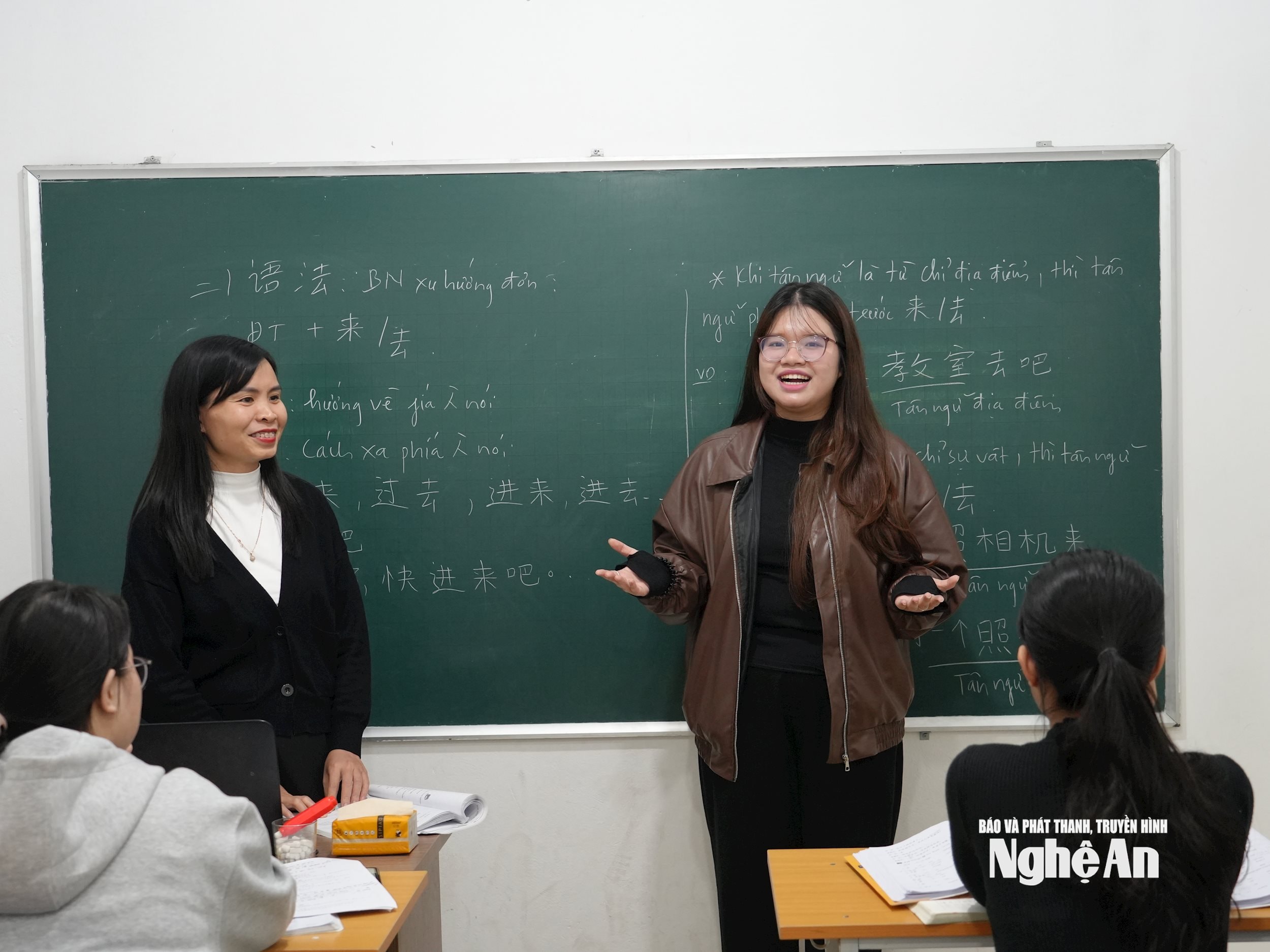
Speaking about learning Chinese, student Cao Minh Anh said that last academic year, although English was the main foreign language in class 12C3, four students registered to take the 12th grade graduation exam in Chinese. This trend may increase in the coming years as the number of students who want to learn Chinese is growing.
Student Nguyen Phuc Tram Anh, from class 11C3 at Phan Boi Chau Specialized High School, added: "In my class, there are currently about 10 students registered to study Chinese and plan to take the Chinese language exam for university admission. Personally, I have been studying Chinese since the beginning of 10th grade and currently attend two classes per week, making it my main foreign language. Having another foreign language helps me access foreign cultures and gives me more opportunities for university admission. Furthermore, this will give me more opportunities to orient my career after graduating from high school."
To date, there are more than 20 Chinese language learning centers in the wards of the former Vinh City, with the number of registered students potentially reaching thousands, mainly concentrated in the age group of high school and university students. Ms. Nguyen Thi Yen (Truong Vinh ward) said that since the beginning of 6th grade, her daughter has asked her mother to let her learn Chinese and has been dedicated to this subject for the past four years...
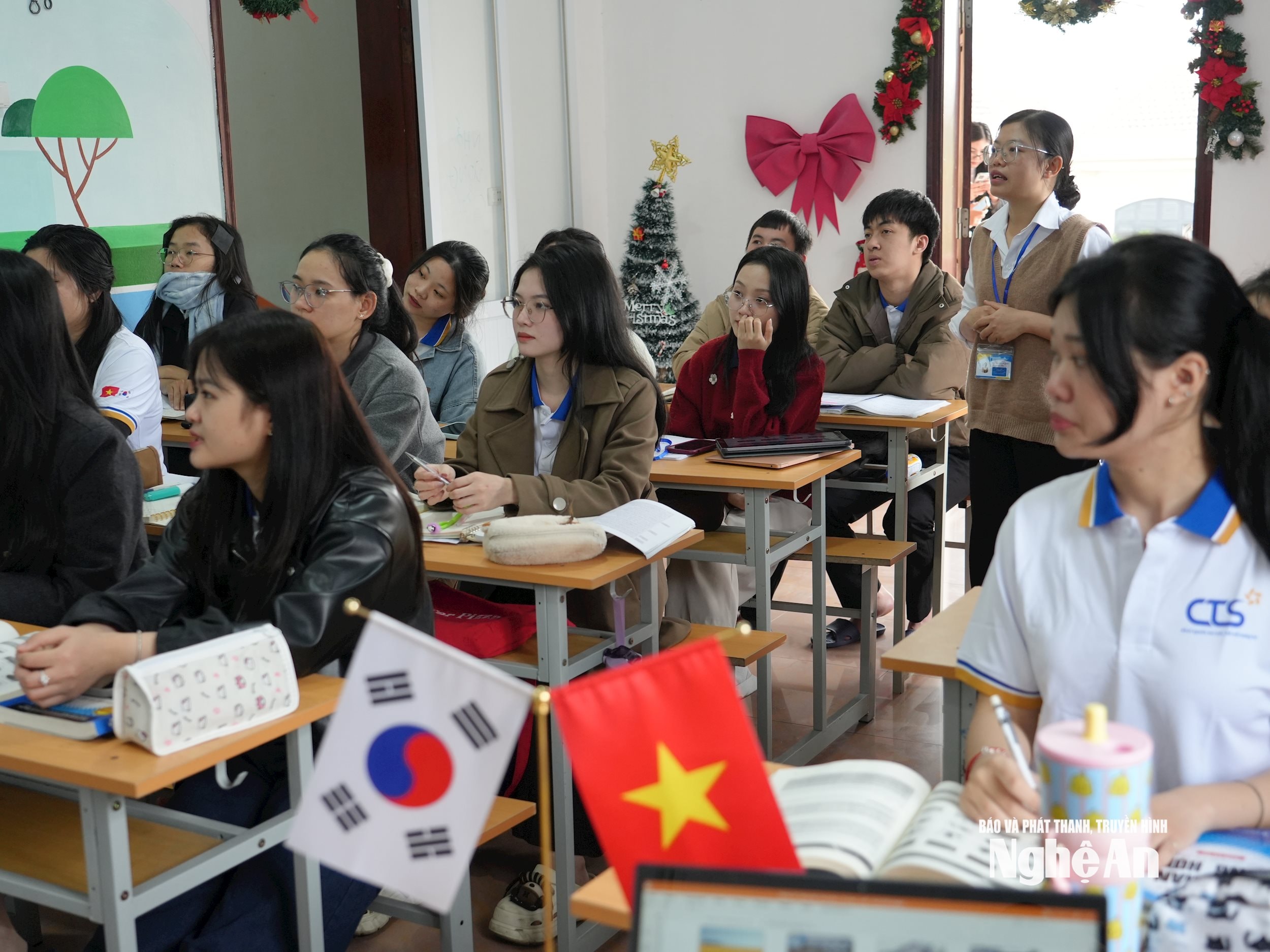
Talking about learningChineseCurrently, Ms. Dau Thi Hoang Anh - Director of the Vietnam-China Foreign Language Center - said that compared to some other foreign languages, learning Chinese is quite affordable, costing around 19 million VND for a program lasting about 3 years. Therefore, in recent years, the number of students registering to study Chinese at the center has increased by about 30% each year.
The demand for learning Chinese comes not only from students aiming for specialized classes or majoring in Chinese language, but also from students who want to acquire a second foreign language to expand their future job opportunities.
Many parents also proactively enroll their children in early education, starting from junior high school, to give them time to accumulate knowledge and systematically practice listening, speaking, reading, and writing skills.
Ms. Dau Thi Hoang Anh - Director of the Vietnam-China Foreign Language Center
Increase job opportunities
Previously, English was the primary language of choice for many students. However, learning other foreign languages has become increasingly popular. At Vinh University, in order to create more job opportunities and enhance the integration capabilities of students and alumni, the university has recently collaborated with international partners to open many free foreign language classes, focusing primarily on Chinese, Japanese, Korean, and German.
The Japanese language course, which just started in early December, has nearly 40 students enrolled. The program offers free tuition for four semesters, taught directly by native Japanese teachers. In addition, the organizing institution supports students in accessing the Japanese job market, such as working or interning in Japan, participating in student exchanges with universities, and working for Japanese companies in Vietnam.
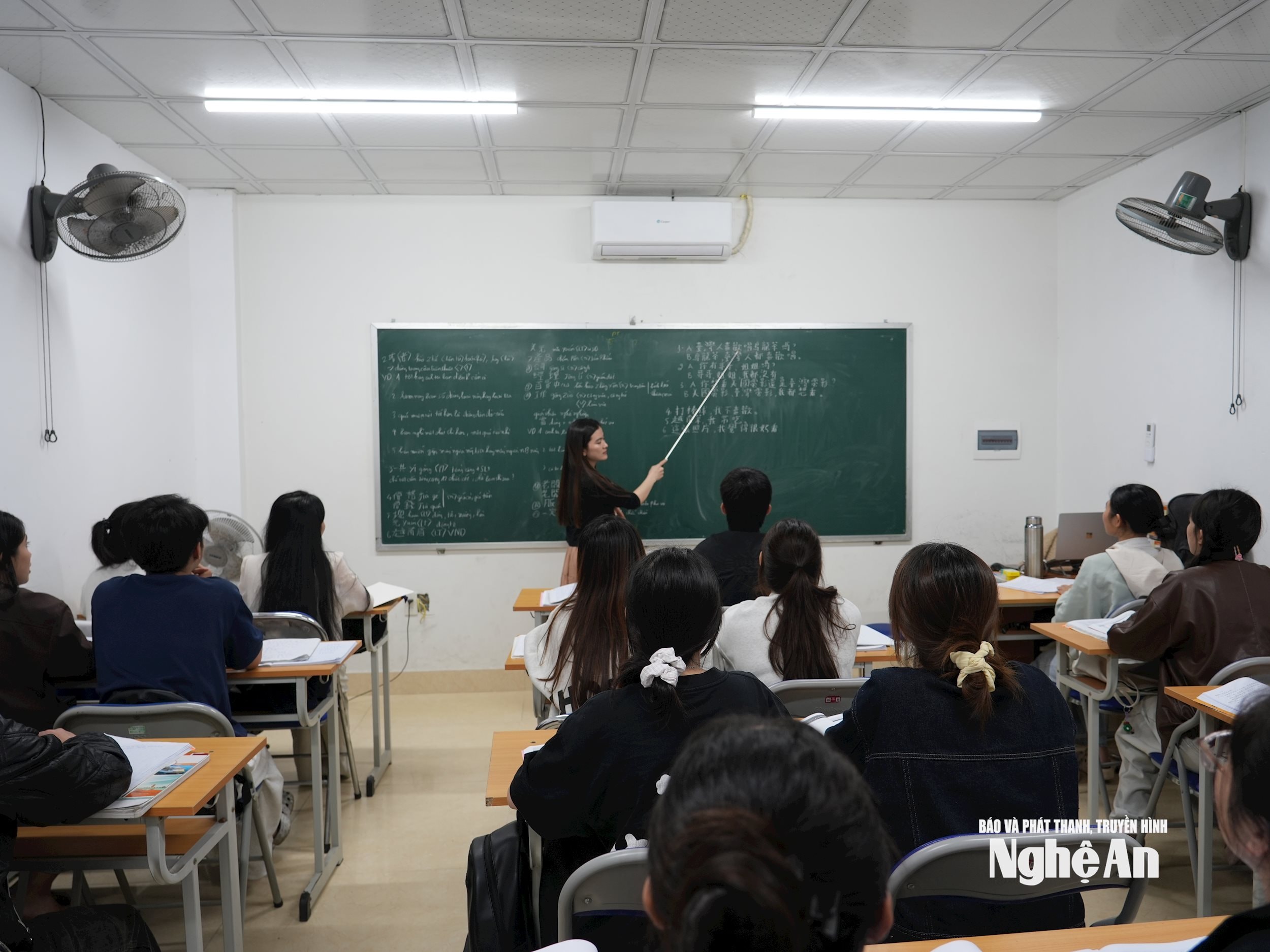
In addition to foreign partners, several large enterprises in industrial zones within the province have recently participated in teaching foreign languages to students at Vinh University. This early engagement helps businesses shorten training time and create a pool of future employees.
In the current context of international integration, digital transformation, and competition in the labor market, students need to equip themselves with foreign language skills to increase their job opportunities.
At our university, based on feedback from recruiting companies, they often highly value students who possess both professional competence and foreign language skills, and who can use them proficiently in the workplace. Foreign languages are also the second "key" for students to access the international job market.
Mr. Doan Minh - Deputy Director of the Center for Student Services, Support and Business Relations, Vinh University
Not only students, but many young workers have also chosen to learn a foreign language to make it easier to find a job. Nguyen Cong Vu, a former student of Do Luong 3 High School, graduated nearly a year ago. After graduating, Vu went to industrial zones in the province intending to apply for a factory job, but could not find a suitable job because many places required foreign language skills. Vu said: "I decided to register for an intensive Chinese language course with 6 sessions per week. I hope that after obtaining the required foreign language certificate, I will have a stable job that matches my abilities..."
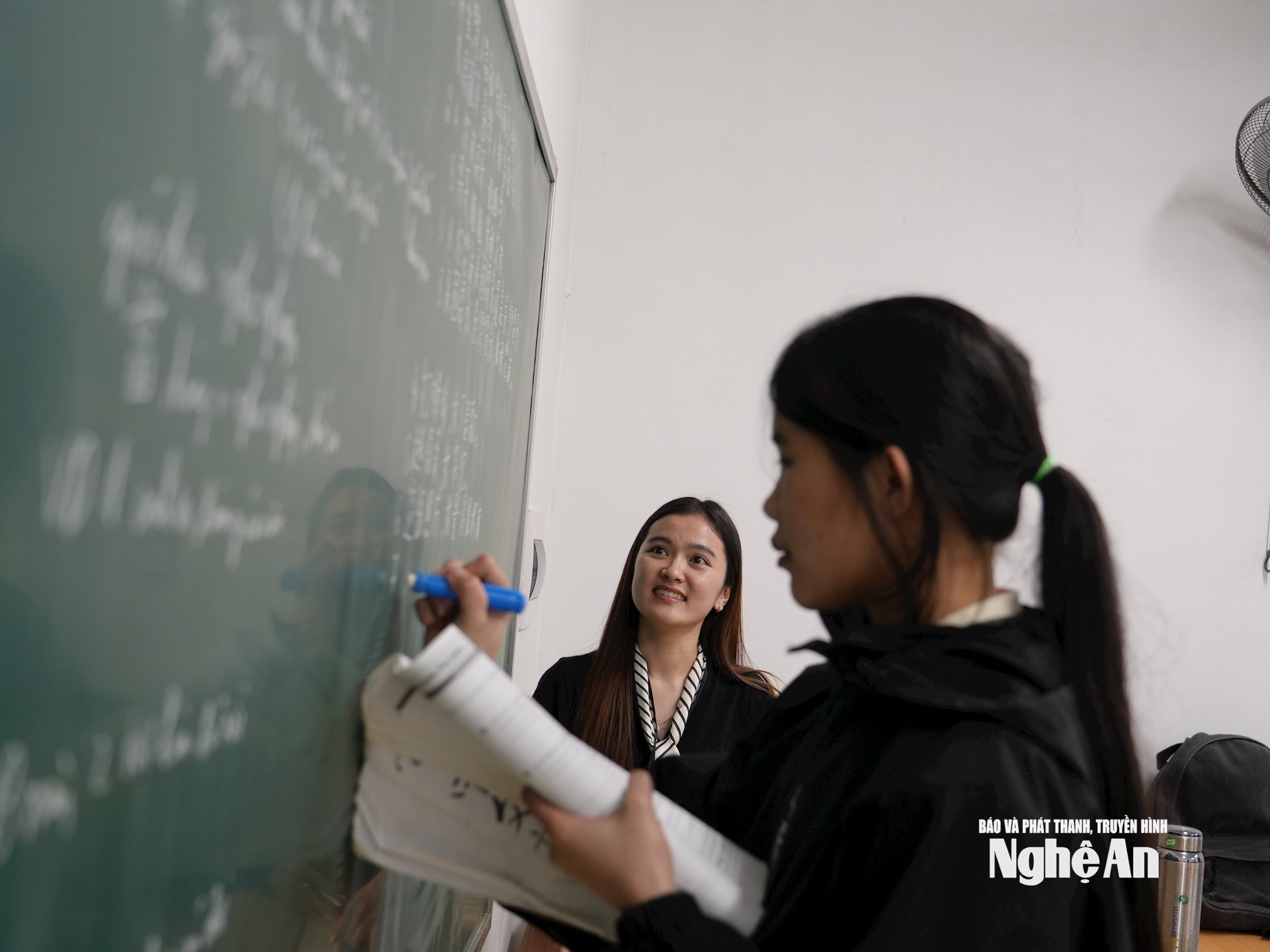
Meanwhile, Dau Trung Kien, a former student of Tan Ky 1 High School, chose to study Korean. After three months of study, he has now obtained a TOPIK Level 2 certificate and is striving to reach TOPIK Level 4 in order to apply for study abroad. His high school graduation exam scores were quite high, but he decided to study in South Korea and then work while studying. This way, upon graduation, he can work abroad and also easily find employment in Vietnam, as there are currently many Korean businesses in the country.
To make language classes more accessible to students, many institutions now offer online classes in addition to in-person instruction. Mr. Nguyen Dinh Chin, Director of CTS Education Consulting Co., Ltd., stated: "Currently, our center offers evening Korean language classes with approximately 50 students. The majority are students in grades 11 or 12 from high schools. Their goal is to obtain a language certificate early so they can study or work in South Korea."
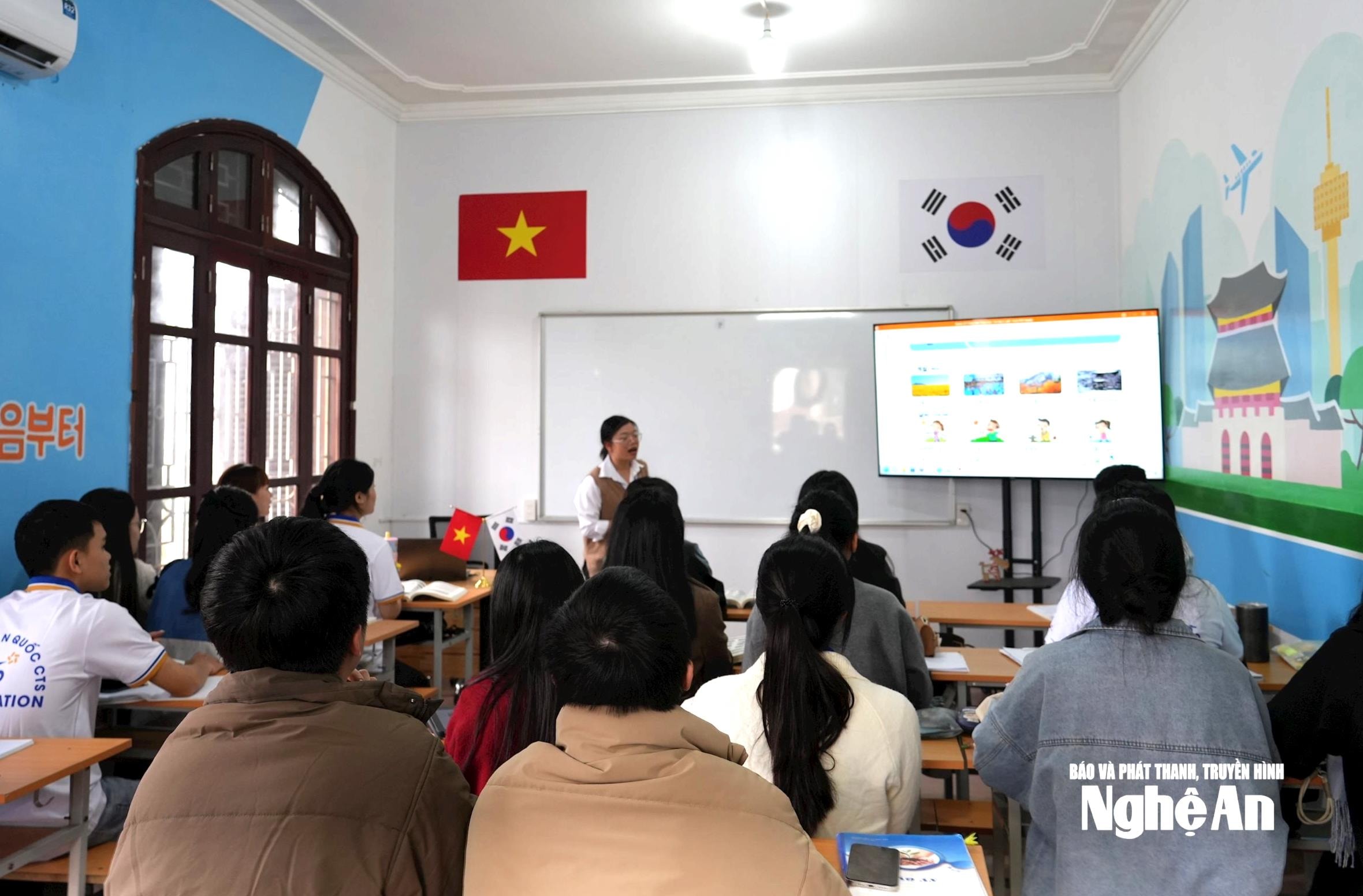
According to Mr. Nguyen Dinh Chin, South Korea is currently one of the largest markets for Vietnamese workers and students, with stable demand and relatively good income. Preparing for the language early helps students be more proactive in their future plans and reduces academic pressure after graduation. During the learning process, centers also design flexible learning programs, combining listening and speaking practice, specialized vocabulary, and knowledge of Korean culture so that students can quickly adapt to the learning and working environment in South Korea.


