
Fishermen in Nghe An province are urgently pulling their rafts ashore to avoid Typhoon No. 3.
Forecasts indicate that Typhoon Wipha (Typhoon No. 3) will bring heavy rain, high waves, and storm surges. Fishermen in coastal communes of the former Dien Chau district (Nghe An province) are rushing to pull their rafts ashore before the typhoon makes landfall.
Early in the morning of July 21st, in the coastal communes of Nghe An province, due to the influence of Typhoon No. 3, heavy rain began to fall, and the atmosphere of preparing to cope with Typhoon Wipha became more urgent than ever. Men hurriedly worked together to pull rafts and small boats to higher ground. With the help of tractors, ropes, and support stakes, hundreds of rafts were moved to open areas near the shore, away from the impact of large waves and high tides.
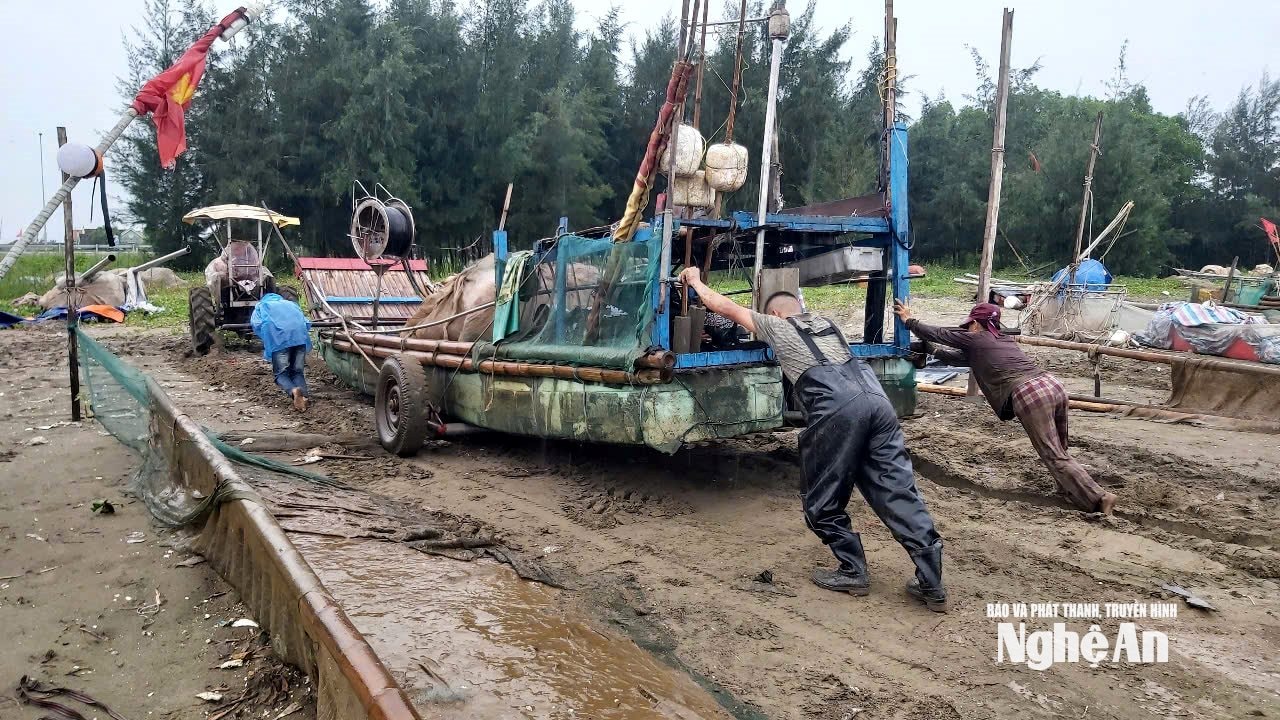
Mr. Pham Van Lap, a fisherman in Hai Chau commune (formerly Dien Chau district), shared: “When we heard that a strong storm might hit, the whole fishing village gathered to pull their rafts ashore to prevent them from being destroyed by the waves. Each raft, along with fishing equipment and tools, is worth more than a hundred million dong and is our livelihood, so we have to find every way to protect it.”
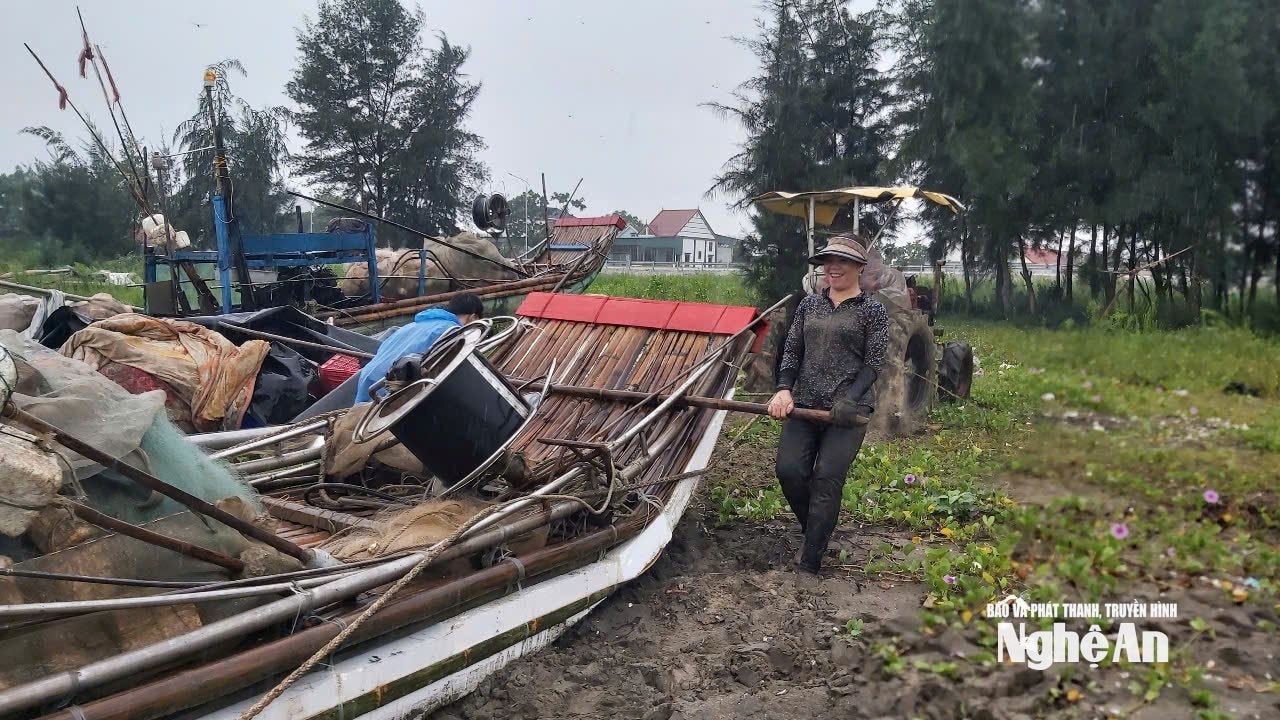
Along the coast of Dien Chau commune, dozens of small vessels such as bamboo boats and rafts were brought ashore. Many households also used sandbags and chains to reinforce their rafts, dismantling machinery and equipment to bring them home, to prevent them from being swept away by the wind. The atmosphere of "escaping the storm" was bustling but full of calculated planning and experience accumulated over many years of living with the sea.
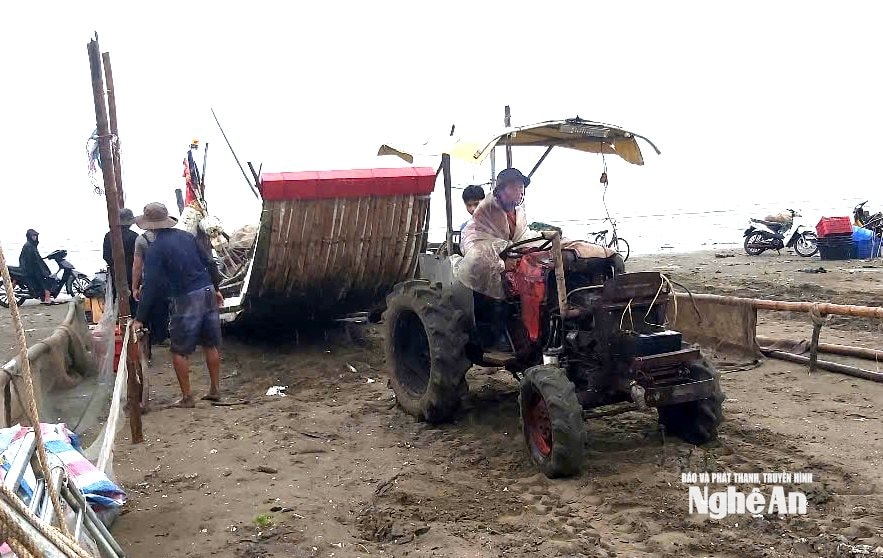
Mr. Nguyen Van Minh, a fisherman from Dien Chau commune, said that although fishing with rafts is close to shore, people stop fishing the day before to avoid unexpected strong waves. Pulling the rafts ashore, far from the water's edge, used to require manpower to help each other, but now hiring a tow truck is less strenuous and faster. However, human effort is still needed to lift the bow of the raft off the ground before the tow truck can pull it up."
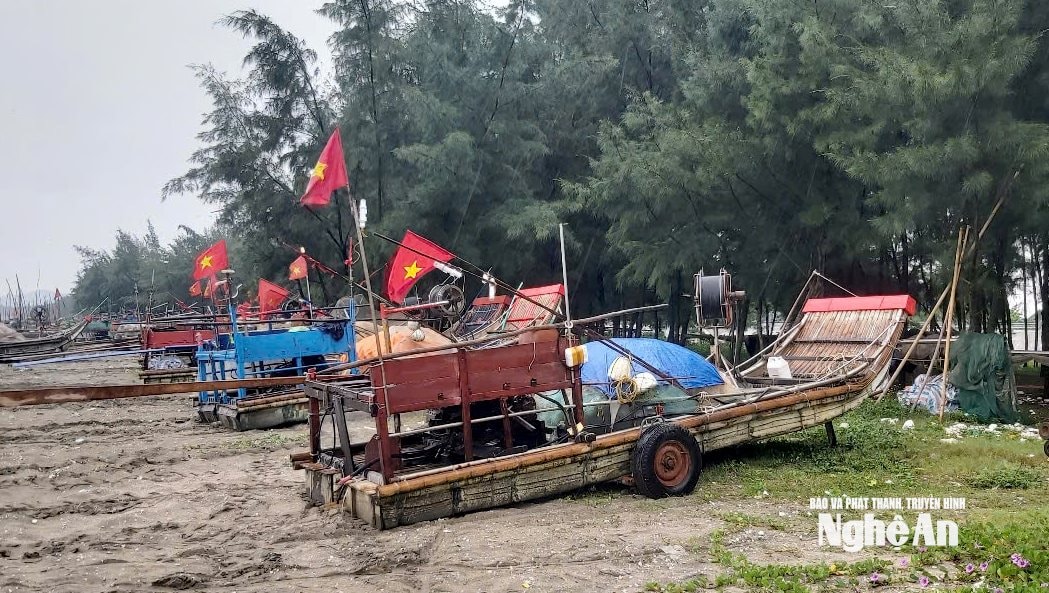
According to statistics, the former Dien Chau district had over 300 rafts, and in addition, some communes of the former Quynh Luu district and Hoang Mai town also used rafts for fishing. At this time, fishermen are urgently mobilizing manpower and machinery to pull their rafts ashore to avoid the storm.
Besides worrying about transportation, people in coastal areas are also urgently reinforcing their houses, packing up belongings, and moving items that could be blown away by the wind. Following the "four on-the-spot" principle, localities have fully prepared evacuation plans for residents in high-risk areas, weak houses, and houses along rivers and coastlines.
Mr. Nguyen Trong Huyen, Chairman of the Hai Chau Commune People's Committee, said: "We have requested coastal residents to review all boats, especially rafts used for near-shore fishing, to ensure that no one is still at sea. Pulling the rafts ashore is also part of the disaster response plan."
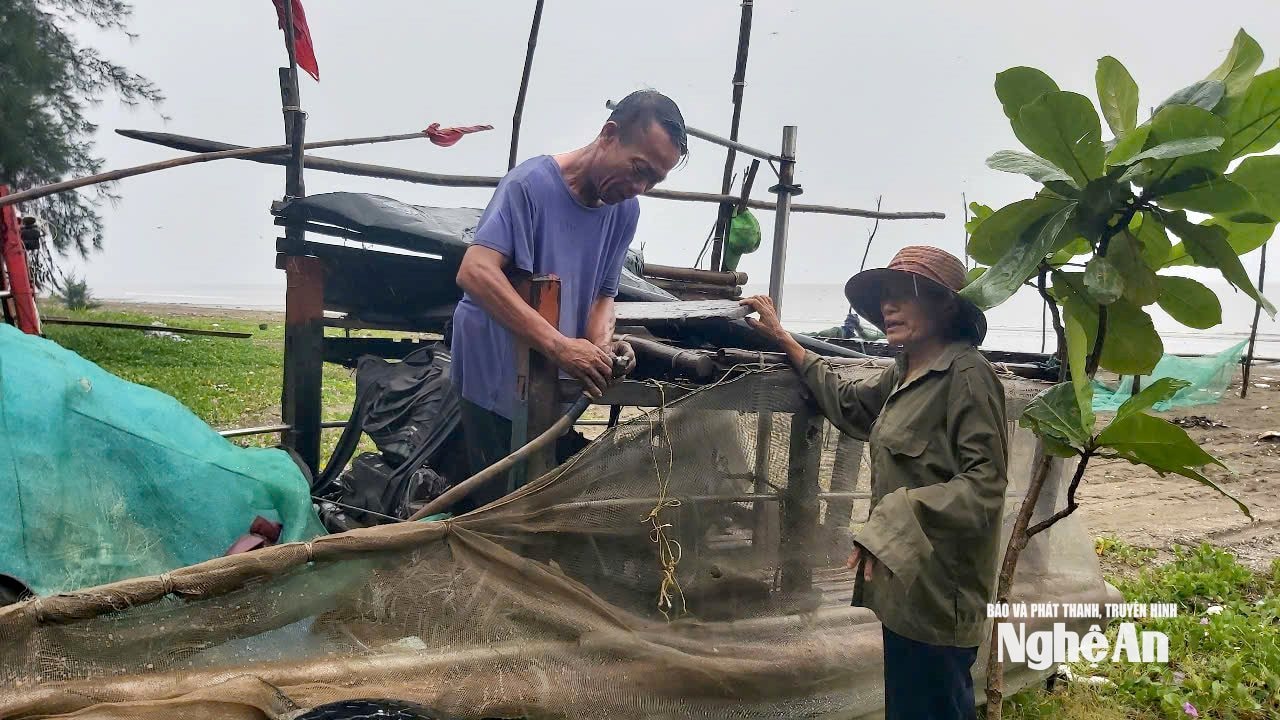
Once all the rafts were safely ashore, the people felt somewhat relieved and returned home. Although the extent of the damage from the storm was still unknown, the proactive and swift response had significantly mitigated the risks.
According to the National Center for Hydrometeorology: At 7:00 AM on July 21st, the typhoon's center was located at approximately 21.3 degrees North latitude and 109.9 degrees East longitude, over the northern part of the Leizhou Peninsula (China), about 220km east of Quang Ninh - Hai Phong. The strongest winds near the center of the typhoon were at level 9 (75-88 km/h), with gusts up to level 11; moving in a west-southwest direction at a speed of 15-20 km/h.
Forecasts indicate that the storm will enter the Gulf of Tonkin on the afternoon of July 21st with an intensity of level 10-11, gusting to level 14. It is expected to make landfall in the northern part of Vietnam, including Nghe An province, on July 22nd.


