
What are Hanoi residents saying about the ban on gasoline-powered motorbikes starting July 2026?
The policy banning gasoline-powered motorcycles in the area within Ring Road 1 from July 2026 is attracting significant attention from Hanoi residents.
Most Hanoi residents support the goal of reducing air and water pollution in the capital, but also acknowledge the challenges regarding infrastructure and financial support.
Hanoi is currently among the cities with the highest levels of air pollution in the world, with PM2.5, PM10, and total suspended particulate matter (TSP) exceeding permissible limits. Water quality in inner-city rivers has also been alarming for many years.
The Prime Minister instructed Hanoi to implement a roadmap to eliminate fossil fuel-powered motorcycles from circulating within Ring Road 1 by July 1, 2026, in order to improve air quality and the lives of its residents.
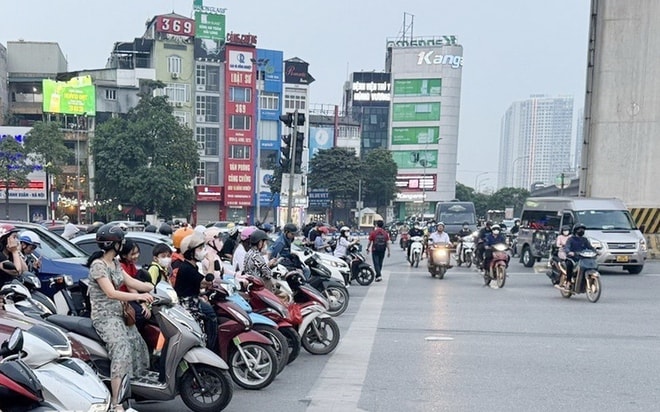
Mr. Nguyen Trung Hieu (39 years old, Dong Ngac, Hanoi) shared that he travels more than 10km to the city center every day and is constantly exposed to the fumes and dust from gasoline and diesel vehicles, causing discomfort and posing potential health risks. "The policy of banning gasoline vehicles is necessary, but support for people to switch to electric vehicles is also needed," he said.
Similarly, Mr. Duong Quang Huy (40 years old, Xuan Dinh, Hanoi) believes that high traffic density is the main cause of pollution. Banning gasoline-powered motorbikes within Ring Road 1, if accompanied by policies and fees to encourage clean vehicles, would promote a green lifestyle and improve the quality of life. However, Hanoi needs to invest heavily in public transportation to meet travel demands.
Ms. Nguyen Ngoc Bao Linh (Viet Hung, Hanoi) highly appreciates the civilized nature of this policy, which aligns with global sustainable development trends. However, motorbikes are a significant asset for many low-income households. "The city needs to provide financial support and ensure adequate public transportation infrastructure for the policy to be feasible," Bao Linh suggested.
Mr. Nguyen Van Vuong (Thanh Xuan, Hanoi) believes that banning gasoline-powered vehicles is a turning point in reducing pollution, but its success depends on the speed of public transportation development and the financial capacity of the people. "If the infrastructure is good and there is support, this will be a great impetus for green vehicles," he stated.
Furthermore, this policy also helps to recall old and dilapidated motorcycles, reduce vehicle density, and raise public awareness about low emissions, aiming for net-zero emissions by 2050.
To achieve this, Hanoi needs to issue mechanisms to support businesses producing electric vehicles, develop charging station infrastructure, and encourage people to switch to electric vehicles.
The public agrees that, in addition to environmental benefits, the government needs a clear roadmap, financial support policies, and synchronized infrastructure investment to minimize difficulties, especially for low-income workers, and ensure a smooth transition.


