
People in western Nghe An province are hoping for new bridges after the floods.
Following the historic floods caused by Typhoon No. 3, the western communes of Nghe An province suffered serious damage. Many bridges were swept away by the floodwaters, leaving thousands of people isolated. Residents are hoping for the construction of new bridges soon, to facilitate convenient travel and stabilize their lives.
People have to cross the river by boat every day.
On the morning of October 20th, at the Ban Chan bridge area (Tuong Duong commune), the remnants of the historic flood were still evident. The sturdy concrete bridge spanning the Lam River – once a vital transportation route for the people – is now just bare bridge abutments after being completely swept away and broken by the flood. Now, small boats are the only means of transporting students to school and people for daily life, shopping, and trading.
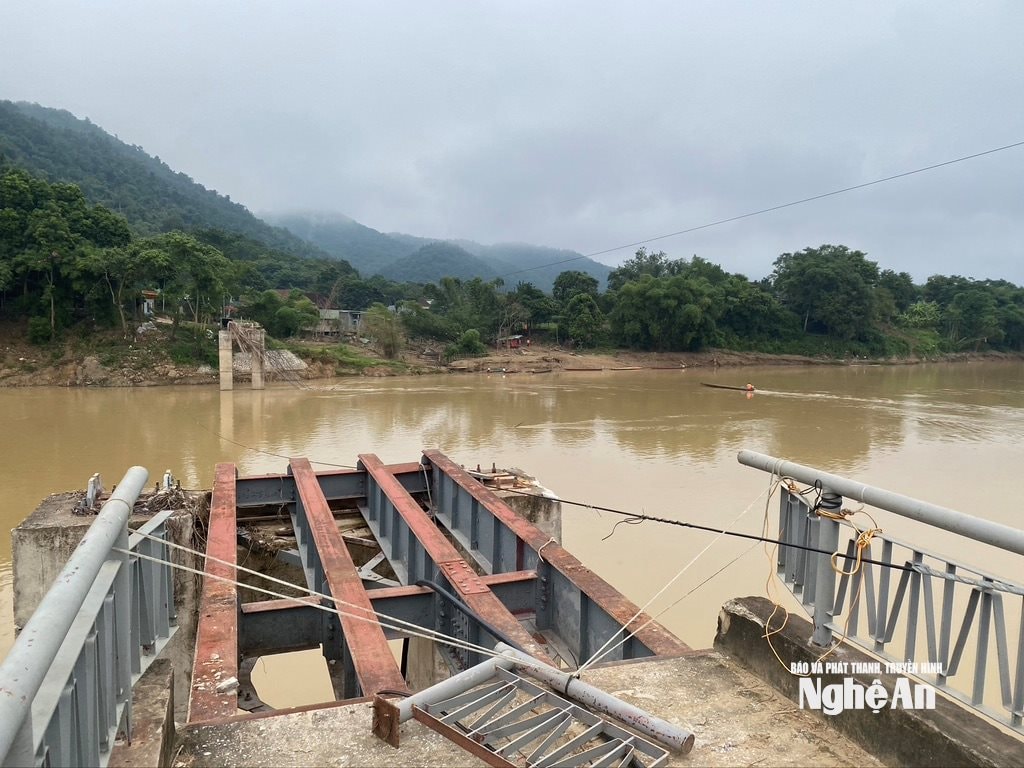
Le Hoai Thuong, a 7th-grade student at Thach Giam Secondary School, shared: “When the bridge was still there, it was very convenient for me to go to school. I could go in the morning and come home at noon to have lunch with my parents. Now that I have to use the ferry, I have to stay at school all day and only get home in the evening.”
Ms. Vi Thi Tinh, a resident of Chan village, shared: "Before, with the bridge, people could travel easily and sell whatever they harvested. Now, we have to use boats, and transporting goods is very difficult. The people hope the government will rebuild the bridge soon so that they can live and work in peace."
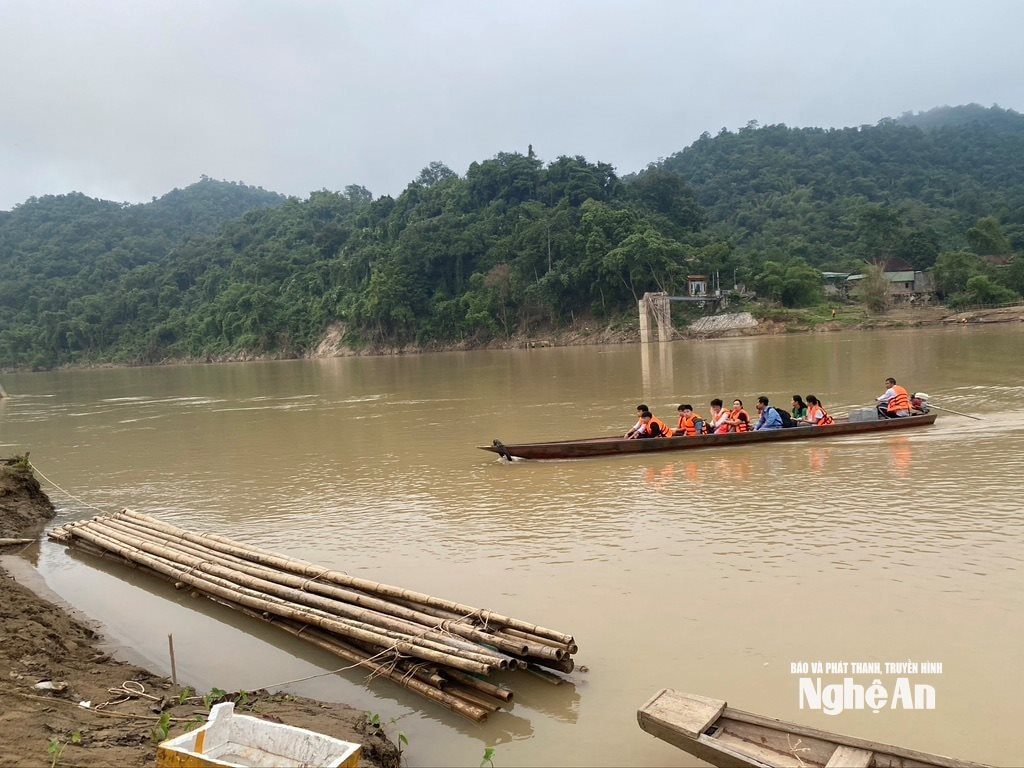
Mr. Nguyen Hong Tai, Chairman of the People's Committee of Tuong Duong commune, said that the recent flood caused unprecedented damage to the locality. In particular, three important bridges – Ban Chan bridge, Ban Lau bridge, and Cua Rao bridge – were completely swept away, directly affecting four villages (Ban Chan, Ban Lau, Ban Mac, and Ban Nhan) comprising 394 households with over 1,600 people.
Faced with this urgent situation, the commune authorities promptly submitted a request to the province for assistance. Simultaneously, the commune established a temporary ferry crossing on both sides of the river with a single iron boat, a waiting area, and free transportation for residents. In addition, the villagers themselves contributed money to purchase eight smaller boats to transport goods and agricultural products. During the ferry journeys, the commune regularly deployed personnel to monitor and remind people to wear life jackets to ensure safety.
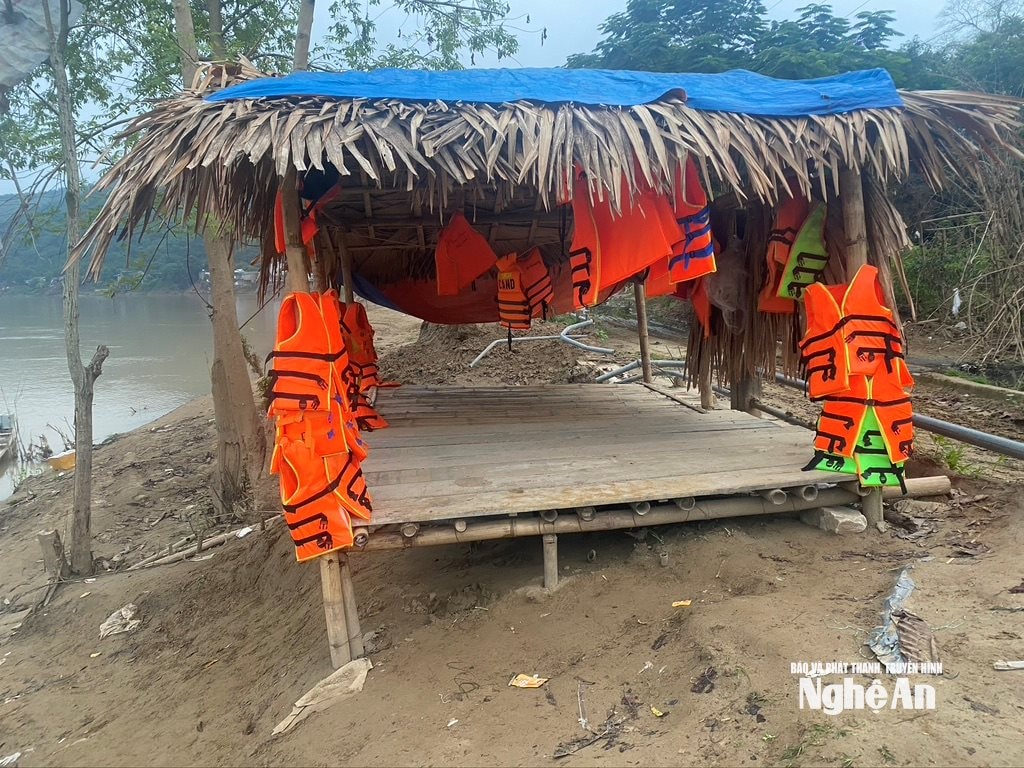
The best news is that on September 22nd, the People's Committee of Nghe An province issued a decision to supplement the budget and allocate central government funding to address the consequences of the storms and floods. Of this amount, 15 billion VND was approved for the construction of a new suspension bridge in Lau village, with construction expected to begin in early November 2025 and be completed before the Lunar New Year.
Mr. Nguyen Hong Tai further shared: "In the long term, the commune hopes to continue investing in the construction of a heavy-duty bridge in Chan village, in order to exploit the development potential on the left bank of the Lam River."
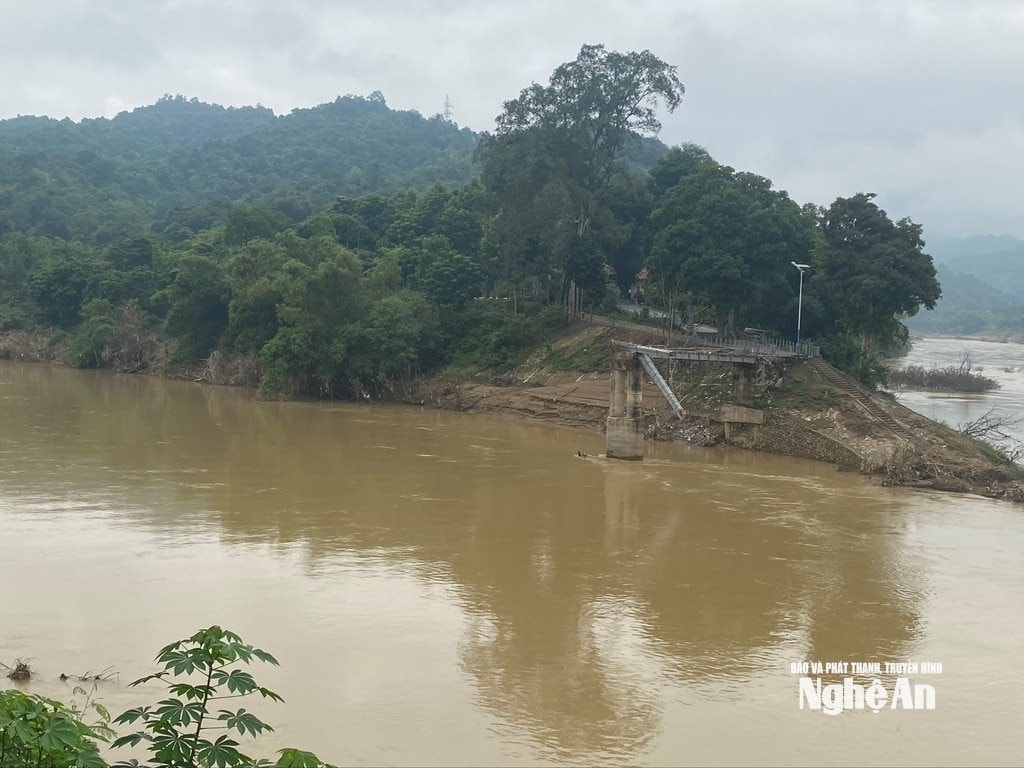
A similar situation occurred in Luong Minh commune when the suspension bridge in Xop Mat village completely collapsed during the flood. More than 490 households in the villages of Dua, Minh Tien, Minh Thanh, and Cham Puong were severely isolated. Since September 1st, Luong Minh commune has requested the opening of a temporary ferry terminal in Xop Mat village with two boats operating alternately, transporting 40-50 people back and forth each day.
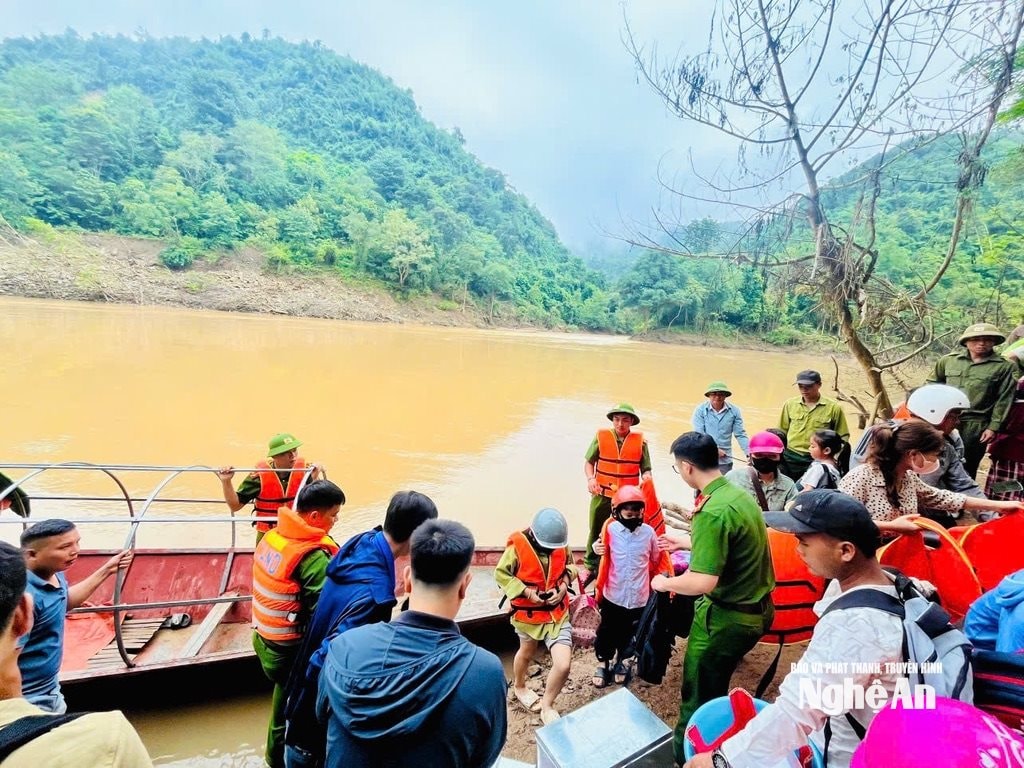
Mr. Nguyen Van Hoa, Chairman of the People's Committee of Luong Minh commune, said: "The ferry solution is only temporary, for emergency situations. We have coordinated with functional forces to provide sufficient life jackets and assigned personnel to supervise safety. According to the plan, with central government funding, the new suspension bridge in Xop Mat village will be started in November, bringing great joy to the local people."
Wishing for new bridges.
In Muong Quang commune, the Muong Quang suspension bridge connecting Quanh village to National Highway 16 – the only route to the town center – was completely swept away by the floodwaters. This bridge, 56 meters long and 2.2 meters wide, was built in 2006 and was intended for motorbikes and vehicles under 1 ton. Residents of Quanh village now have to take a detour through the former Chau Thon commune, nearly 4 kilometers away, which is very difficult and time-consuming.
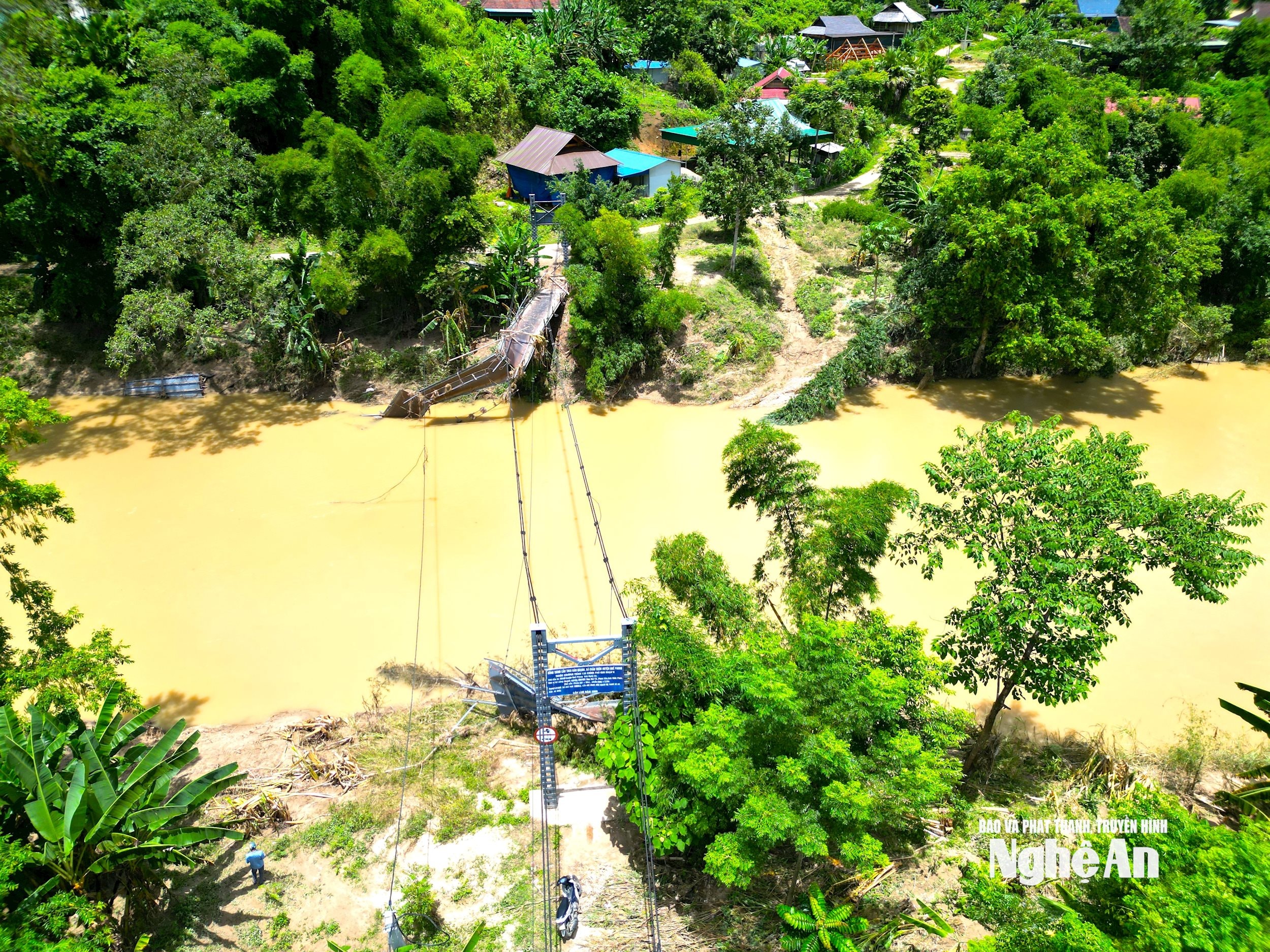
Observations at the scene indicate that the entire bridge structure has been swept away, leaving only the two bridge piers and a few loose iron cables.
Mr. Vi Van Thi, a resident of Quanh village, said: "The bridge was swept away. Since then, we have had to take a detour, which wastes an hour."
According to Mr. Sam Ba Tuan, Chairman of the People's Committee of Muong Quang commune, this suspension bridge served 105 households and 500 people. Now that the bridge has been swept away by floods, the lives of the people are facing many difficulties. With the commune's current resources, restoring the bridge is beyond its capabilities. The government and people of Muong Quang commune earnestly hope that higher authorities will soon pay attention and provide support to rebuild the bridge so that the people can stabilize their lives.
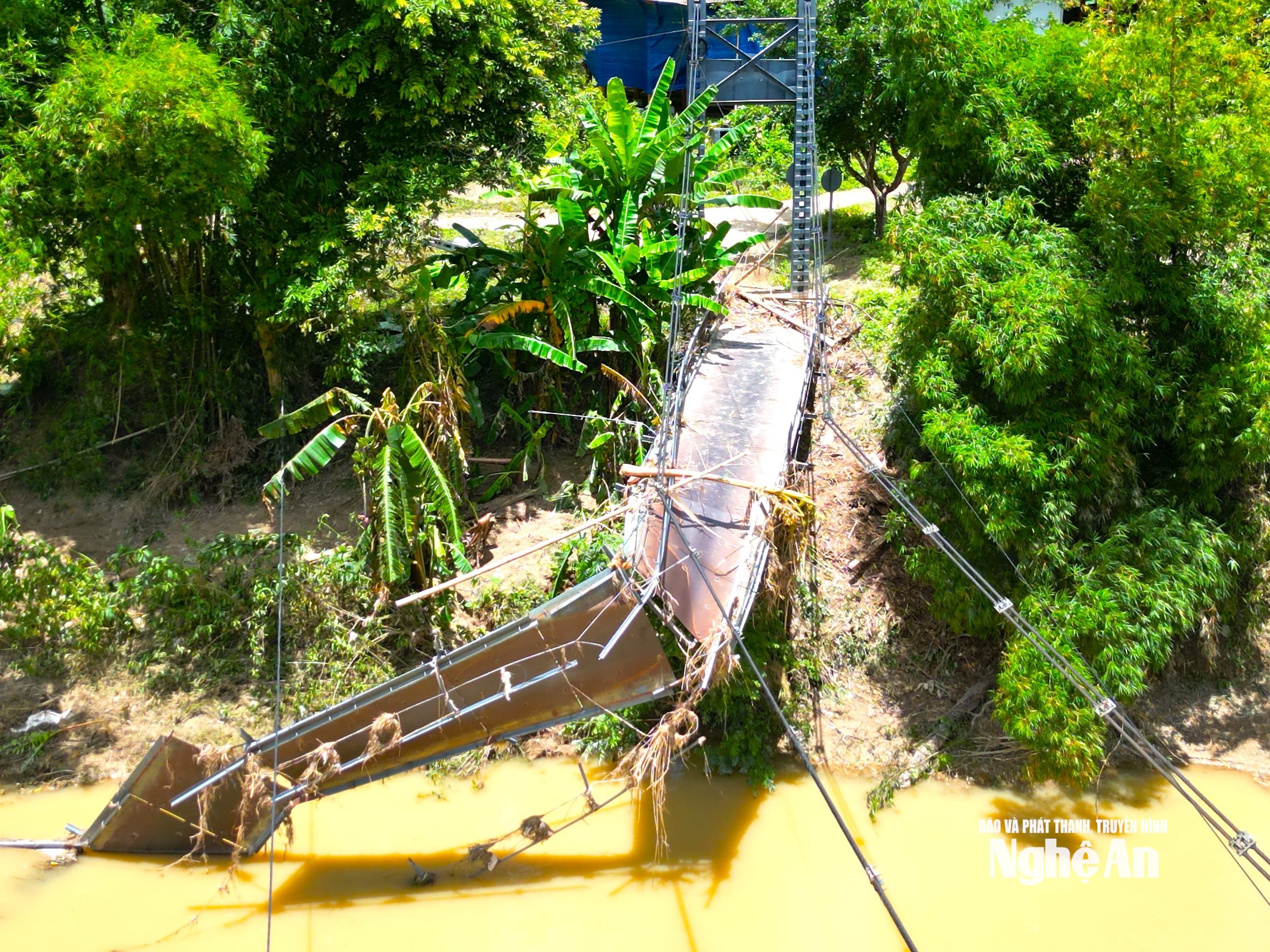
According to statistics, after typhoon No. 3, seven bridges in Nghe An province were swept away, including: Muong Quang suspension bridge (Muong Quang commune); Xop Mat village suspension bridge (Luong Minh commune); three bridges in Tuong Duong commune including Chan village bridge, Lau village bridge, and Cua Rao bridge; Khe Hi iron bridge (Nhon Mai commune) and Yen Hoa suspension bridge (My Ly commune).
Initially, the province will prioritize using central government funds to rebuild two bridges in Lau village (Tuong Duong commune) and Xop Mat bridge (Luong Minh commune). However, five other bridges still need to be restored and rebuilt in the near future to ensure safe travel and stable long-term livelihoods for thousands of people in the highlands.


