
People in the mountainous areas of Nghe An province are proactively responding to floods and landslides.
As the rainy season approaches, the mountainous areas of Nghe An province are once again facing the risk of landslides and localized flooding. Therefore, with the close guidance of all levels and sectors, the people are increasingly aware of the need to proactively respond.
Locals are voluntarily repairing roads and fixing landslides.
Bao Thang is one of the remote communes in Ky Son district, frequently experiencing landslides, flooding, and road closures whenever there is heavy rain and strong winds. In particular, some locations always pose a high risk of landslides, causing cracks in roadbeds and house foundations, and the collapse of roads, bridges, and culverts.
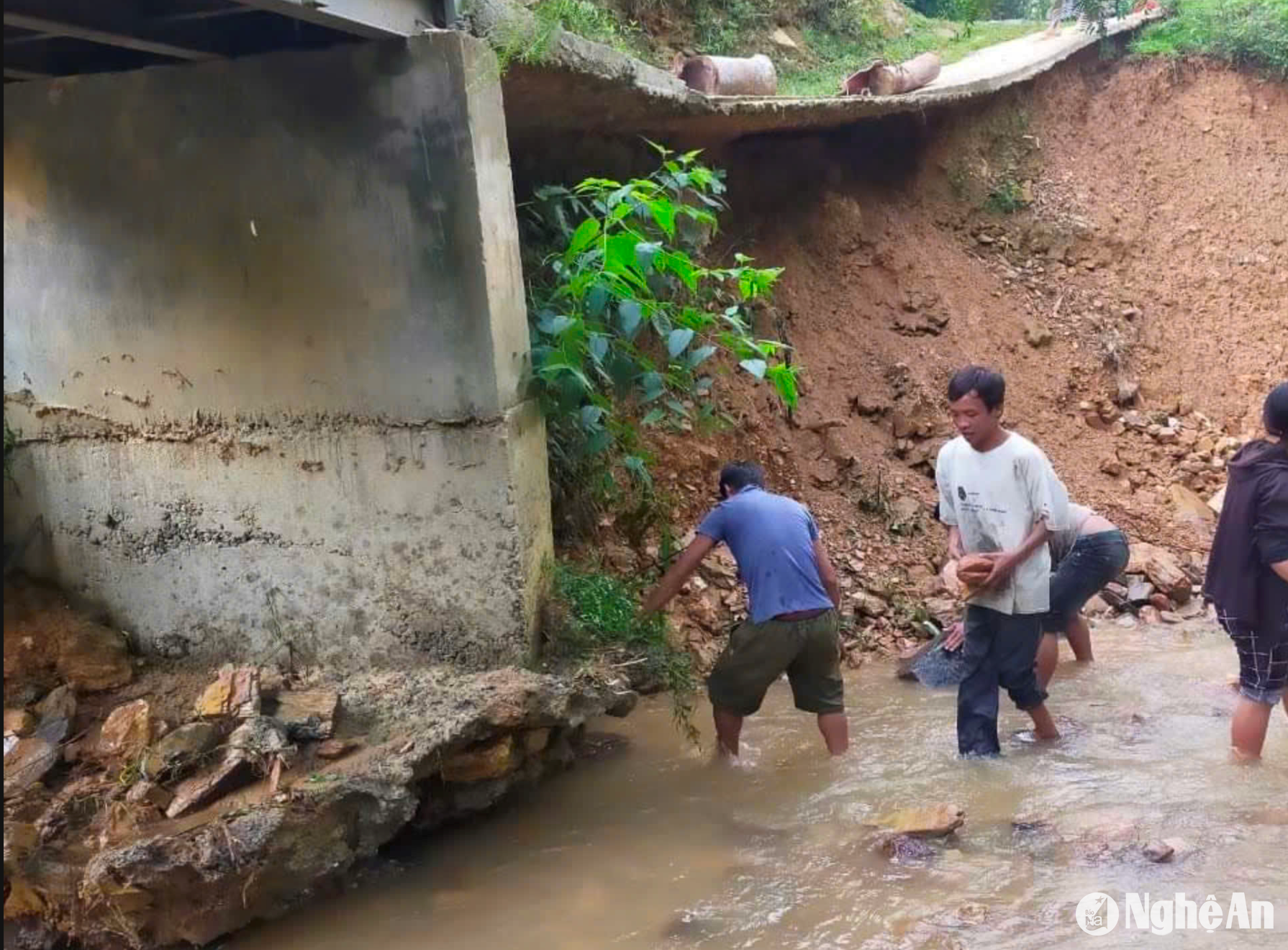
The heavy rains following Typhoon No. 3 caused several landslides in this commune, especially at the base of the bridge in Cha Ca 2 village. According to the leaders of Bao Thang commune, after many disaster prevention efforts, the government and the people have developed a proactive awareness of how to protect themselves from the negative impacts of the weather.
Following the "four on-site" principle, when the bridge's foundation in Cha Ca 2 village showed signs of serious erosion, commune and village officials and residents braved the rain and wind to repair the bridge's foundation and fill in areas prone to landslides. After nearly a day of gathering soil and rocks and using some sandbags, the landslide under the bridge's piers and abutments in Cha Ca 2 village was repaired.

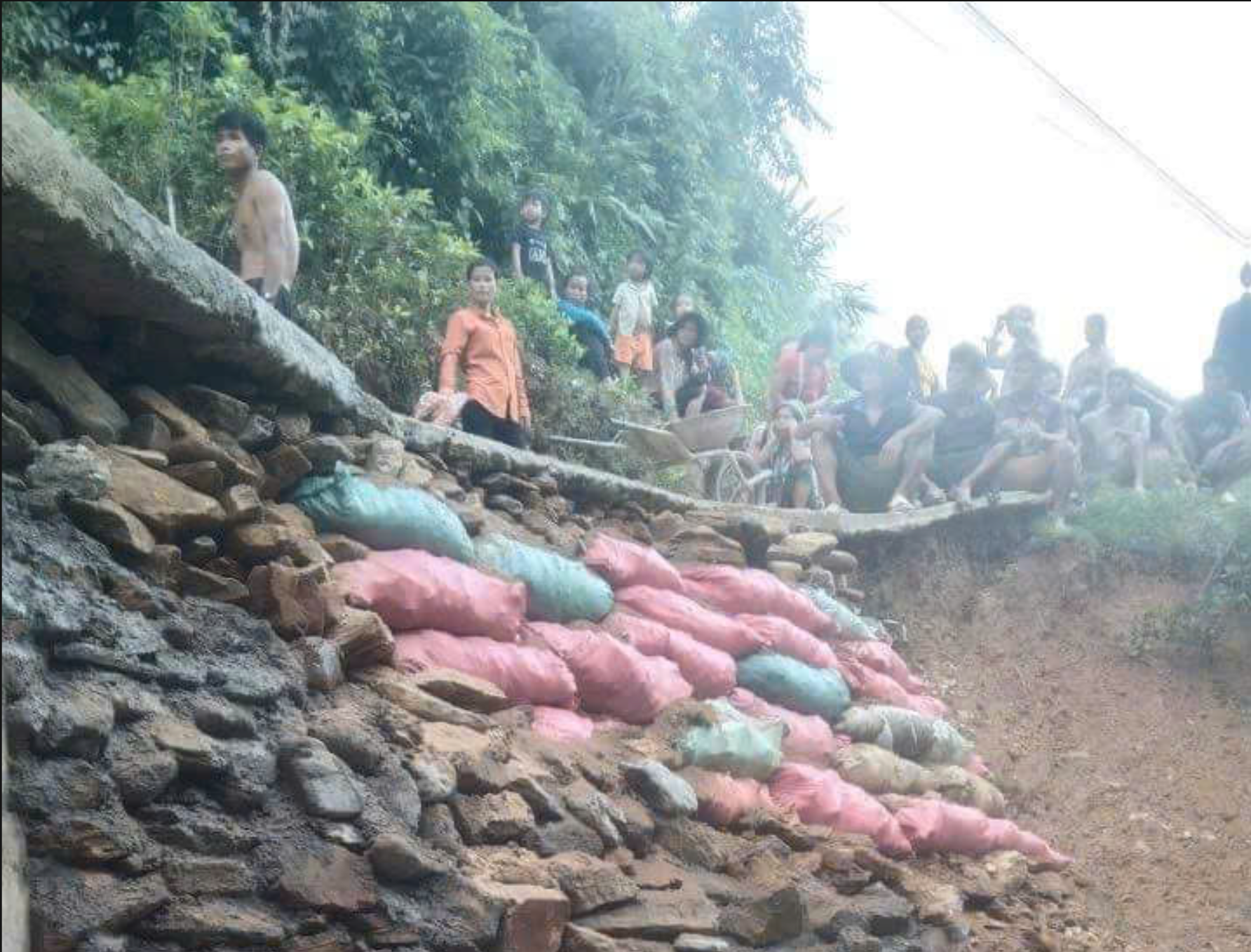
Also affected by the rain following typhoon No. 3, many villages in Dooc May commune, Ky Son district, experienced landslides and mudslides, burying some roads in the area through Huoi Vieng and Noong Han villages. According to officials from the Dooc May commune People's Committee, the road to Noong Han village was the most severely affected, making it impassable for people and vehicles.
Upon receiving the information, the "four on-the-spot" forces, comprising various organizations, the Keng Du Border Guard Post, and local residents, mobilized manpower and resources to excavate and clear the road. Simultaneously, they surveyed other landslide-prone areas and warned residents to be cautious when traveling, especially during rainy weather.
Stay close to the local area and monitor weather forecasts to proactively respond.
According to disaster warnings and weather forecasts from regional and national meteorological and hydrological stations, Nghe An is located in a high-risk area for landslides in mountainous areas and flooding in plains, urban areas, and coastal regions during heavy rains. Therefore, local Party committees and authorities have proactively developed detailed flood and storm prevention plans for their localities since the beginning of the year.
At the same time, officials in charge of specific areas and sectors are regularly assigned to the grassroots level to update the situation and direct timely responses. For example, in Tuong Duong district, from September 15-17, leaders of the District Party Committee, the District People's Committee, and the Department of Agriculture and Rural Development surveyed the situation in key communes and villages at high risk of landslides and flooding to encourage and remind the authorities and people to proactively respond.
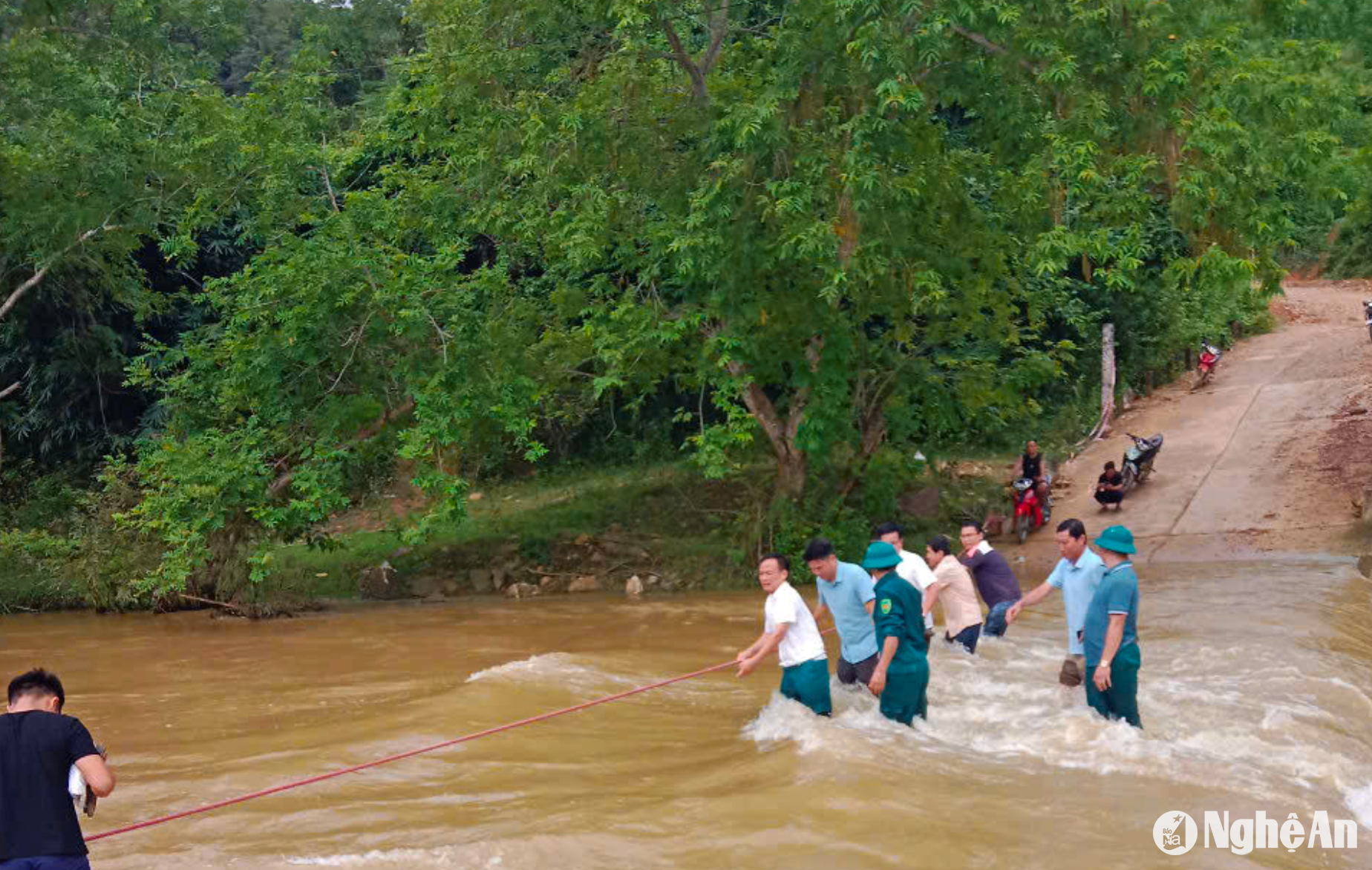
Similarly, in Ky Son district, following prolonged rainfall due to the influence of Typhoon No. 3, dozens of landslides occurred. The "four on-the-spot" forces proactively cleared the roads blocked by landslides. Leaders of the Ky Son District Party Committee and People's Committee also surveyed and directed response plans for floods and landslides in the communes of Muong Ai, Muong Tip, Na Ngoi, etc. To date, the roads affected by landslides in Ky Son have been repaired and are no longer cut off.
Besides being familiar with the local area, having access to weather forecasts is also extremely important.
According to the forecast of the North Central Meteorological and Hydrological Station, the tropical depression, which may strengthen into typhoon number 4, is expected to cause widespread heavy rainfall in Nghe An province from September 19th to 22nd. Total rainfall amounts are expected to be: 100-200 mm in mountainous areas, with some places exceeding 250 mm such as Con Cuong, Anh Son, and Thanh Chuong; 150-350 mm in the midland and coastal plains, with some places exceeding 400 mm such as Vinh City, Cua Lo Town, and Hung Nguyen; and localized heavy rainfall. This could cause flooding in low-lying urban areas, flash floods in small rivers and streams, and landslides on slopes in mountainous regions.


