
Should smartphone users use anti-spy screen protectors?
Anti-spy screen protectors are becoming a popular choice for many smartphone users seeking to protect their privacy in public. But are they truly effective, or merely a "peace of mind" accessory?
Digital security measures such as end-to-end encryption, two-factor authentication, or strong virtual private networks (VPNs) can protect you online. However, a curious glance from someone sitting next to you on a bus or in a coffee shop can still expose your personal data, something technology cannot control.
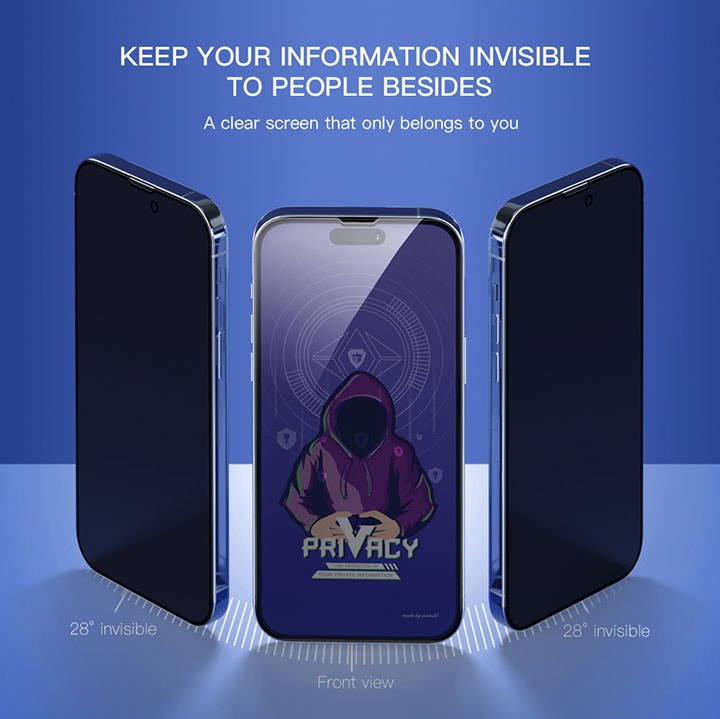
If you care about privacy in real life, anti-spy screen protectors can be a helpful solution. But what exactly are they and how do they work? Here's everything you need to know.
What is a privacy screen protector?
Anti-spy screen protectors not only protect your phone screen from scratches but also act as a mobile "privacy curtain." Similar to regular screen protectors (made from PET or tempered glass), these protectors incorporate a special optical filter that limits the viewing angle, allowing only the person directly facing you to clearly see the displayed content.
The phenomenon of "visual hacking," or simply put, someone secretly looking at your device screen, may seem harmless, but it carries significant risks. In an era where phones are central to everything from texting and work to social media and digital banking, even a curious glance can expose sensitive data.
We love smartphones with large, bright, and sharp screens, but that's also a weakness when it comes to privacy. Not everyone who looks at your screen has bad intentions; sometimes it's simply curiosity.
But no matter what app you're using or what content you're reading, privacy should always be protected, not only from strangers, but also from the invisible eyes silently collecting data from your every action.
How do anti-spy screen protectors work?
Most anti-peeping stickers currently available use microlouver technology, which includes an extremely thin optical filter that acts similarly to Venetian blinds at a microscopic level.
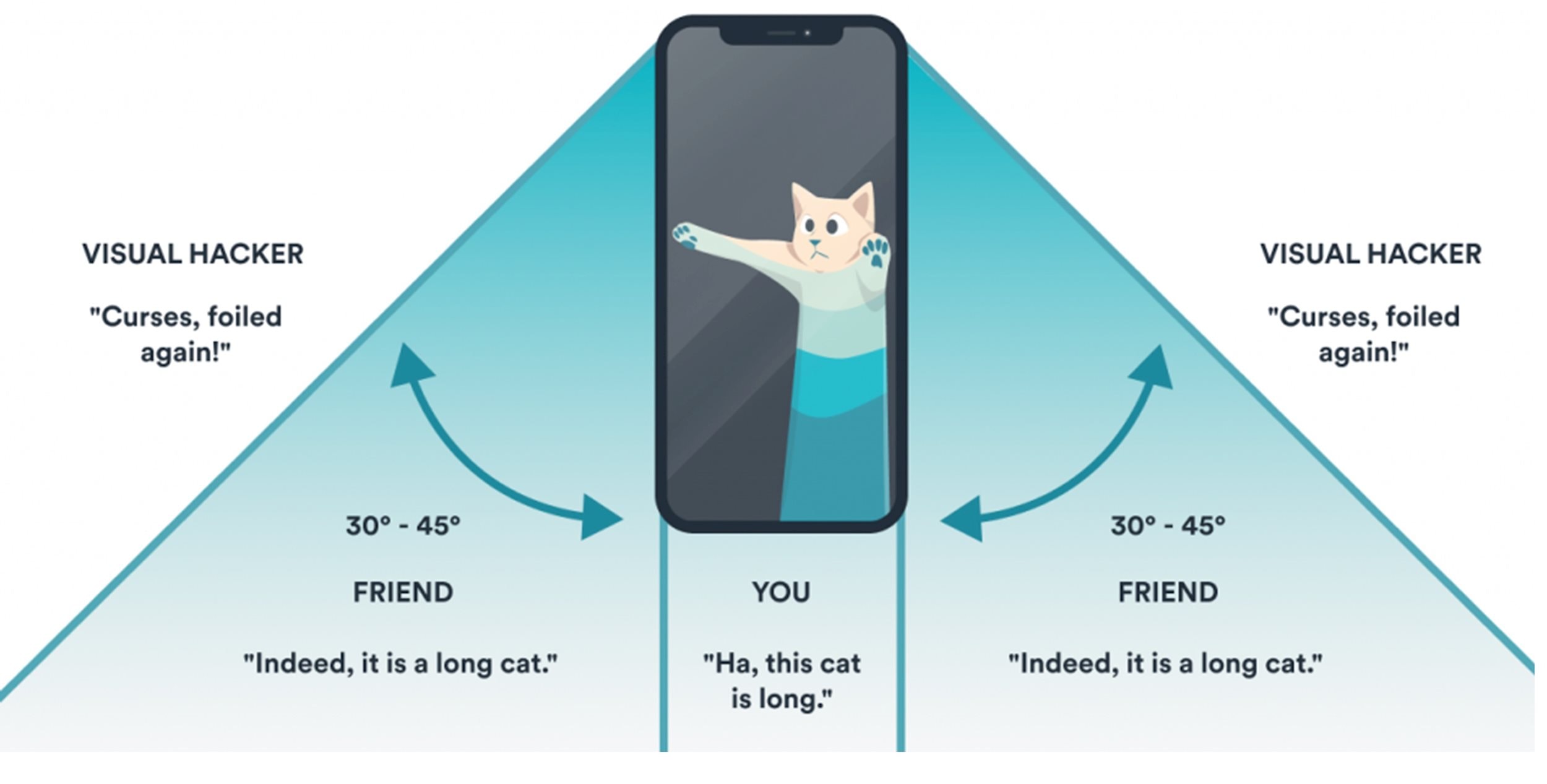
This filter only allows light from the screen to reach the user's eyes within a narrow viewing angle, typically between 60 and 90 degrees. Anyone looking from angles to the left, right, top, or bottom will only see a dark or blurry screen.
Screen protectors using this technology offer a clearer and more private viewing experience compared to those that only use dark films or tinted glass. If you prioritize display quality and privacy, this type is a good choice.
The outstanding benefits of anti-spy screen protectors.
The most obvious advantage of anti-spy screen protectors is that they ensure user privacy. They prevent others from secretly viewing your personal information, bank accounts, or sensitive messages, even in public places like trains, cafes, or offices, providing a significant sense of security.
However, the benefits of this type of screen protector aren't limited to public spaces. If you live with family, a partner, or roommates, a privacy screen protector can also reduce the light emitted from your screen at night, preventing others from being disturbed while you can still comfortably use your phone.
In addition to privacy, this screen protector also serves the role of a regular screen protector, preventing scratches, minimizing the risk of breakage from drops, and extending the lifespan of your device.
Depending on the brand, users may also receive many other useful features such as anti-glare coatings, blue light filters to reduce eye strain, or oil-repellent and water-repellent coatings to keep the screen clean, less prone to fingerprints, and easy to wipe.
The drawbacks of anti-spy screen protectors.
Anti-spy screen protectors offer many privacy benefits, but they are not without limitations. In theory, many manufacturers advertise that their products do not affect screen brightness or clarity. However, in practice, this is not always true.
One of the most noticeable drawbacks is that the screen becomes dimmer and harder to see, especially when used outdoors or in brightly lit environments. You can compensate by increasing the screen brightness, but this means the battery will drain faster and the anti-spy coating will be less effective if someone is looking at it from an angle.
Using a phone has also become less flexible. You need to look directly at the screen to see the content clearly, making quick glances to check the time or notifications inconvenient.
Additionally, when you want to share images or videos with others, you may encounter difficulties because the screen only displays clearly in a very narrow angle, especially with screen protectors that have 4-way filters, which restrict the viewing angle in both horizontal and vertical directions.
Ultimately, a limited viewing angle may still not be sufficient to guarantee absolute privacy. With a 60 or 90-degree viewing angle, someone standing next to you in a public space like a bus or train could still glance at the content on your screen if they are close enough.


