
The 'fire keeper' in Kieng village
In Kieng village, Chau Tien commune, a Thai ethnic woman has served as the Party branch secretary for 10 years, leading her village through difficulties. That woman is Sam Thi Lan (born in 1962), affectionately known by the villagers as "the secretary of the people's hearts." Ms. Lan is one of three outstanding Party branch secretaries in Nghe An province honored by the Central Party Organization Committee.
Concerned about the development of the village.
One day at the end of the year, we traveled along National Highway 48, heading to the western part of Nghe An province, following the winding curves to find Kieng village in Chau Tien commune. The road from the highway to Kieng village has now been paved with concrete. On both sides of the road, new stilt houses are interspersed with sturdy brick houses amidst lush green gardens. Few would imagine that just over ten years ago, this was a poor village, with muddy dirt roads that became slippery when it rained, and the entire village was shrouded in darkness at night.
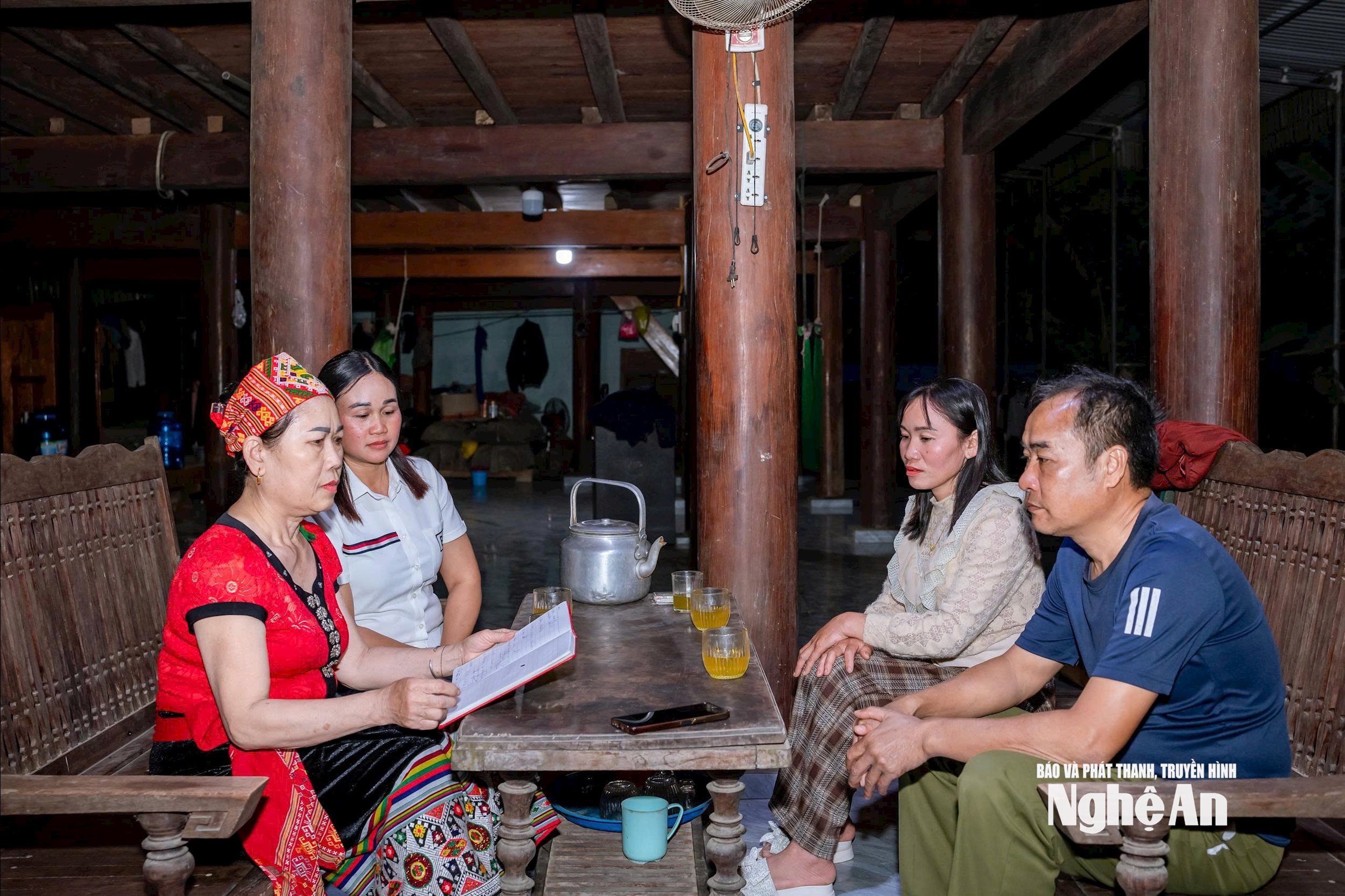
The home of Party Branch Secretary Sam Thi Lan is neat and cozy. In the corner, a loom with shimmering colorful threads is half-finished. Reaching out to pour a pot of steaming green tea, Ms. Lan began to recount her journey as Party Branch Secretary exactly 10 years ago. For Ms. Lan, it has been a long journey of worries, responsibilities, and sleepless nights for the sake of the village. From that day until now, she has served through four Party Branch congresses, fully involved in every change in Kieng village. Ten years – not a very long time in a person's life, but enough to leave a mark on the persistent, quiet, and responsible journey of a Party Branch Secretary in the highlands.
"Being a Party branch secretary in a village isn't just about holding meetings and passing resolutions; it's about going to each house, listening to each story, and understanding each person's worries. Only then will the people listen to you, trust you, and actively participate..." - said Ms. Lan.
Nestled amidst the mountains and forests of Chau Tien, Kieng village is a predominantly agricultural community facing many difficulties, with 170 households, 100% of whom are ethnic Thai people. For many years, the lives of the villagers here have mainly depended on fragmented agricultural production, lacking supplementary occupations and resulting in unstable incomes. Consequently, the village has gradually become deserted of young people, leaving only the elderly, women, and children. This is because, after finishing high school, most young people have left the village to attend college, university, vocational school, work as factory workers in industrial zones, or go abroad for labor.
Ms. Lan shared that, in the past, the economy of Kieng village was almost entirely dependent on hybrid acacia trees. Although they covered the hillsides with greenery, the long harvesting cycle and fluctuating prices resulted in unstable incomes for the villagers. Realizing that poverty would persist if their production mindset didn't change, the village Party branch persistently encouraged the villagers to boldly switch to a different model.
Through village meetings and hands-on guidance sessions with individual households, Ms. Lan, along with the Party committee and village leaders, persuaded several pioneering households to plant soapberry trees – a completely new model for Kieng village. The trees are easy to grow, suitable for the soil, and yield a harvest once a year, opening up a promising and more stable livelihood for the people.
In the village, more and more household economic models are emerging; typical examples include raising black pigs, chickens, Muscovy ducks, buffaloes, and cattle, combined with forestry, fish farming, and commercial agricultural production. From small-scale models and fragmented plots of land, many households have risen to prosperity, earning hundreds of millions of dong each year. Currently, the entire village maintains 35.2 hectares of wet rice cultivation with a yield of 63 quintals/hectare; a livestock herd of over 900 animals, poultry over 6,800 birds; and 53 hectares of hybrid acacia trees,... Some families in the village have been able to purchase cars, tractors, and rice threshing machines – significant assets that were once a distant dream for people in mountainous areas.
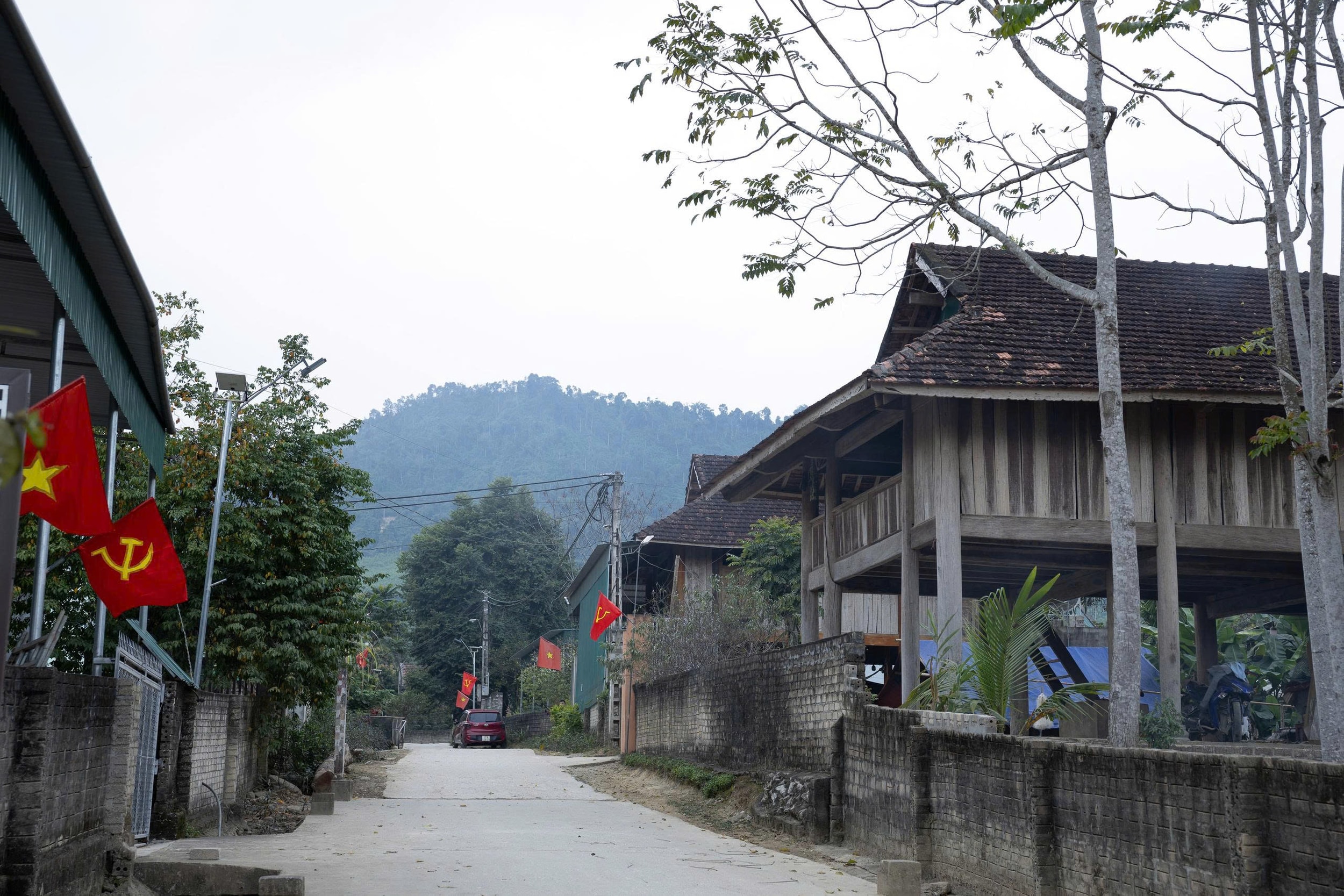
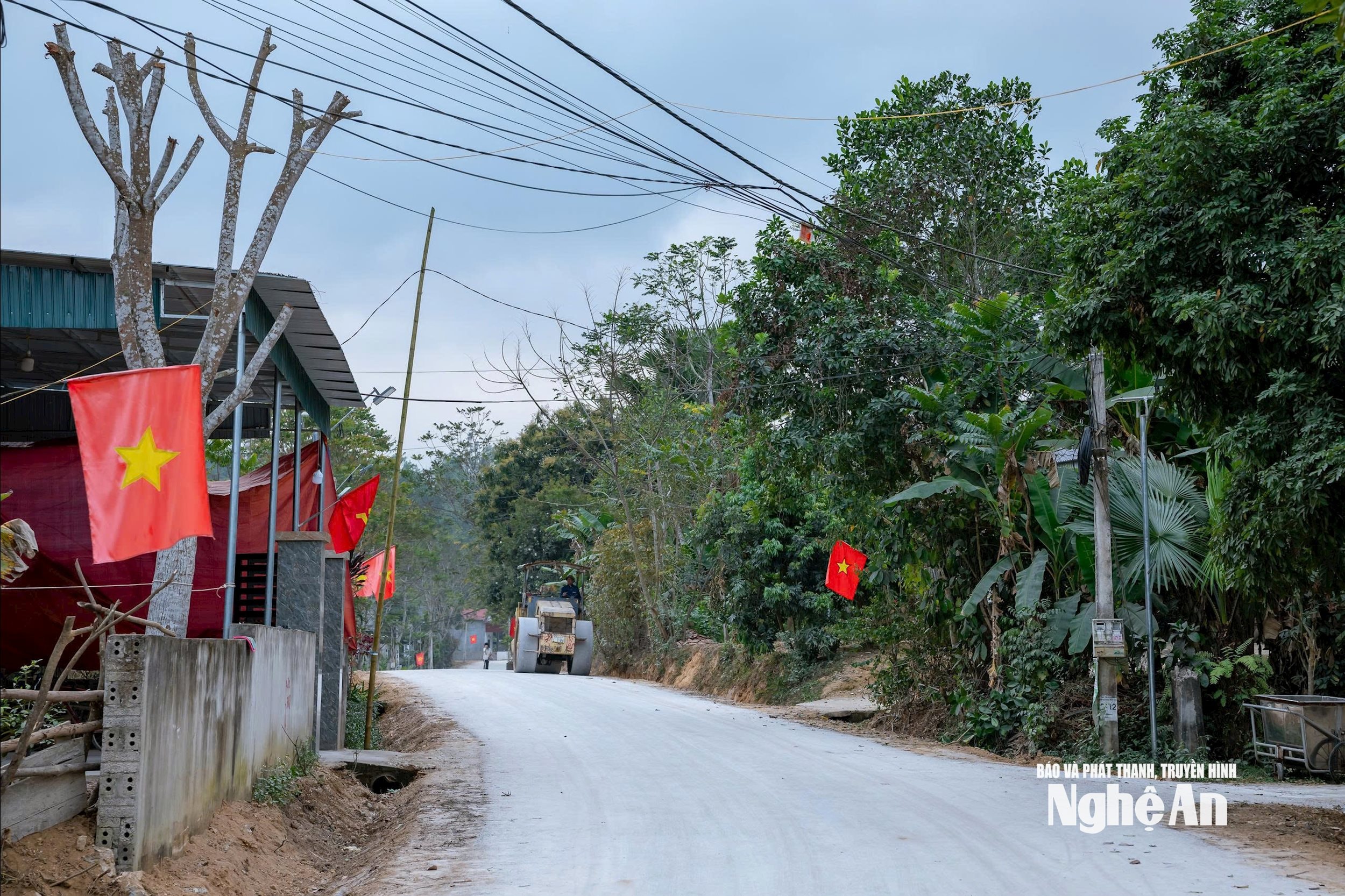
Alongside economic transformation, the appearance of the villages has also changed dramatically. The once muddy dirt roads have now been paved with concrete, connecting the residential clusters. The national power grid has been extended to every household, contributing to a noticeable change in the village's appearance, creating a bright, green, clean, and beautiful environment, and ensuring security and order.
In particular, over the years, the Party branch and the village committee have mobilized the people to contribute 363 million VND to build a security electricity system; and raised 740 million VND to build 3.2 km of concrete roads within the village to serve the new rural development program. Every year, people also voluntarily contribute 300,000 VND per household to maintain and repair internal village roads, creating favorable conditions for daily life and production.
The villagers also actively participate in the "National Unity for Building a Culturally Rich Life" movement. The percentage of culturally exemplary families is projected to reach 91.8% in 2025, and the percentage of families participating in sports is expected to reach 43%; cultural and sports activities are regularly maintained. For many years, the village has had no students dropping out of school; the number of students passing entrance exams to universities and colleges is higher each year, and currently, 14 students from the village are studying at universities nationwide, becoming a source of pride for each family and the entire village of Kieng.
Amidst the changing times, Kieng village still preserves the essence of Thai ethnic culture. A Thai cultural preservation club has been established with 30 members from multiple generations, diligently teaching traditional folk songs and melodies. The sounds of the reed pipe, drums, and simple songs resonate during community gatherings. This not only contributes to improving the cultural and spiritual life of the villagers but also educates the younger generation to be proud of and preserve their ethnic identity, strengthening unity within the community.
Nevertheless, behind this bright picture, there are still concerns. Within the village, there are still cases of people falling into drug abuse, requiring decisive action from the Party branch, the government, and relevant authorities to maintain peace in the village. This also serves as a reminder that the journey forward for Kieng village still contains many obstacles and challenges.
Establishing Party branchesunite,strong
Based on local experience, and in her role as Party branch secretary, Ms. Sam Thi Lan has always recognized that for a Party branch to be strong, it is essential to first create unity and consensus throughout the entire political system at the grassroots level.
From the moment she assumed the position of Party Branch Secretary, she was always concerned about how to ensure that every resolution issued reflected "the breath of life," was accepted by the people, and was voluntarily implemented. According to her, only when the Party branch truly served as the nucleus of unity and the center for gathering the people's strength could any movement truly have depth.
With that in mind, Ms. Lan dedicated much of her time to visiting each household, especially those facing difficulties, to listen to their concerns, share her experiences, and guide them on how to do business and organize their lives. She was always present in the village's activities, directly participating in the meetings of the branches and youth groups, listening to the opinions of members, and promptly resolving problems. She also noted innovative ideas and effective methods to concretize into practical resolutions and action plans.
The Party branch has identified studying and following Ho Chi Minh's ideology, ethics, and style as a regular task, linked to specific actions. Each Party member not only reflects on their own conduct and self-corrects but also joins hands in sharing with the community. Annually, the Party branch mobilizes each member to contribute 200,000 to 300,000 VND to a fund to help poor households. From this fund, over the past five years, many families with particularly difficult circumstances have received support to repair their homes, giving them a foundation to improve their lives. These small but persistent actions have spread a spirit of responsibility and compassion, becoming the "glue" that binds the community together, creating the strength for Kieng village to progress.
The journey of building a strong Party branch in Kieng village has not been smooth. In reality, the majority of young people have gone away to work, making the task of recruiting and developing Party members very difficult. Faced with this challenge, the Party branch did not falter but persistently nurtured the masses from the grassroots level, paying attention to those who were dedicated and committed to the village, gradually creating a successor generation.
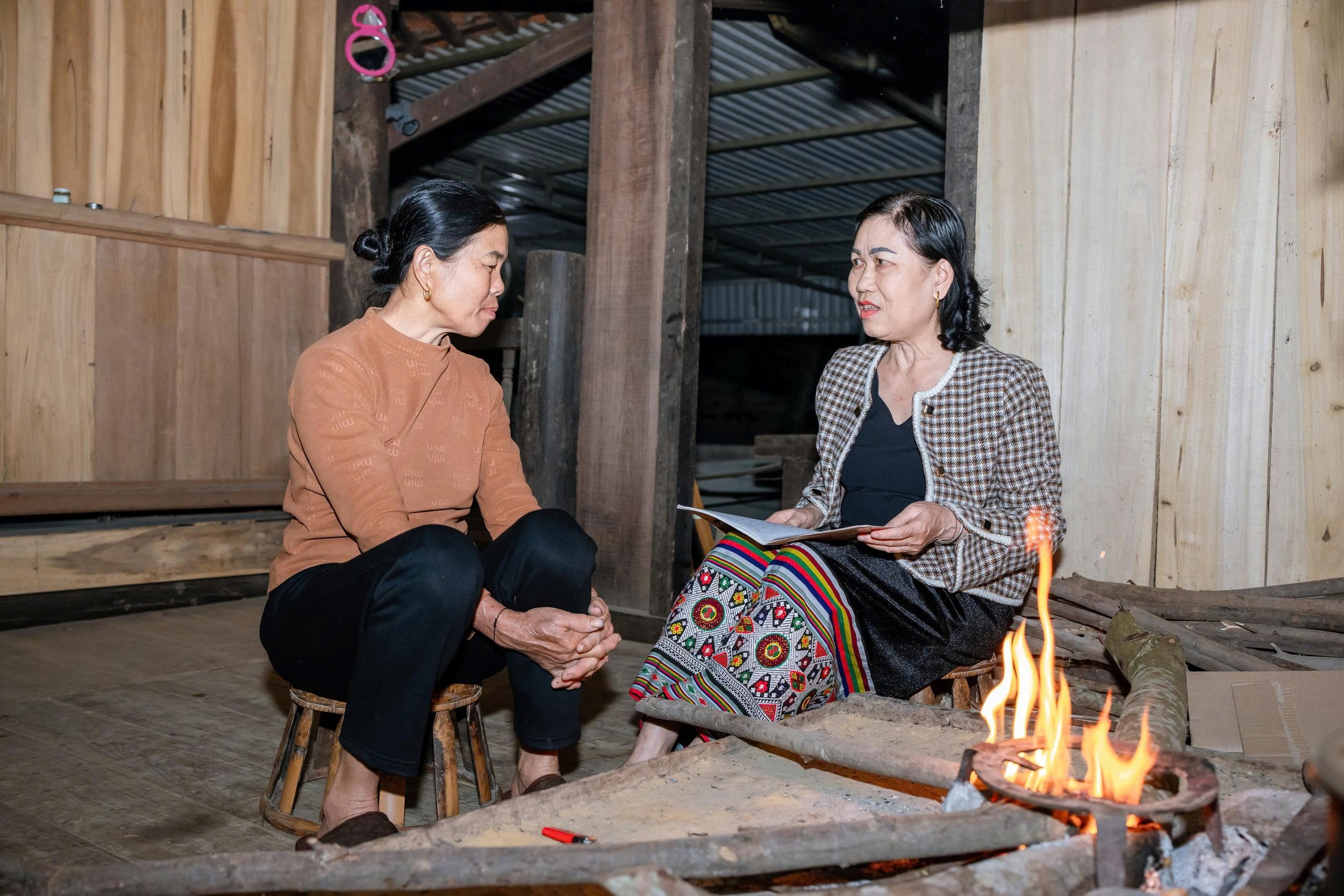
In the new context, with the implementation of a two-tiered local government system, the tasks facing the Party branch committees and branches are increasingly demanding. Party branch secretary Sam Thi Lan strives to learn, actively participates in digital transformation training courses, uses the electronic Party member handbook, and proactively equips herself with a computer to read newspapers and watch news, thereby providing official information to Party members and gradually improving the quality of Party branch activities.
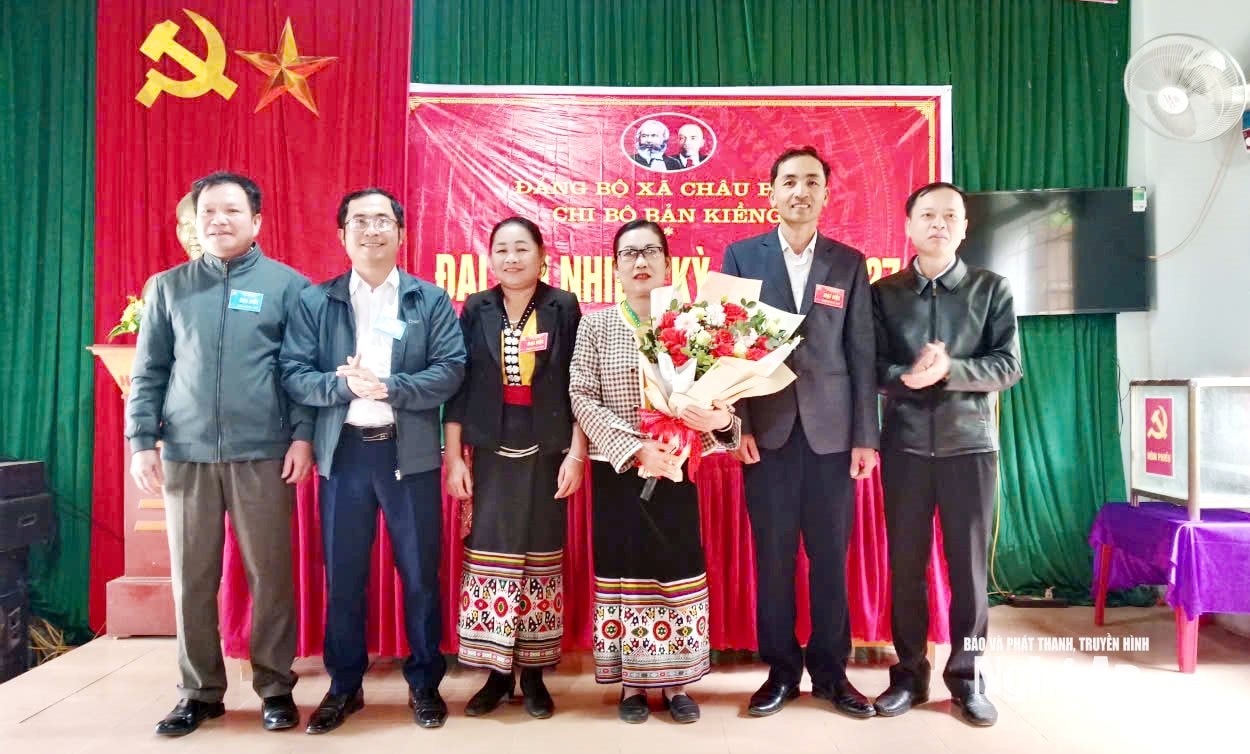
Thanks to this unity, discipline, and sense of responsibility, from 2020 to 2025, the Kieng village Party branch was ranked as an outstanding performer for five consecutive years. In particular, Comrade Sam Thi Lan was honored as one of the three outstanding Party branch secretaries in Nghe An province and one of 96 outstanding Party branch secretaries nationwide, recognized by the Central Organizing Committee on the occasion of the 96th anniversary of the founding of the Communist Party of Vietnam.


