Journalists and the footsteps that tell stories...
Thanh Phuc•June 6, 2025 13:45
I still believe that, in this age of overwhelming technology, amidst news stories written in the blink of an eye by machines, journalists – first and foremost – must be travelers. Only by traveling and writing can the lifeblood of journalism be preserved, and each word breathe and resonate with life.
The paths we've traveled, the stories we've left behind.
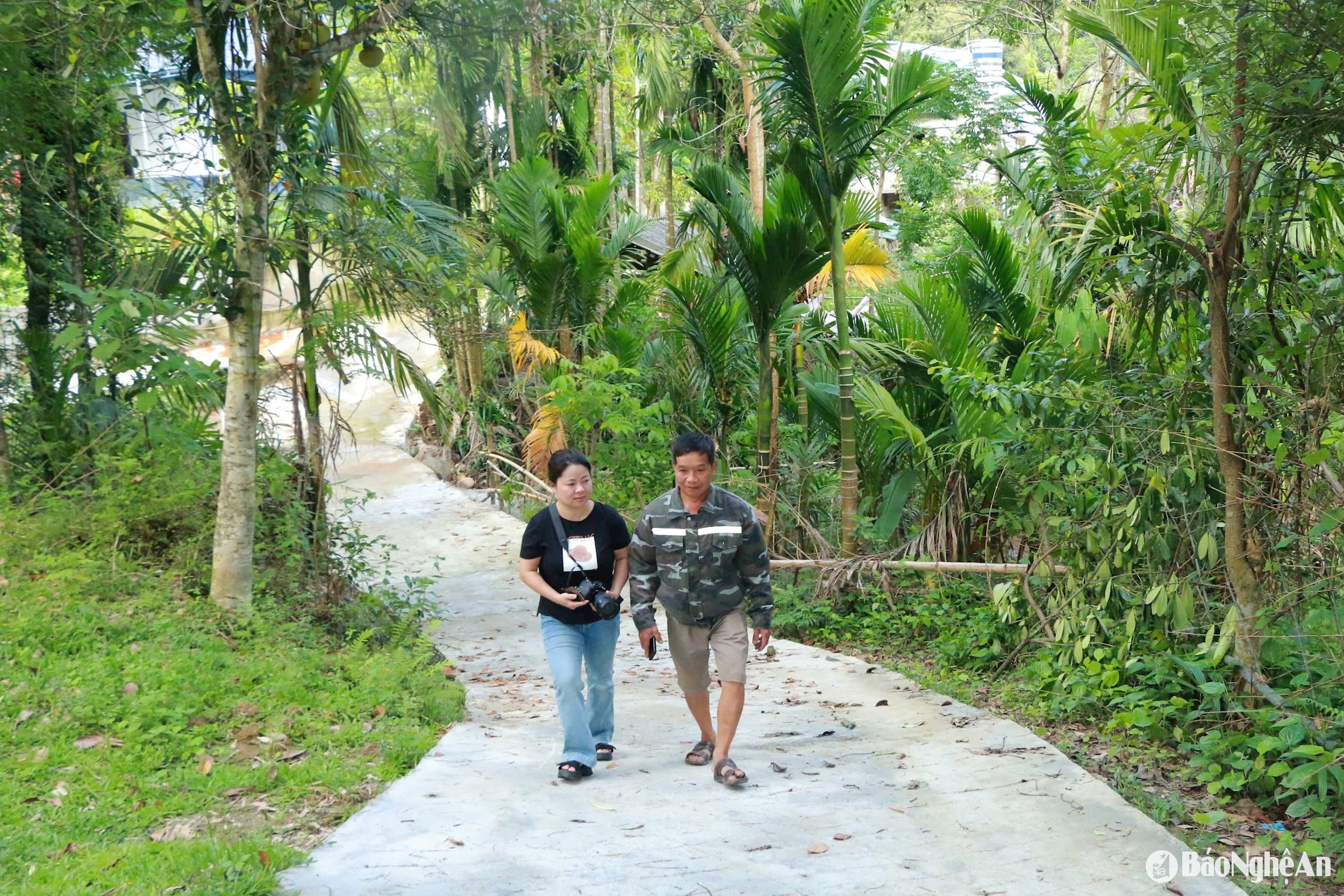
Visiting the fields with officials from Lien Phuong village (Chau Kim commune, Que Phong district). Photo: Khanh Ly
In nearly twenty years of journalism, I can't remember how many roads I've traveled, how many villages I've visited, how many people I've met, documented, and recounted their stories through words. But I vividly remember the feeling of my first trip in 2006, when I had just graduated and was offered a probationary position. At that time, I had no concrete concept of the profession in my mind.
On that trip, I went with my colleagues to the communes of Huu Khuong, Huu Duong, and Nhon Mai – communes located in the reservoir area of the Ban Ve hydroelectric power plant in Tuong Duong. At that time, the hydroelectric project was underway, and people were preparing to leave their ancestral homes to move to resettlement areas. I went there to listen, to see, and to record the thoughts and aspirations of the people before this major turning point in their lives.
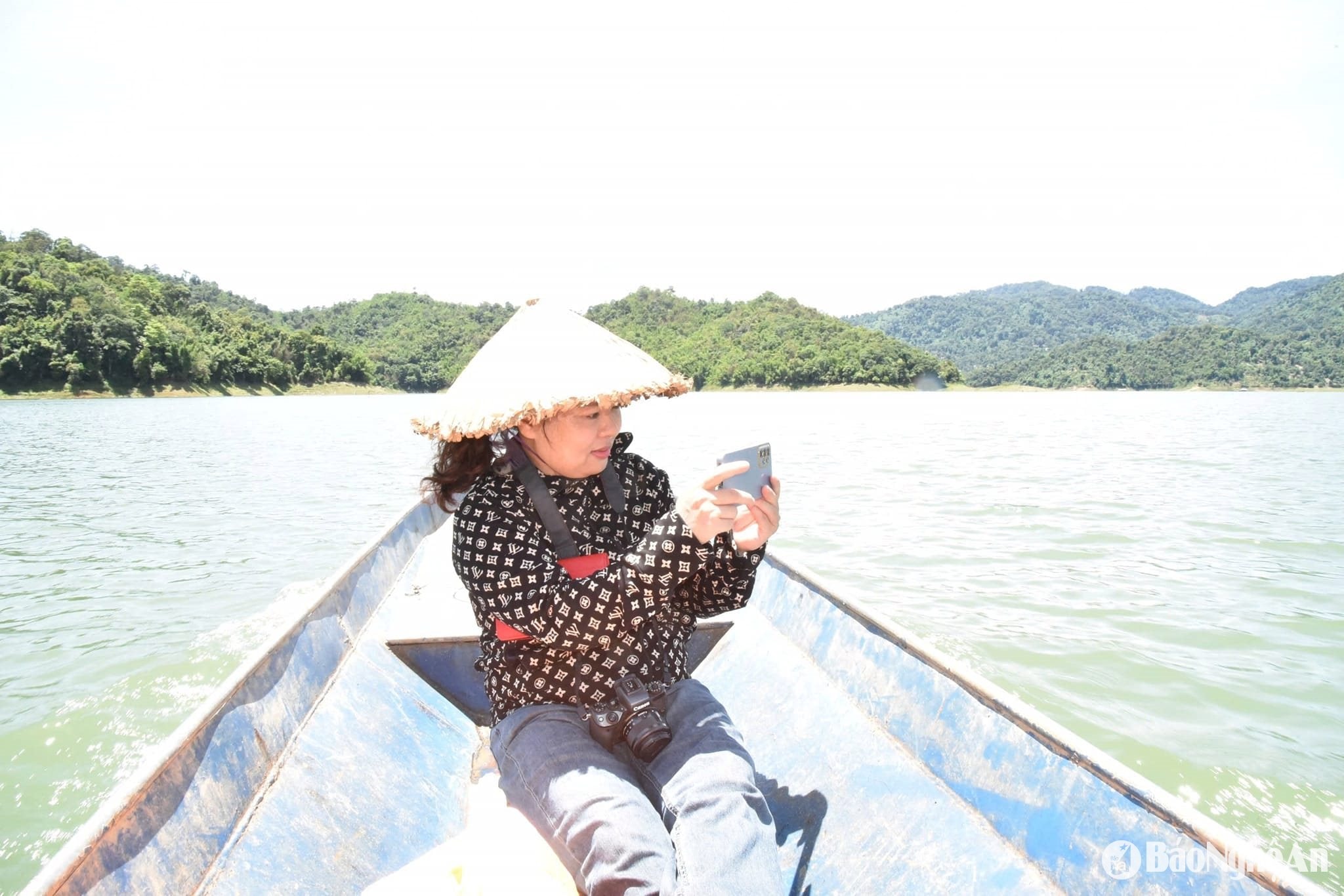
Upstream on the Hua Na hydroelectric reservoir (Dong Van commune, Que Phong district). Photo: Hoai Thu
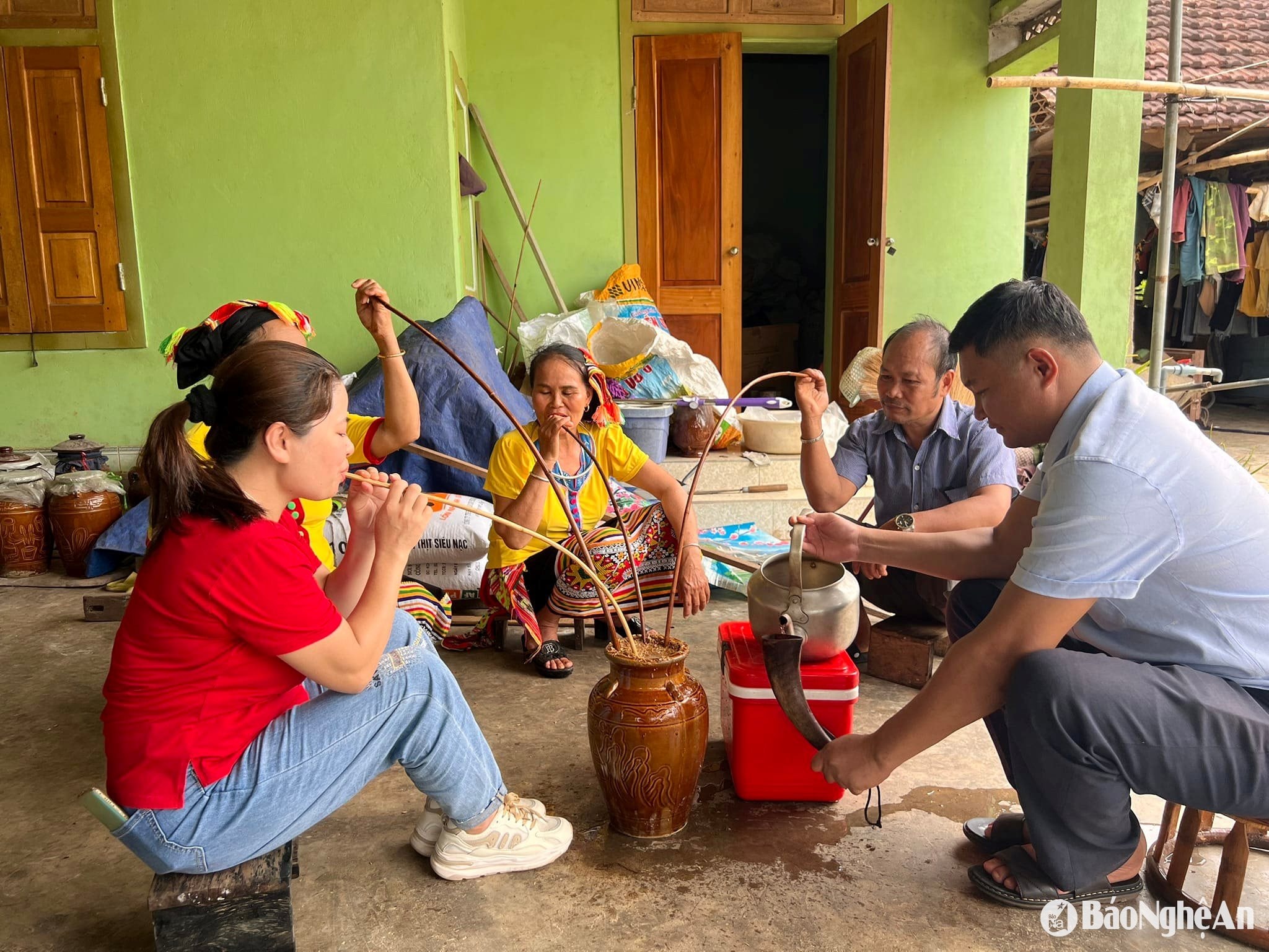
The journey began with rough, rocky paths, then involved a boat trip along the Nam Non River, navigating through sheer cliffs, listening to the murmur of the ancient forest, and feeling the poignant peace of a land on the verge of being submerged. By the crackling fire, the villagers poured me a cup of rice wine, telling me stories of their ancestors, their village, their fields, and their worries about the future in their new home…
I will always remember the gaze of an old man by the fire, his voice slow and deliberate: “I was born here, lived here almost my whole life, and now that I’m old, I have to leave. I’ll miss it so much, I’ll cherish it, I’ll feel so much regret…” Those words weren’t particularly special, but they resonated with me – because I was there to listen, to witness, and to write them down, with all the emotions of someone working in this field.
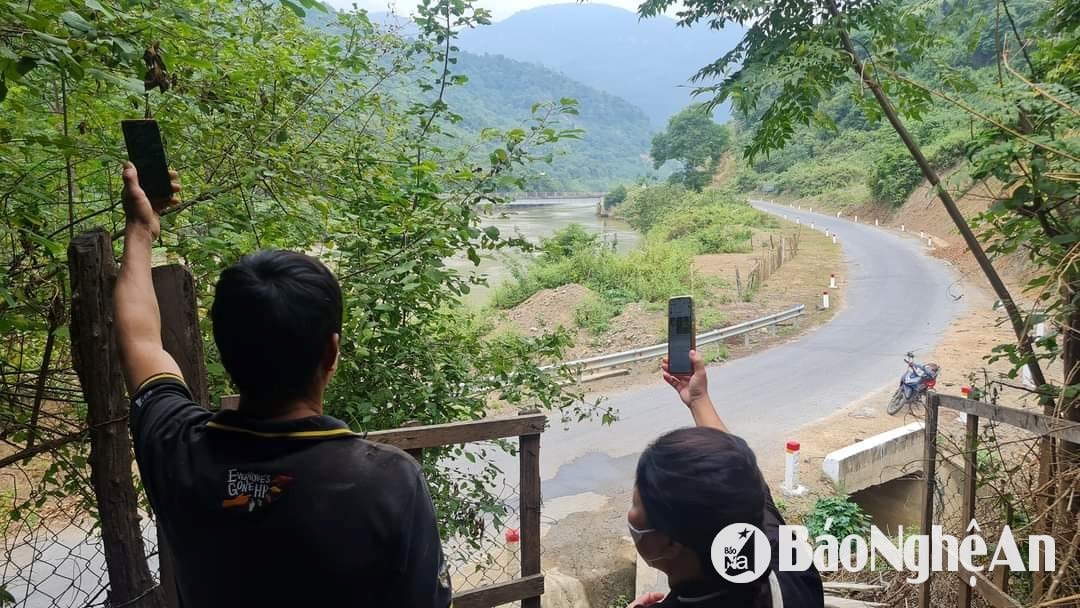
Working in remote, mountainous areas where phone signals are intermittent, requires "catching signals" on the go. Photo: Hoai Thu
Since then, I embarked on a career in journalism, through relentless travel. It was 2009 or 2010, I don't remember exactly, but it was my first time visiting the remote school in Huồi Máy village, Cắm Muộn commune, Quế Phong district – a place considered completely isolated from the outside world. From the commune center, we traveled dozens of kilometers by motorbike through the forest, then left our bikes behind and, armed with sticks, waded through streams and cut through the woods. Each step felt like stepping into a different world – a place where children wore thin clothes in the cold, and teachers brought rice and salt to the village to teach.
There, I wrote about a classroom without desks or chairs, about students diligently writing on stone slabs, about the teacher tying a raincoat to the wall to block the wind. The article didn't have many photos, just a few scribbled notes and a trembling emotion. But I received many letters from readers. Some asked for directions, others sent books and supplies for the students. That was the first time I truly felt the power of journalism: connecting souls.
Photo: T.
"
"Is there any pain that can be expressed solely through words? No! But I believe that if you write with empathy, based on what you have witnessed firsthand, then the words will be able to tell a story."
I often rode on the back of a motorbike driven by a local official in the cold, misty regions like Keng Du, Muong Long, and Huoi Tu (Ky Son district), and I felt seasick as if I were on a ship, my stomach churning like a frying pan. The roads were steep, the ravines bottomless; a single misstep could send us plunging to the abyss. In some sections, the motorbike couldn't go any further, and we had to walk, each person sniffing the heels of the person behind just to reach the top of the slope.
Someone asked, "Why don't you write at home? It would be less strenuous." I just smiled. Because if I hadn't gone, how would I have known that amidst the vast wilderness, there were Hmong people pioneering in forest-based economic activities, building models for cultivating native trees, and establishing family farms and large-scale farms? They didn't say much, they just showed me the cardamom plants, tea plants, and plump black pigs, then smiled kindly. These small models in the middle of the vast forest were enough to ignite hope.
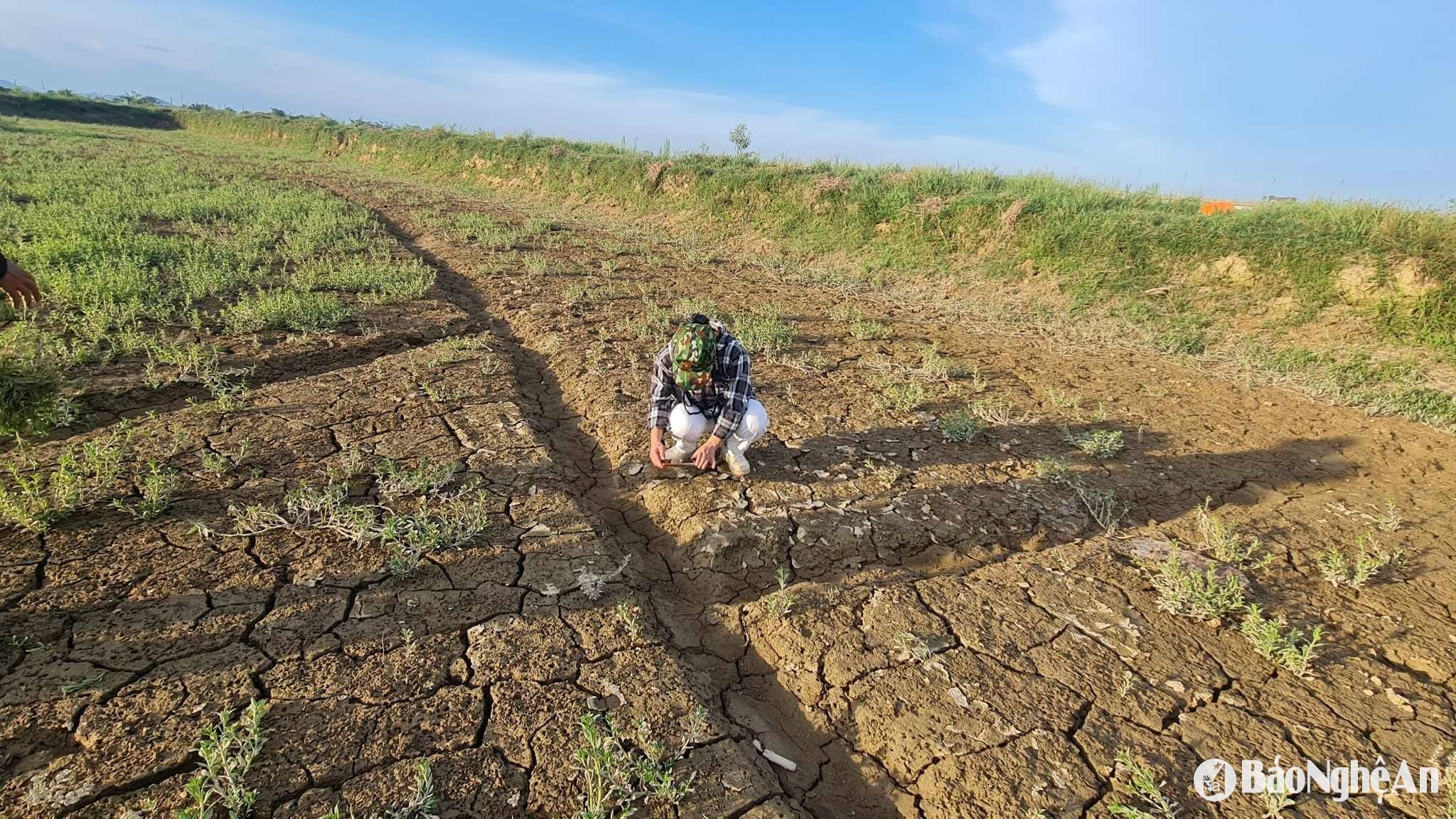
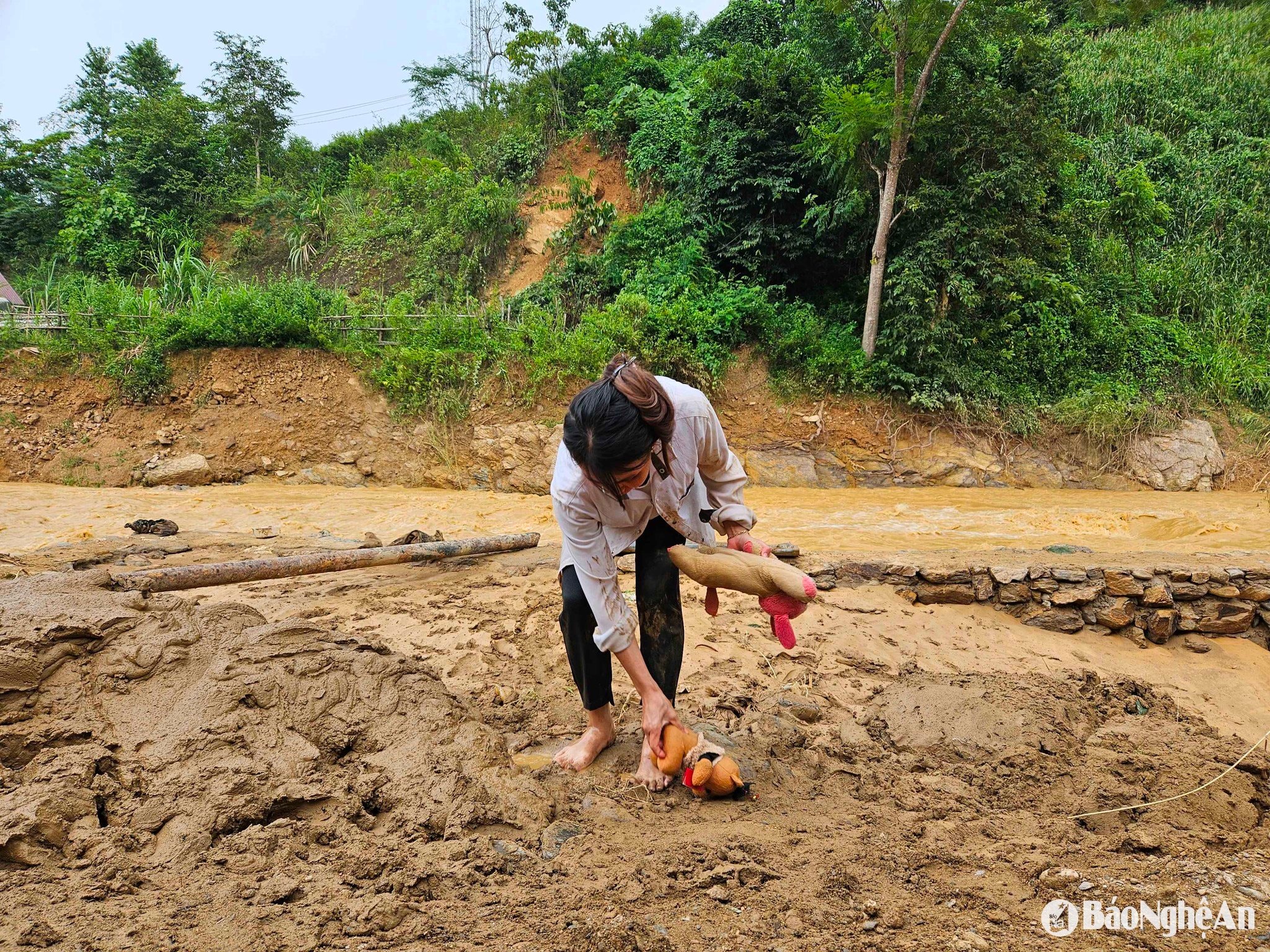
If I hadn't gone, I wouldn't have been able to record the footage, take the photos, or feel the pain of the people after the flash flood. Photo: Hoai Thu
I've worked in flood and landslide-prone areas like Tuong Duong and Ky Son – places where every rainy season brings immense suffering to people. Once, I arrived just as it started raining heavily, roads were blocked, signal was lost, clothes were soaked, my camera was wet, and I couldn't reach my family. But I managed to capture the moment a mother found her schoolbag amidst the mud, and the late-night embrace of a father and son in their makeshift tent after the flood. Can pain be expressed solely through words? No! But I believe that if you write with empathy, based on what you've witnessed firsthand, then words will tell the story.
Dust and words in the age of AI
Enjoying traditional rice wine with the villagers of Phẩy Thái Minh hamlet, Tiên Kỳ commune (Tân Kỳ district). Photo: PV
Journalism, despite its hardships, offers unparalleled experiences: seeing clouds swirling over the peak of Pha Danh, hearing the resounding gongs echoing through the Muong Long valley, sitting by the fire with the village elders recounting stories of village founding. I was once invited by the Mong, Thai, and Kho Mu people to drink rice wine, sing call-and-response songs, and be seen off to the top of the hill. I received such warmth and affection from the villagers that no gift could be more precious. Every time I return, I get to meet the villagers again, shake their hands tightly, and say, "You've come to visit us again? How are you? Stay a little longer..."
People say AI is changing the world, and journalism is no exception. News can now be synthesized in seconds, and articles can be generated by a machine in just a few minutes of data input. But I still believe, and firmly believe, that journalism only has value when journalists are committed.
Following the subject into the production fields in Na Ngoi (Ky Son). Photo: Reporter
Machines cannot smell the mud after a flood, nor can they feel the trembling hands of villagers carrying bowls of cold rice after the murky water swept everything away... Machines cannot feel moved when they see teachers in the highlands braving the sun to bring each student to class, nor can they be touched when they hear a child whisper: "I'll study hard so I can become a doctor and treat the people in my village"...
Only by traveling and writing, by setting foot in places, seeing with my own eyes, hearing with my own ears, living and eating with them, can I write articles with soul, with real-life material, that touch the hearts of readers. Amidst the sea of information flowing every day, I choose to slow down. I choose to wade through streams, cling to mountains, and linger longer on small details. Just to listen carefully to a voice, to record a glance, to understand more about a person's life. In an age of fake news, junk news, and information saturation, truth, vibrancy, and genuine emotion are the most precious things that journalism needs to preserve. That is something that AI cannot replace.
Without venturing out, going out, and experiencing things firsthand, the article will lack the breath of life. Photo: PV
Journalism – ultimately – is about traveling and writing. A journalist's career isn't long. But I always believe in the value of articles earned through sweat, dust, empathy, and sleepless nights in the deep forests. I don't know how much longer I can travel, how much longer I can climb mountains and cross streams. But I know that as long as I have the strength and the love for the profession, I will continue to travel. Because only by traveling can I truly be myself. Because only by writing can I feel I'm contributing a small part to connecting, sharing, and illuminating...
On the 100th anniversary of Vietnam's Revolutionary Press Day, I sit here writing these lines on a June afternoon, my memories swirling like a stream in early spring. I know I am not alone on this journey. Out there, countless colleagues – true journalists – are still clinging to their assigned areas, their subjects, and their lives. While others choose to write from a keyboard, I choose to go. Because for me, journalism is not just a profession. It is another life, a life lived among the people, amidst hardship and kindness.
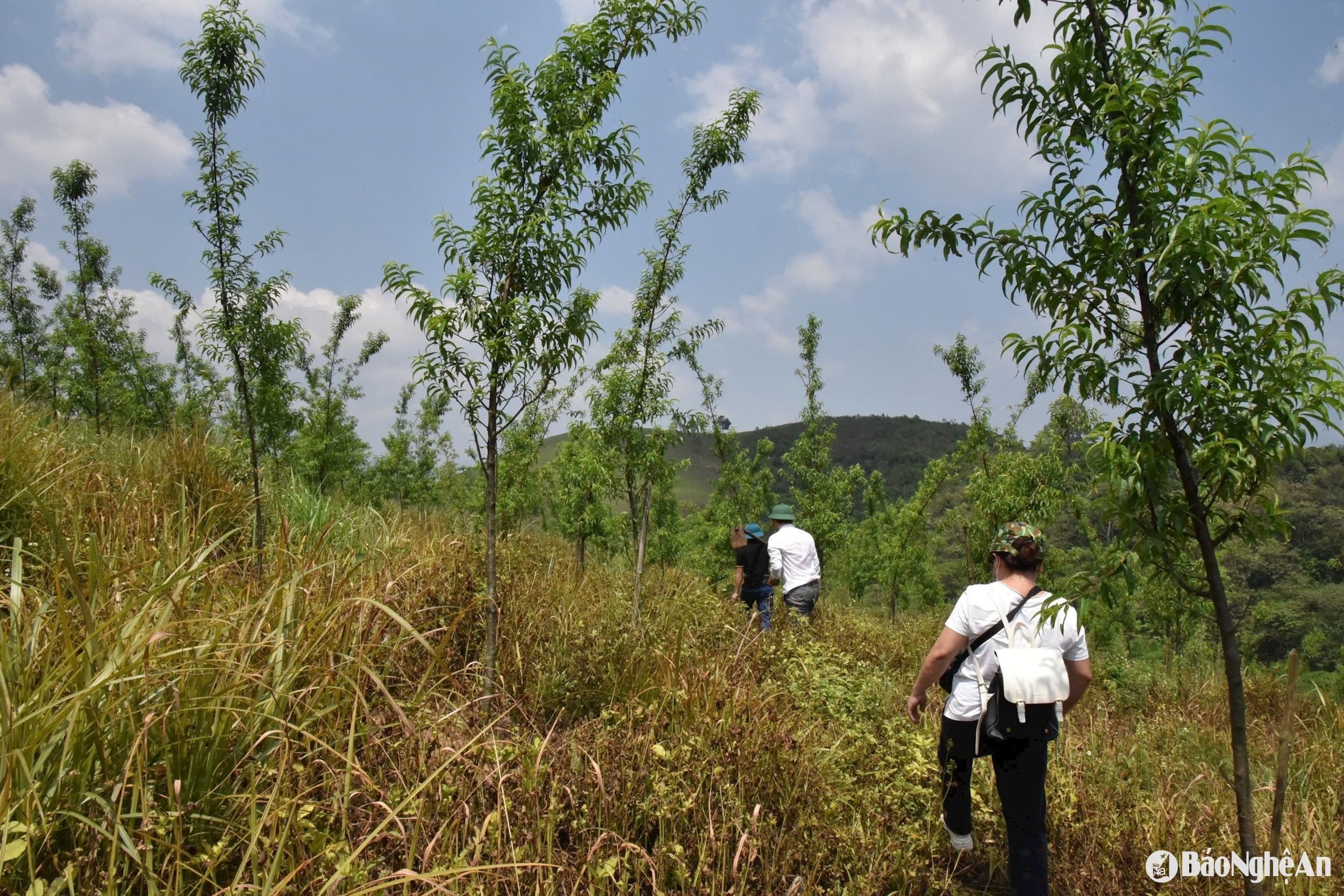
We stopped to rest after a long journey climbing mountains and crossing streams to reach the production area of the Mong ethnic group in Tri Le (Que Phong). Photo: PV
"
A journalist's career is short. But I always believe in the value of articles written with sweat, dust, empathy, and sleepless nights in the deep forest. I don't know how much longer I can keep going, how much longer I can climb mountains and cross streams. But I know that as long as I have the strength and the love for the profession, I will keep going...
Your comment has been submitted and will be displayed after being reviewed by the editorial team. The editorial board reserves the right to edit comments to comply with the newspaper's content guidelines.

.jpg)