The person who "ignited" change in Xoóng Con
The first computer in Xoóng Con village, Tam Thái commune, cost as much as a buffalo. But what's even more remarkable isn't its monetary value, but the determination of the person who conquered it. From someone who had never touched a computer before, Mr. Lương Văn Cường, the Party Secretary of Xoóng Con village, became a driving force behind digital transformation at the grassroots level, helping the Party branch escape the risk of becoming "back to square one" and igniting the aspiration for change in this remote and disadvantaged mountainous region.

Thanh Phuc - Hoai Thu/Present:Hong Toai• June 7, 2026
*****
The first computer in Xoóng Con village, Tam Thái commune, cost as much as a buffalo. But what's even more remarkable isn't its monetary value, but the determination of the person who conquered it. From someone who had never touched a computer before, Mr. Lương Văn Cường, Secretary of the Party Branch of Xoóng Con village, became a driving force behind digital transformation at the grassroots level, helping the Party branch escape the risk of becoming "back to square one" and igniting the aspiration for change in this remote and disadvantaged mountainous region.

The road to Xoóng Con village, in the mountainous Tam Thái commune, winds through the verdant slopes of the mountains. Stilt houses nestled at the foot of the hills, cornfields in full bloom, and the cheerful chatter of children in front of the community center create the characteristic peaceful atmosphere of a highland village. Despite living in the "Indochina cauldron," during these days, Mr. Lương Văn Cường, the Party Secretary of Xoóng Con village, still maintains the habit of going from house to house, visiting each villager to understand their living conditions. More than thirty years ago, when he began participating in village affairs, he also traveled these same roads. And today, with his hair streaked with gray, he remains the most familiar person with each household and each situation in the village.


Xoóng Con is one of the most remote villages in Tam Thái commune. With 49 households and nearly 200 inhabitants, mostly of the Thái ethnic group, the lives of the people here mainly depend on slash-and-burn agriculture and the exploitation of non-timber forest products under the forest canopy. The remote terrain, difficult economic conditions, and uneven levels of education mean that many policies and initiatives face numerous obstacles when implemented at the grassroots level. In this context, Party building work in the village also faced significant challenges. At one point, the Xoóng Con Party branch was at risk of "re-abandoning," becoming one of the areas included in Project 01 of the Standing Committee of the Nghệ An Provincial Party Committee on consolidating and developing grassroots Party organizations. Recalling that time, Mr. Cường pondered for quite a while.

Nearly three decades of working in the village have taught him that for a Party branch to be strong, it must first be connected to the people. He carried out mobilization efforts to encourage villagers to participate in movements, visited individual homes to disseminate policies and guidelines, and sought out and nurtured outstanding individuals with perseverance and responsibility. From facing the risk of declining Party membership, the Xoóng Con Party branch has gradually been strengthened and developed. By 2024, the branch had escaped the risk of "re-empty membership," had 10 members, and was rated as having successfully completed its tasks. This achievement is the culmination of the involvement of the entire political system, but also marks the persistent efforts of the Party branch secretary who has dedicated nearly half his life to village affairs.
Among the 14 Party branches in the commune, Xoóng Con is the most challenging area in many respects. However, it is precisely in this difficult place that dedicated grassroots officials like Mr. Lương Văn Cường emerge. What is admirable about this Party branch secretary is not only his devotion but also his unwavering commitment to achieving his goals. From a Party branch once at risk of "re-establishing membership," by 2024, Xoóng Con had 10 Party members and was gradually stabilizing its operations.
Mr. Lu Van May - Secretary of the Party Committee of Tam Thai Commune
.jpg)
However, just as one difficulty was resolved, a new requirement arose. The implementation of a two-tiered local government model and the promotion of digital transformation at the grassroots level rendered traditional working methods increasingly unsuitable. From reports, resolutions, and party branch meeting documents to party member handbooks and attendance records, everything was done digitally. For many, this was an inevitable trend of the times. But for a party branch secretary like Mr. Cuong, who only completed the 9th grade and had been accustomed to working with pen and notebook for many years, it was truly an unprecedented challenge.

Mr. Tran Anh Tu, Standing Committee member and Chairman of the Party Committee's Inspection Committee of Tam Thai commune, recalled that before the digital transformation was accelerated, Mr. Cuong was a very enthusiastic and responsible grassroots official, but almost "a blank page" when it came to information technology. Mr. Cuong himself admitted this.
For many years, he meticulously handwrote all reports, documents, and meeting materials before photocopying them. Computers were a foreign concept to him. However, what impressed many was that instead of avoiding or citing his age to refuse change, he chose to start learning from the most basic things.
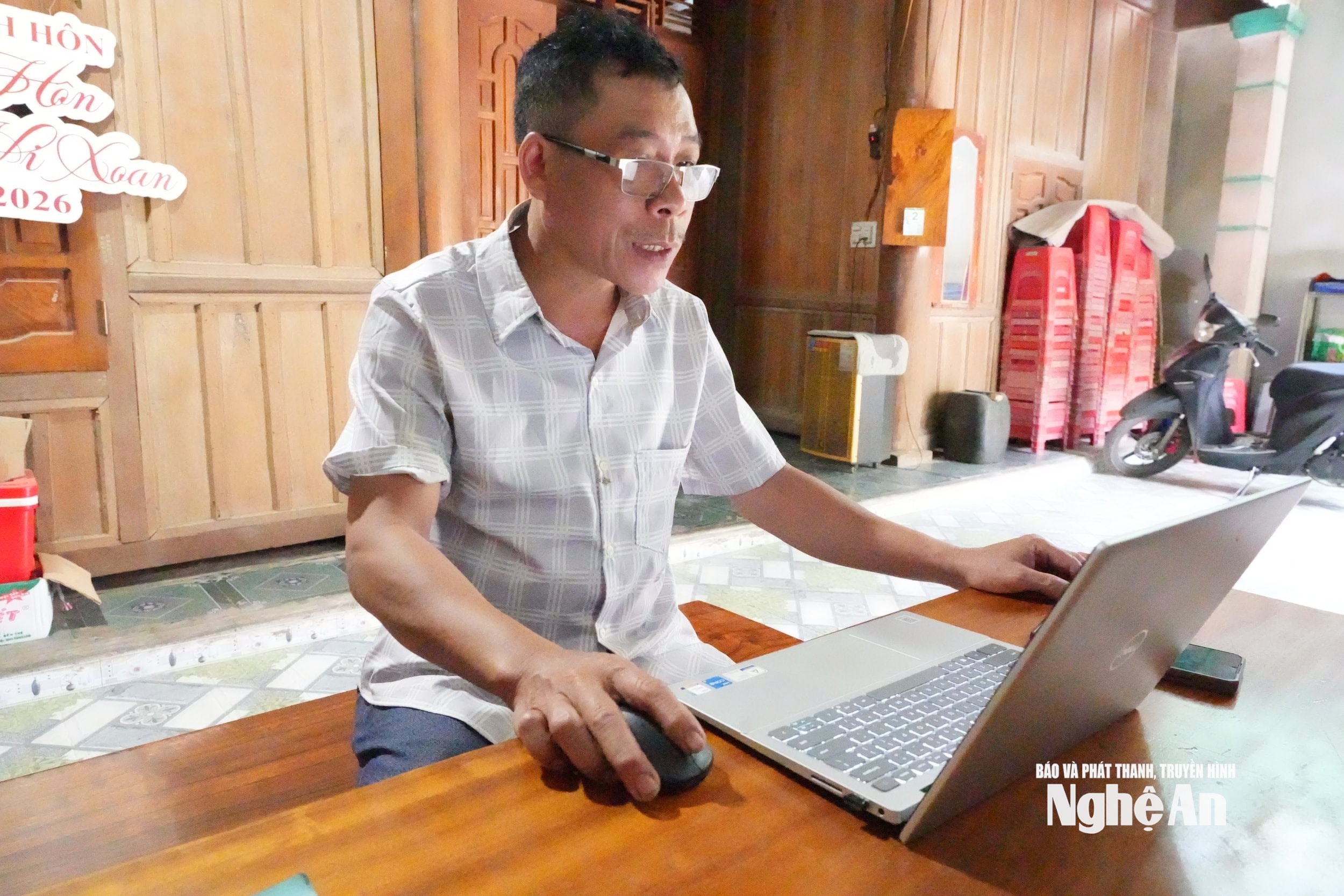
The turning point came in July 2025, after many meetings, when the Xoóng Con village decided to use its communal fund to buy a laptop for work. In many places, that's a normal investment. But in a remote, impoverished village, the value of the laptop was equivalent to a buffalo – a significant asset for each family. The laptop was purchased with high hopes from the entire village, but unfortunately, no one knew how to use it. From the Party branch secretary to the village head, no one had ever touched a computer or typed on a keyboard. However, instead of seeing it as a barrier and making excuses to avoid it, Mr. Lương Văn Cường was determined to learn.
The early days of learning technology were filled with bewilderment. He started with typing and word processing books. During the day, he worked at a printing shop, and in the evenings, he would open his computer and practice typing. However, the more he learned, the more he realized that technology wasn't as easy to master as he thought. There were characters he couldn't find no matter how hard he searched. There were operations he tried repeatedly but still got wrong. Not knowing who to ask or where he was going wrong, he decided to seek direct guidance.
.jpg)
The person he sought out was Mr. Luong Van Tin, a skilled computer expert, former Chairman of the Farmers' Association of the old Tam Thai commune, who had recently retired under Decree 178. Bringing his newly purchased computer, Mr. Cuong traveled to Mr. Tin's house, more than 10 km away, and asked to stay for a week to learn. "People go to learn a trade, but I went to learn how to use a computer," he said with a laugh.
For a whole week, the nearly 50-year-old Party branch secretary learned the basics: how to turn on the computer, how to position his hands on the keyboard, how to type Vietnamese diacritics, and how to save a document. A man nearing 50 years old began learning again like a beginner, patiently memorizing each character on the keyboard, his fingers, once accustomed to holding machetes and hoes for farming, now persistently typing each letter.
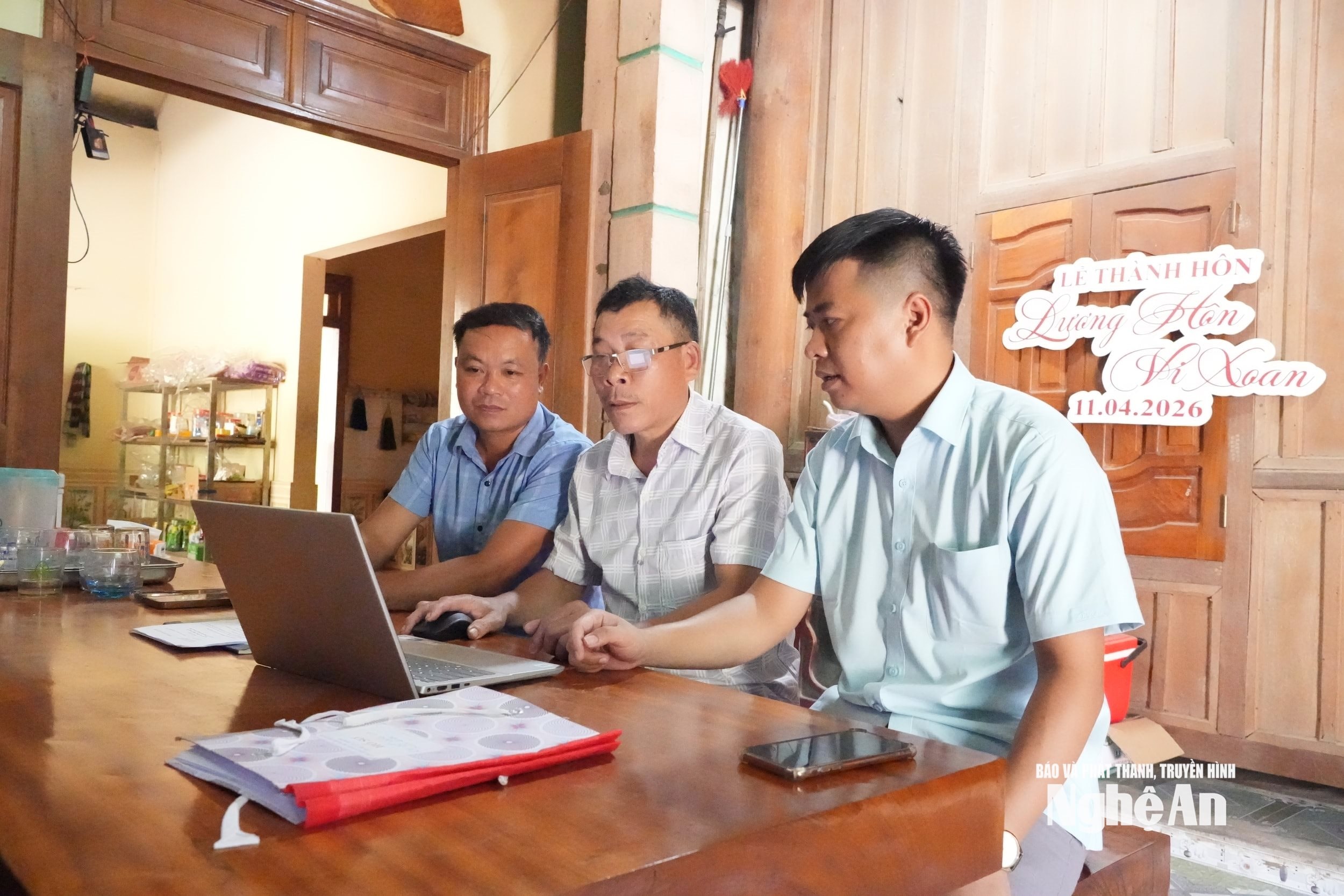
After those days of intensive training, Mr. Cuong continued to bring his computer to the commune office, taking advantage of every opportunity to ask officials for further guidance. He learned with rare perseverance. When he was pointed out for spelling mistakes repeatedly, he happily corrected them. Even when he had to repeat operations many times to remember them, he never gave up.
The culmination of that journey was the first year-end performance review, entirely written on a computer. He spent three days and nights completing the document. Three days and nights typing every word, adjusting every line, checking for every small error. During the day, he was busy with production and village affairs, and at night, he would sit in front of the computer screen until late. His wife watched him diligently working at the keyboard, worrying about his health while admiring his determination.
.jpg)
.jpg)
What is commendable is that Mr. Luong Van Cuong did not consider learning technology as just his own story. Once he became more proficient, he began sharing his knowledge with other party members in the branch and local officials. From having to write and photocopy all documents by hand, branch meetings now feature well-organized and clear written materials. From being hesitant about using digital tools, many grassroots officials are now more confident in adopting technology. This change not only improves the quality of work but also creates a positive ripple effect. Young party member Vi Van Tuan said that what he learned from the branch secretary was not just computer skills, but also the spirit of daring to think, daring to act, and not being afraid of challenges. If an older person is so determined to learn, then the younger generation has even less reason to be complacent and stagnant.
When we first bought the computer, neither I nor Mr. Cuong knew how to use it. But Mr. Cuong was the first to learn and take the initiative. Seeing him, nearly 50 years old, still patiently learning each computer operation, I told myself that since I was younger, I couldn't be left behind. Inspired by Mr. Cuong's pioneering spirit, I boldly learned new things, gradually applying technology to my work and encouraging others to follow suit."
Mr. Vieng Van Thin - Head of Xoong Con village
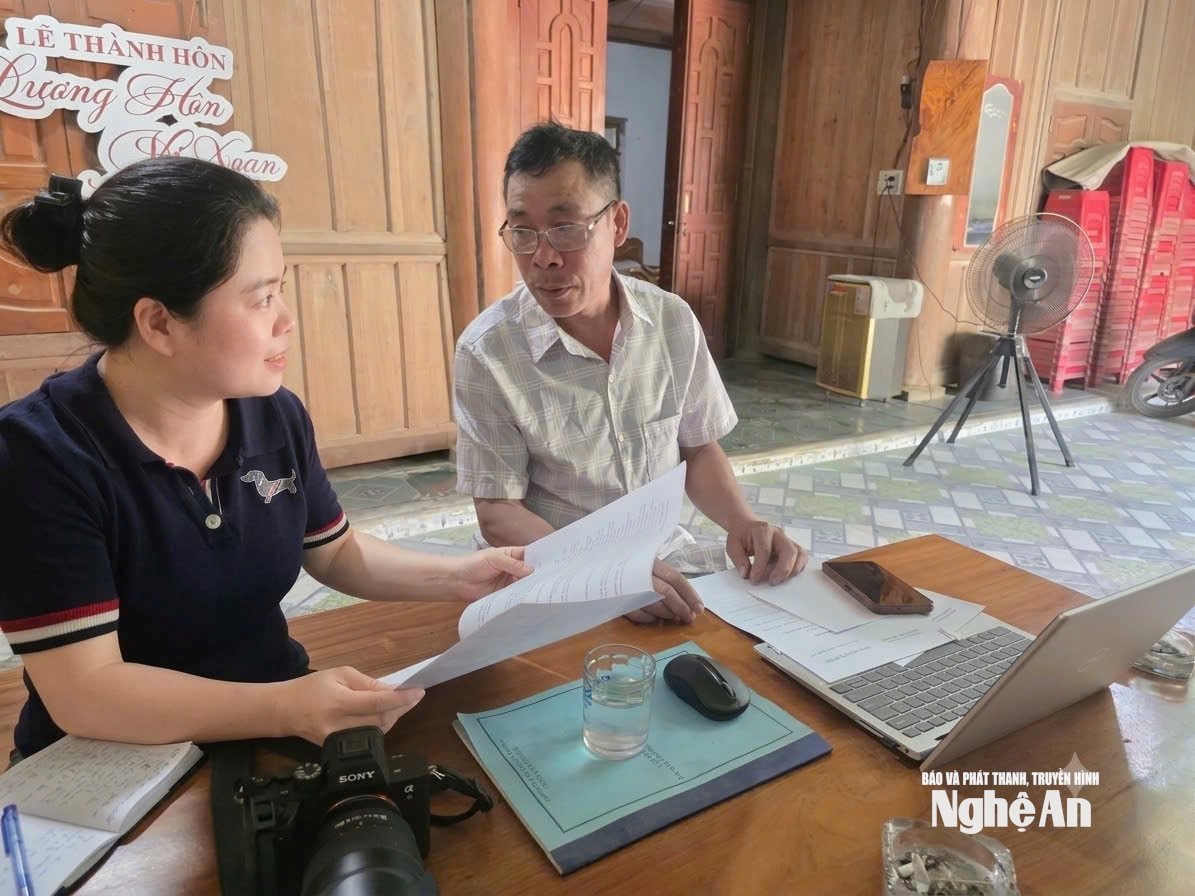
Late in the afternoon, Mr. Luong Van Cuong took us to visit a Party member's corn field in the village. Along the way, he used his phone to record the production situation, took a few photos, and explained: "Nowadays, many things can be learned online. If you want to know which crops are suitable or what techniques are needed, you can look them up. Later, the villagers' agricultural products can also be sold online," Mr. Luong Van Cuong said. According to him, many villagers now use smartphones, but mostly for entertainment. More importantly, they must learn to transform technology into a tool to serve their lives. For the people to do that, officials must lead the way, becoming pioneers for change.
.jpg)
On the way back from the fields, traversing the steep mountain slopes, the Party branch secretary continued the conversation about the new corn harvest, about plans to help the villagers sell their agricultural products online... In his eyes shone a simple but powerful belief that the people of the highlands can absolutely keep pace with development if they have access to knowledge and technology.
From the journey of a remote village party secretary conquering the keyboard, one thing becomes clear: digital transformation doesn't begin with technology, but with people. And in the most remote villages, where conditions are still very difficult, that change sometimes originates from a grassroots official who dares to step beyond their own limitations to pave the way for the community to move forward.