
Vietnamese people spend billions of USD importing medicine every year.
Domestic production capacity remains at a basic level, meaning nearly 55% of the country's pharmaceutical needs must be met through imports.
According to a report by the Vietnam Industry Research and Consulting Joint Stock Company (VIRAC), Vietnam's pharmaceutical imports have been showing a strong upward trend in recent years. In 2016, the value of pharmaceutical imports was estimated at approximately US$2.5 billion, a 10% increase compared to the previous year.
With a rapidly growing economy, rising incomes are driving consumers to spend more on living expenses and healthcare. This is further reinforced by the fact that per capita spending on these items in Vietnam is relatively low compared to many other countries, at around $30-40 per person per year, compared to $96 in developing countries and $186 globally.
However, under current conditions, Vietnam is only ranked in the top 3 on the world pharmaceutical map, among the 17 countries with developing pharmaceutical industries (pharmerging countries). This is due to a lack of capacity to independently invent new drugs and the fact that only a few businesses have the technology to meet high EU standards such as GMP or PIC/S.
Given this situation, nearly 55% of domestic pharmaceutical demand must be met through imports, including a large quantity of patented drugs, which are expensive because they cannot be produced domestically.In 2016, Vietnam imported approximately $2.5 billion worth of pharmaceuticals, with branded pharmaceutical products, mainly imported from France, Germany, and the United States, accounting for nearly $200 million.
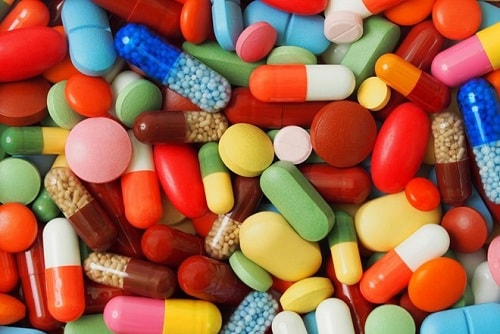 |
Hundreds of millions of dollars worth of pharmaceuticals are imported into Vietnam every year. |
From here, the main import sources are clearly divided according to product segments, with Europe (France, Germany, the UK, Switzerland) and the US mainly supplying branded pharmaceuticals, while India and China supply low-cost medicines.
With over 13,000 hospitals, polyclinics, and health centers, distribution through this channel helps ensure sales for suppliers. A report by Maybank Kim Eng Securities (MBKE) also indicates that over 70% of the total national drug expenditure (approximately $3 billion) is contributed through this channel.
However, the regulations for selecting winning bids for drugs, initiated by Circular 01 (effective June 1, 2012) of the Ministry of Health, prioritized "low price," further intensifying the already fierce competition in the ETC market. Simultaneously, it created numerous shortcomings and distorted the management of drug quality and drug bidding processes. Many large companies in this market were overtaken by unknown competitors in less than a year after the regulations were implemented.
"Circular 01/2012, upon implementation, faced numerous complaints regarding the situation where drugs awarded through tenders, despite being inexpensive, were of very poor quality," wrote Rong Viet Securities Company in a report.
However, after the Ministry of Health's Circular 01 was issued in 2012, Imexpharm fell into crisis, as it was unable to survive in the ETC channel.
Imexpharm's revenue through the ETC channel, which accounted for nearly 60% of total revenue in 2012, plummeted to a low of 13.4% three years later. Although it recovered in 2016, its share is still less than one-third of what it was before.
According to Rong Viet Securities Company (VDSC), the price-prioritizing regulation in Circular 01/2012, which prioritizes products exceeding 70 technical criteria points, has made Imexpharm's products less competitive compared to its rivals.Consequently, the company's revenue from hospital bidding channels has decreased sharply, even though its core products are antibiotics – which play a key role in prescriptions.
Although hope is returning to this pharmaceutical manufacturing company as revised regulations on drug bidding (Circular 36/2013, Circular 31/2014, and Circular 11/2016) create a better balance between price and quality, restoring Imexpharm's position in the ETC market is not a simple matter.
According to the General Department of Customs, as of August 15th, Vietnam had spent $1.7 billion importing pharmaceuticals, an increase of 5.8% compared to the same period last year ($1.6 billion). There are 5 pharmaceutical import markets with a turnover value of 100 million USD or more.accounting for 46.6% of the country's total pharmaceutical import value during the same period..Germany currently ranks first with a trade value of $187.7 million. This is followed by France with $180 million, India with $164.4 million, South Korea with $111 million, and Italy with $102.5 million. According to statistics, in 2016 Vietnam spent $2.563 billion importing pharmaceuticals (compared to $1.6 billion in the same period last year). The figures for 2014 and 2015 were $2.035 billion and $2.32 billion respectively. |
According to VNE


