
ERPA light source
Visiting the villages and hamlets of the border communes of Tri Le, Hanh Dich, Nam Giai, Thong Thu… in the mountainous district of Que Phong during this time, you will encounter many newly completed “small projects” such as roads, lighting, and cultural centers. You will hear the people excitedly recount their benefits from the policy of paying for reduced greenhouse gas emissions, and see their strong connection with the Pu Hoat Nature Reserve, working together with determination to preserve and protect the forest.

Nhat Lan - Vo Hai • December 31, 2024

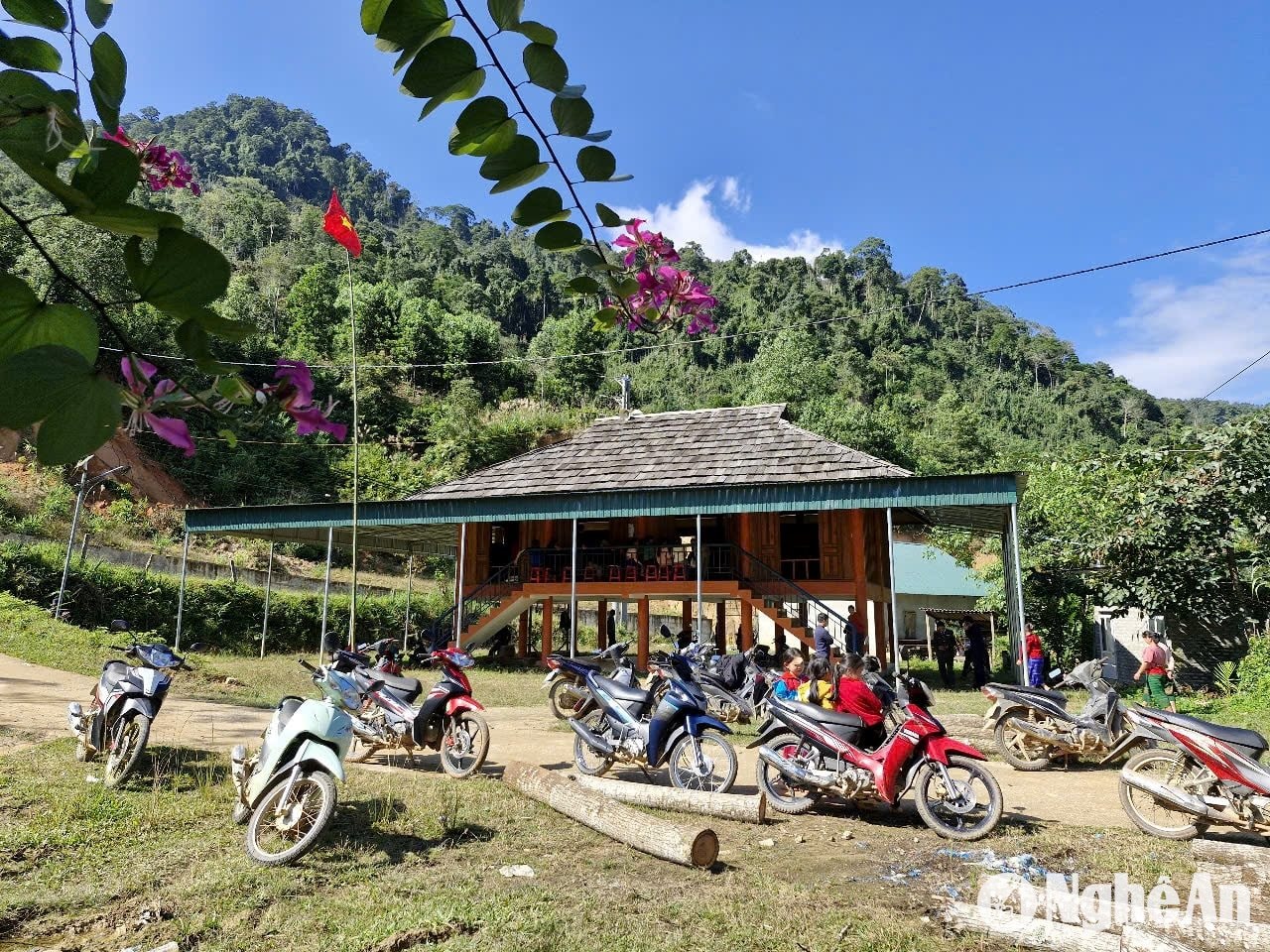
The "land of a thousand peach blossoms," Pà Khốm, inhabited by the Mong ethnic group in the border commune of Tri Lễ, is perched precariously on a high mountain. In previous years, reaching Pà Khốm was extremely difficult; leaving National Highway 16 required climbing a narrow, steep mountain trail over 1km long, with a slope exceeding 30 degrees. Now, getting to Pà Khốm is much easier, as most of the trail has been replaced by a concrete road nearly 20cm thick and 3m wide.
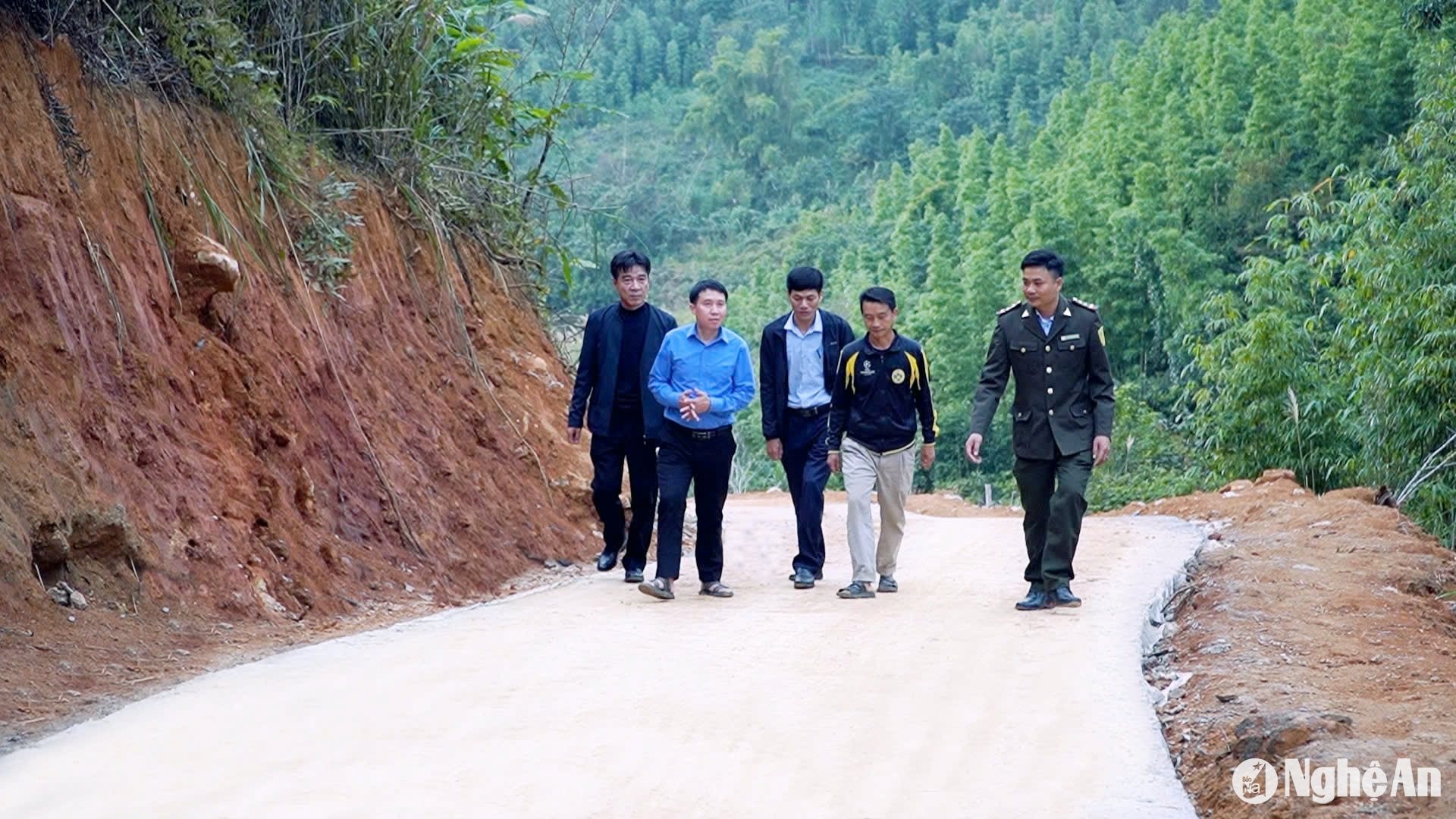
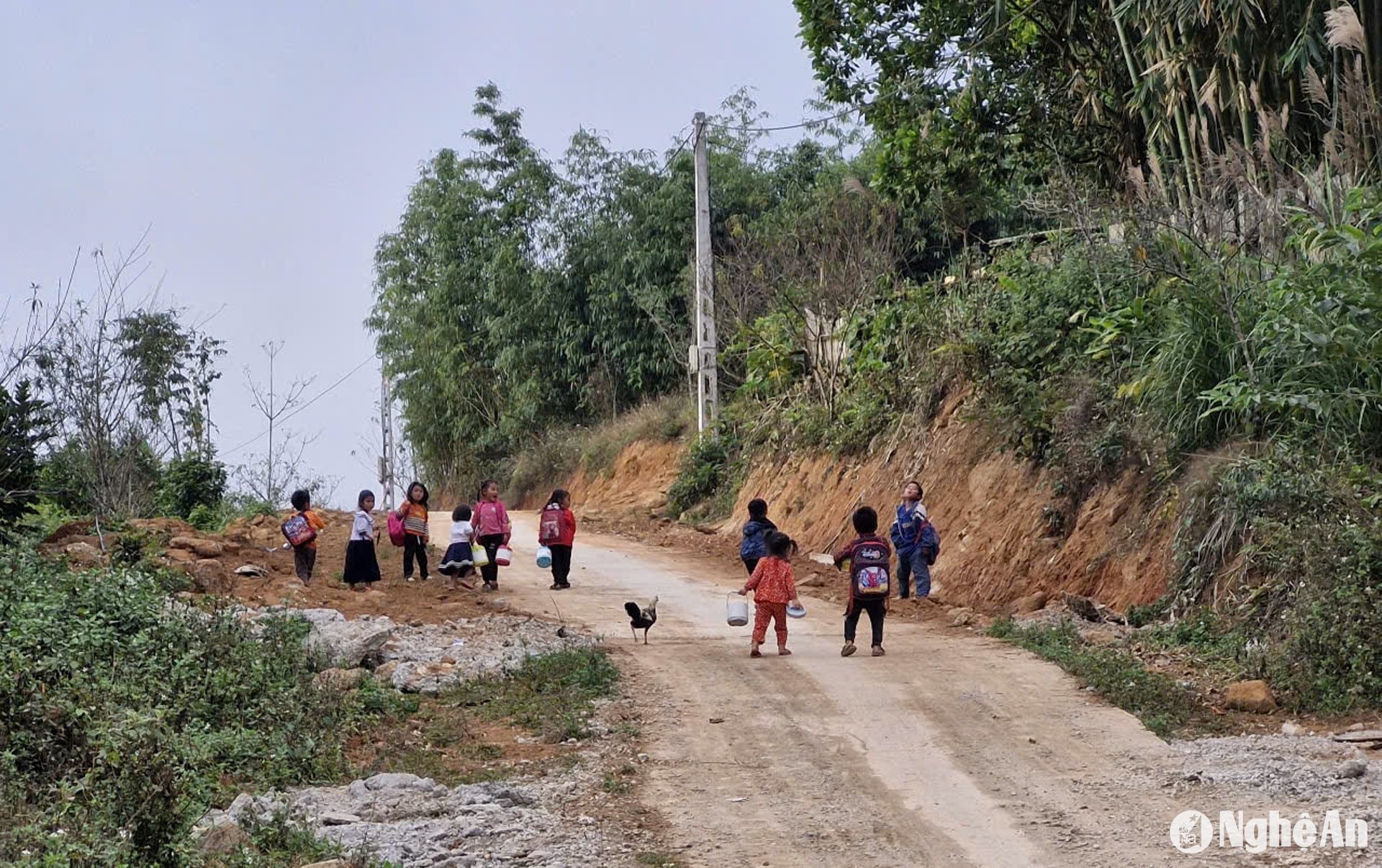
On the new road, Party Secretary Va Ba De excitedly recounted that around mid-2024, Pa Khom village received information from the Pu Hoat Nature Reserve and the local Party committee and government about the implementation of the Emission Reduction Payment Agreement (ERPA) for the North Central region, according to Decree 107/2022/ND-CP. Pa Khom village, comprising 98 households, was contracted by the Pu Hoat Nature Reserve to protect 293 hectares of forest along a 1.8km border. With the ERPA program, the forest protection budget was increased from over 100 million VND to 218 million VND, and they received 50 million VND in support for the construction of a public facility. With this support, the community unanimously agreed to build the main road.
“Previously, the road to the village was very difficult, very slippery during the rainy season, and people couldn't take their children to school because the school was far away, which was very sad for the children. Therefore, when we asked for their opinions, everyone said that the village needed the road the most and requested a concrete road to the village…” – said Party Secretary Va Ba De. He then recounted that with 50 million VND from the ERPA program, the village received additional support from benefactors, totaling over 200 million VND to purchase materials. The construction process was entirely carried out by the villagers themselves, so the new road was completed. Va Ba De happily added: “There’s only one more section left to have a concrete road all the way to the center of the village. But even this much makes the villagers very happy…”

When asked about forest protection efforts, the Party Secretary of Pa Khom village honestly stated that when the community received contracts for forest protection, some people still felt uneasy, believing that insufficient funding would affect their lives. Therefore, the Party branch and the village committee have actively propagated the government's policies to dispel these misconceptions among some villagers. “Preserving the forest means preserving a clean environment, protecting the water source for the village and for ourselves, and bringing additional benefits to each family and the community…” – said Party Secretary Va Ba De. We asked what projects they would choose to build in the following year if they received support. Mr. Va Ba De replied: “This requires a meeting to gather opinions from the people to reach a consensus. Without their input, the effectiveness will be low. But we will only choose projects that are truly necessary…”
.jpg)
Leaving Pà Khốm, we arrived at Tân Thái, one of the Thái ethnic minority villages in Tri Lễ commune. It was 5:15 PM, and the mountainous landscape was shrouded in the green shadows of the mountains in the winter afternoon. However, along the winding village road, the streetlights illuminated the uneven mounds of earth. Mr. Lương Văn Hành (70 years old), whose house is near the road, said that the streetlights had been completed just one week ago, "a welfare project done by the Pù Hoạt brothers for the people." According to the head of Tân Thái village, Lương Văn Dần, because the main road was still unpaved, nighttime travel was difficult for the villagers. In particular, the village has Tri Lễ 1 Primary School and a kindergarten, making it very difficult for the children to study at night. Therefore, the Party branch and the village committee decided to hold a meeting to gather opinions from the villagers. With 100% support from the community, the village reported to the Party committee, the commune government, and the Pù Hoạt Nature Reserve, and then proceeded with the procedures to build the streetlights. Forty streetlights along the main road, spanning over 800 meters, were completed, illuminating the area from 5 PM to 5 AM the following morning. “With the streetlights, the people of Tan Thai are very happy and grateful to the Pu Hoat Nature Reserve. Those working far away also shared their congratulations on Facebook…” – Village head Luong Van Dan happily stated.
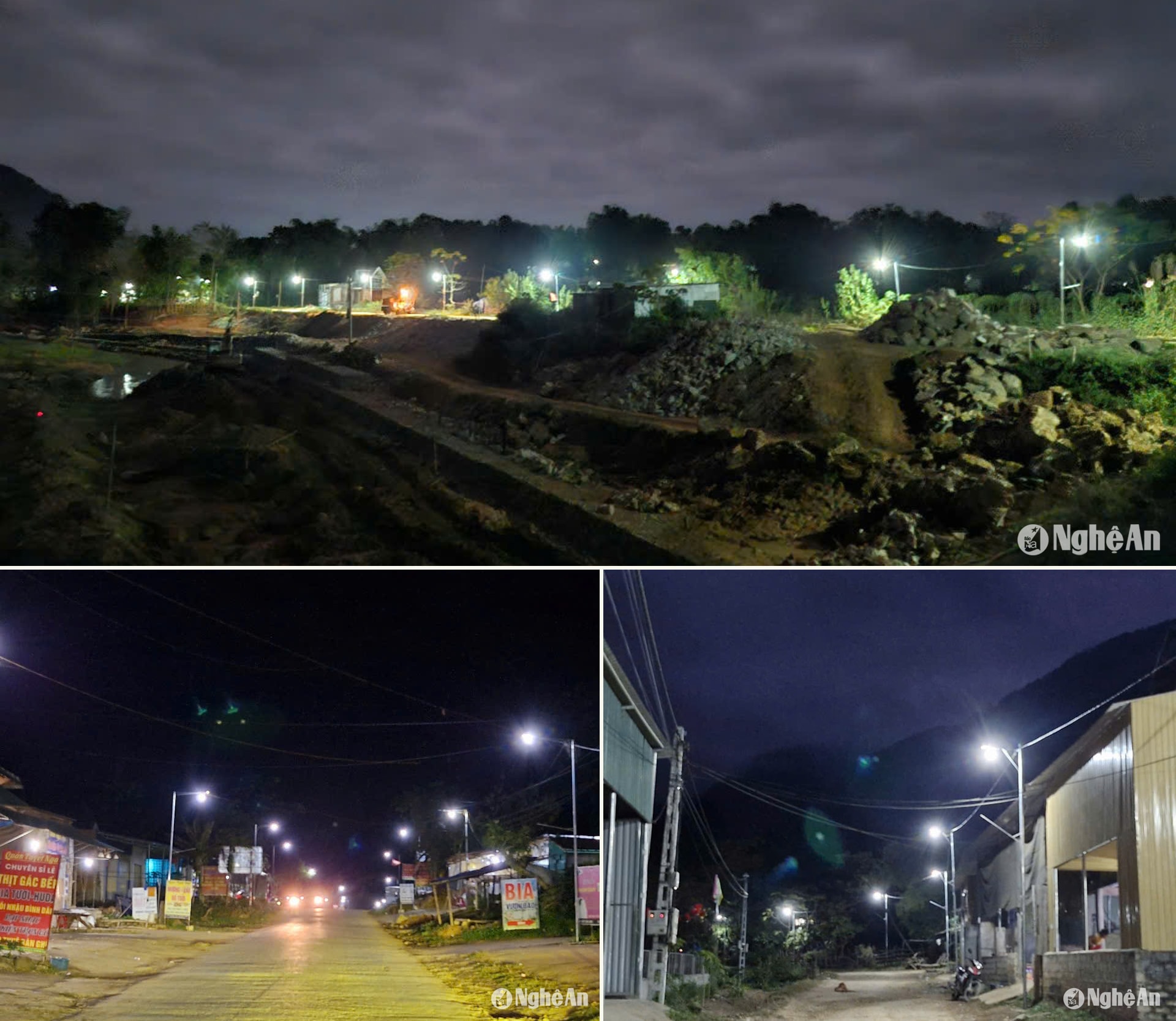
According to Village Head Luong Van Dan, the village has 65 households participating in protecting over 500 hectares of forest. This year, thanks to additional funding from the ERPA Program, they received over 300 million VND. This money is largely distributed to households participating in forest protection, with a portion used for forest patrols, and a further amount allocated to investing in village infrastructure and organizing events such as the National Unity Day and the Spring Festival. “Thanks to the awareness campaigns by the Party Committee, the government, and the Pu Hoat Nature Reserve, along with a substantial and stable annual funding source, the villagers' awareness has changed, and they strictly adhere to regulations, especially those of the Forestry Law…” – Village Head Luong Van Dan affirmed.
In the border commune of Hanh Dich, six villages – Long Thang, Long Tien, Hanh Tien, Quang Vinh, Vinh Tien, and Chieng – have all benefited from the ERPA program. For example, Long Tien village, entrusted with protecting over 1,000 hectares of forest by the Pu Hoat Nature Reserve, received additional funding from the ERPA program, totaling 462 million VND, and was supported with 50 million VND to build nearly 100 meters of concrete road leading to the production area. Ms. Vi Thi Minh, whose house is located right next to the new concrete road, said she was overjoyed when the community unanimously agreed to build the road. Now she is very happy and occasionally goes out to admire it.
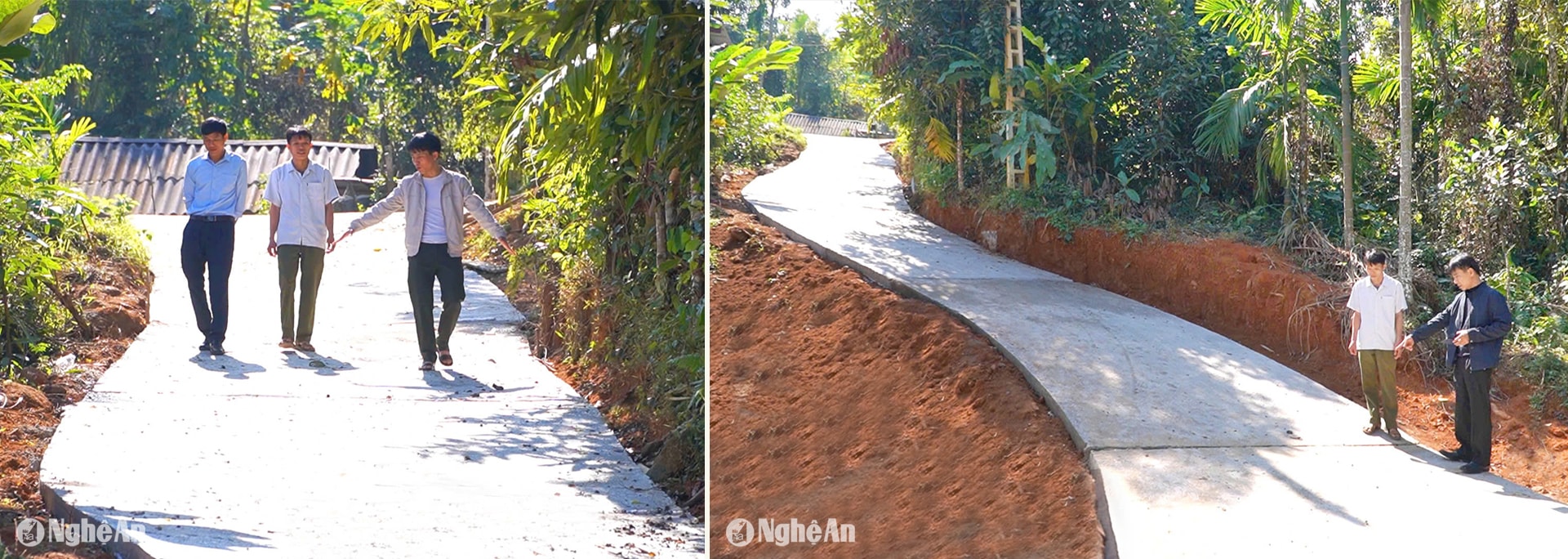
According to Long Tien village head Ha Van Cuong, the cost of materials for road construction was 67 million VND, and labor was mobilized from 144 households in the village. Mr. Cuong said: “The 462 million VND will be divided among the households, with the village keeping 62 million VND for forest patrols and other activities. The remaining 17 million VND will be covered by the community's forest protection fund. We plan to invest in a road lighting system in the village next year if we receive support…”
In Long Thang village, a newly built community cultural center, constructed of wood with a beautiful thatched roof, has been completed. Therefore, the villagers collectively wished to add a corrugated iron roof, both to provide shade for attendees during ceremonies and meetings, and to protect the building from rain, thus increasing its durability. This wish has been fulfilled, with a 200-meter-wide corrugated iron roof system installed.2The walls surrounding the cultural center were completed before the villagers held their meeting to elect a new village head...

The Emission Reduction Payment Agreement (ERPA) for the North Central region, signed on October 22, 2020, between the Ministry of Agriculture and Rural Development and the International Bank for Reconstruction and Development (IBRD), derives its revenue from forest environmental services, specifically focusing on carbon sequestration and storage by forests, thus reducing greenhouse gas emissions. Revenue from the ERPA program is disbursed according to Decree 107/2022/ND-CP to local communities contracted to protect forests in the North Central provinces, and to support livelihood activities, with a maximum allocation of 50 million VND per community per year.
.jpg)
Nghe An is one of the six provinces in North Central Vietnam that implemented Decree 107/2022/ND-CP quite early, but many regulations, when compared with practical realities, present obstacles and inadequacies, requiring considerable time for analysis and clarification. In fact, a compilation of problematic issues had to be submitted to central agencies for review and guidance. The ERPA program only truly began to be implemented among beneficiaries in mid-2024. Therefore, what was seen and heard from the border villages of Que Phong was truly fascinating.
Contacting the Management Board of Pu Hoat Nature Reserve, Director Nguyen Van Sinh explained that, given the limited budget for forest management and protection, resources from forest environmental services, reforestation, and especially from the ERPA Program are extremely important. Additional funding from the ERPA Program will help reduce pressure on the state budget, improve livelihoods, increase income and living standards for those involved in forest protection, especially ethnic minorities in high-altitude areas like the border district of Que Phong, thereby contributing to maintaining national security, defense, social order and safety, and increasing forest cover. Therefore, Pu Hoat Nature Reserve considers the implementation of the ERPA Program a crucial task and is proactively taking action early. As early as January 2024, Pu Hoat Nature Reserve selected personnel to establish a Steering Committee and developed a detailed work plan for each member to organize its implementation.
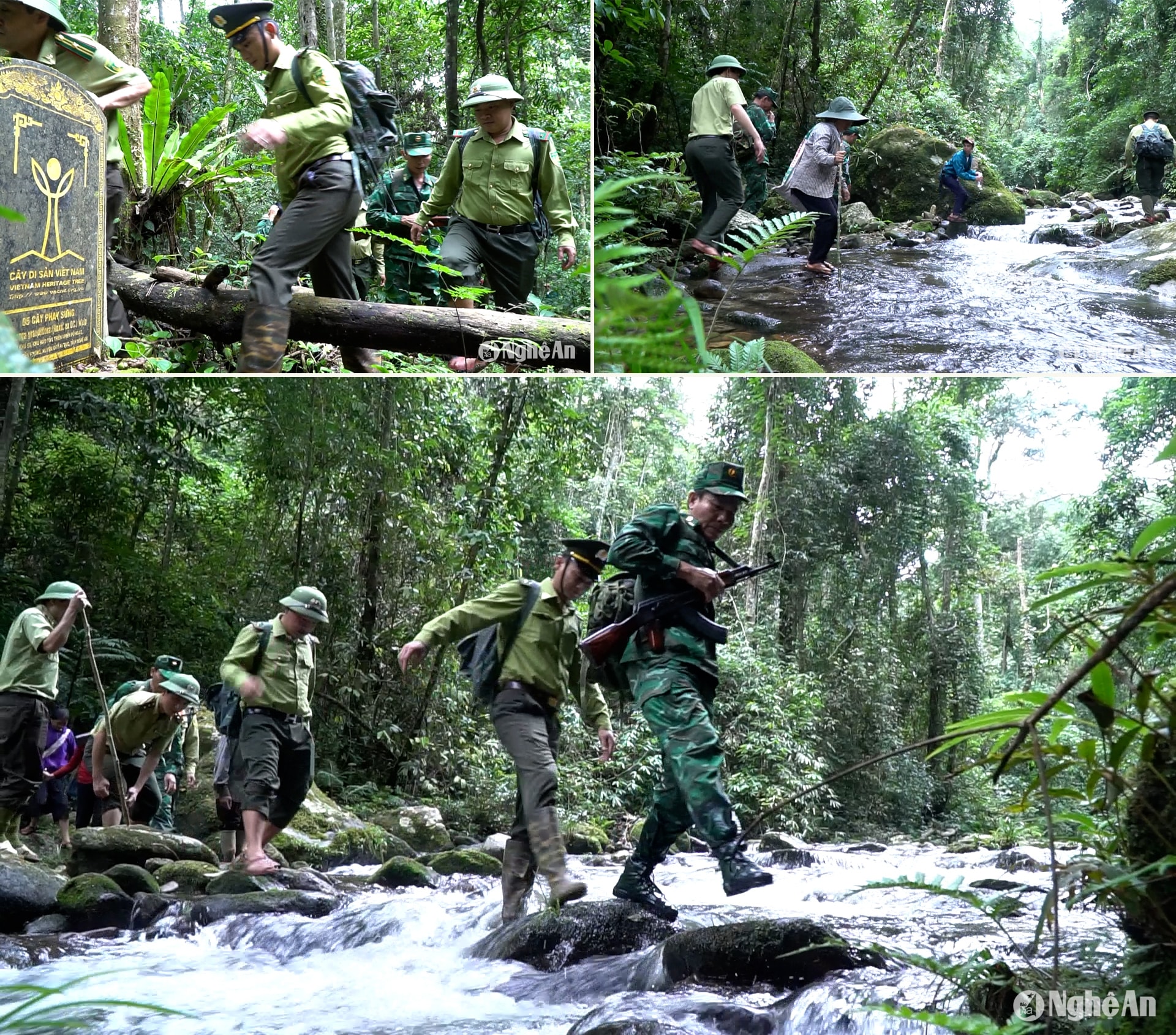
As the Party Secretary and Director of the Pu Hoat Nature Reserve, Mr. Nguyen Van Sinh is responsible for the overall direction of the ERPA program. During discussions, he frequently mentioned the implementation of livelihood support projects for the communities in the villages. According to him, this is a "difficult" but "valuable" initiative; even with a support level of only 50 million VND per project, its successful implementation has a significant ripple effect among the people and receives support from local Party committees and authorities. This idea has stayed with him since encountering Decree 107/2022/ND-CP, because these projects are implemented based on the people's wishes, with the people themselves developing implementation plans until completion. Party committees, authorities, and related organizations such as the Pu Hoat Nature Reserve only handle the steps of preparing documentation, monitoring implementation, acceptance testing, and disbursement according to regulations. From thought to action, the staff of the Pù Hoạt Nature Reserve have been actively involved, and to date, 44 villages and hamlets in 9 communes of the mountainous Quế Phong district have completed 44 high-quality community projects.
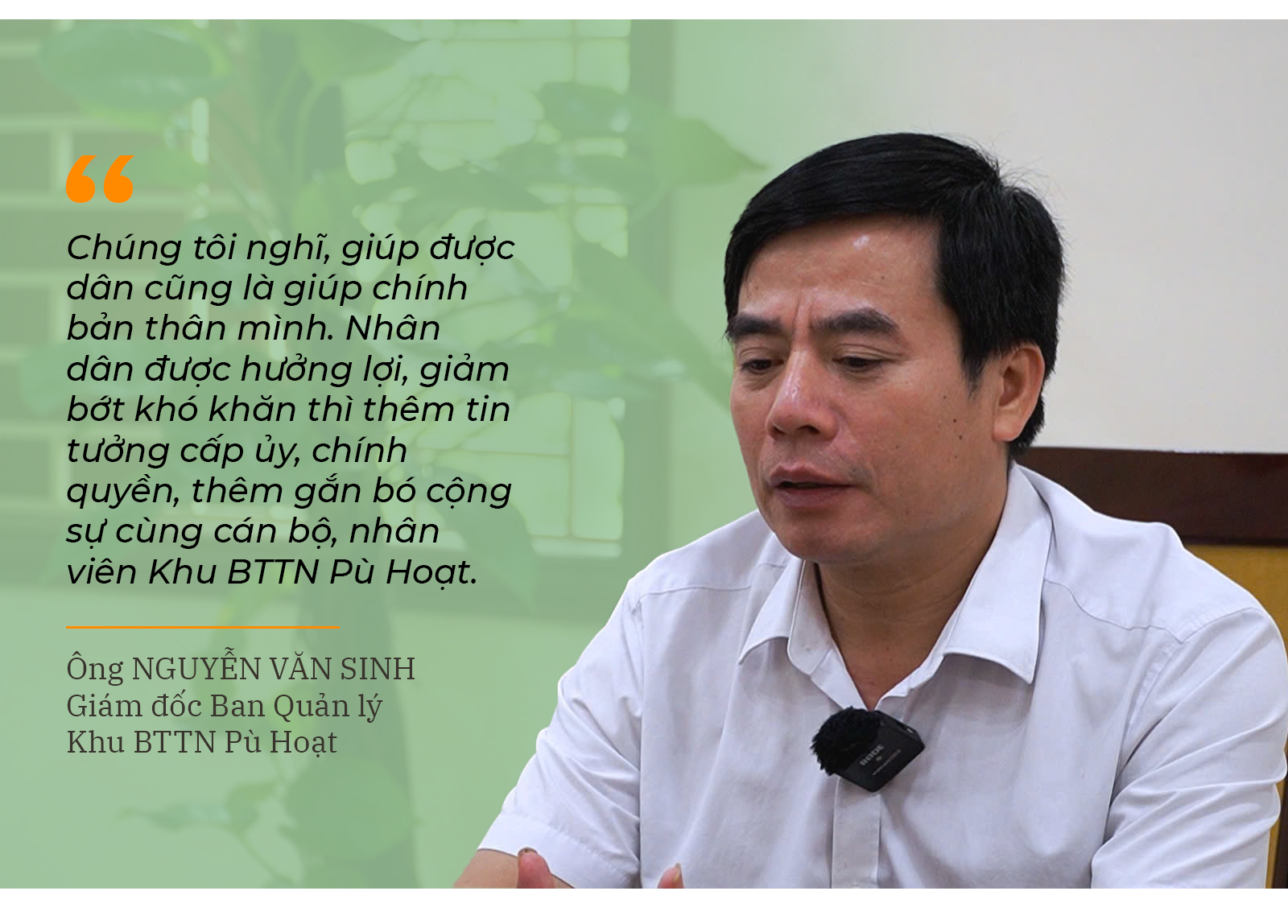
Director Nguyen Van Sinh shared: “The implementation of community projects is for the people. We believe that helping the people is also helping ourselves. When the people benefit and their difficulties are reduced, they will have more trust in the Party committee and the government, and will be more closely connected with the staff and employees of the Pu Hoat Nature Reserve. Therefore, we have researched and exploited all policies to benefit the people. In recent years, the Pu Hoat Nature Reserve has applied policies for special-use forests to implement some community projects, so we have gained some experience. When the higher authorities implemented Decree 107/2022/ND-CP, we focused on research early on and made thorough preparations, so we have achieved some results…”
According to the Nghe An Forest Protection and Development Fund, the Pu Hoat Nature Reserve is a shining example, being the only unit that has essentially completed 100% of its plan. Here, the leadership is decisive, the staff is highly skilled, and they are well-prepared so that when the ERPA program is implemented, it can be quickly deployed to the beneficiaries. The successful completion of 44 livelihood support projects has been highly appreciated by the Party Committee, the government of Que Phong district, and the communes in the area.
(Nghe An Province Forest Protection and Development Fund)
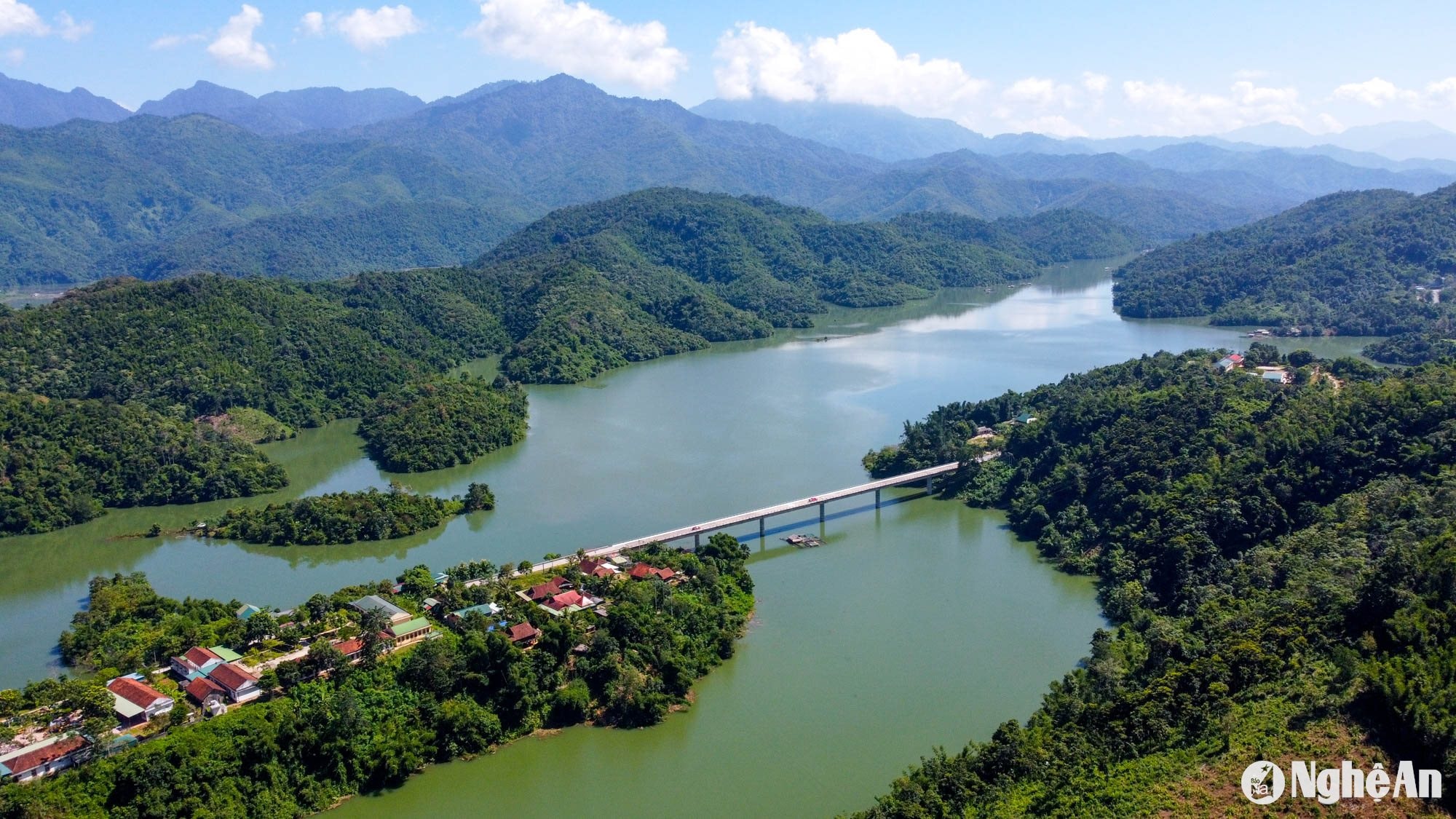

On November 26, 2024, the Provincial People's Committee and the Department of Agriculture and Rural Development organized a conference to implement the National Forestry Planning for the period 2021-2030, with consideration up to 2050. At this conference, the presentation by the former Director of the Vietnam Institute of Economics, Associate Professor Dr. Tran Dinh Thien, mentioned the working visit of Prime Minister Pham Minh Chinh to the 28th Conference of Parties to the United Nations Convention on Climate Change; comparing the province's forest cover of 58.3% with the national average of 43% to conduct an in-depth analysis, affirming that Nghe An is bearing a heavy responsibility for the nation and needs a policy of equal value. According to Associate Professor Dr. Tran Dinh Thien, it is time to move beyond viewing forests solely as a source of timber resources, and instead focus on global environmental issues and the survival of humankind.
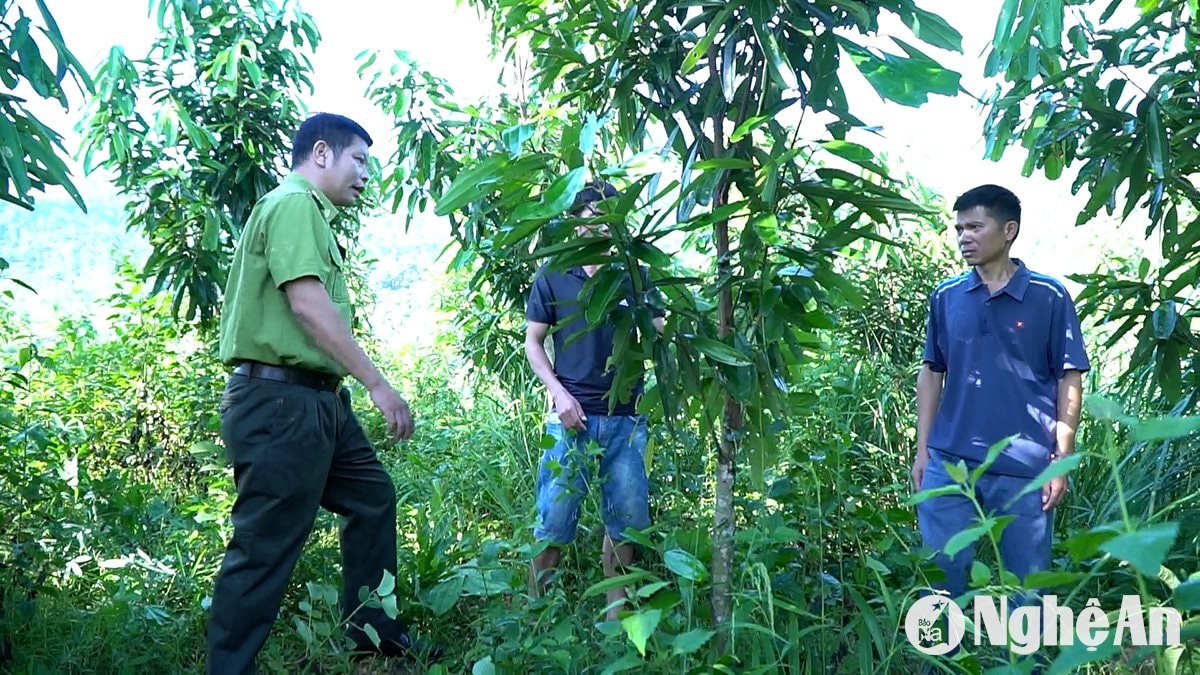
According to Mr. Nguyen Van Sinh, nowadays, when discussing the use of forests, people are talking about the multifaceted nature of forests, not just the value of forest products. Specifically, this includes the value of environmental services, tourism, or medicinal plants... In particular, the global trend is leaning towards environmental protection through the trading of carbon credits. This trend is opening up enormous opportunities for Vietnam to benefit from forests. From 2025 to 2027, Vietnam will conduct a pilot program for the carbon market, officially launching it in 2028. By that time, the benefits derived from forests will be substantial, becoming a major and stable source of income.
Therefore, large areas of natural forest, mainly concentrated in areas inhabited by ethnic minorities, are of particular value and require special attention for protection. To ensure the preservation of these vast forest areas, policies are needed to guarantee the livelihoods of ethnic minorities and to support forest protectors. “For example, the ERPA program, the government's initial pilot project for a carbon market in six provinces of North Central Vietnam, is truly a beacon of hope for those involved in forest protection…” – said Nguyen Van Sinh, Director of the Pu Hoat Nature Reserve.
.jpg)


