Nguyen Thi Due dedicated her life to the noble communist ideal.
In 1930-1931, factory workers and farmers in the areas surrounding Vinh - Ben Thuy rose up together to fight for higher wages, shorter working hours, and the abolition of corvée labor and taxes, initiating the Nghe Tinh Soviet movement (1930-1931). Among them was Comrade Nguyen Thi Due, an outstanding daughter of the heroic Ben Thuy, and the head of the Central Committee's transport team.
In Vinh - Ben Thuy, factory workers and farmers from surrounding areas rose up together to fight for higher wages, shorter working hours, and the abolition of corvée labor and taxes, initiating the Nghe Tinh Soviet movement (1930-1931). This is a glorious milestone in the golden history of our Party. Many outstanding individuals from Nghe An province emerged from this movement, including Comrade Nguyen Thi Due, an outstanding daughter of the heroic Ben Thuy, and the traffic team leader of the Central Committee of the Vietnam Fatherland Front.
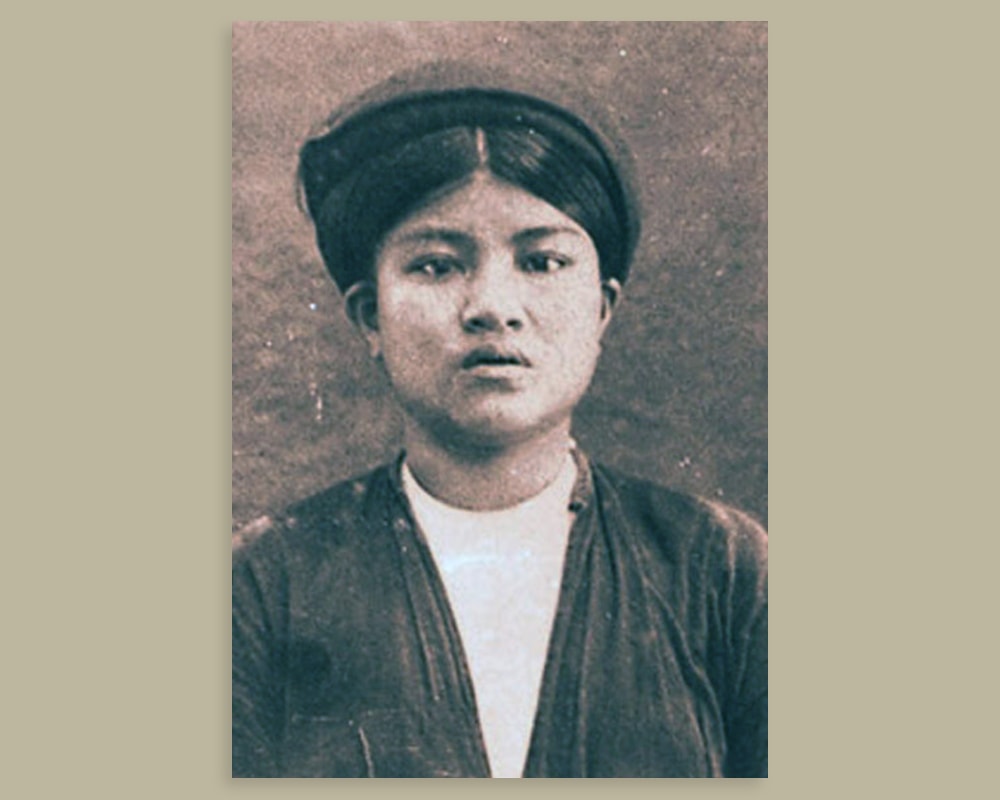
Comrade Nguyen Thi Due was born in 1910 in Yen Dung Ha village, Yen Truong commune, Hung Nguyen district (now Ben Thuy ward, Vinh city), Nghe An province. Growing up in hardship and poverty, orphaned at a young age, Nguyen Thi Due had to work as a laborer at the Ben Thuy Match Factory at the age of 17.
During that period, the Match Factory in Ben Thuy expanded and became one of the two largest factories in Vinh - Ben Thuy town. The factory employed over a thousand workers, including men, women, young people, and children. Only a small number worked on machinery, while the majority were engaged in heavy manual labor. The women working there suffered immensely. They were not only beaten, verbally abused, and fined, but also subjected to harassment, mockery, and groping by the foremen and overseers. It was this suffering that forged in Nguyen Thi Due and many other women her age a strong determination to liberate themselves and their homeland.
On July 14, 1925, on Con Meo Mountain, Vinh - Ben Thuy, the Phuc Viet Society was founded, attracting many patriotic young people. Nguyen Thi Due and several comrades who worked at the Match Factory, such as Le Mao, Le Doan Suu, Le Viet Thuat, etc., enthusiastically participated in the struggle movement and activities organized by the Society.
Under the leadership of the Association, the movement demanding amnesty for Phan Boi Chau and the movement demanding mourning for Phan Chu Trinh became large-scale demonstrations, awakening the national spirit in Nguyen Thi Due and the female workers in the factories.
Nguyen Thi Due quickly matured, actively participating in campaigns, calling on fellow workers and peasants to fight, and officially embarking on the arduous path of revolutionary activity. To maintain secrecy and disguise herself from the enemy, Nguyen Thi Due used the pseudonyms: Vy, Thanh, and Suu.
On April 11, 1928, under the leadership of the Tan Viet Party members, workers at the Match Factory and Sawmill united in a struggle against the unreasonable dismissal of workers by their employers, demanding higher wages and shorter working hours. As a result, the factory owners were forced to increase wages for all workers by 5 cents per day. The struggle was successful, and Nguyen Thi Due gained even more trust and admiration from the workers in the factory, and was elected as the team leader.
In February 1930, Nguyen Thi Due was appointed to the Struggle Committee, responsible for mobilizing and propagating revolutionary ideas among workers. On April 5, 1930, under the direct leadership of Comrade Le Mao (Secretary of the Vinh Provincial Party Committee), the Match Factory Party Committee held a meeting to mobilize workers to support relief efforts for the striking workers of the Nam Dinh Textile Factory, and also discussed responding to the Central Party Committee's call to launch a nationwide struggle to commemorate International Workers' Day on May 1st. As a Party member in charge of propaganda, mobilization, and the development of revolutionary forces among workers in Vinh - Ben Thuy, Nguyen Thi Due worked tirelessly day and night, regularly organizing and mobilizing women to participate in increasingly vigorous struggles.
To prepare for the struggle commemorating International Workers' Day on May 1, 1930, the Vinh Provincial Party Committee held a meeting and assigned Comrade Le Mao to directly lead the workers in the factories of the Vinh - Ben Thuy area, deciding that each factory would have its own leadership committee. Nguyen Thi Due was appointed to the leadership committee of the Match Factory and became a full member of the Communist Party of Vietnam.
The May 1st, 1930 struggle, which erupted with the massive participation of workers at the Match Factory, became the opening struggle of the Nghe Tinh Soviet movement. From that initial spark, the mass struggle quickly spread to communes, wards, and districts, dismantling the puppet government apparatus. Soviet governments were established in many places in the two provinces of Nghe An and Ha Tinh. Mass organizations such as the Red Trade Union, the Women's Liberation, and the Communist Youth Union were successively established and developed strongly.
Comrade Le Doan Suu (Member of the Vinh Provincial Party Committee) directly assigned the task of mobilizing and building the Women's Liberation Association to comrades Nguyen Thi Due and Nguyen Thi Nhuan. Thanks to Comrade Due's propaganda, mobilization, and assistance, many female workers in the factories joined the Association. They actively participated in social activities such as meetings, fundraising, donating money and clothes, and providing mutual support, all while feeling enthusiastic and confident in the Party's leadership.
During this time, the mass revolutionary movement was gaining momentum, and the enemy was increasingly relentless in monitoring and hunting her down. On October 14, 1930, Nguyen Thi Due was arrested by secret police and imprisoned in Vinh prison. For over four months, she endured all kinds of torture, but she remained calm and resolutely refused to confess. Due to insufficient evidence, they were forced to release her, expel her from the match factory, and ordered secret police to secretly monitor her.
Upon her release from prison, Nguyen Thi Due immediately set to work. With her intelligence, quick wit, and courage, this female liaison officer of the Central Vietnam Regional Party Committee disguised herself as a fruit vendor, skillfully overcoming all difficulties to promptly transport leaflets, documents, and newspapers of the Party to various locations. Thanks to this, the communication line from the Regional Party Committee to the Party's branches was re-established.
From April 24-29, 1931, the Central Committee of the Vietnam Fatherland Front held a conference at Bo Temple (Loc Da village), chaired by Comrade Nguyen Phong Sac (Secretary of the Central Committee of the Vietnam Fatherland Front). The conference reported on the revolutionary situation since the beginning of 1930 and the implementation of resolutions of the Central Party Committee, the Provincial Party Committee's Steering Committee, and the resolutions of the provinces implementing the directives of the higher authorities... Comrade Nguyen Thi Due attended the conference to receive guidance and continue leading the revolutionary movement in the new phase.
After the conference, leading comrades of the Regional and Provincial Party Committees, such as Nguyen Phong Sac, Le Mao, and many others, were captured by the enemy and killed. At this time, the District and Provincial Party Committees had to retreat into the mountains and forests to operate secretly and preserve their forces. Comrade Le Viet Thuat became the Secretary of the Central Vietnam Regional Party Committee, replacing Comrade Nguyen Phong Sac, working in a secret cave in De Thap Street.
Comrade Nguyen Thi Due (Secretary of the Ben Thuy District Party Committee), under the pseudonym Suu, regularly visited to report on the movement's situation and receive instructions from the Secretary to relay to the Party's grassroots organizations. On December 7, 1931, while attending a meeting at a secret location on De Thap Street, Comrade Le Viet Thuat and Nguyen Thi Due were arrested by secret police and imprisoned in Vinh prison.
During her second imprisonment in Vinh prison, the French colonialists employed many insidious tactics and extremely brutal forms of torture, but they could not shake the steely spirit and unwavering loyalty to the Party of Nguyen Thi Due, a daughter of Ben Thuy. On January 8, 1932, the Southern Court of Nghe An province sentenced Nguyen Thi Due to life imprisonment with hard labor. In March 1934, on the occasion of King Bao Dai's wedding, a decree was issued to reduce the sentence for political prisoners, and Nguyen Thi Due and many other comrades were released.
After her release from prison, Nguyen Thi Due, along with her husband Nguyen Van Vy (a Standing Committee member of the Ben Thuy District Party Committee), continued to actively participate in revolutionary activities. The Le Viet Thuat military factory, with the significant contributions of comrades Nguyen Thi Due and her husband, played a considerable role in the patriotic emulation movement during the period when the whole country was simultaneously fighting the war and building the nation...
Nguyen Thi Due, an outstanding daughter of the heroic Ben Thuy homeland and the liaison officer of the Central Vietnam Regional Party Committee, dedicated her entire life to the noble communist ideal, the liberation of women, and the liberation of the nation. Following the example of the Soviet female fighter Nguyen Thi Due, countless women "fought to the death for the Fatherland," fighting alongside the nation through two wars of resistance against French colonialism and American imperialism, regaining independence and freedom for their homeland. They wrote a glorious chapter in the history of our Party, worthy descendants of the Trung Sisters and Trieu Sisters; worthy of the eight golden words bestowed upon them by beloved President Ho Chi Minh: "Heroic, indomitable, loyal, and capable."