
Vinh Prison: Unveiling the secrets of this 'hell on earth'
(Baonghean.vn) - If there were a chronicle of prisons throughout Vietnam, alongside Con Dao, Phu Quoc, Hoa Lo, etc., Vinh Prison would certainly be included. By 1945, this "hell on earth" had existed for over 140 years, right where the Soviet Nghe Tinh Museum is now located (Dao Tan Street, Vinh City). Under the Nguyen Dynasty and through the French colonial period, thousands of patriotic intellectuals and revolutionary fighters were imprisoned here. However, the shackles of the feudal and colonial regimes seemed only to further forge their unwavering will, steadfast character, and shining spirit of loyalty to the people and the nation.
WHAT IS VIETNAM'S OLDEST PRISON?
We vaguely surmise this about Vinh Prison, when comparing its founding dates with many other "famous" prisons and jails across the country. For example, Con Dao Prison was established by a decree signed by the Governor of Cochinchina, Bonard, in 1862; Hoa Lo Prison was built in 1896; Thua Phu Prison dates back to 1899… And then there are the "later generations" of prisons such as Lao Bao Prison, built in 1908; Buon Ma Thuot Prison, built in 1930-1931; Chi Hoa Prison, built in 1943; Phu Quoc Prison, built from 1967…
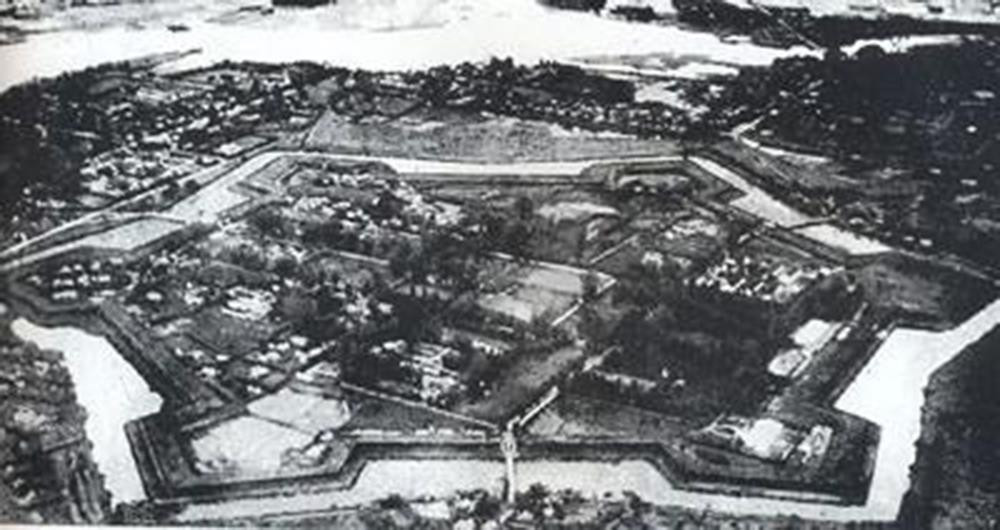 |
| A panoramic view of Nghe An citadel, built in 1804. Vinh Prison is a structure located within this complex. (Archival photo) |
Based on these figures, Vinh Prison, built in 1804, could be considered one of the oldest prisons in Vietnam? Of course, that "title," whether accurate or not, is not an honor when bestowed upon Vinh Prison. On the contrary, it further highlights the crimes of the feudal-colonial regime in applying brutal torture methods to patriotic citizens and revolutionary fighters.
In order to gain a relatively accurate understanding of Vinh Prison 140 years ago, we consulted numerous researchers and historical sources. Particularly fortunate were our access to the original account of a former political prisoner at Vinh Prison – Mr. Dang Quang Minh. Written in 1995, this account is one of the valuable reference materials that led to the Provincial Party Committee's Propaganda Department compiling the book "Vinh Prison" in 2005.
The general layout of Vinh Prison is recorded as follows: The prison is located within the ancient citadel of Nghe An, bordered to the west by the Right Gate, to the east by the military barracks, to the north by the lake and the citadel wall, and to the south by a road that cuts across the citadel, connecting the Left Gate to the Right Gate and opposite the Royal Palace. The entire prison complex is 150m long and 130m wide, covering an area of 19,500 m2, occupying over 4.6% of the citadel's surface. The prison is completely enclosed by four walls, each 3m high and 0.4m thick. Each corner of the walls has a guard booth, and many broken pieces of glass are embedded in the walls.
Under French colonial rule, they used more advanced means to strengthen and reinforce Vinh prison. Within the prison complex were many buildings arranged in rows, with the main section for prisoners consisting of six cells, each 20 meters long and 5.2 meters wide, with two large, heavy iron doors. The six cells contained 12 rooms, each designed with a place to shackle prisoners' legs, and each room had a very thick iron door.
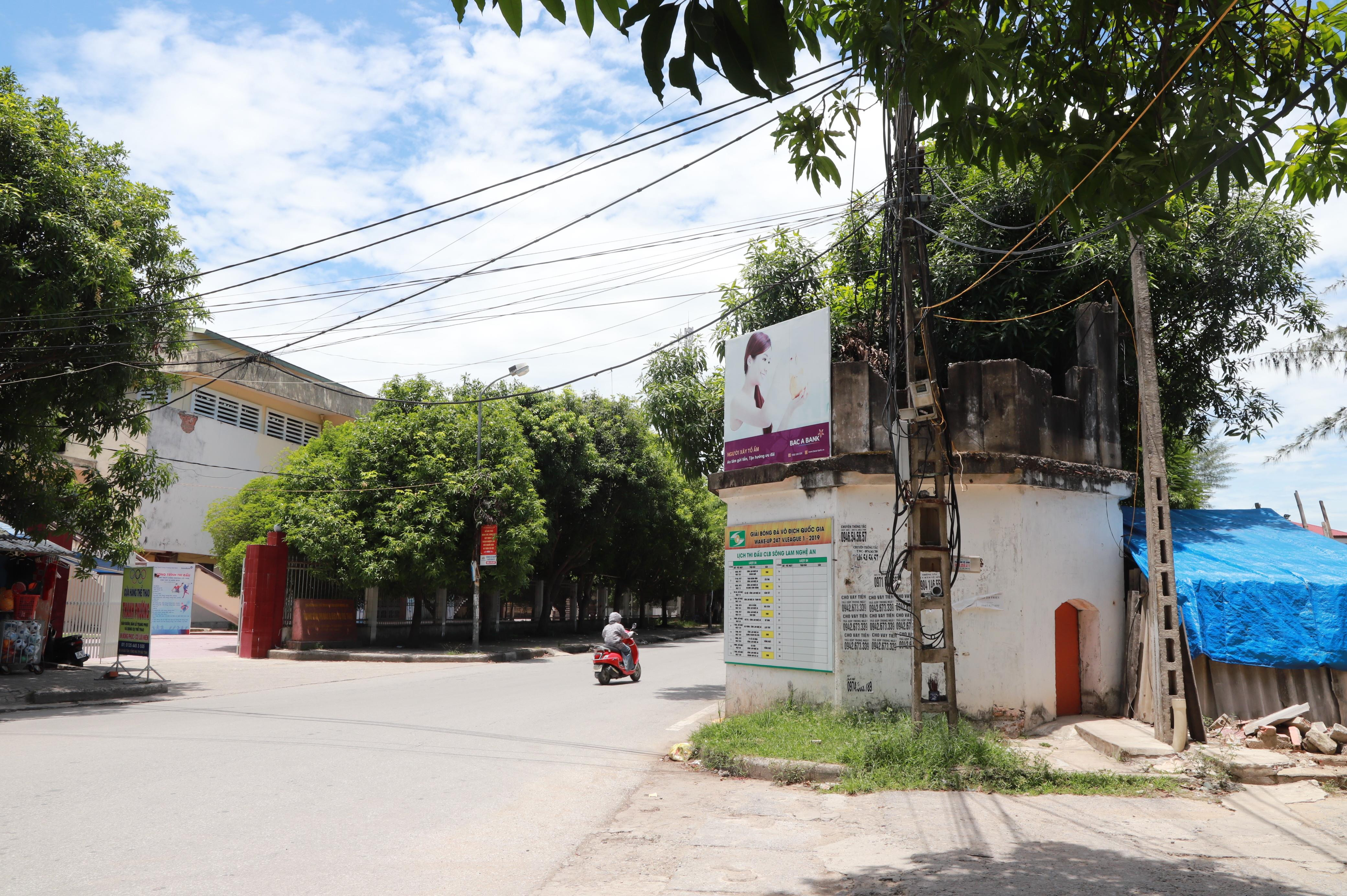 |
| The remaining guard post of Vinh prison on Dao Tan Street. Photo: Phuoc Anh |
The prison cells were numbered from right to left and divided by "function": East and West were for women; East, West, East, and West were for those convicted of economic crimes; other cells held those accused of opposing the imperial court and the protectorate government… East and West cells and the mortgage cells were separate areas with 3-meter-high partition walls used to imprison political prisoners… The prisoners' living and eating conditions were terrible: moldy rice, maggot-infested fish sauce, rotten fish…
Vinh prison was like "hell on earth" because of the series of brutal and savage torture and forced confessions inflicted on political prisoners.
For political prisoners in particular, Vinh prison was like "hell on earth" due to the barbaric and cruel torture and interrogation methods employed by the prison guards. Rubber whips, twisted ropes, bullwhip, batons, and crocodile bone whips were used to relentlessly beat prisoners; they also used electric shocks, burned ten fingers with alcohol lamps, heated copper plates until red-hot and forced prisoners to sit on them, made prisoners kneel in the sun on ant nests, and released snakes and centipedes into their bodies…
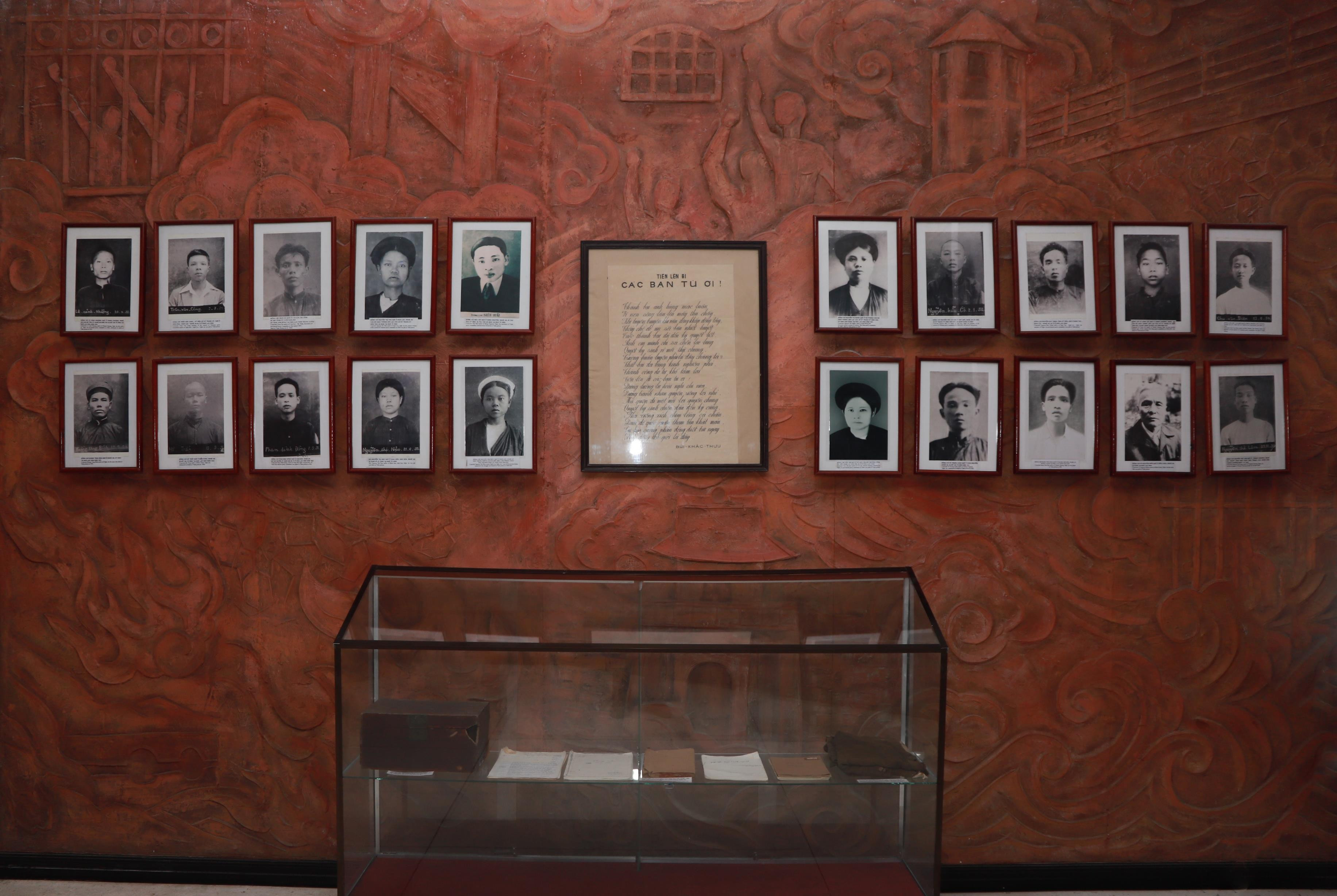 |
| Images of steadfast revolutionary fighters imprisoned in Vinh prison. Photo: Phuoc Anh |
Beaten until disfigured in front of his father - "Be strong, son!"
Memoirs of former political prisoners and French secret police records clearly document stories of "trials by fire" applied to leaders of the movement. A typical example is Comrade Le Viet Thuat - Secretary of the Central Vietnam Regional Party Committee (1931). When all brutal torture failed to break his spirit, the secret police cowardly arrested his father, teacher Le Viet Hien, and brought him to Vinh prison to identify his son.
They subjected both father and son to brutal torture in front of each other, but it didn't go as they wished. Standing before his son, beaten until his face was disfigured, teacher Le Viet Hien suppressed his grief, opened his eyes wide, and stared intently into his son's eyes: "Be strong, son! Don't be soft-hearted and fall into the enemy's trap..."
The story spread throughout the prison cells, becoming a role model and lesson for all political prisoners and revolutionary masses imprisoned in Vinh prison for many years.
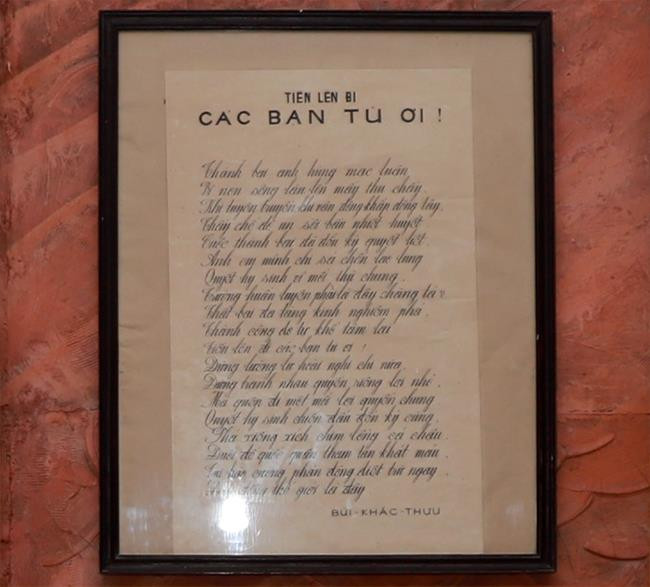 |
| An inspirational poem composed by a political prisoner in Vinh prison. Photo: Phuoc Anh |
TRANSFORMING PRISONS INTO REVOLUTIONARY SCHOOLS
Despite the brutal treatment in prison, patriotic scholars, communist fighters, and revolutionary masses all demonstrated unwavering commitment to their ideals and chosen path of struggle. Vinh Prison was where many generations of political prisoners were held, from the Văn Thân and Cần Vương movements to the August Revolution of 1945, including figures such as Nguyễn Xuân Ôn, Nguyễn Sinh Khiêm, Nguyễn Thị Thanh, Trần Thị Trâm, Tôn Quang Phiệt, Nguyễn Phong Sắc, Lê Hồng Phong, Lê Viết Thuật, Siêu Hải, Hồ Tùng Mậu, and Nguyễn Duy Trinh…
Amid countless brutal tortures, where the line between life and death was incredibly thin, they "would rather die with honor than live in shame," never betraying the people, the Party, or the achievements of the revolution.
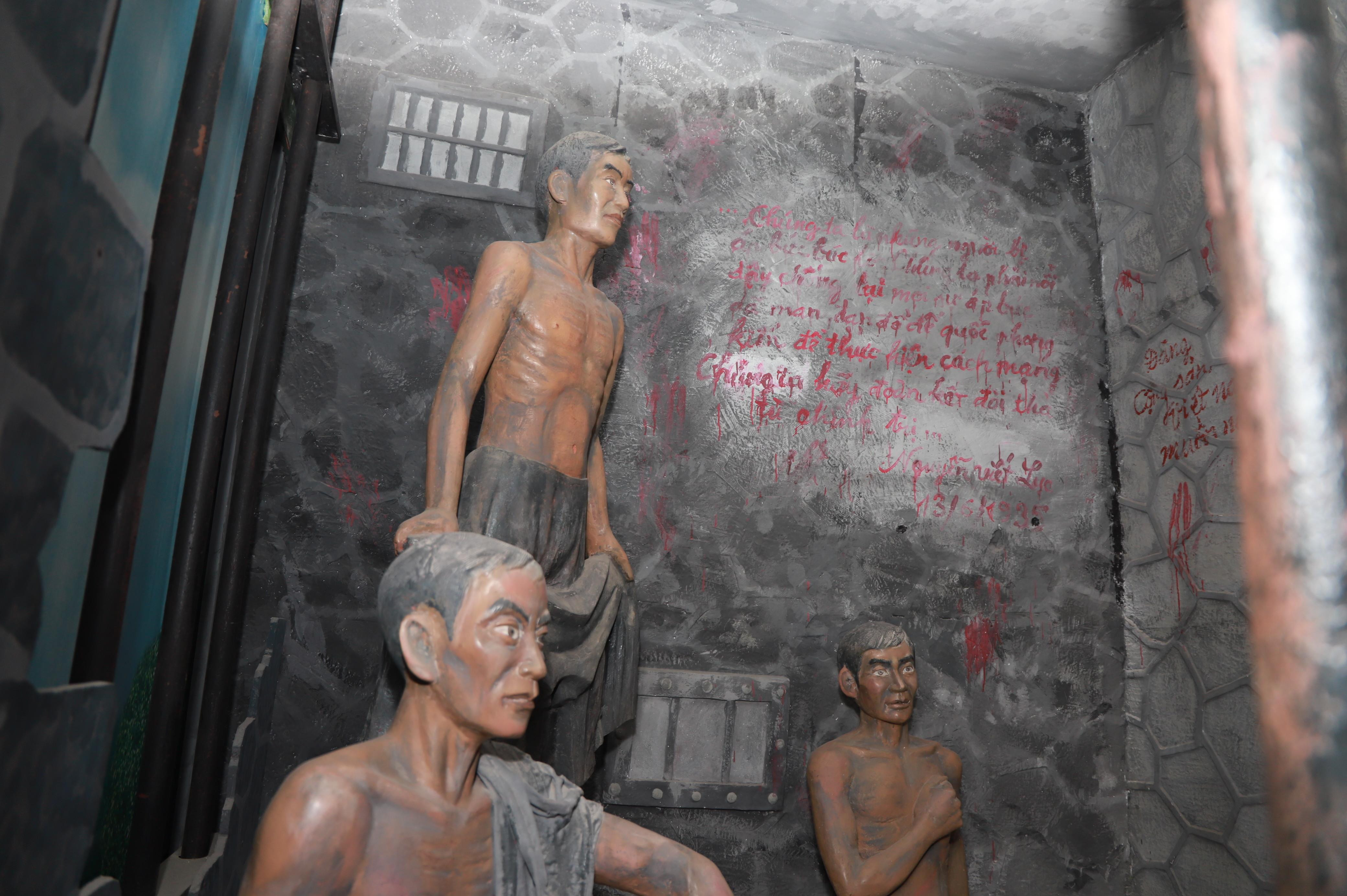 |
| The area features statues depicting political prisoner cells at Vinh Prison. Photo: Phuoc Anh |
The work of mobilizing soldiers was so effective that many prison guards became helpers, arranging escapes for their comrades to return to the movement.
What few people know is that even amidst the harsh prison life, starting in June 1930, the Communist Party cell in Vinh prison was established with Comrade Hoang Trong Tri as its secretary. The cell's activities helped to strengthen the faith of political prisoners and lead the struggles against the brutal regime of the French colonialists and the feudal Southern Dynasty.
In particular, key party members in the branch were also crucial in influencing and enlightening ordinary prisoners, propagating revolutionary ideas, and attracting soldiers to the side of the revolution. In prison, party members even taught literacy to prisoners and wrote poems to boost morale… The work of mobilizing soldiers was so effective that many prison guards became helpers, arranging escapes for their comrades to return to the movement.
Existing for 140 years (1804-1945), Vinh Prison is a testament to the crimes of feudalism and colonialism; at the same time, it is a symbol of unwavering revolutionary spirit and integrity. Through time and historical upheavals, only a single guard post remains of Vinh Prison today. Within the grounds of the Soviet-Nghe Tinh Museum – the site of the former Vinh Prison – a memorial monument has been erected. The museum also preserves many documents, artifacts, and touching stories about political prisoners at Vinh Prison, each story offering a vivid and authentic lesson for today's and future generations.
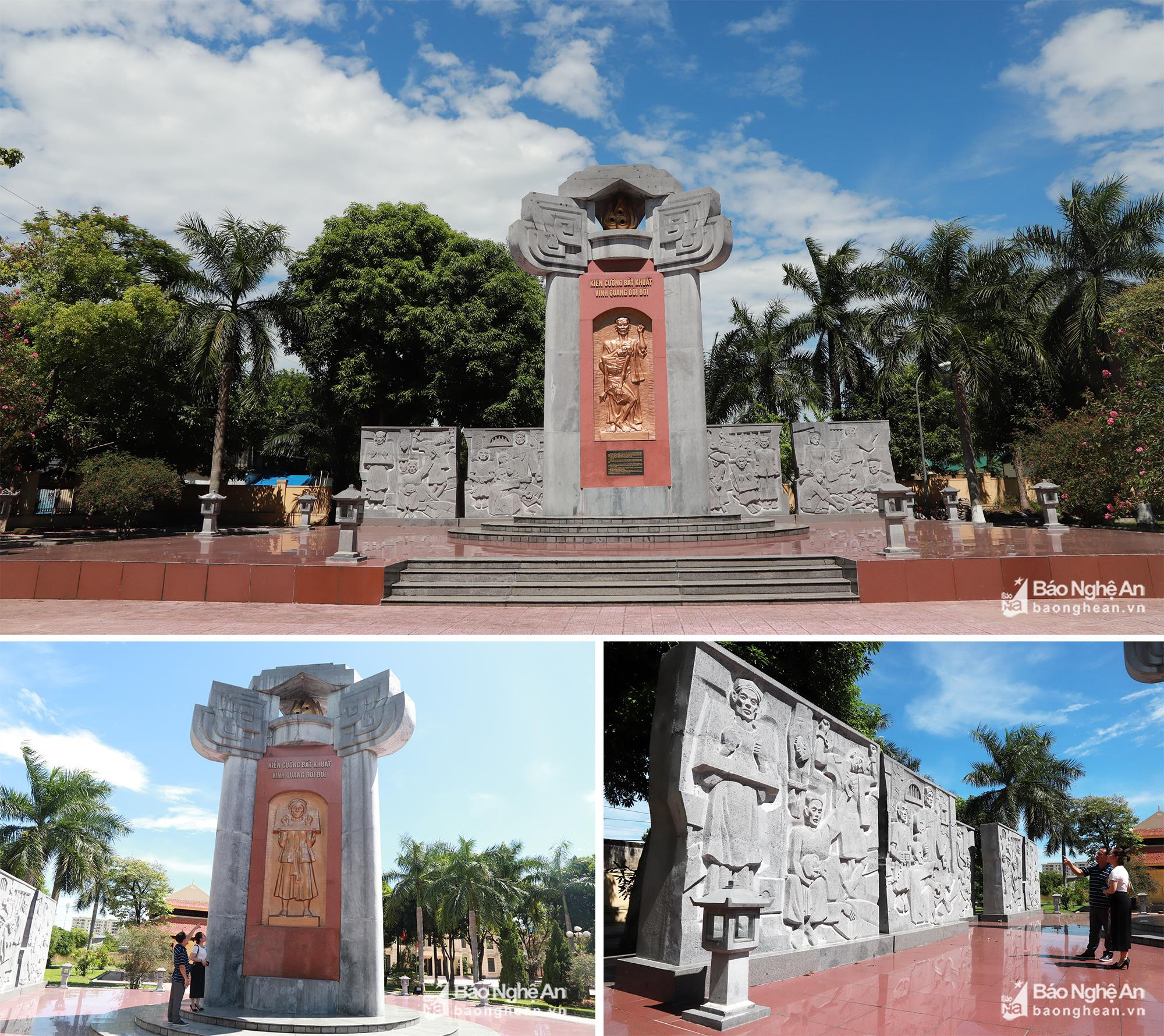 |
| The Vinh Prison Memorial in the grounds of the Soviet-Nghe Tinh Museum. The two photos below: The memorial bears an inscription expressing the unwavering loyalty of the communists; a bas-relief illustrates the indomitable struggle of revolutionary fighters and patriotic citizens in Vinh Prison. Photo: Phuoc Anh |


