
Poet Pham Minh Tam - There was a time like that
Poet Pham Minh Tam was born in 1951 and enlisted in the army at the age of 17, becoming a special forces soldier in Unit K3B - Tri Thien Military Region. Having experienced the smoke and fire of the fierce war against the US, the former soldier understands the immense losses that war brings.
The inner feelings of the poet-soldier
One afternoon in late July, when the hot, dry wind still blew fiercely through the trees, I was captivated by the war stories of the old soldier Pham Minh Tam – who had just been admitted as a member of the Vietnam Writers Association in 2025.
Holding the four volumes of poetry he gave me, I flipped through a few pages and fell silent, afraid to read further, for I feared my emotions would interrupt his story—the short and long tales of his life as a soldier, the joys and sorrows, the dangers, and especially the pain he felt witnessing the sacrifice of his comrades right before his eyes.
Poet Pham Minh Tam was born in 1951 and enlisted in the army at the age of 17, becoming a special forces soldier in Unit K3B of the Tri Thien Military Region. Having experienced the fierce flames of the war against the US, the former soldier understands the immense losses that war brings. He himself went into battle with a 2/4 disability. Therefore, his poems and epics are filled with heartfelt emotions, verses written for himself and for his comrades – those who did not make it back after peace was restored.
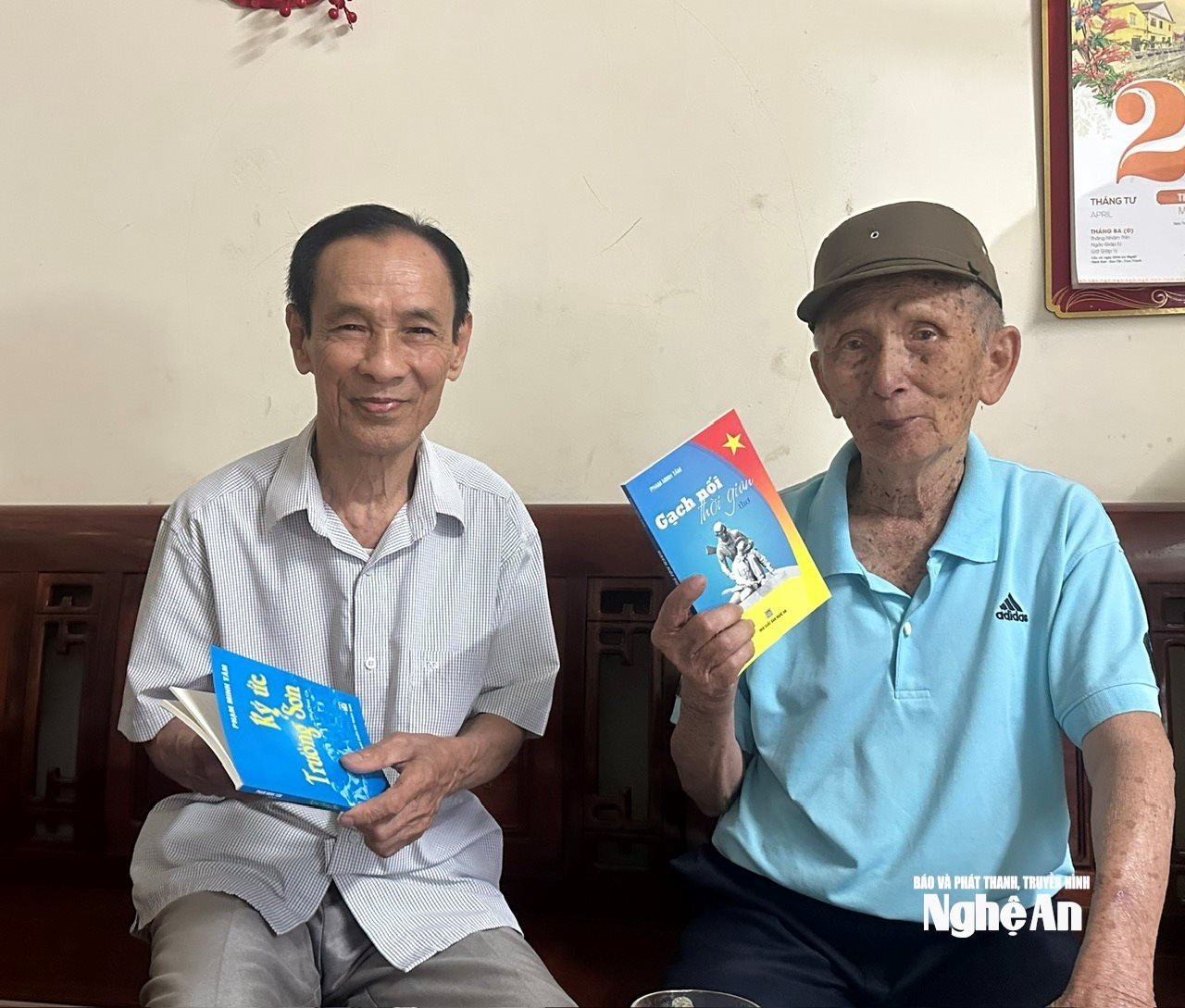
Four volumes of poetry in my hands, all revolving around one theme: the soldier. It's the image of a veteran searching for fallen soldiers' graves, the lonely figure in a war cemetery, the comforting embrace of a comrade's mother whose son will never return, the compassionate gaze of a young wife who has lost her husband, the anxious look in the eyes of a former comrade towards his fatherless children...
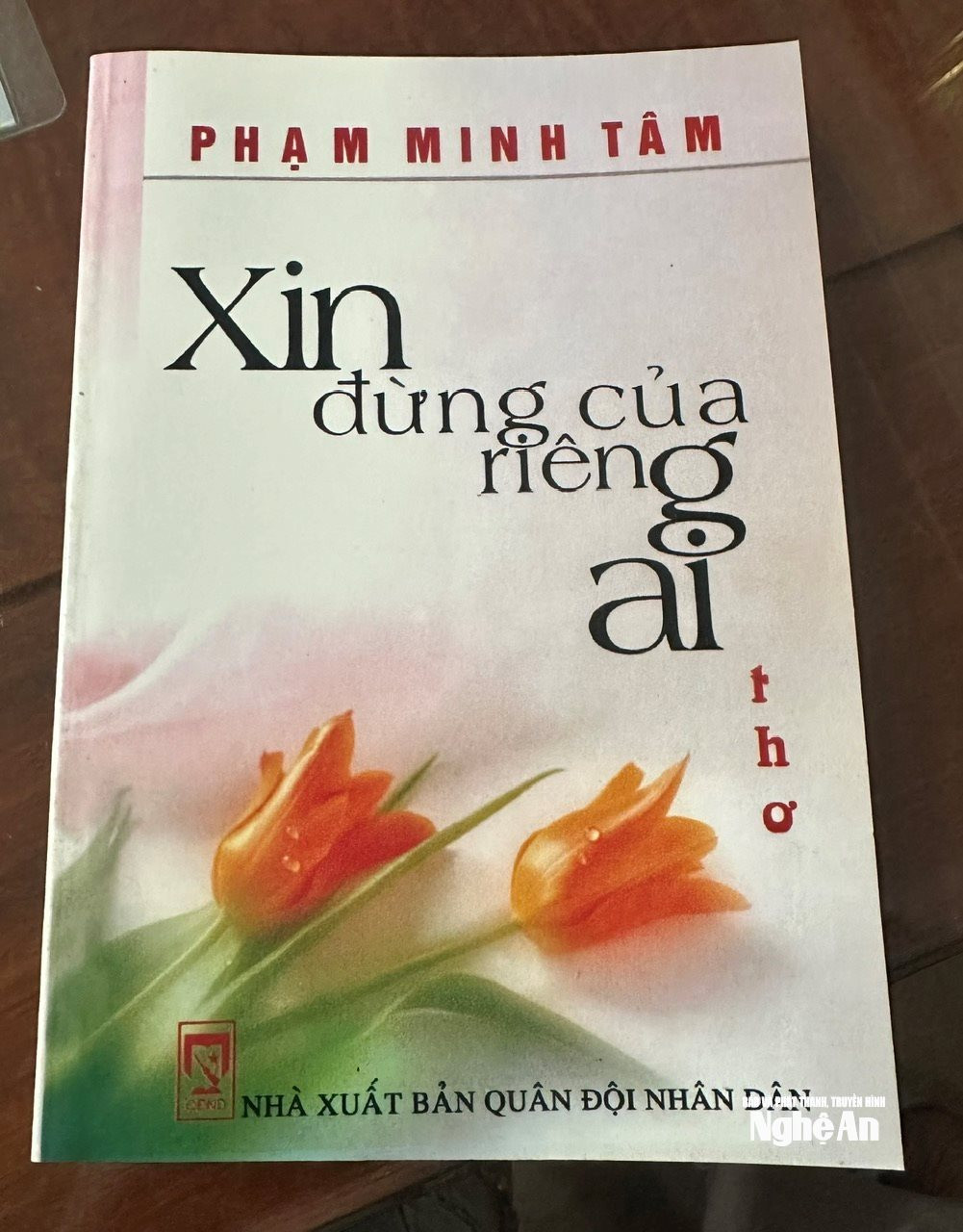
The first book I opened was "Please Don't Belong to Anyone" - published by the People's Army Publishing House in 2007. It was a poetry collection released on the occasion of the 60th anniversary of the War Invalids and Martyrs Day on July 27th. As the poet Pham Minh Tam wrote in his opening remarks: "From the bottom of my heart, with the simple, sincere emotions of a soldier-war invalid who has experienced and tasted the pain of war, I wrote 'Please Don't Belong to Anyone' and consider this poetry collection a small token of my respect to my comrades..." Because for him, in the echoes of the marching song, there is "The Whisper of the Earth": "No matter how green, there was a time of burning heat / Peace after countless storms / Death sows the seeds of life / Standing in the midst of today, hearing the past wrack my heart..."
Because he had witnessed it all: “Planting the flag on Quang Tri citadel/So many of my comrades never returned.” That’s why he was so afraid, a fear only soldiers who have experienced war can understand: “I fear the search of mothers who have lost their children/wives who have lost their husbands/on the day of reunion…”. The smiles of reunion with loved ones, friends, and comrades also seem out of place: “The smile suddenly becomes lonely amidst so much suffering/The gain is immense, but how can the loss ever be compensated for…”. Reading “Please Don’t Belong to Anyone,” each poem, each sentence touches the reader’s heart with a silent pain, gradually seeping in until it becomes overwhelming. It is the image of the silent army in the evening, witnessing the sacrifice of their comrades, only having time to hastily fill the grave with a branch of mountain flowers as a farewell. Or, to be more careful, one comrade had already carved his name onto a nearby tree trunk... and that same comrade later sacrificed his life... That's why many graves remain unmarked... because thousands of outstanding sons of the nation sacrificed themselves in this way...
The outstanding young men in their twenties resolutely left their books and fields to go fight the enemy. Their departure meant the weary waiting of their mothers: “Who hasn’t experienced the pain of war? They can’t fully understand the bone-chilling pain, the suffering, the losses. When I was plowing, you left your writing desk and went away. In the long nights, your mother would light a lamp and sit awake, worrying… Villages and hamlets, generations before, generations after… These departures become legends…”
Memories of Truong Son
Every morning, farewells fall, with countless soldiers leaving no promise of return. Their parting is marked by a simple promise: "When peace comes, I will return," but no one can predict how long that peace will last: "The march doesn't count the months or years / Across mountains and rivers, we journey to the land of fire and smoke..." The more you read these verses, the more haunting they become, especially when you encounter lines like, "In such a time - Father and Son / On the peak of Truong Son, the path branches off to two sides / Father goes to the western slope, son stays behind / Throughout the war, we keep going... no one returns..."
.jpg)
During the war, the Truong Son Mountains were seen as a testament to courage. As the poet To Huu wrote, "The eastern Truong Son Mountains are sunny, the western ones are rainy. Anyone who hasn't been there doesn't truly know themselves." The long Truong Son Mountains represented relentless marches, convoys carrying weapons, ammunition, and food through bombardments and shelling. It represented thousands of young women who volunteered to leave their hometowns and cities to join the front lines, and doctors and nurses who overcame hardship and danger to save their comrades...
Along that marching route, "Memories of Truong Son" will forever remain unforgettable for the soldiers. Fleeting encounters with the fair-skinned, soft-eyed Truong Son girls, before they could even warm each other's hearts, were followed by parting forever. Words of love were left unspoken: "Tomorrow I leave / Tomorrow you stay / Two halves of a hopeless battlefield / Two halves of love torn apart by bombs and bullets..." Some found each other after the war, but their joy was cut short, never to begin again. The pain of war lingered into peacetime, due to Agent Orange and the disfigurement of their bodies... Small, unfulfilled dreams remained silent; many could no longer become mothers or fathers...
The epic poem "There Was a Time Like That," spanning 112 pages, captivated readers with its profound emotions, its narratives, and its poignant, realistic depictions of the war. Therefore, having emerged from the war and gazed upon the peaceful sky, poet Pham Minh Tam understands even more deeply the price of independence.
His third poetry collection, published in 2019 and titled "The Bridge of Time," is also imbued with the sentiments of a soldier. The collection depicts a veteran searching for his comrades, listening to the whispers of the wind, the clouds, and the grass. Because beneath the forest canopy, perhaps his friend hasn't returned; beneath the grass, perhaps his friend's grave hasn't been found yet...: “We return to visit the old battlefield / Standing and gazing at the cemetery, our hearts ache / The graves of our comrades - rows of pristine white tombstones / White in age, white in name, white in birthplace...”. Because they shared life and death together, in this bridge of time, these soldiers understand and care for each other the most. They once shared a pill, sheltered each other when charging into enemy positions, and rejoiced in a letter from home: “Memories flood back of a time we were together / A pill shared the pain, a bowl of rice shared / Amidst bombs and bullets - sharing the fire / A love letter shared memories, shared forgetfulness...”. The passage of time is brimming with camaraderie, not only through journeys to find friends in the deep forests and mountains, but also through the anxieties of reuniting with loved ones. There are mothers anxiously waiting for their children, wives who have waited for their husbands for over half a century, children who long to find their fathers... and countless wounded soldiers who don't remember who they are when they meet their friends again at the rehabilitation center, because shrapnel is still lodged in their brains...
Concerned about the current situation
"Memories of Truong Son" is the main inspiration for poet Pham Minh Tam's epic poems, rich in emotion and seen from the perspective of a soldier after the war. He remains proud of himself and his comrades for having "Once upon a time like that." He is always troubled by the immense sacrifices of his comrades, and even more so by the millions of martyrs on this S-shaped land. Therefore, "Memories of time" always haunt him, making him ponder the current situation. And he, a soldier of Uncle Ho's army, remains steadfast in his belief: "The fire of faith, of justice, of compassion / Of conscience burns down the treacherous villains... The Party is exemplary, the people will have firm faith / For a future of a prosperous people and a strong nation / The Vietnamese Fatherland - a source of pride and honor / Is soaring, spreading its wondrous wings."
Parting ways with poet Pham Minh Tam, what I will always remember is the look in his eyes, brimming with compassion—the compassion of a soldier for the sacrifices of so many comrades, compassion for the pain of their mothers, wives, lovers, and children in peacetime. And compassion for the social upheavals and the threatened values. And in his story, there still shone the unwavering faith of a soldier in the Party in the cause of building and developing the country. That faith of the poet is also the faith of the entire nation, faith in the wise and strict leadership of the Communist Party of Vietnam.


