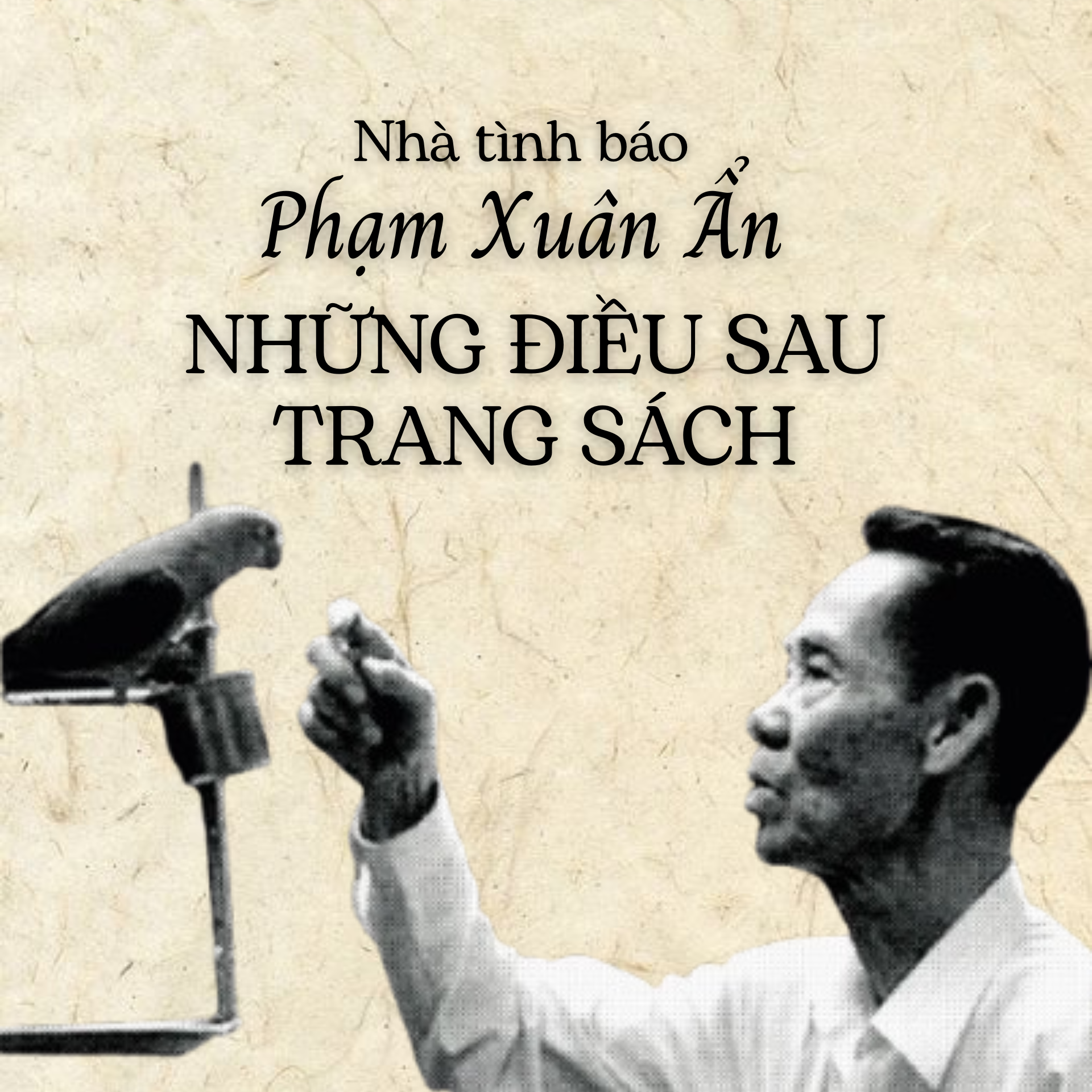
Intelligence agent Pham Xuan An: What lies beyond the pages of a book.
Phuong Chi•April 13, 2026 09:29
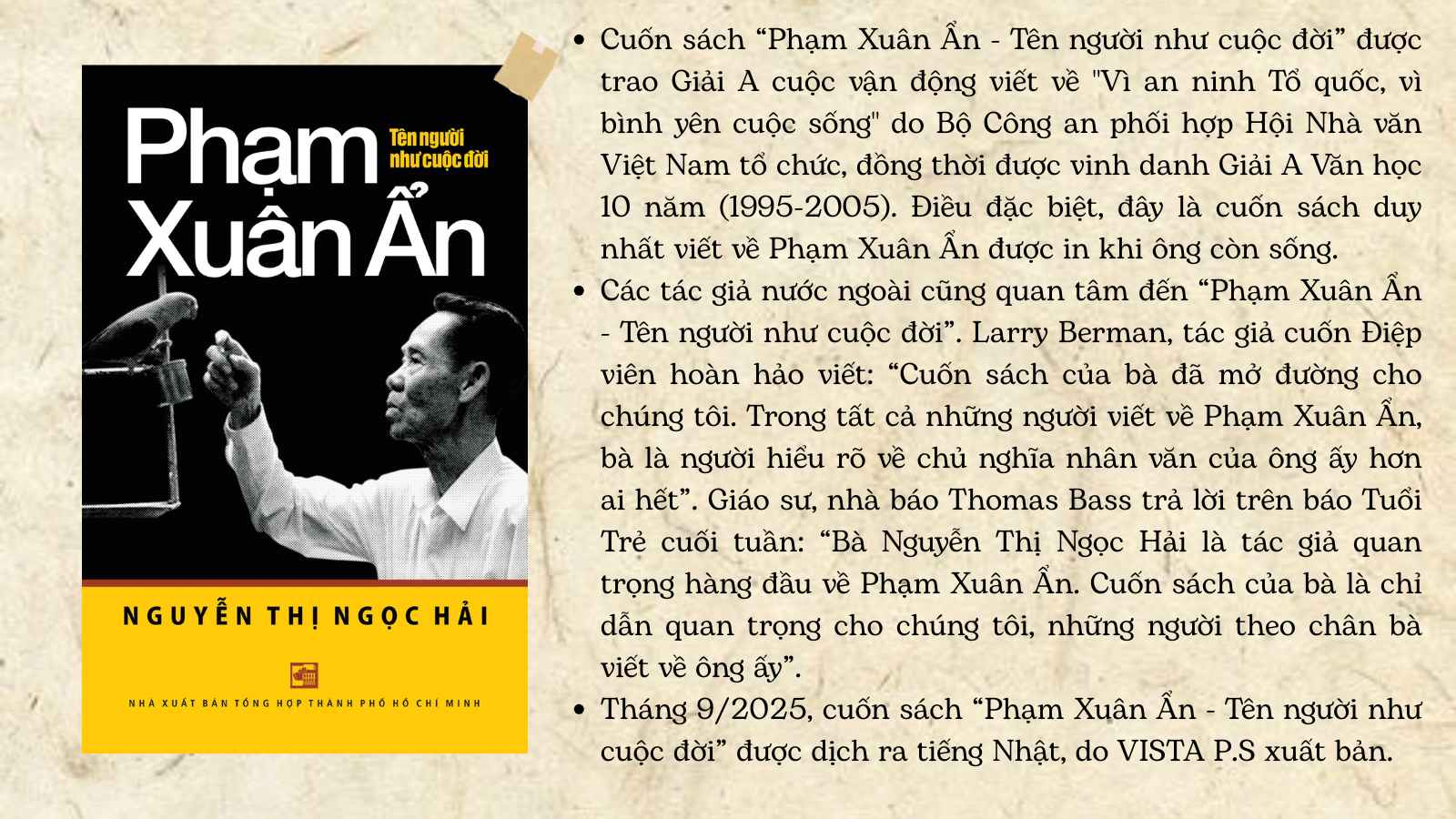
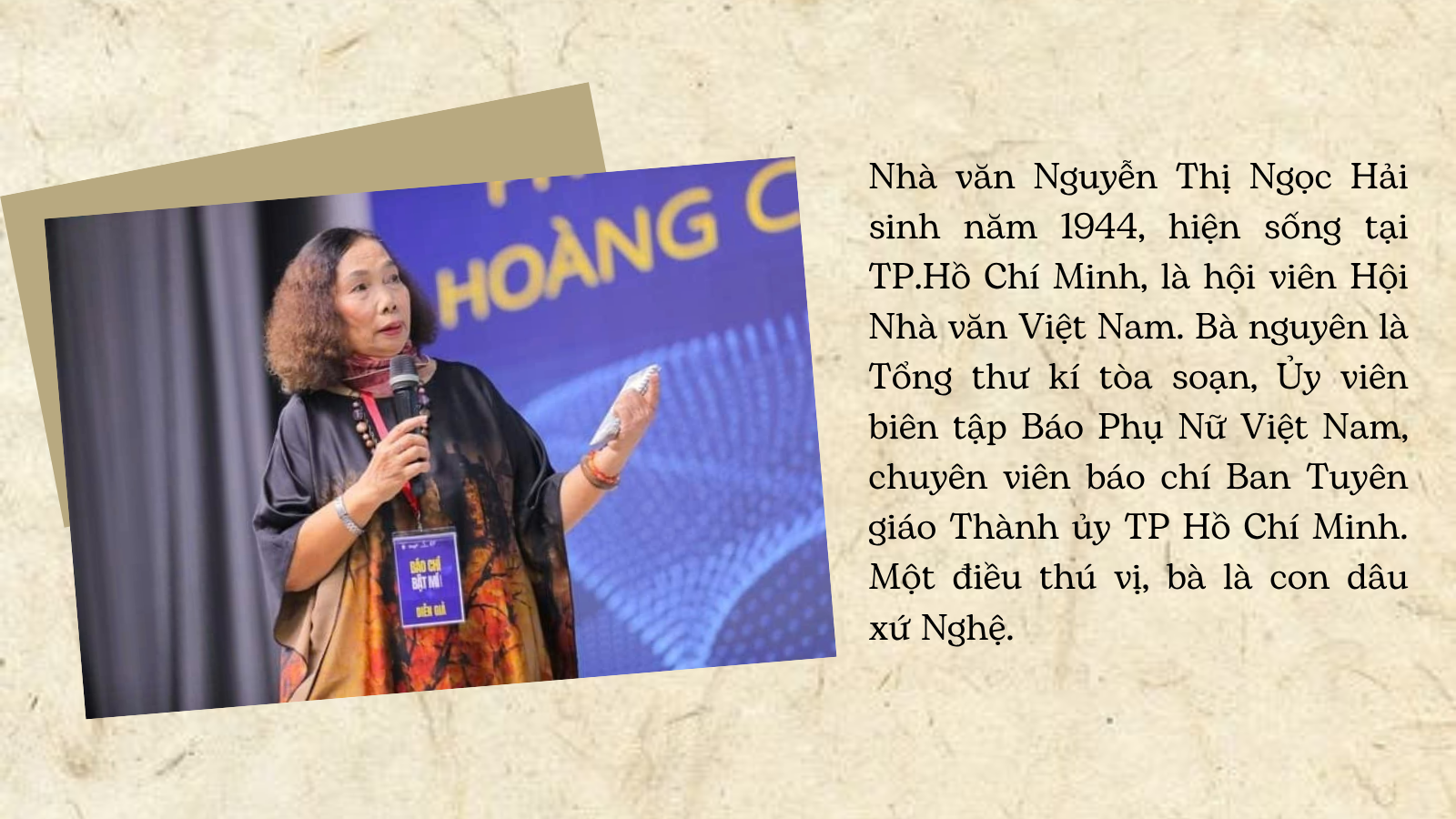
Without delving into the details of the espionage operation, the book "Pham Xuan An - A Name Like a Life" by journalist and writer Nguyen Thi Ngoc Hai is the result of 10 years of persistent effort to uncover the "soul map" of the brilliant intelligence agent of the Vietnamese revolution, behind a multitude of secrets.
Content + design:Phuong ChiApril 13, 2026
*****
As April 30th approaches, books about war and intelligence are once again in high demand.readers are searchingAmidst that flow,"Pham Xuan AnButA person's name reflects their life.”of the housejournalists, writersNguyen Thi Ngoc Hai still holds a special position.distinct.Without going into too many details of the operation, the book is the result of 10 years of dedication.maintainto find"The 'map of the soul' of the brilliant intelligence agent of the Vietnamese revolution,"behind the insectparasitesecret.CThe following conversation partially reveals the stories behind the writing..
PV:Among so many historical figures, what prompted you to dedicate your time and effort to delve into the portrait of Pham Xuan An – a man who lived in the "silent zone" of history for many years?
HomeNguyen Thi Ngoc Hai's essay:I thought from the start that there must be some terrible stories behind this person. Someone who works as both a journalist and an intelligence agent, living in circumstances where death could come at any moment, yet remaining so secretive, couldn't possibly be a simple person.
Mr. An often joked about his profession. For example, in journalism, people often say "a nose for news." I once asked him, "Aren't you afraid people will call us 'German Shepherds'?" He laughed and said, "If we could be that perceptive, that would be great." But that very story made me realize that, in journalism, besides "What, Who, When, Where...", the "Why" and "How" are the most terrifying.
"Why" and "How" are two questions I yearn to find answers to in the story of Pham Xuan An's life. That period was very difficult, especially since An's identity was still a complete secret, and there were even warning messages like, "Be careful." But I thought of myself as someone searching for diamonds; once I found the mine, I couldn't turn back. The more difficult it became, the more my instincts and love for my profession urged me to see it through to the end.
PV:It is known that she "pursued" the character of Pham Xuan An for 10 years, and initially he did not agree to let her write about him. How did she manage to convince him?
HomeNguyen Thi Ngoc Hai's essay:Exactly 10 years, from 1992 to 2002. The first time I visited his house on Ly Chinh Thang Street (Ho Chi Minh City), the doorbell wasn't an electric button like it is now, but a wire hanging inside. I stood outside and pulled it, hearing a "boong, boong, boong" sound from inside, then he came out to open the door - a thin, frail man.
On the very first day, he asked me, "Do you know anything about intelligence work?" I honestly replied, "I know nothing at all."
I'm not the sharp-witted journalist type. I'm just average, even my friends call me "the errand girl," meaning I run errands. But I guess Mr. An saw something different in me – he saw this naive girl, yet one who burned with passion and desire. Honesty is even better; being too cunning might not get the job done, because how can you display cunning in front of a truly cunning man? So, I think my sincerity touched the tolerant side of him.
For ten years, there were times when I felt very discouraged. He talked about things far removed from reality, things I couldn't understand. For a while, I visited less often. Then, he called again. He said, "Why haven't you come in so long? Are you sick?" I told him honestly, "Brother, I find it so difficult, I don't know if I can handle it, and I'm torturing you like this, wasting your time." Then he said, "Just come and visit." So I went again.
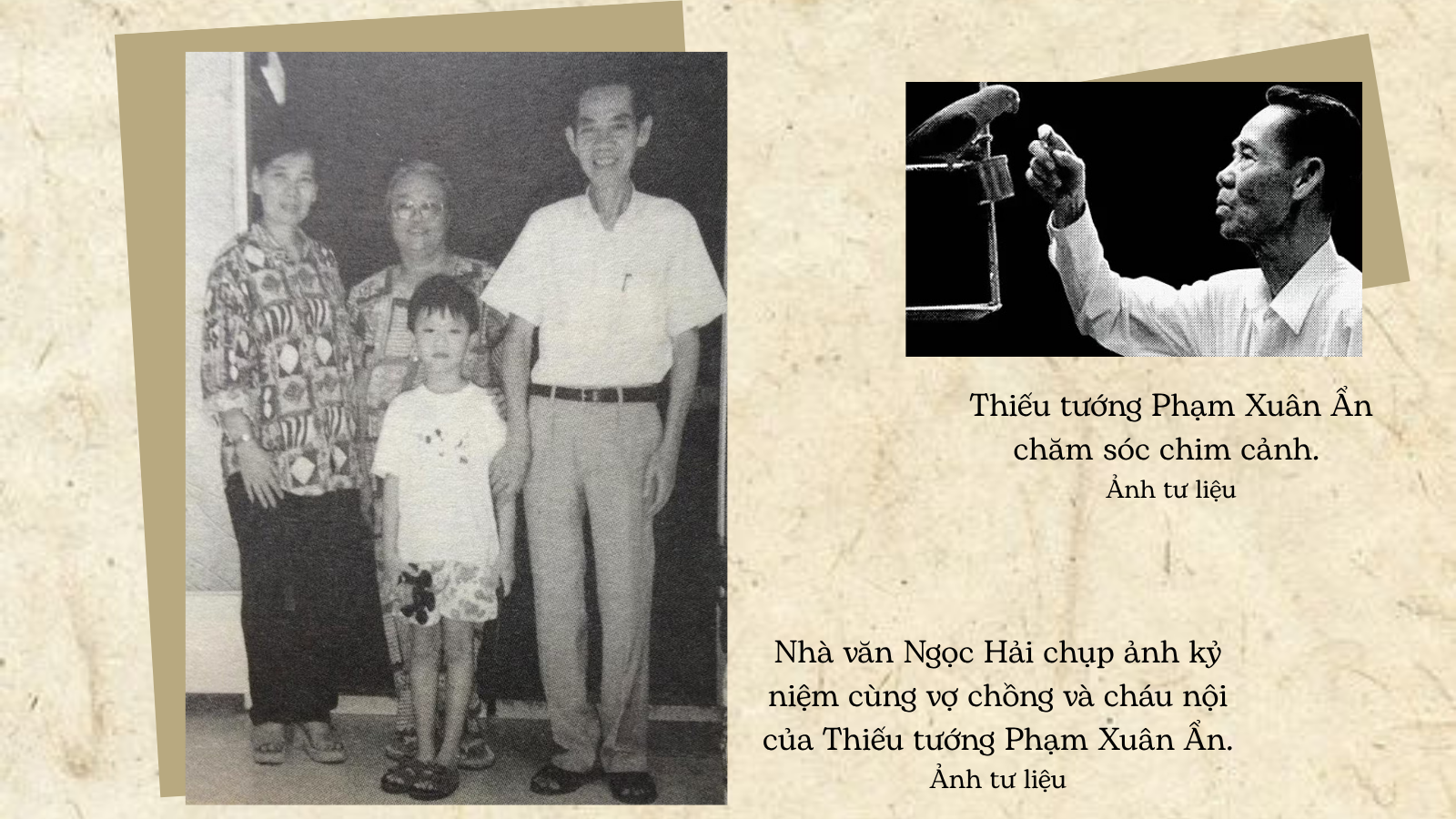
He had a soft spot for sincere and passionate people. He received me, often without discussing intelligence matters at all, showing me how he played with his pet birds, how he cared for them. Sometimes he would spend an entire afternoon just talking about birds. But I still took notes. I have a habit of not missing a single word, because I believe that sometimes seemingly unrelated details are the "key" to unlocking a person's true character.
After 10 years of "pursuing" this subject, I think anyone else might have given up. But I couldn't, because I was both curious about the profession and felt like I had touched something very deep, and once I had touched it, I couldn't turn my back.
PV:From a journalist's perspective, she approached this figure as a subject of documentation, but from a writer's perspective, she had to "decipher" his inner life. Did these two approaches clash, or even contradict each other, during the process of writing her work "Pham Xuan An - A Name Like a Life"?
HomeNguyen Thi Ngoc Hai's essay:I don't see any contradiction. People often separate them to make it easier to talk about their profession, but for me, these two things should complement each other.
Documents, if they are just documents, are merely hard information, and with a man like Mr. An, it couldn't stop there. Intelligence documents are already difficult to obtain, especially in the past, when there were no other means, only courage and human intelligence. But even with information obtained, if one doesn't delve into the man's character, it remains just fragmented pieces.
The important thing is to find the human element in that extremely dangerous situation. A person who carries the entire war within them, both mysterious and very human, very human – that is the key.
Pham Xuan An lived many lives within one lifetime: a life as a journalist, a life as an intelligence agent, and a life of loyalty and humanity.
His loyalty to the revolutionary cause and the ideals of the Party is clear, but he was also loyal to people, including those on the other side, whom he still considered friends, still saw the good in them, and was not blinded by hatred.
He clearly distinguished between good and beautiful people, and believed that life was not just about fulfilling one's duty, but first and foremost about being a human being. He said: "Throughout my life, loyalty has been my success!"
That's what surprised me the most. So, for me, the documents are just the starting point. You have to go through them, process them, to see a living, profound person, with inner beauty, carrying the burden of war within a strange and mysterious individual. Only then can you "decode" why Mr. An lived such a life, and only then will the story truly have meaning.
PV:Through conversations with Pham Xuan An and the search for and connection of related documents, what, in your opinion, is the "key" to understanding the true nature of Pham Xuan An – behind all the abundant information?
HomeNguyen Thi Ngoc Hai's essay:To be honest, I didn't know much about intelligence at the time. It seemed mysterious, complicated, and even dangerous to me.
What captivated me wasn't the material itself, but the person behind it all. A truly beautiful person, a rare soul. As a writer and journalist, I've met many people, but it's rare to encounter someone who possesses such qualities, especially in such a horrific situation.
So I think, for me, it was a stroke of luck. It's not every day that someone in this profession encounters such a person. And once you've met them, you can't just stand by; you have to delve deeper, you have to find the core essence of it.
Perhaps the "key" isn't in any particular technique, but rather whether you can see the person behind them, and whether you have the patience to get to the heart of that beauty.
PV:Some argue that writing about figures like Pham Xuan An easily falls into two extremes: either mythologizing them or "flattening" them into factual accounts. What demands did you set for yourself to ensure your work retains both historical weight and the reliability of real life?
HomeNguyen Thi Ngoc Hai's essay:I think that first and foremost, one must feel with the heart, not just with the mind. The same applies to readers; they don't just read with reason, they read with emotion. What remains is not the event, but the people.
I once received a message from a reader saying that my book about Mr. An didn't have many thrilling spy details, but it was the most "realistic" book they had ever read. I think they understood me. Because I wasn't pursuing a purely intelligence-driven narrative, partly because there wasn't enough material at the time, but more importantly because I was drawn to the person.
Events will eventually be forgotten by history, but people will remain forever. Therefore, if you only write in a list format, like a performance report, no one will remember it for long. They'll forget it as soon as they read it.
I want to do something different: Draw a "map of the soul." That is, from stories and life details, to reveal a person with form, depth, hidden corners, and contradictions, not just a flat image.
I later learned that this is called the Pareto principle (20-80), where 20% is hard information and 80% is storytelling – stories about people and stories that attract people. When I wrote the book, I knew nothing about this theory; I only realized that if I didn't delve into the essence of the person, I couldn't understand why he lived such a life. With a person like Mr. An, the more angles you look at him from, the more you realize you can't fully understand him, but it's precisely that incomprehensibility that creates his appeal. And I had to find a way to preserve that in my writing.
PV:Have you ever asked Mr. Pham Xuan An about the similarities and differences between journalism and intelligence work?
Writer Nguyen Thi Ngoc Hai:I did ask him. He said: The two professions are similar in that they both involve gathering information, but the difference is that journalists release it to the whole world, while intelligence agents have to keep it secret!
PV:The title "Pham Xuan An - A Name Like a Life" is considered by many to be highly evocative and possessing a rare "endurance," a quality that some later books about Pham Xuan An have struggled to replicate. How did you arrive at this title?
Writer Nguyen Thi Ngoc Hai:I finished writing it first, then named it. It's a play on words. It evokes mystery, curiosity, and the unknown – which perfectly reflects Mr. An's character. His name is Pham Xuan An, and his whole life has been "hidden." This coincidence itself is very evocative.
PV:Placed in today's context, where young readers access history through various channels, what do you think is the most important message that "Pham Xuan An - A Name Like a Life" conveys to them?
Writer Nguyen Thi Ngoc Hai:It is patriotism, loyalty, and noble human qualities that will overcome all difficulties.
PV:Looking back on the journey of writing this book, what aspects still make you think, ponder, or want to rewrite or add to it?
Writer Nguyen Thi Ngoc Hai:No, I couldn't write much more. With "Pham Xuan An - A Name Like a Life," I've hidden myself away so that readers can almost speak directly to Mr. An. Reading the book, you won't find many espionage missions or epic tales like other authors, because my writing criteria are different. A work must not only conquer the mind but also the heart to endure; that's the criterion of great literary works around the world, and I've followed that, trying to convey some of it in my work.
PV:Thank you, writer Nguyen Thi Ngoc Hai, for the open conversation!
"
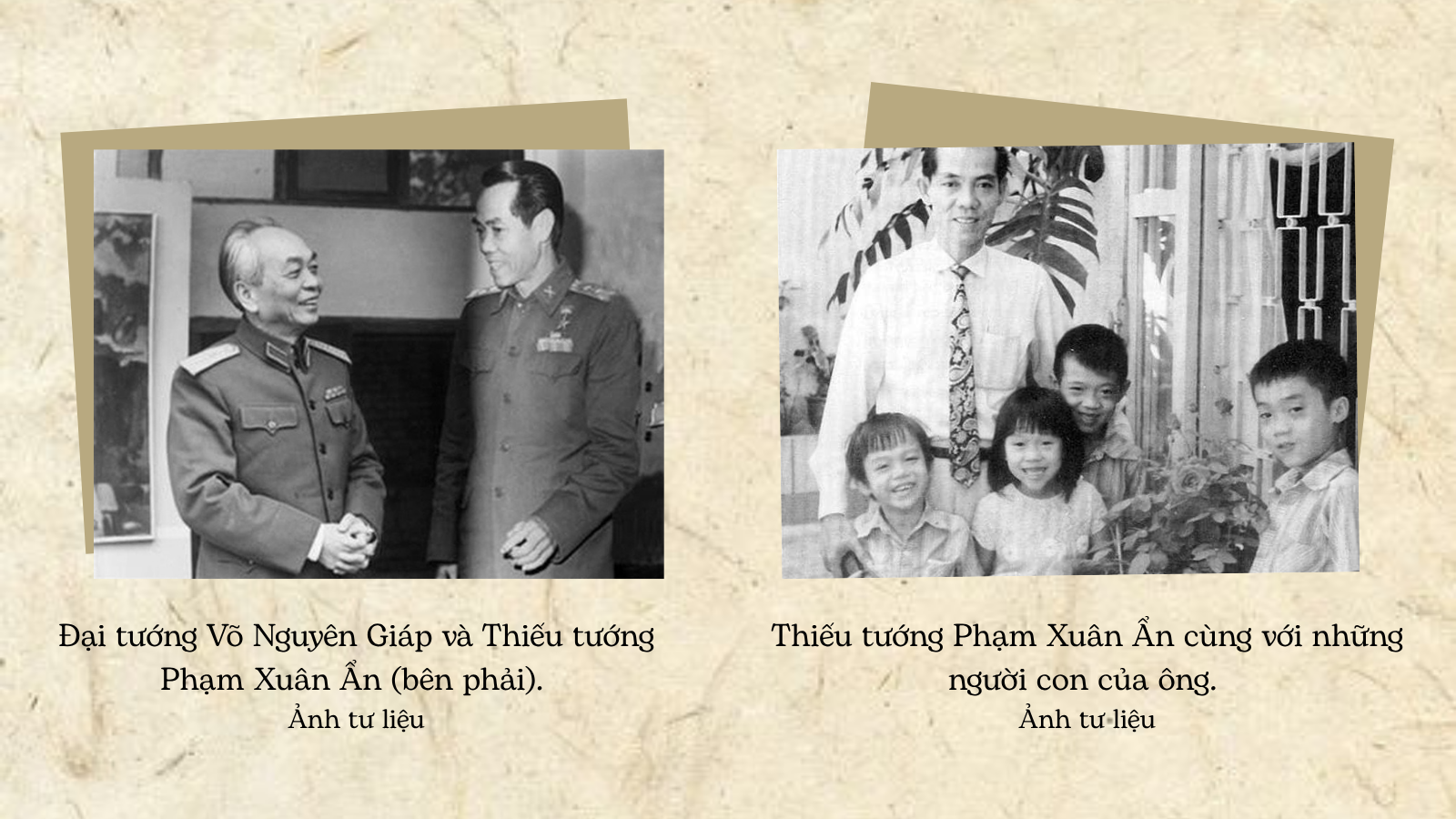
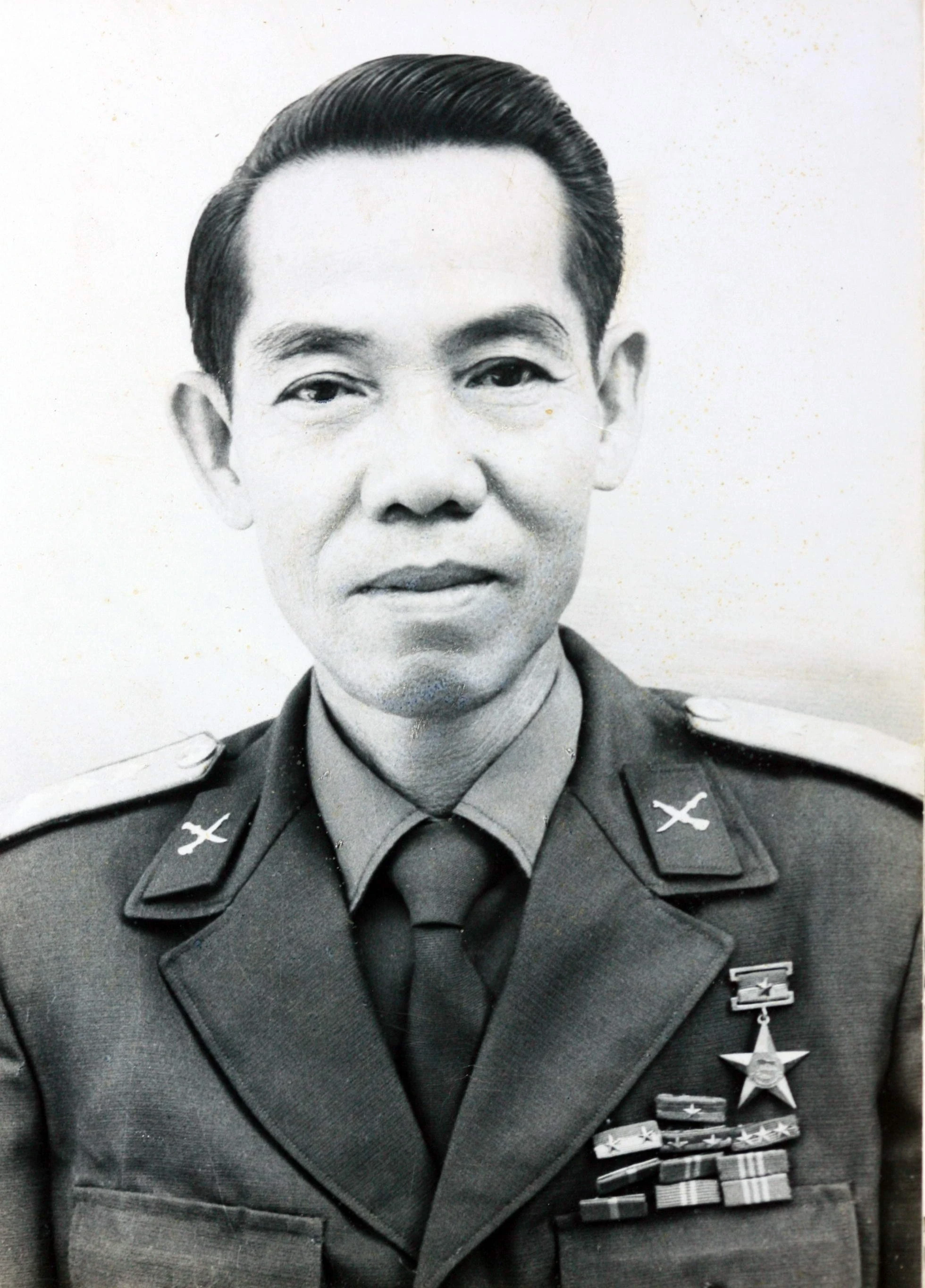
Major General, intelligence officer Pham Xuan An (also known as Pham Van Thanh) was born on September 12, 1927, in Dong Nai province. During his revolutionary years, Major General Pham Xuan An worked for major news agencies such as Reuters, TIME, the New York Herald Tribune, and The Christian Science Monitor. Thanks to his extensive connections with high-ranking officers, intelligence personnel, military security officials, and even the CIA, Major General Pham Xuan An obtained much important information that served the revolution.
In recognition of his exceptionally outstanding achievements and contributions to the revolutionary cause, Major General Pham Xuan An was awarded the First Class Liberation War Merit Medal, two Second Class Liberation War Merit Medals, and a Third Class Liberation War Merit Medal. He was also recognized as an Emulation Soldier six times.
On November 15, 1976, Major General Pham Xuan An was awarded the title of Hero of the People's Armed Forces by the President of the Democratic Republic of Vietnam.
On the morning of October 23, 2025, the General Department II (Ministry of National Defense), in coordination with the Party Committee and the government of Tan Nhut commune (Ho Chi Minh City), held the inauguration ceremony of the Memorial House for Major General Pham Xuan An, Hero of the People's Armed Forces.
Your comment has been submitted and will be displayed after being reviewed by the editorial team. The editorial board reserves the right to edit comments to comply with the newspaper's content guidelines.

.png)
.png)