
Japan considers deploying THAAD: A multi-purpose weapon.
(Baonghean) - Following in South Korea's footsteps, Japanese Defense Minister Tomomi Inada recently announced that the country is considering deploying the US Terminal High Altitude Area Defense (THAAD) missile defense system. According to observers, this move by Japan is not only aimed at strengthening its national defense capabilities but also at sending a message to other countries.
Deterring North Korea
In her statement, Japanese Defense Minister Tomomi Inada affirmed that considering the deployment of the US Terminal High Altitude Area Defense (THAAD) missile defense system on Japanese territory would enhance national defense capabilities in responding to potential ballistic missile threats.
The THAAD system, manufactured by the American corporation Lockheed Martin, is a missile interception system that operates both inside and outside the Earth's atmosphere. In response to the growing threat from North Korea, Japan is also currently deploying a two-layer ballistic missile defense system.
This system includes SM-3 interceptor missiles operated from warships to target high-altitude missiles and PAC-3 land-based missile batteries specializing in intercepting low-altitude missiles. Of course, for Japan, the greater the threat, the more thorough the investment in response is necessary.
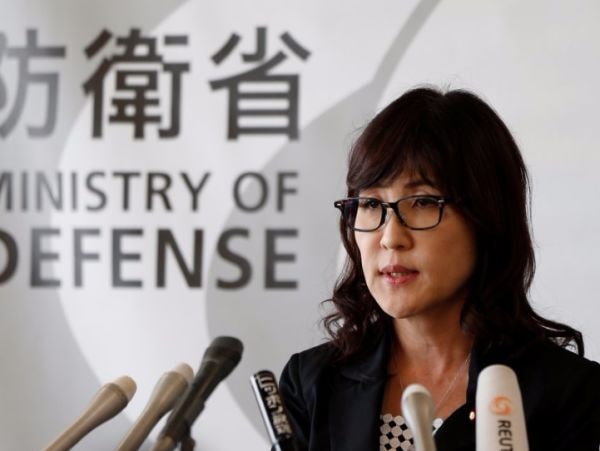 |
| Japanese Defense Minister Tomomi Inada said that Japan is considering deploying THAAD in the country. |
In fact, in recent months, such as July, August, and September, North Korea has repeatedly conducted missile tests towards the Sea of Japan. For example, in July, South Korean news agency Yonhap, citing military sources, reported that North Korea launched three ballistic missiles toward the Sea of Japan. In August, North Korea launched another ballistic missile off its eastern coast in protest against the US plan to deploy the THAAD missile defense system in South Korea.
Shortly afterward, Japan stated that this was the first time a North Korean missile had fallen in or near waters controlled by Japan. According to a Japanese defense official, the main body of the missile even fell into Japan's Exclusive Economic Zone (EEZ). Japanese Prime Minister Shinzo Abe described the launch as a serious threat to Japan.
More recently, on September 5th, North Korea fired three ballistic missiles from its east coast. The missiles traveled over 1,000km, with some reaching 1,300-1,500km before falling into Japan's air defense identification zone. Such continuous progress by North Korea has inevitably caused concern in Japan, leading it to consider deploying THAAD in the country.
Sending a message to China
If China has consistently expressed its opposition to the US Terminal High Altitude Area Defense (THAAD) missile defense system in South Korea, then deploying the system in Japan would only add fuel to the fire. This is understandable because once THAAD is deployed in Japan, its operational range could extend towards China.
Last August, Japan and South Korea also agreed for the first time to share information and data obtained from the THAAD system, which is expected to be deployed in southern South Korea. This move marked a complete shift in South Korea's stance on information sharing, as it had never previously intended to cooperate with Japan.
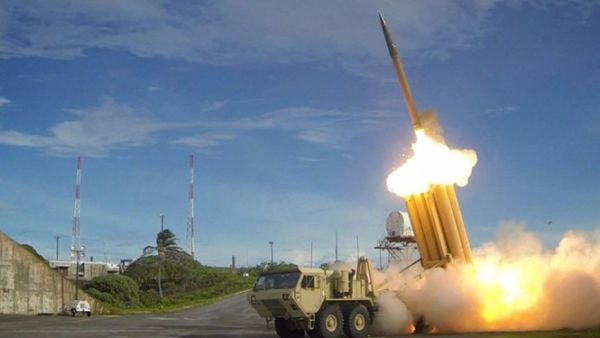 |
| The THAAD missile defense system is expected to be deployed by the US in South Korea in 2017. Source: Reuters |
It's worth reiterating that Japan and South Korea are both allies of the US in Asia, but their relationship has been strained due to tensions stemming from the war. However, in the new context, in order to address common threats, the rapprochement between these two countries is understandable. This also forms the basis for the close alliance between the US, Japan, and South Korea.
Although US President-elect Donald Trump has made several statements demanding that his ally Japan contribute more, core US interests in the region will not easily allow him to turn his back on these two key allies.
The strong US-Japan-South Korea alliance will naturally cause concern in many countries, including North Korea and China. China is particularly worried because, once the THAAD system is deployed in both Japan and South Korea, all of its military activities along the future coast will be entirely within the radar's detection range.
According to military experts, THAAD's mobile radar system, with a search range of up to 3,000 km, can detect all military exercises on land and in the air. Detailed parameters such as sortie frequency, number of troops, and airfield locations are also detected. Furthermore, the deployment of THAAD in Japan will certainly be a message Tokyo wants to send to Beijing regarding the recent disputes in the East China Sea.
Sending a message to Russia
Not only targeting North Korea and China, Japan's announcement of considering deploying THAAD is also intended to worry Russia. On November 22, the Russian Pacific Fleet announced the deployment of Bal and Bastion missile batteries to its naval bases on the Kuril Islands, which Japan also claims as its Northern Territories. Russia stated that these missile batteries would conduct training exercises soon.
In fact, Russia and Japan have not signed a peace treaty since World War II, due to sovereignty disputes over four islands in the disputed archipelago between the two countries. Therefore, Russia's actions have greatly angered Japan.
Japanese Prime Minister Abe has declared this action "reprehensible" and contrary to Tokyo's position. Therefore, the announcement of considering deploying THAAD is nothing more than a "ploy" that the Japanese government wants to send to Russia.
Although Japanese Defense Minister Tomomi Inada stated that Japan has no immediate intention of deploying the THAAD missile defense system and that Japanese military officials are "considering what can be done," this statement has caused concern among the countries involved and is predicted to increase tensions in the Asian region, especially in Northeast Asia, which already has many complex conflicts.
Phuong Hoa


