
Japan plans to release an additional amount of oil from its reserves equivalent to 20 days of consumption starting in May 2026.
The Japanese government has announced plans to release additional oil from its reserves and diversify its supply sources away from the Middle East to ensure national energy security against global risks.
Japan plans to release an amount of oil from its national reserves equivalent to 20 days of consumption into the market starting in May 2026. This move comes as the country seeks alternative energy sources outside the Middle East to cope with geopolitical disruptions to global supply chains.
National energy security strategy
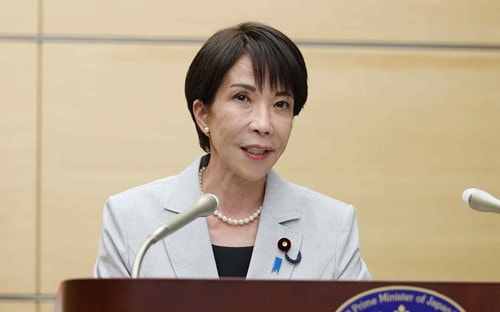
Speaking at a cabinet meeting on April 10, Prime Minister Sanae Takaichi emphasized that releasing oil from reserves is necessary to maintain the stability of the domestic economy. Currently, Japan relies on approximately 95% of its oil imports from the Middle East, a proportion that poses significant risks in the event of armed conflict in the region.
Previously, Japan began implementing a plan to release oil from its reserves on March 16th, both unilaterally and in coordination with international partners, with the expected volume released to the market equivalent to 50 days of consumption. The additional oil released from May 2026 is an increase aimed at strengthening energy self-sufficiency. As of April 6th, Japan's total oil reserves remained at a safe level, sufficient for approximately 230 days of use, including 143 days from national reserves.
Diversify transportation routes and supply sources.
Besides releasing its oil reserves, Japan is aggressively implementing a strategy to diversify shipping routes to minimize risks in key straits. Prime Minister Takaichi stated that by May 2026, the country aims to ensure that more than half of its imported oil is transported via routes that do not pass through the Strait of Hormuz.
According to Japan's Ministry of Industry, alternative routes in the region include shipping from Yanbu port on the Red Sea coast of Saudi Arabia and Fujairah port in the United Arab Emirates (UAE). In addition, the Japanese government has proactively established contact with a range of potential suppliers in various regions around the world, including:
- North America and Southeast Asia:The United States and Malaysia.
- Central Asia:Azerbaijan and Kazakhstan.
- Latin America:Brazil, Argentina, Ecuador, Colombia, and Mexico.
- Africa:Nigeria and Angola.
Prioritize essential economic sectors.
In order to protect production activities and people's lives, the Japanese government has requested suppliers to prioritize fuel distribution to critical sectors. Priority sectors include healthcare, transportation, and agriculture.
Notably, specialized agricultural sectors such as green tea cultivation, livestock farming, and aquaculture are also included in the list of those guaranteed a stable fuel supply. This is part of Prime Minister Takaichi's administration's efforts to prevent disruptions to the supply chains of food and basic services amid global energy market fluctuations.


