
Many localities in Nghe An province have opened stadiums and cultural center grounds for people to dry their rice.
During the peak of the spring rice harvest, the practice of people using roads and sidewalks to dry their rice has recurred in many places, posing a risk to traffic safety and affecting urban aesthetics.
Faced with this situation, many localities in Nghe An have proactively opened stadiums and cultural centers, and arranged centralized drying areas for residents. This flexible approach both meets production needs and contributes to ensuring traffic order and safety.
Drying takes place at the stadium.
Arriving at Hung Dung Stadium in Truong Vinh ward at midday under the scorching sun, one easily notices large areas of the field covered with layers of golden rice. Locals divide the land into small sections, some raking, some turning, some bagging... Gone are the anxious moments of dodging vehicles, the blaring horns, and the worry of children playing in the middle of the road, as in previous harvest seasons.
.jpg)
Mr. Nguyen Van Sang, residing in Truong Vinh ward, shared that his family owns 10 sao (approximately 1.7 hectares) of rice paddies. For many years, due to the lack of a drying yard, his family often dried their rice on Nguyen Duy Trinh road because the road was quite wide, the asphalt surface was smooth, and it absorbed heat well, allowing the rice to dry quickly. However, this convenience came with numerous concerns.
"Drying rice on the road was always a struggle; we had to watch the rice while also worrying about avoiding passing vehicles. For the past two years, the local authorities have provided us with the opportunity to dry it at the stadium, which offers ample space, safety, and doesn't affect traffic," Mr. Sang shared.
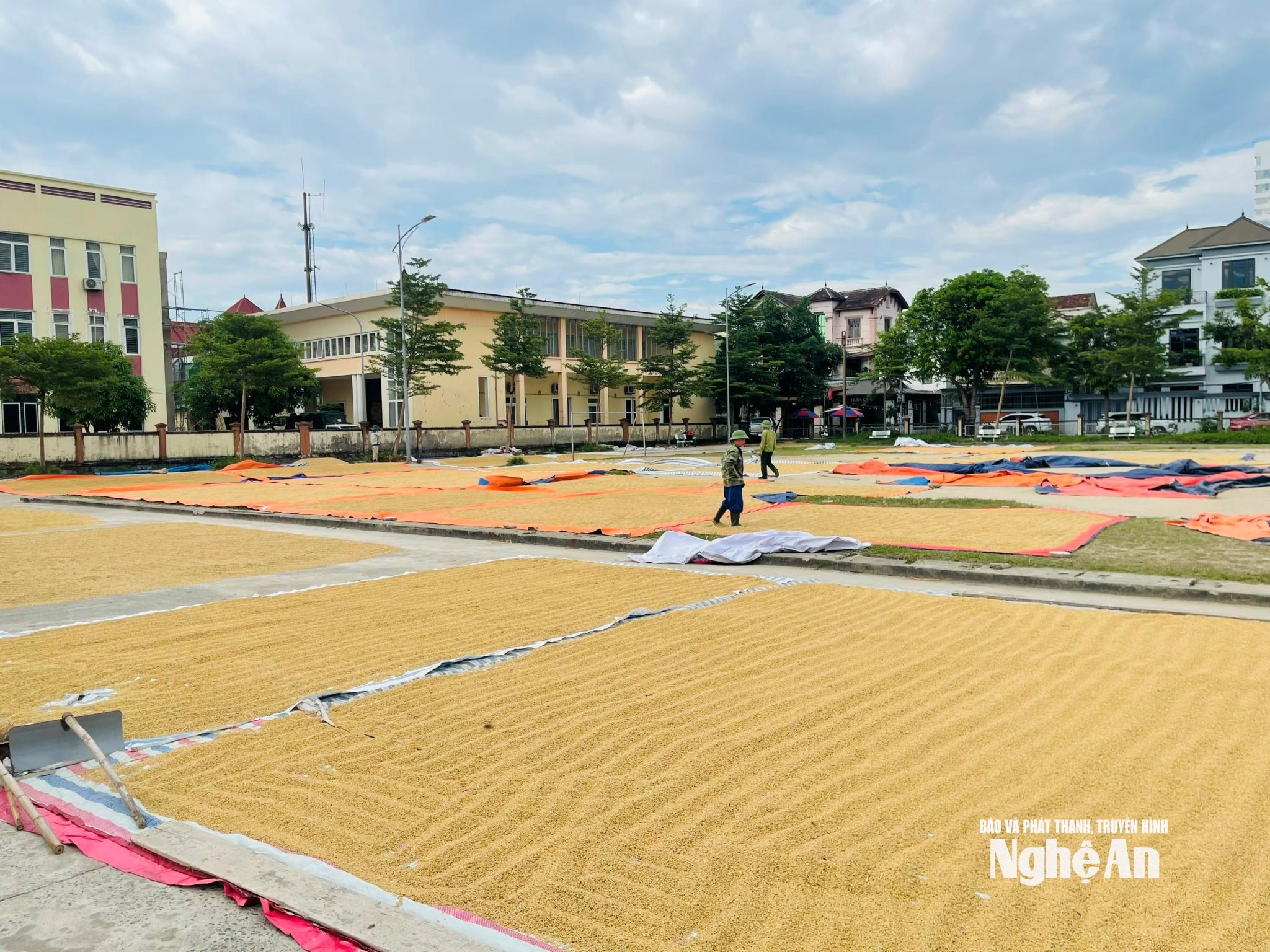
According to Mr. Sang, the biggest advantage is the large area of the stadium, enough for dozens of households in the block to dry their clothes at the same time. Each family only needs to proactively choose a location and manage their own area, which is both convenient and civilized.
According to statistics, after the merger, Truong Vinh ward now has a fairly large rice cultivation area of about 530 hectares, concentrated mainly in the Hung Hoa and Hung Dung (formerly) areas and some surrounding areas. This means that during each harvest season, the demand for drying rice is very high.
According to the Truong Vinh ward authorities, to curb the encroachment on roads and sidewalks for drying rice, the ward has intensified its public awareness campaign since the beginning of the harvest season through its public address system, neighborhood groups, self-governing organizations, and grassroots associations. Simultaneously, the ward has proactively opened stadiums in former wards and communes, cultural centers, and surveyed vacant land areas that could be utilized as centralized rice drying sites.
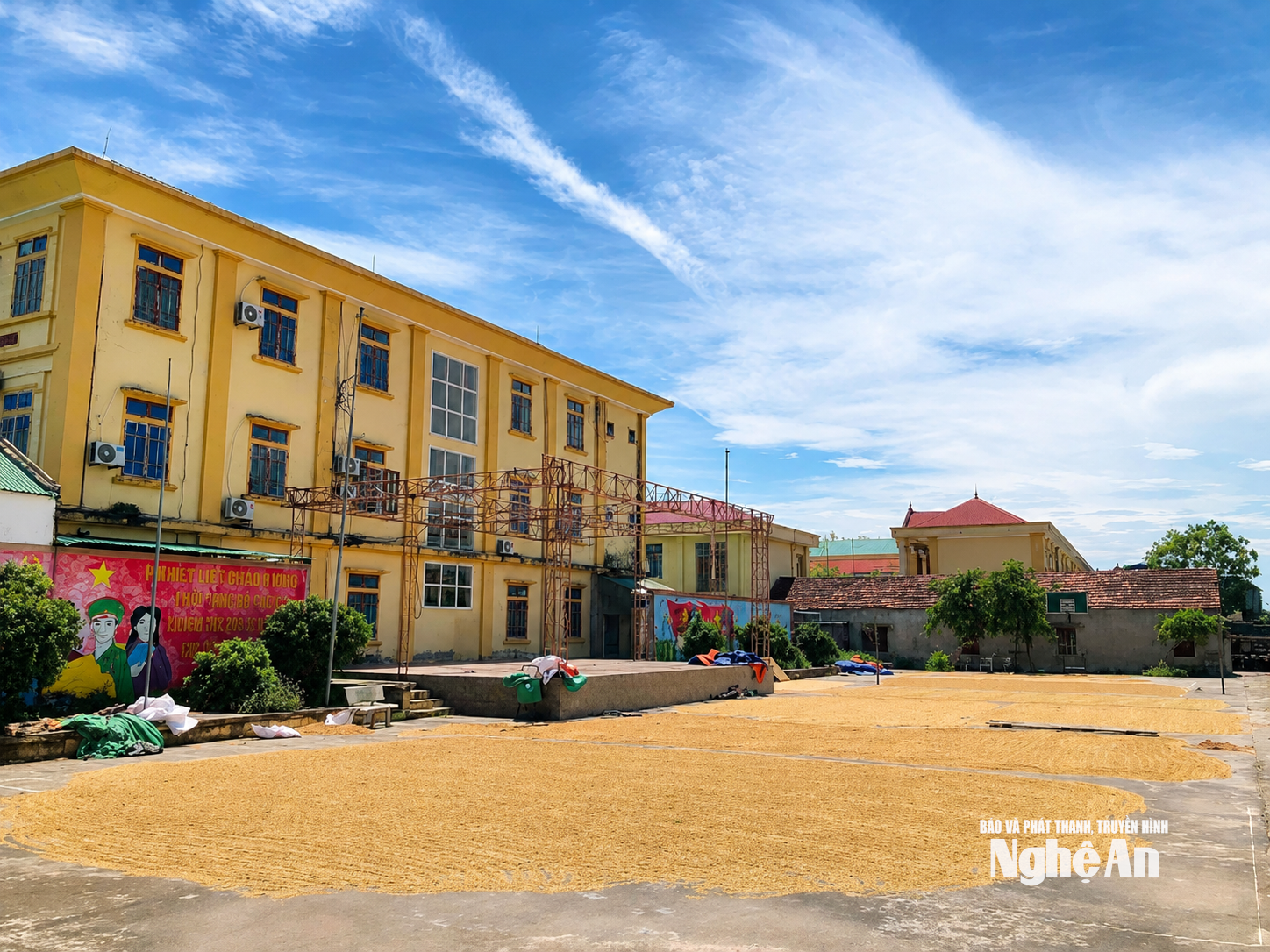
Not only in Truong Vinh ward, but many other localities such as Minh Chau and Trung Loc communes are also effectively implementing this model. In these communes, village cultural centers, commune stadiums, and schoolyards are utilized during the summer holidays as places to dry rice for the people each harvest season.
Mr. Tran Nguyen Hoa, Chairman of the People's Committee of Trung Loc commune, said that the locality currently has more than 600 hectares of rice fields and is entering the peak season for harvesting the spring rice crop, so the demand for drying rice is very high. Along with that, the situation of some households using the road and sidewalk to dry rice still occurs in some areas, posing a potential traffic safety risk. In response to this, the commune has developed a plan to raise awareness and remind people early on; assigning the Economic Department to coordinate with the police force to regularly patrol and inspect, and promptly correct violations.
According to Mr. Hoa, after the administrative unit merger, the commune now has four stadiums belonging to the four former communes, creating favorable conditions for arranging centralized rice drying areas for the local people.
Of these, the former Nghi Thuan commune stadium, with an area of over 10,000m², is spacious and has a favorable surface, and has been identified as the main drying spot during this season.
"The commune is actively encouraging people to bring their rice here to dry. This method provides farmers with ample space for convenient turning and collecting of their rice, while also avoiding encroachment on traffic lanes and contributing to the safety of people and vehicles," Mr. Hoa emphasized.
.jpg)
Although opening stadiums, cultural centers, or utilizing vacant land as centralized rice drying areas are flexible and practical approaches, for communes and wards with large rice-growing areas and concentrated harvests at the same time, the available public spaces are insufficient to meet all needs.
Therefore, in addition to arranging more suitable drying areas, it is even more important to strengthen propaganda and reminders to raise people's awareness and make them clearly understand the traffic safety risks caused by drying rice on the road.
It shouldn't stop at just giving a reminder.
Although many localities have made positive progress in encouraging people to bring rice to centralized drying areas, the reality shows that the problem of rice drying encroaching on roads has not been completely resolved.
On some inter-communal and inter-village roads, it is still easy to spot rice being dried for tens of meters, accompanied by bricks, stones, bamboo stakes, and sacks placed in the middle of the road to warn vehicles.
.jpg)
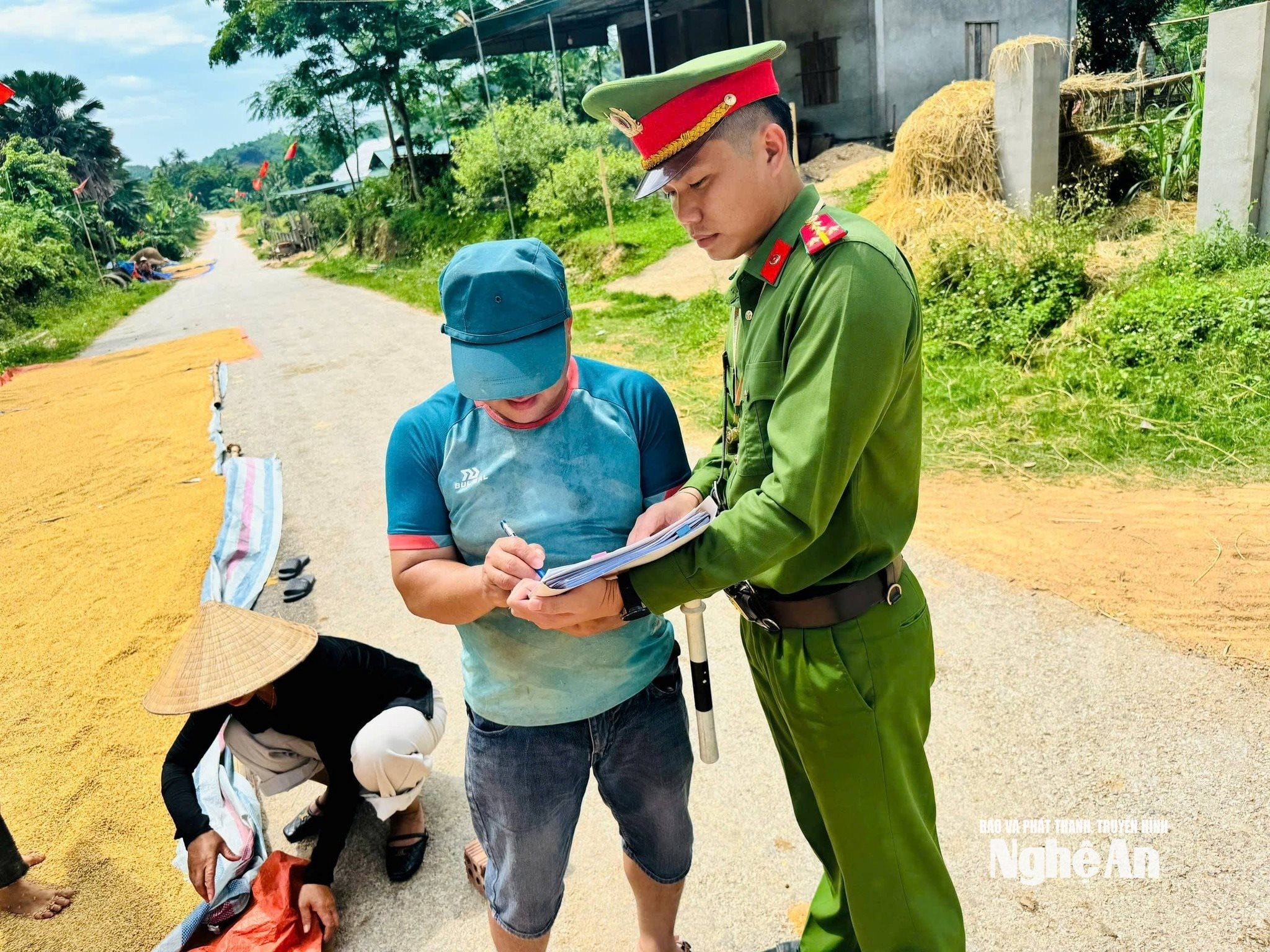
Speaking to reporters, Mr. Phan Huy Chuong, Deputy Head of the Traffic Safety Committee of Nghe An province, said that in the current context, simply raising awareness and reminding people is not enough to deter accidents, especially since tragic accidents have already occurred.
“Over the years, the Provincial Traffic Safety Committee has regularly directed localities to strengthen propaganda on this issue. However, in reality, enforcement at the ward and commune levels remains quite limited, partly due to the difficulties faced by farmers during the harvest season. Nevertheless, even though many localities have proactively arranged stadiums and cultural centers as designated drying areas and intensified propaganda efforts, the deliberate encroachment on roads and sidewalks still persists. This cannot be limited to mere reminders. For cases of repeated violations, dangerous obstructions, or excessive encroachment, administrative penalties must be resolutely imposed to ensure deterrence,” Mr. Chương emphasized.
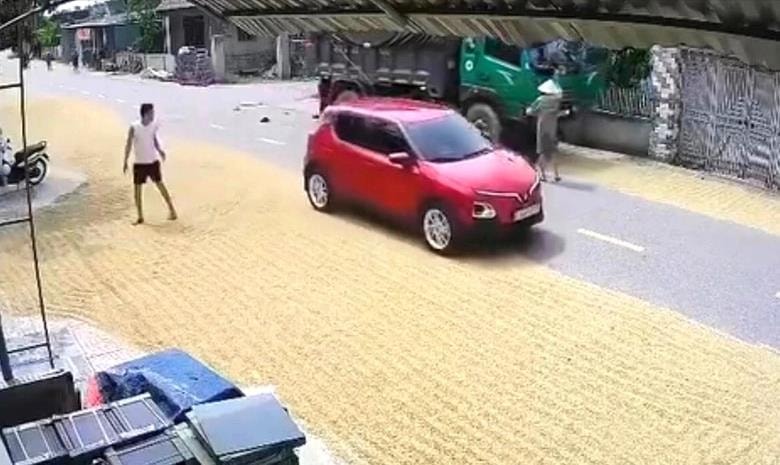
According to Mr. Chuong, the strict enforcement is not intended to cause difficulties for the people but to prevent unfortunate consequences from occurring. This has become even more urgent after the tragic accident that occurred on the afternoon of May 12, 2026, in Truong Luu commune, Ha Tinh province, when a truck, avoiding an area where rice was being dried that encroached on the road, collided with an electric motorbike, killing a mother and child instantly. Security camera footage showed the rice being dried occupying more than half of the road, forcing vehicles to swerve to avoid it.
This incident serves as a painful warning about the traffic safety risks posed by the habit of drying rice on the road. It highlights the need for local authorities to be more decisive in inspecting and penalizing violations to avoid such unfortunate consequences.


