
Many properties on prime real estate in Nghe An province remain vacant.
The phenomenon of businesses returning leased premises on central streets in Nghe An province is not just a temporary decline, but reflects the retail industry's need for transformation to adapt to changes in shopping habits in the digital environment.
Cost pressures and a wave of store closures.
Recently, along many central streets considered "prime commercial land" in the wards of Vinh city, the sight of kiosks closed, displaying signs for rent, transfer, or liquidation, has appeared with increasing frequency.
Surveys show that retail space occupancy rates in some key areas have decreased by 10% to 15% compared to peak periods. Many large spaces in prime locations remain vacant for months.
.jpg)
According to economic experts, this is an inevitable consequence of the interplay between operating costs and the shift in the retail market. The most decisive change stems from consumer habits. Online shopping has become the preferred option, significantly reducing customer traffic to physical stores. As in-person purchasing power decreases, fixed costs become a major burden for businesses.
Ms. Nguyen Thi Cam Anh, a small business owner selling electronics on Ly Thuong Kiet Street, said that the number of customers coming to buy goods in person has decreased significantly recently, leading to a drop in revenue.
However, rental costs did not decrease; in fact, they increased year after year. To survive in the market, she intensified sales on digital platforms and e-commerce sites.

From the perspective of property owners, adjusting rental prices downwards is difficult to accept due to calculations of investment value and commercial location. On many streets such as Nguyen Van Cu, Phan Dinh Phung, and Le Hong Phong, there are premises that previously rented for tens of millions of VND per month but remain vacant for many months.
Mr. Le Duc Bich, from Truong Thi 3 block, Truong Vinh ward, shared: "These are bustling and convenient streets. Everyone has to invest capital to get a good location, so the trend for rental prices generally only goes up; it's very difficult for them to go down."
When they can't find common ground, many business owners are forced to terminate their contracts and leave the central streets to find business locations with more affordable operating costs.
.jpg)
Switch methodsand improve the legal framework.
The fact that many businesses are moving out of expensive locations does not necessarily mean they are scaling back their operations.
According to data from the General Statistics Office, as of July 2026, total retail sales of goods and consumer service revenue in the area continued to grow, reaching an increase of 13.1% compared to the same period of the previous year.
However, this growth is no longer focused on traditional shopping channels but is shifting significantly.
Modern retail models incorporating digital platforms are the main drivers of growth. This has led sectors that previously relied heavily on prime physical locations, such as fashion, restaurants, household goods, and electronics, to gradually reduce their in-person sales space and dedicate more resources to developing online sales on digital platforms.
Recognizing the changing market, distribution businesses are proactively transforming their methods. A customer service representative from the fashion brand Format stated that the proportion of revenue from online channels currently accounts for 20% to 30% of their business, and they aim to increase this percentage to over 40% in the near future.

This shift is creating significant room for development in logistics and delivery infrastructure. Modern goods flows are no longer concentrated in bustling street-front showrooms, but instead circulate continuously through warehousing systems and professional transportation networks.
At the provincial post office, the unit has designed comprehensive logistics service chains, applying technology to optimize delivery times. It connects with e-commerce platforms such as Shopee and TikTok and supports businesses in bringing their products to the digital environment.
Mr. Nguyen Trong Tuan, Deputy Director of the Operations Center, added: Approximately 60% of customers regularly use the Vietnam Post app as well as other sales software to create orders and track order progress.
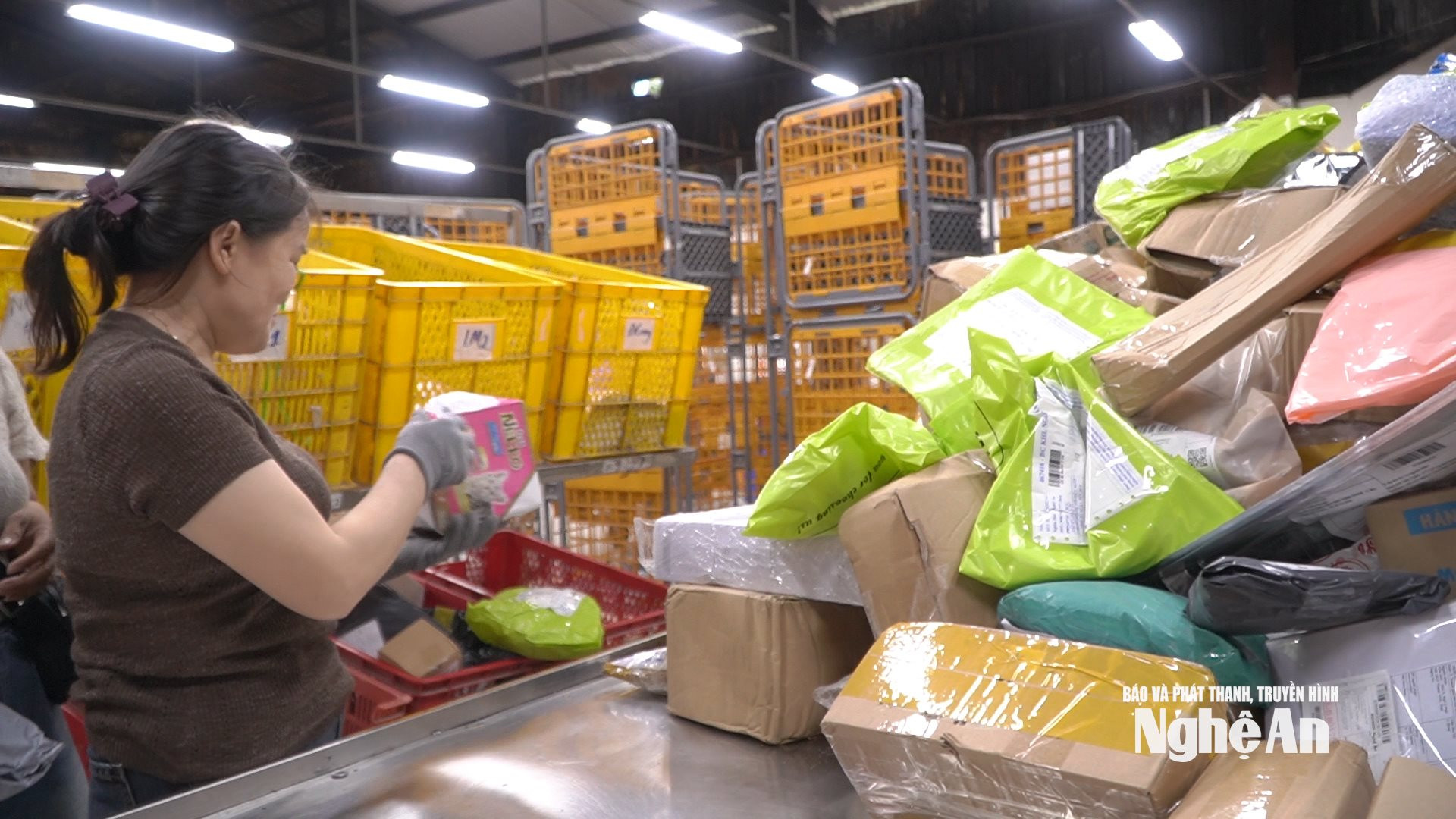
This is clearly an inevitable transformation for the retail industry aimed at optimizing costs. However, the explosion of e-commerce and the digitalization process are also posing new and more complex challenges for state management.
With most commercial activities taking place online, monitoring cash flow, managing taxes, and ensuring product quality require integrated management tools. The core issue now is building a comprehensive legal framework that ensures a transparent business environment and creates fair competition between online and offline sales channels.
A significant shift in management has been established with the regulation requiring 100% identification of online users under the E-commerce Law, effective from July 1, 2026. This is a mandatory requirement for electronic identity verification for all individuals selling goods, engaging in affiliate marketing, and live streaming.
This regulation aims to completely put an end to the use of fake accounts for trading counterfeit or substandard goods, or for tax evasion. It also strengthens the supervisory responsibilities of online platforms.
When the legal framework is tightened, the market will be purified, maximizing the protection of consumers' legitimate rights and creating a foundation for sustainable economic development.


