
Looking back at the US-North Korea war 57 years ago.
(Baonghean.vn) -The Korean War took place...57 years agoIt claimed the lives of millions of civilians and resulted in the deaths of over 400,000 soldiers.
In mid-1950, as the world was actively rebuilding after World War II, a new conflict emerged in East Asia. Fighting between North and South Korea resulted in at least 2 million civilian deaths. The number of American soldiers killed was 30,000, and the South Korean army 400,000. According to the Britannica Encyclopedia, the number of civilian deaths in South Korea was approximately 1 million.
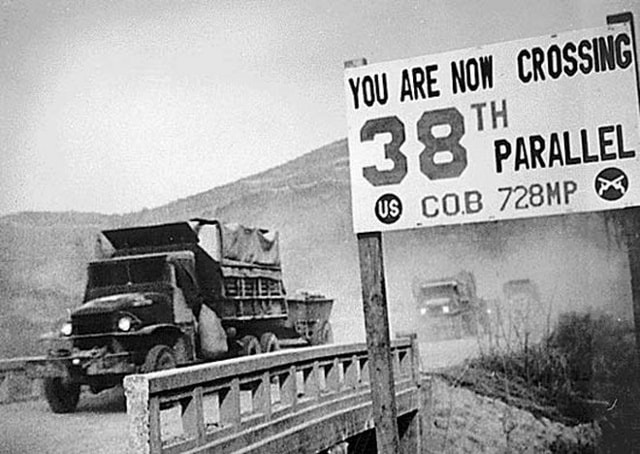 |
The 38th parallel divided the two regions. |
World War II ended. After losing to the Allies, Japan surrendered unconditionally and allowed the Soviet Union to take over the peninsula. The United States and the Soviet Union agreed to divide the peninsula into two parts, with the border at the 38th parallel. The Soviet Union controlled the North (present-day North Korea) and the United States the South (present-day South Korea). Chairman Kim Il-sung held supreme leadership in North Korea. In the South, Syungman Rhee became president. In 1949, the United States and the Soviet Union simultaneously withdrew their troops from both sides.
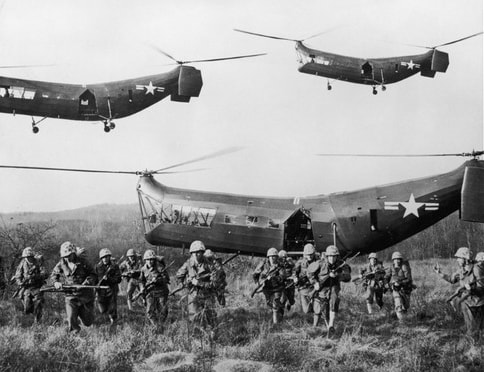 |
| American helicopters are dropping troops into South Korea. |
Before the war broke out, the balance of power between the two sides was quite uneven. North Korea had 130,000 well-equipped soldiers, including tanks and artillery. The South Korean army had approximately 100,000 soldiers. In the early morning of June 25, 1950, North Korean troops crossed the 38th parallel and attacked South Korea. The US military immediately intervened in the conflict.
Initially, the US and South Korea faced significant difficulties fighting North Korea's well-trained army. They retreated to the port city of Busan while the US appealed to the United Nations for assistance.
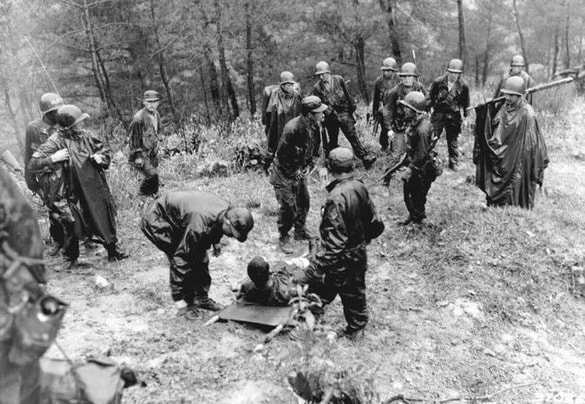 |
| American soldiers wounded in North Korea. |
Fourteen countries, including Belgium, France, Greece, the Netherlands, the Philippines, Thailand, Turkey, South Africa, and Australia, sent troops to the Korean Peninsula. The United States, the United Kingdom, Canada, and Australia accounted for the largest number, with over 260,000 soldiers.
During this time, South Korean troops concentrated on holding the port of Busan while fighting North Korea. In the south of the peninsula, General Walton Walker had to personally motivate the soldiers to prevent them from retreating. They held out for another six weeks, but at the cost of many American casualties.
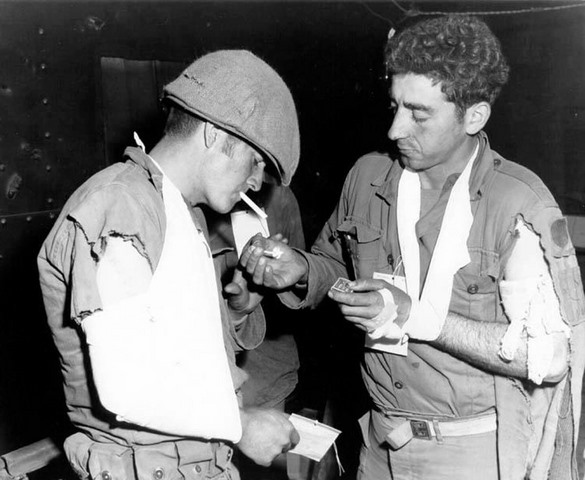 |
| Two coalition soldiers were wounded. |
General Douglas MacArthur was determined to reverse the situation with a daring campaign. On September 15, 1950, he attacked the port city of Inchon. His goal was to cut off North Korea's supply and communication lines, trapping North Korean troops between Inchon and Busan. By September 25, the Allied forces had recaptured Seoul after the North Korean troops retreated.
US President Harry Truman wanted to unify the Korean peninsula to establish a pro-Western government. General MacArthur ordered his soldiers to pursue North Korean troops across the border. China declared that if the US invaded Korea, it would enter the war.
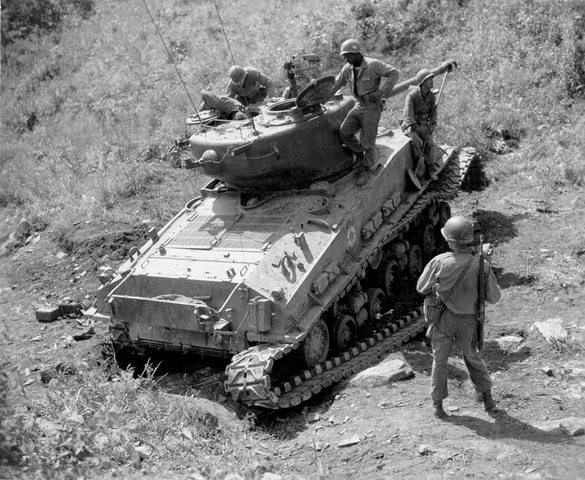 |
| South Korean soldiers inspect a burnt-out tank. |
Despite the warnings, General MacArthur remained confident that the coalition forces would soon end the Korean campaign. Ten days later, Chinese troops joined the battle. On November 24, General MacArthur deployed troops to the Yalu River, which separates Korea from northeastern China. The American general hoped the battle would end quickly and his soldiers could return home before Christmas.
The following day, 180,000 Chinese troops launched a fierce attack, forcing the allied forces to retreat in freezing 0°C weather and regroup behind the 38th parallel. After a few months, the situation calmed down, and the 38th parallel became more stable.
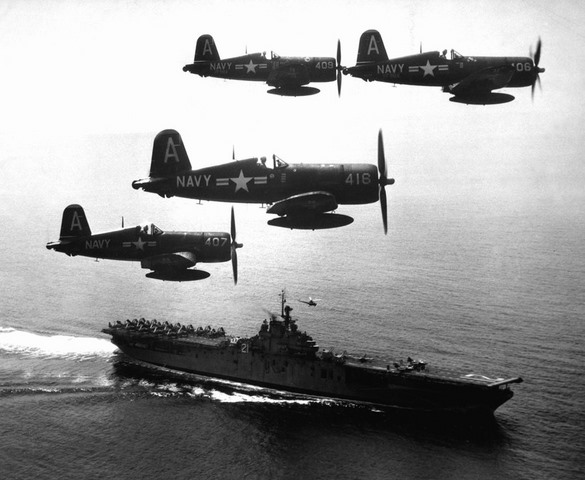 |
| American aircraft escorted the USS Boxer. |
President Truman declared his willingness to sign an armistice agreement, but faced fierce opposition from General MacArthur. MacArthur insisted on a war with China and put his views on the matter before Congress. General MacArthur was dismissed in April 1951.
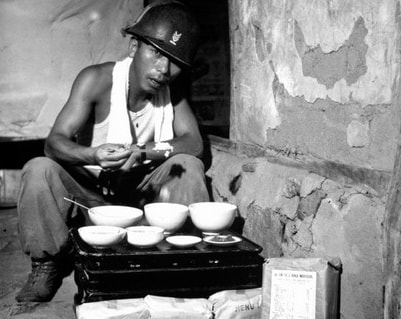 |
| South Korean soldiers eat their meals in a bomb shelter. |
Negotiations began on July 10th of that year but encountered numerous impasses regarding the exchange of prisoners and the demarcation line between the two sides. A ceasefire agreement was signed, but it wasn't until 1953 that the final agreement was approved under President Eisenhower.
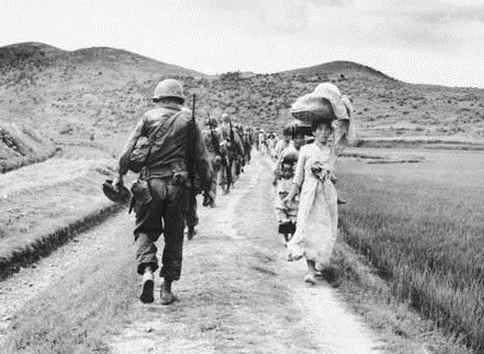 |
| American soldiers march past North Korean women. |
After more than 57 years, the armistice agreement remains temporary, "until peace is re-established." Therefore, theoretically, North and South Korea are still in a state of war.
Kim Ngoc
(Synthetic)
| RELATED NEWS |
|---|


