
Looking back at the world in 2025: A center of balance and dialogue.
Concluding 2025 under Malaysia's chairmanship, the Association of Southeast Asian Nations (ASEAN) has marked a year of significant developments, both expanding its membership and proactively adapting to profound changes in the regional and global environment.
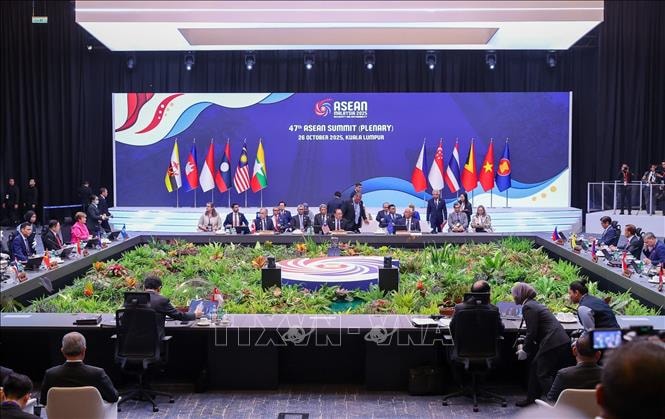
A series of high-level conferences, most notably the Conference cThe 47th ASEAN Summit and related meetings in Kuala Lumpur not only summarized ASEAN's development progress during this pivotal year, but also laid the strategic foundation for the ASEAN Community Vision 2045, towards a resilient, dynamic, innovative, and people-centered community.
Against the backdrop of an increasingly unstable international environment, heightened strategic competition, and a resurgence of protectionism, ASEAN leaders have focused on expanding membership, strengthening economic resilience, and deepening regional cooperation. The economic agenda is considered the most urgent priority, aiming to maintain integration momentum, protect supply chains, and mitigate the impact of external risks, particularly tariffs and global trade disruptions.
Strengthening the central role
One of ASEAN's most notable diplomatic achievements in 2025 is the official admission of Timor Leste as its 11th member. The admission declaration, signed within the framework of the 47th ASEAN Summit, is considered a historic milestone, clearly demonstrating the inclusive principle and spirit of mutual support – core values of ASEAN for nearly six decades.
Timor Leste's accession to ASEAN is expected to provide new impetus to the ASEAN Economic Community (AEC), while expanding the scope for political and security cooperation and regional connectivity. However, policymakers frankly acknowledge the accompanying challenges, particularly the risk of widening development gaps among member states. This is seen as a long-term problem, requiring ASEAN to continue strengthening technical assistance, narrowing disparities, and ensuring internal cohesion.
On the geopolitical stage, ASEAN reaffirms its collective voice and capacity for action as a balanced and credible regional forum. Amidst increasing great power competition, ASEAN remains steadfast in its principles of neutrality, while strengthening its "central role" as a platform for dialogue where parties can manage disagreements through diplomacy and cooperation.
ASEAN's external relations in 2025 will continue to highlight the bloc's central role in the regional structure, through a series of "ASEAN+" mechanisms with major partners such as the United States, China, Japan, South Korea, India, and the European Union (EU). Discussions will increasingly expand into new areas, from digital trade and clean energy to supply chain resilience and inclusive growth.
Notably, ASEAN is actively pursuing a strategy of diversifying partnerships, strengthening connections with regions and groups of countries such as the Gulf Cooperation Council (GCC), the Middle East, BRICS, and the economies of the Southern Hemisphere. This approach aims to increase strategic space, enhance economic self-reliance, and reduce traditional dependence on a few major powers in the context of an unpredictable international environment.
Two economic initiatives considered to shape ASEAN's future, strongly promoted in 2025, are the ASEAN Digital Economy Framework Agreement (DEFA) and the ASEAN Grid Agreement (APG). DEFA is considered ASEAN's first regional digital economy agreement and a pioneering initiative globally. The agreement aims to build a borderless digital market with unified rules on e-commerce, cross-border data flows, cybersecurity, digital identity, and digital payments. When fully implemented, DEFA is projected to double the size of ASEAN's digital economy to approximately US$2 trillion by 2030, thereby enhancing the region's competitiveness, especially for micro, small, and medium-sized enterprises (MSMEs).
Alongside digital transformation, ASEAN is also deepening its commitment to the green agenda. The ASEAN Power Grid (APG) – a network connecting renewable energy sources across borders – is affirmed as a cornerstone initiative in the ASEAN Connectivity Master Plan. Member states emphasize the importance of developing renewable energy infrastructure, smart grids, and regional power swapping mechanisms, viewing them as foundations for sustainable growth and long-term resilience.
Faced with rising protectionism and a fragmented global trade environment, ASEAN has opted for a strategy of “deeper integration to mitigate risks.” This approach is reflected in efforts to upgrade key trade frameworks, including the ASEAN Trade in Goods Agreement (ATIGA), to modernize rules of origin, digitize customs procedures, and reduce compliance costs.
Furthermore, the upgrading of the China-ASEAN Free Trade Agreement (ACFTA 3.0) with new chapters on the digital economy and green economy is seen as a strategic step, helping ASEAN maintain its central role in the regional trade network. Experts believe that accelerating integration while diversifying partners is how ASEAN positions itself as a reliable manufacturing and innovation hub in the Indo-Pacific region.
Vietnam's prominent role
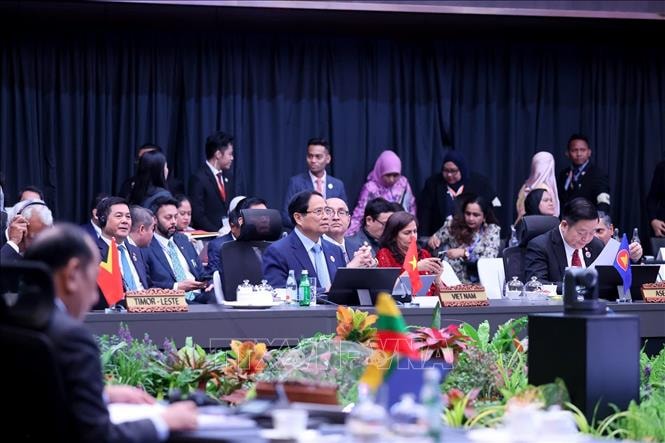
According to many regional experts, Vietnam is emerging as one of the most dynamic and increasingly influential members of ASEAN in 2025. Vietnam is seen as transforming from a beneficiary of integration into an active "architect," contributing to shaping the bloc's strategic agenda.
With its high growth rate, Vietnam plays a crucial role in key sectors such as energy transition, green economy, digital economy, and advanced manufacturing. Vietnam is also seen as an attractive destination in the "China+1" strategy, attracting investment capital, technology, and new supply chains, creating a positive spillover effect throughout the region.
Adjusting the national development strategy to align with regional initiatives such as DEFA and APG is considered a key factor in helping Vietnam become a model of proactive integration and sustainable development within ASEAN.
The 47th ASEAN Summit established strategic priorities towards the ASEAN Community Vision 2045, focusing on finalizing and implementing new frameworks such as DEFA and APG; strengthening physical, digital, and institutional connectivity; and promoting green, inclusive, and innovation-driven growth.
Overall, ASEAN Year 2025 marks a significant turning point in the bloc's long-term progress. Despite facing numerous challenges, ASEAN demonstrates the political will and collective capacity to adapt to a volatile global environment, continuing to affirm its role as a balancing center and platform for regional dialogue, towards a more stable and sustainable future by 2045.


