
If the land title is registered in the name of the person who paid for it, can the person who paid for it reclaim the land?
For sensitive reasons, I purchased a plot of land worth nearly 2.5 billion VND but had someone else's name registered on the land use rights certificate. If a dispute arises later, can the person who paid but whose name isn't on the certificate reclaim the property? This is a concern raised by Ms. TLC (Vinh Phu Ward).
Reply:
Having someone else's name on the land title certificate when buying land carries many legal risks. According to Clause 21, Article 3 of the 2024 Land Law, the person whose name appears on the land use right certificate is the person whose legal land use rights are recognized by the State. This means that, legally, the person whose name appears on the certificate has full rights to the land, regardless of who actually paid for it.
When a dispute arises, according to regulations, the parties are required to conduct mediation at the People's Committee of the commune where the land is located. Only if mediation fails can the interested party file a lawsuit in court.
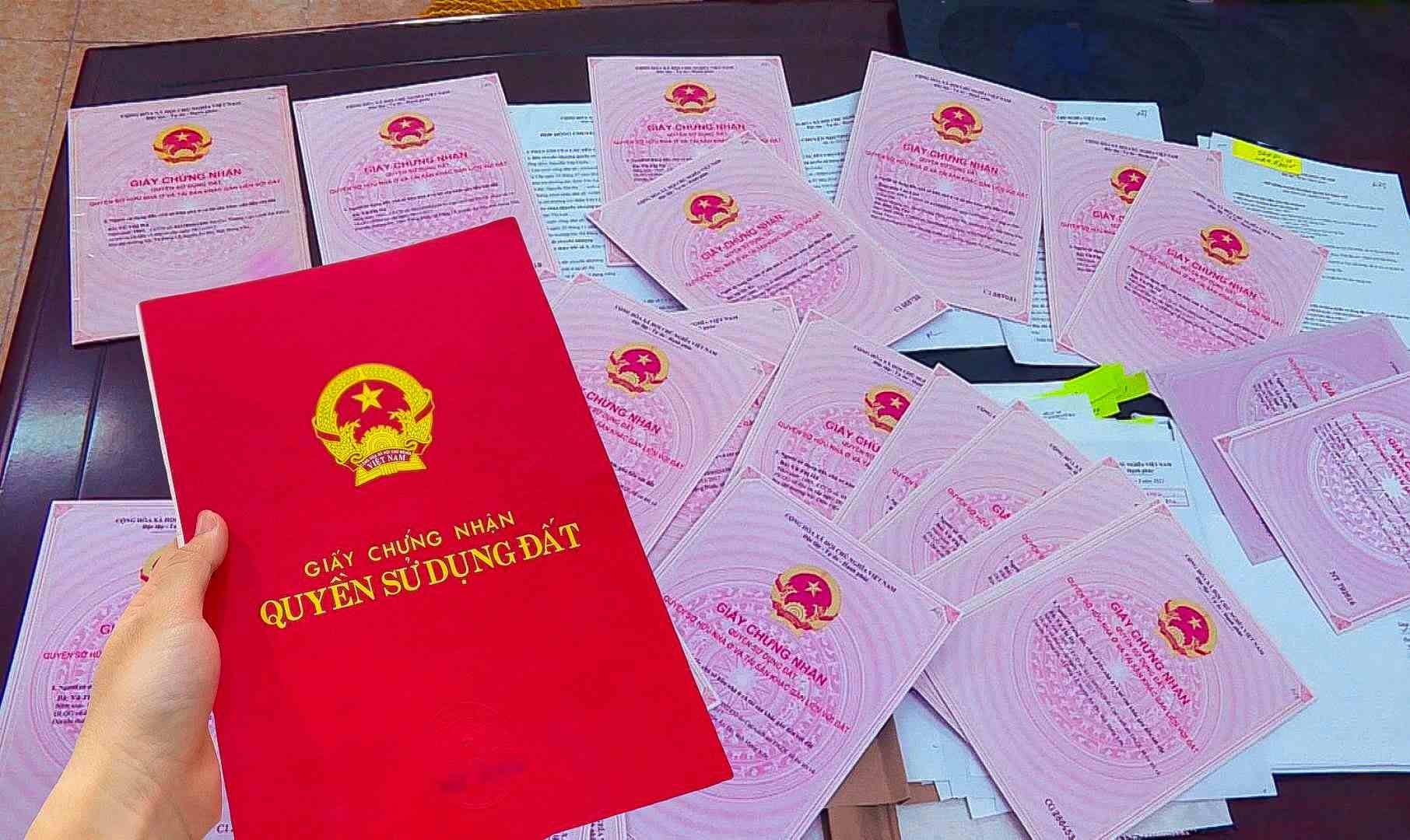
To reclaim ownership of real estate, the person who paid but did not register the property in their name must prove that the act of having someone else register it in their name was only temporary and that they were the actual buyer. Important evidence may include: written agreements for temporary registration (if any), text messages, emails, audio recordings of conversations, witness statements, and proof of money transfer when paying for the land...
If the person whose name is on the title deed refuses to cooperate in transferring ownership, the person who paid for the land has the right to sue. However, judicial practice shows that these types of disputes are often protracted and complicated, because the person whose name is on the title deed is always in a more favorable legal position. In many cases, the person who paid for the land has completely lost their rights to the property because they could not provide evidence to prove that they had asked someone else to hold the title deed on their behalf.
In principle, the person who signs the transfer contract and is granted the land title is protected by law. However, if the court determines that the person named on the title is not the one who actually paid for the land, but the person who paid meets all the legal requirements to be named on the title, the court may recognize the land use rights for the person who paid.
In the case of someone requesting a proxy to file a lawsuit, their request may be granted if they can prove three things:
(1) There is an agreement to have someone else register under their name;
(2) I am the one who directly paid for the land;
(3) I am legally eligible to be named as the owner of the land use rights.
If the value of the real estate increases over time, the investor must also compensate the person whose name is on the title deed for their efforts in managing and maintaining it, in accordance with Precedent No. 02/2016/AL of the Council of Judges of the Supreme People's Court.
Conversely, if the source of the funds or the agreement to hold the property in someone else's name cannot be proven, the plaintiff may lose the case and forfeit the right to reclaim the property.
In certain specific cases, such as when Vietnamese citizens residing abroad do not meet the eligibility requirements to own property in Vietnam at the time of the transaction, even if they can prove they invested the money, the court will usually only order the return of the monetary value, not the actual property, while still requiring compensation for the efforts of the person whose name is on the title deed.
From the above facts, it can be seen that the risks of having someone else's name on the land title are very high, because all rights depend on the ability of the person who paid to have the title registered in their name in case of a dispute. Therefore, this should only be applied in cases of force majeure and a clear and strict written agreement should be drawn up from the beginning to avoid the risk of losing both property and money.


