
Hands that extend the memories of Lang Sen Village
At the Kim Lien National Special Historical Site (Nam Dan, Nghe An), there are people who silently and diligently care for each thatched roof, tending to every tree and blade of grass with utmost dedication and profound reverence. Through their hands, their passion, and their sincere feelings, they are contributing to preserving the soul of the homeland and the memory of President Ho Chi Minh intact for future generations.
The color blue symbolizes love and respect.
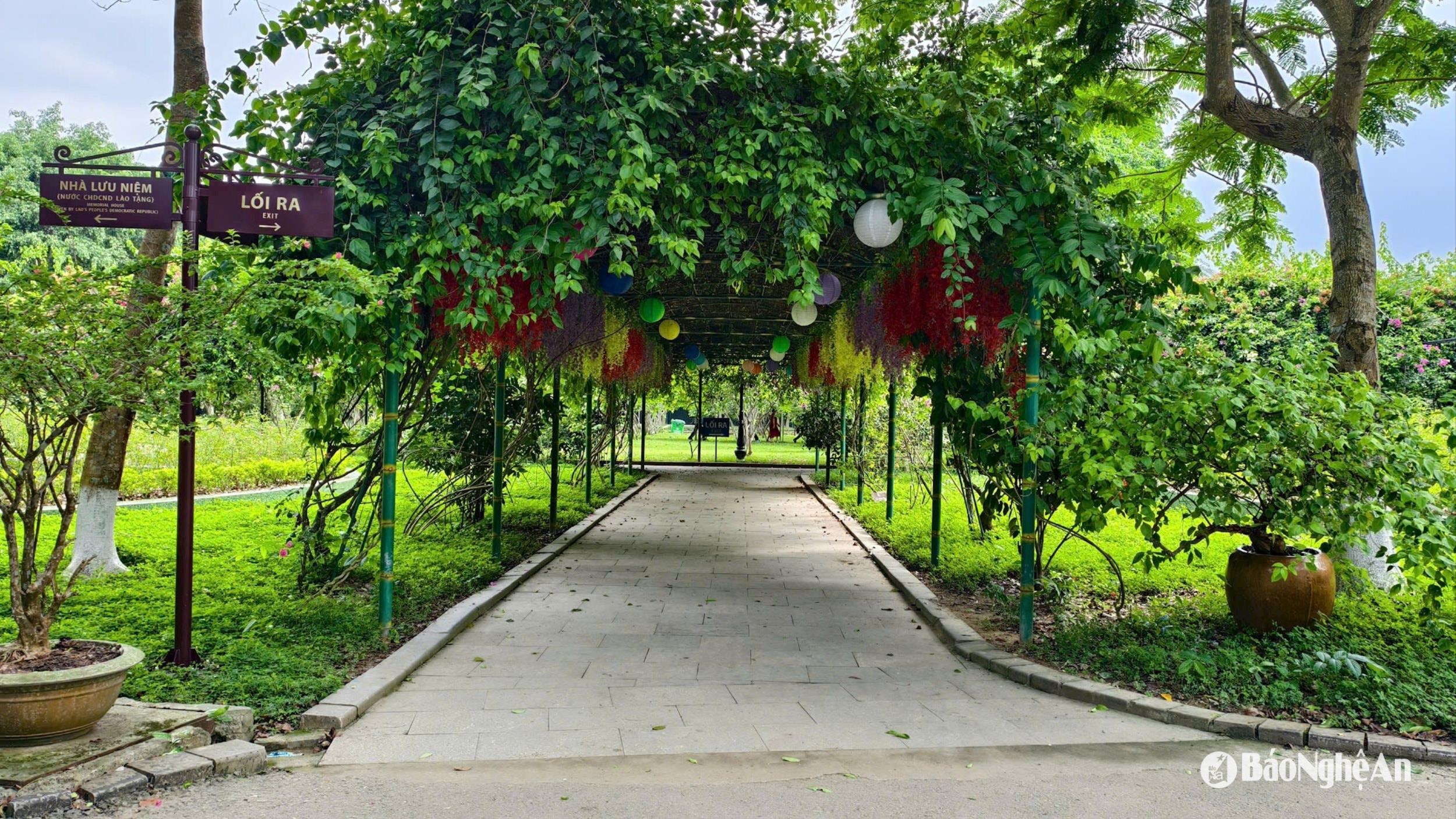
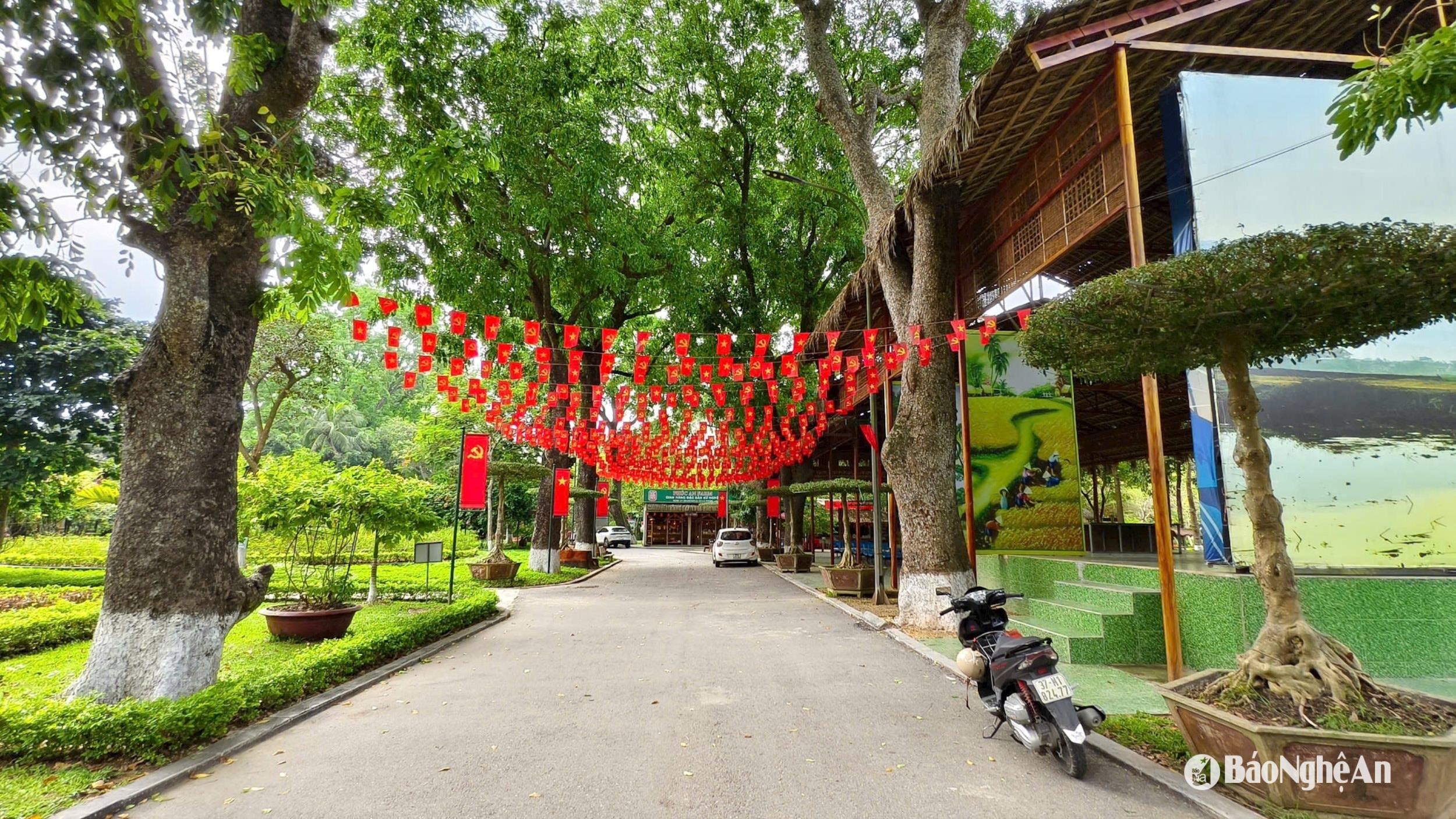
In recent years, visitors returning to the Kim Lien National Special Historical Site can easily sense the changes in the area: greener, cooler, fresher, and much more beautiful. To achieve this, in addition to efforts to renovate and enhance the infrastructure, we must also acknowledge the silent contributions of the workers who maintain the greenery and gardens.
.jpg)
In the area around President Ho Chi Minh's ancestral home, there are currently 25 workers caring for the trees, led by Ms. Hoang Thi Thuy, who has been dedicated to this work for the past 7 years. Speaking about her work, Ms. Thuy smiled proudly: "Although it's hard work, every time I see tourists satisfied with the lush greenery and clean environment, I feel happy too. We always strive to make everything as perfect as possible."
Achieving that "ultimate perfection" requires the silent and arduous efforts of the gardeners. Their workday begins at 6:30 AM to 10:30 AM and continues from 1:30 PM to 5:30 PM, rain or shine. Their job isn't simply watering plants or sweeping leaves; they must ensure absolute safety and meticulous attention to detail in every corner. Dry branches must be swept away immediately, and the concrete surface must be sprayed clean of moss to prevent slips on rainy days.
Ms. Thuy recounted: “During peak festival days, the work never stopped. Each day, 40-50 groups of visitors came, and the team was constantly cleaning and tidying up the landscape. Some months we hardly had a day off, but everyone encouraged each other to persevere for the common good and for the image of President Ho Chi Minh's hometown.”
The difficulties weren't just about the hard work; sometimes there were also unspoken worries about each tree and flower pot in the historical site. Ms. Thuy confided: "In the seven years I've done this job, I've come to regard each tree as my own child. Every time a tree is affected by pests or diseases, I feel uneasy. The banyan tree planted by Uncle Truong Chinh, there was a time when we thought it was beyond saving. We worried so much that we watered it every day, sprayed pesticides, and dug up the roots to treat it, but it still wouldn't recover. But then, luckily, perhaps Uncle Ho saw our dedication and blessed us, the tree miraculously recovered."

Every summer, the workload intensifies as the plants grow rapidly, requiring constant pruning. With trees reaching seven or eight stories high, the gardeners climb ladders to prune them under the intense Central Vietnamese sun. The watering system is also inoperable due to the sheer number of pots; each day, the gardeners have to manually pull hoses to water each pot. On peak days, when there are many visitors, the hoses are constantly stepped on, making the task of pulling them open quite exhausting.
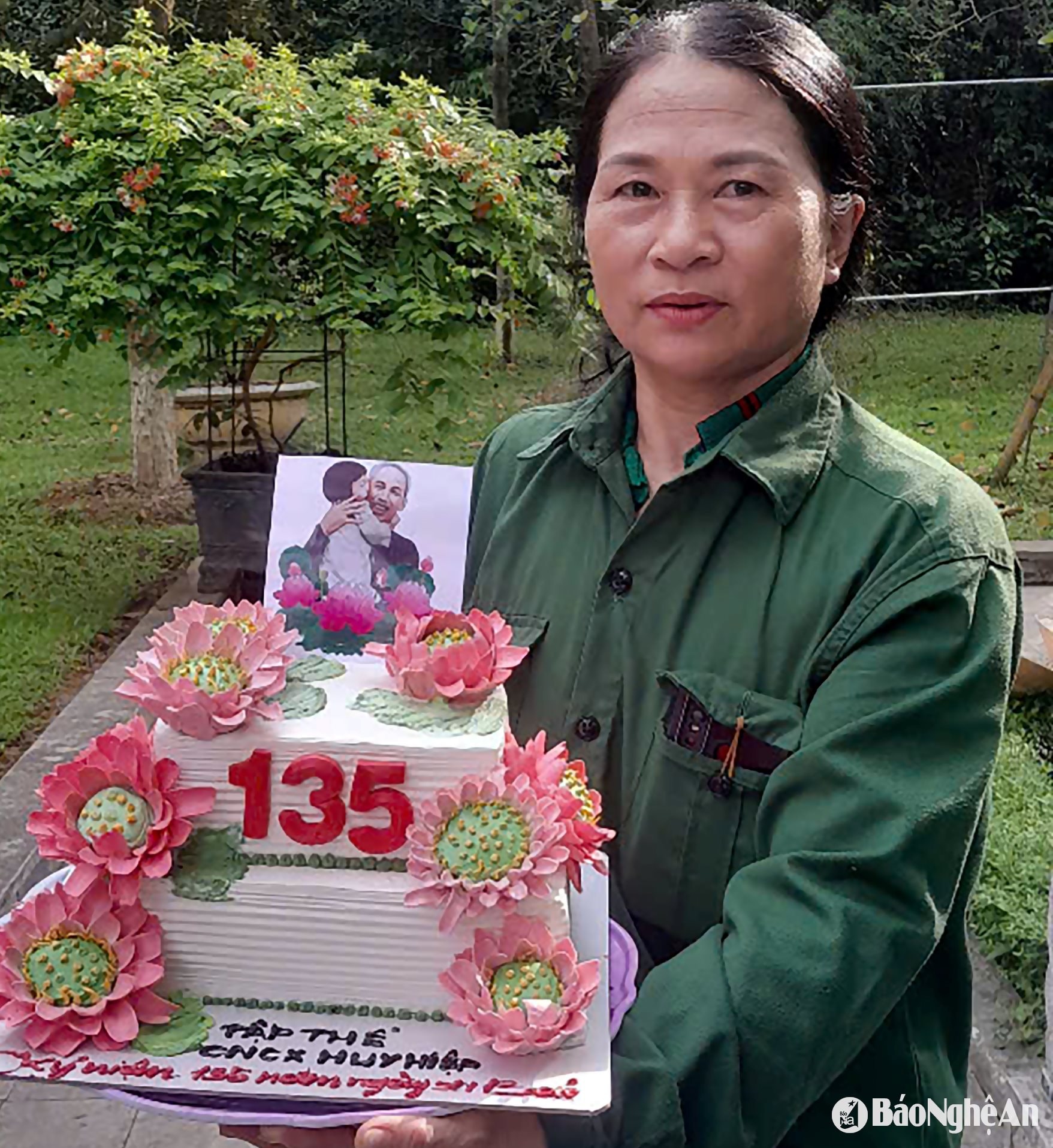
Caring for President Ho Chi Minh's ancestral garden is both a duty and an honor for everyone here. Ms. Thuy confided: "Each season brings its own bounty. When lychees, mangoes, or longan ripen, we harvest them to offer as incense to President Ho Chi Minh, and then share the blessings together."Uncle Ho's birthday"The whole team made a small cake to offer to him, and on the anniversary of his death on the 23rd of July (lunar calendar), we prepared a feast of sticky rice and chicken. Moments like that are truly warm and special. We feel like we are his relatives. Perhaps many people think the same, so quite a few tourists ask us, 'You must have a very special family background to be able to work here, right?'"
The work of the workers at the Kim Lien Historical Site is not simply about tending trees and cleaning gardens, but also about expressing their love and respect for President Ho Chi Minh. And it is through this quiet work that they feel happier and prouder to be contributing to preserving the place where he once lived and walked.
“Despite the hardships, the sun and rain, and the illnesses, being here – amidst the spirit of the homeland, amidst the breath of Uncle Ho – I feel very fortunate,” said Ms. Thuy, while her hands nimbly trimmed the towering trees under the scorching May sun. And because of this, every lotus blooming season, every visiting group, somewhere in that space shaded by green trees, there is also the love, the silent sacrifice, and the unspoken pride of those who “preserve the green spirit” of Uncle Ho’s homeland.
Preserving the spirit of the countryside through the years.
Beneath the verdant canopy of trees in President Ho Chi Minh's hometown, a team of restoration workers silently and diligently tends to each ancient house, preserving every trace of time. The team consists of 15 people, with Mr. Dinh Van Han (born in 1957, Xuan Lam village) being one of the oldest and having dedicated over 10 years to this special work.
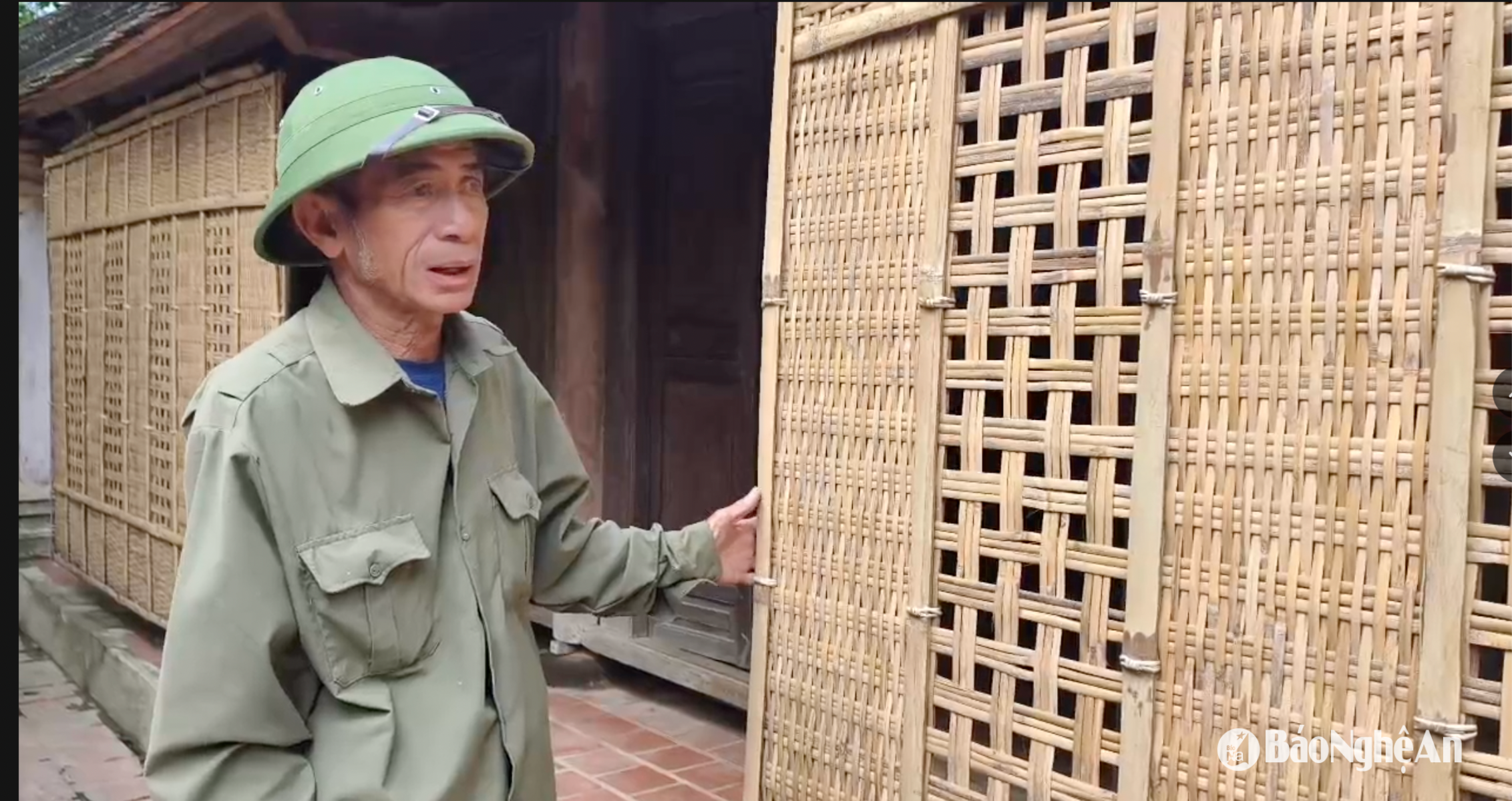
Mr. Han slowly recounted his work with utmost care and attention: "We don't build new structures; we only repair what's damaged according to the old design. Each bamboo screen is made from bamboo and reeds, and the fibers must be completely removed by charcoal burning. The paving stones for the courtyard and well are natural stones characteristic of our homeland, carved and arranged in layers and rows, ensuring that the ancient, pristine appearance is preserved."
All the elements, from the bamboo screens covering the well and the bamboo curtains protecting against rain and sun, to the pathways and the ground, were skillfully restored by the craftsmen to their original state as Uncle Ho was in his childhood. In particular, the thatched roof was the most difficult and challenging task. Mr. Han recounted that sugarcane leaves are increasingly scarce, requiring orders from mountainous districts, sometimes tens of tons at a time. The leaves are sharp and can easily cause irritation and itching, but they are the only material that can be used to maintain the traditional design.
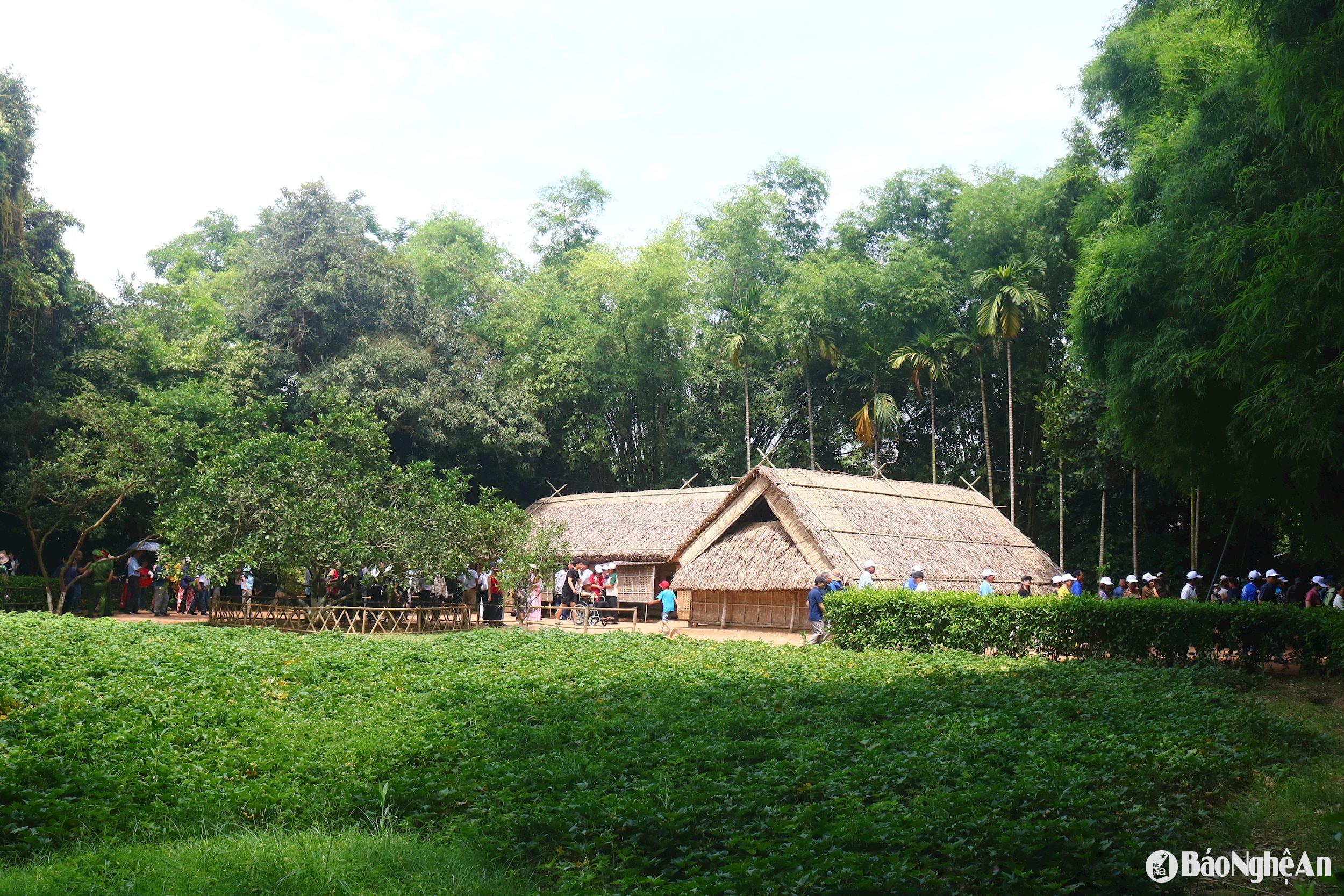
To complete the thatched roofing of all the structures at the ancestral homes of President Ho Chi Minh's paternal and maternal families, the team of workers had to work non-stop for a whole month. The shortage of skilled workers made this process even more difficult. There were times when the sun was scorching hot or it rained incessantly day after day, yet they persevered, meticulously preserving the roofs of President Ho Chi Minh's homes to keep them intact and beautiful. Thatched roofs are very susceptible to mold and termites, so the team had to repair and maintain them regularly almost every year to prevent deterioration.
Ms. Nguyen Thi Minh Hue - Head of the Collection, Inventory, Exhibition and Preservation DepartmentKim Lien Historical SiteHe shared: “For the uncles and aunts in the restoration team, every sugarcane leaf, every bamboo stick is carefully selected. They work not only with skill but also with love, respect, and affection. It is this meticulousness that helps the historical site always feel vibrant, familiar, and evokes memories of Uncle Ho's childhood with his loved ones.”
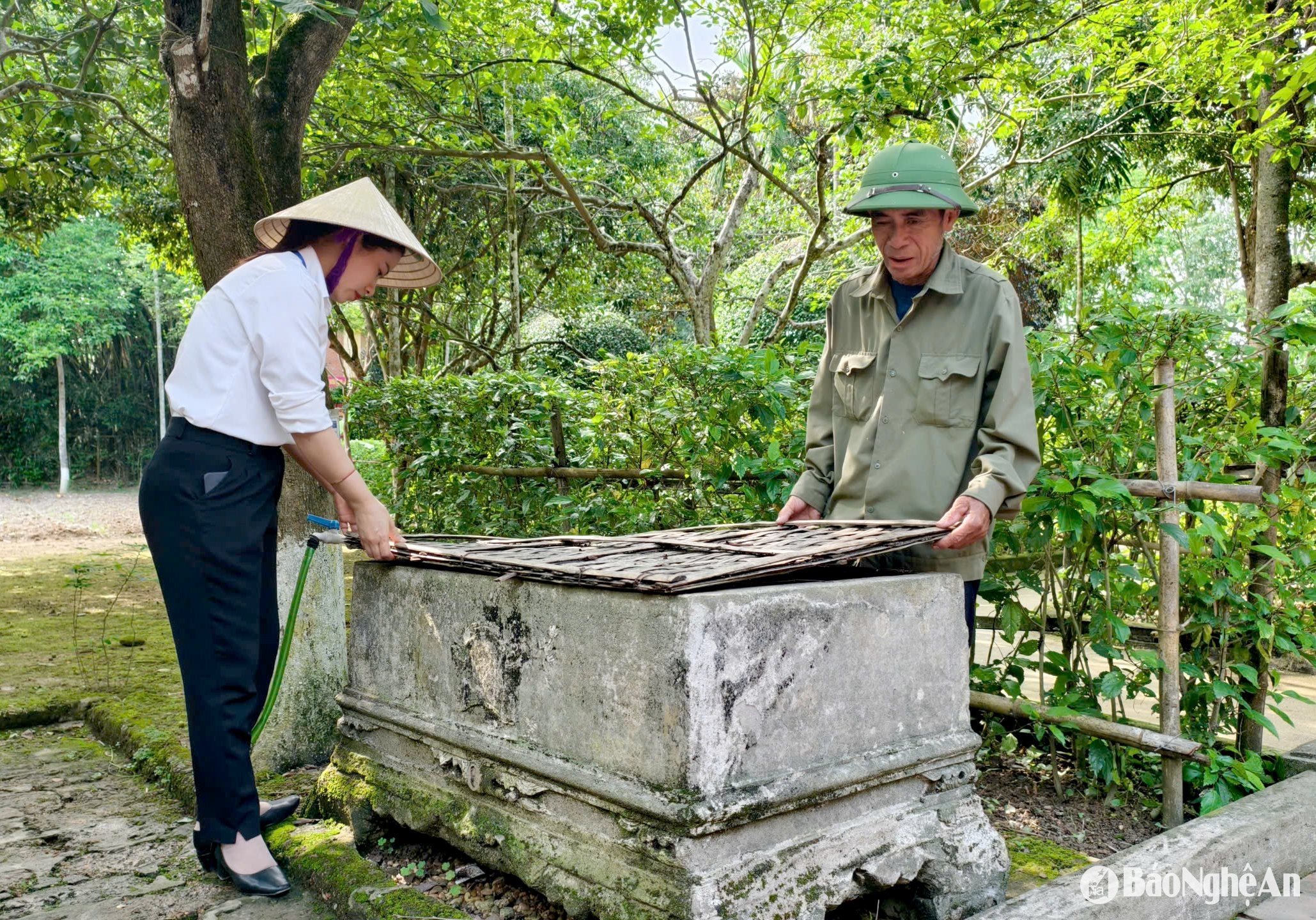
For Mr. Han and his colleagues, the work is not simply about repairing a house, but about preserving a part of the soul of their homeland, extending the beautiful memories of President Ho Chi Minh to future generations. And each time they finish the job, standing and looking at the house of President Ho Chi Minh, perfectly intact amidst the vast green of their homeland, Mr. Han feels truly happy and proud to have contributed his small effort to something so meaningful.


