
Frontline officials who deeply care for the people.
Amidst the changing landscape at the grassroots level, the officials of the Nghe An Fatherland Front remain dedicated to accompanying the people, listening to their concerns and contributing to resolving existing difficulties and obstacles in their lives. Every action, big or small, is directed towards a common goal: to ensure that the voices of the people are heard, their practical needs are shared, thereby fostering trust, consensus, and cohesion within the community and society.
.png)
Thanh Quynh/Present: Hong Toai •10/9/2026
*****
Amidst the changing landscape at the grassroots level, over 3,360 Fatherland Front officials from the provincial to the village level in Nghe An province remain dedicated to working alongside the people, listening to their concerns and contributing to resolving their difficulties and obstacles. Every action, big or small, is directed towards a common goal: to ensure the voices of the people are heard, their practical needs are shared, thereby fostering trust, consensus, and cohesion within the community and society.

Over the past few days, from the headquarters of Muong Chong commune, Mr. Cao Van Thai - Member of the Standing Committee of the Commune Party Committee, Chairman of the Commune Fatherland Front Committee - has made many trips over the mountains to Tang village, a village located in the far southwest of the commune with more than 800 inhabitants of the Thai ethnic minority.
The more than 22-kilometer-long road winding along those mountain slopes was all too familiar to him. Because when he returned to the villages, besides learning about their lives and listening to their thoughts and aspirations, he had another passion: to accompany the local people in familiarizing themselves with digital technology.
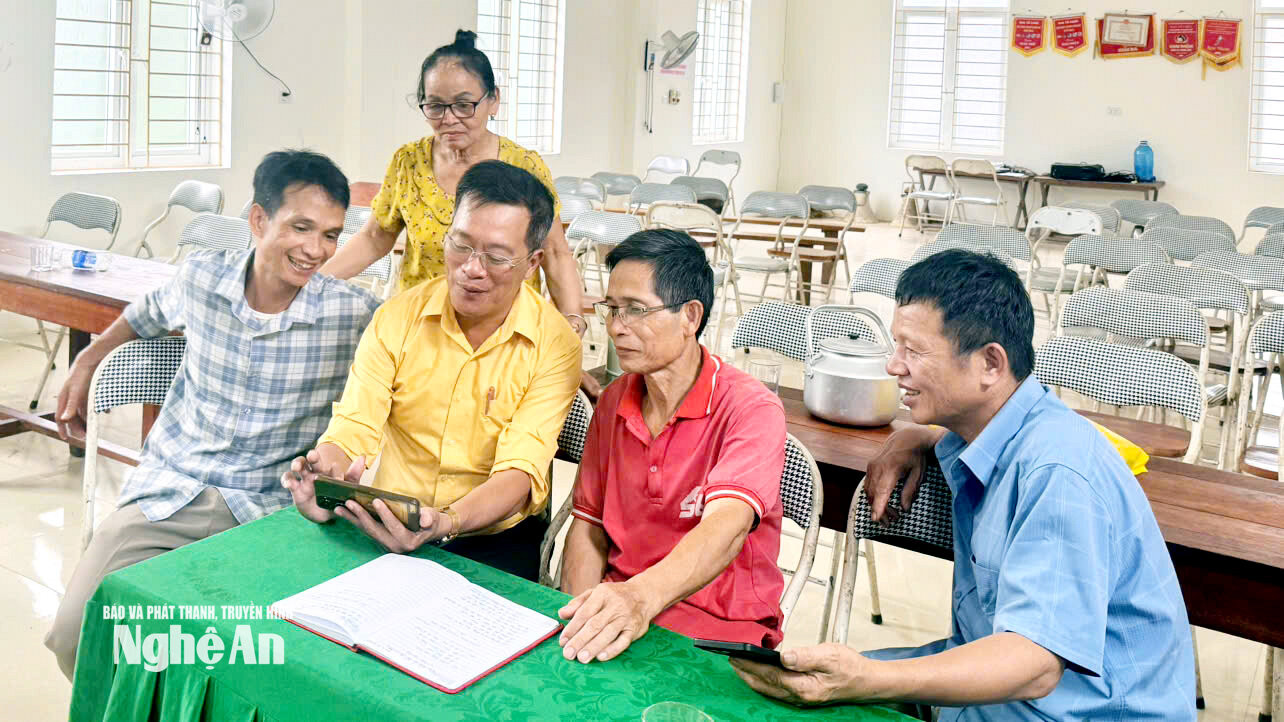
Mr. Mac Van Ke (born in 1965) - Head of the Fatherland Front Committee of Tang village - couldn't hide his joy when sharing that, from knowing almost nothing about information technology, he has now been able to create his own Fanpage "Fatherland Front Committee of Tang village". At the same time, he has also applied artificial intelligence to his work. The villagers are also gradually becoming familiar with the benefits of technology and are more proactive in exchanging information and connecting with local officials.
In each village, watching Mr. Cao Van Thai enthusiastically talk about data integration boards, search software, and the scientific use of artificial intelligence, one understands why Muong Chong – a mountainous area still facing many difficulties – has become one of the units that has done well in digital transformation in the field of the Fatherland Front in the province.
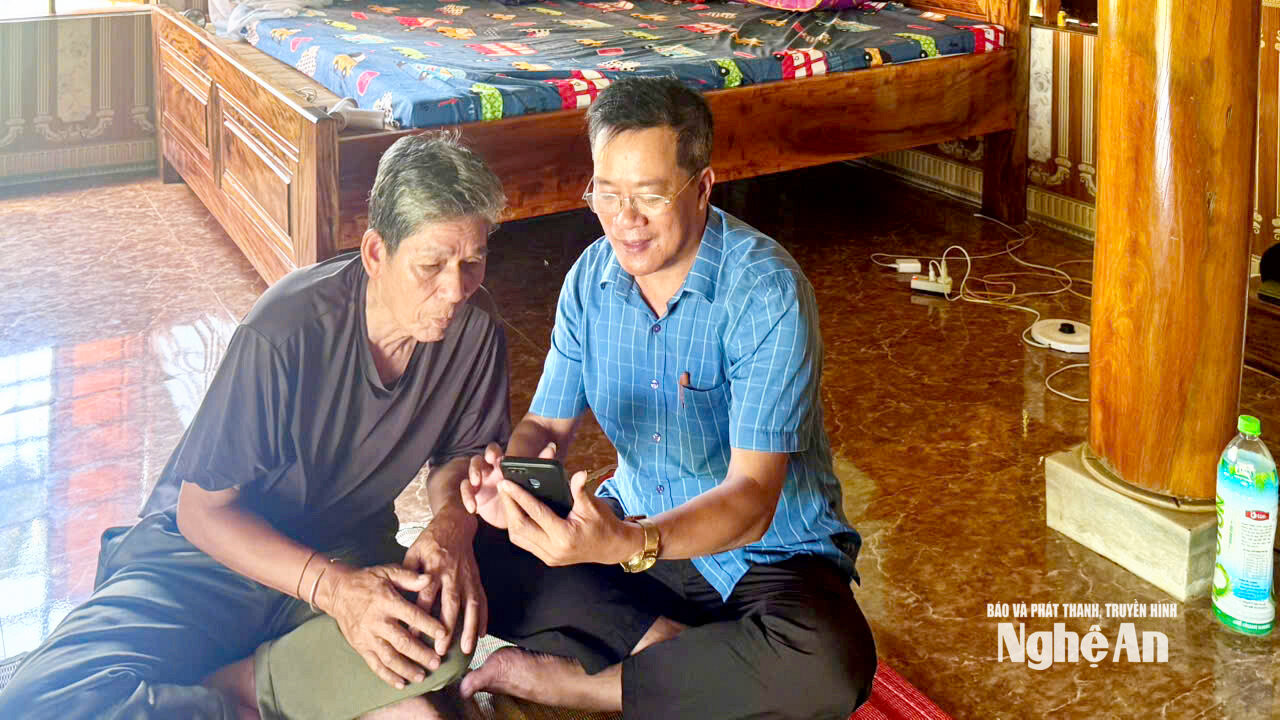
Few people know that this official has had a long career with many different positions at the grassroots level. Starting as a cultural officer, he spent 5 years as the Standing Deputy Secretary and 9 years as the Party Secretary and Chairman of the People's Council of Chau Ly commune. After the locality implemented administrative unit reorganization, he assumed the position of Chairman of the Vietnam Fatherland Front Committee of Muong Chong commune.
Muong Chong commune is a particularly disadvantaged mountainous area with a scattered population and a high percentage of poor and near-poor households. After the merger, data on the lives and circumstances of the people are still scattered across many sources. The fact that data is mainly stored in paper files or individual data files makes it difficult to compile, monitor, compare, and utilize the information.
Faced with these shortcomings, in his role as head of the Fatherland Front Committee of the commune, Mr. Thai began experimenting with new tools and seeking ways to apply technology to practical work. Based on local data, Mr. Thai started building a social security data platform, hoping not only to "digitize" the files but, more importantly, to create a new management method.
From there, all the data of 11,236 individuals was entered into the system. The platform simultaneously manages 420 poor households with 1,721 individuals, 601 near-poor households, and many other vulnerable groups. The system's platform structure allows for multi-directional information linking, from overall population data and thematic target groups to support data and policy benefit history.
Thanks to this, the frontline workers can quickly identify which disadvantaged groups a household belongs to, what support has been provided, and what needs still require attention.
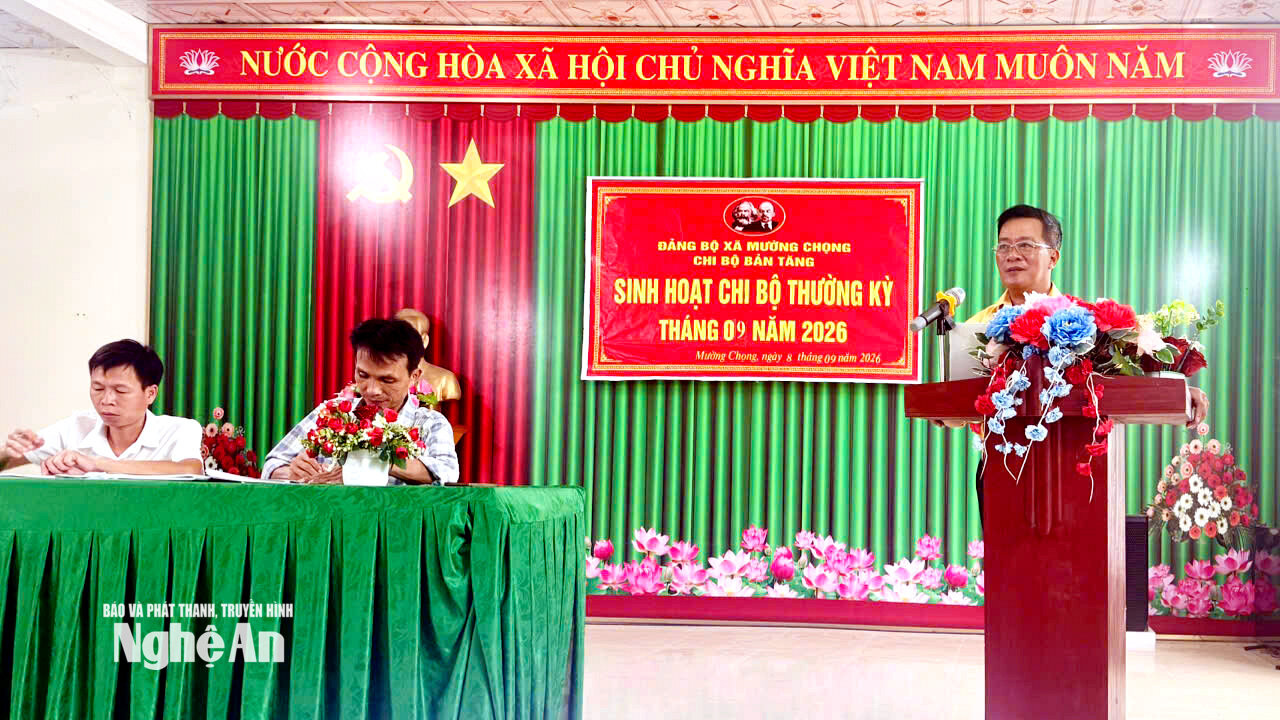
Along with data development, the Muong Chong Front has implemented many practical models. A prime example is the "Digital Bridge" initiative, which guides officials, members, and residents in villages and hamlets to access and utilize digital tools. Through guidance sessions, training, and hands-on practice, the digital capabilities of Front officials at the grassroots level have been gradually enhanced.
This is just a part of what Mr. Cao Van Thai and the Front Committee team in Muong Chon commune are working together to bring technology closer to the villages, so that people in the highlands are not left behind in the digital flow. These journeys across the mountains will continue, carrying the hope of gradually forming "digital villages" that embrace digital technology, where technology becomes a practical tool serving the lives and work of the people in the highlands...

Speaking of the spirit of solidarity between Catholics and non-Catholics at the grassroots level, Quyet Tien hamlet (Nam Dan commune) is perhaps one of the places that has left the most significant mark on the journey of building national unity. A crucial contributor behind these achievements is Ms. Nguyen Thi Minh Huong, the head of the hamlet's Front Committee, who is highly trusted and loved by the local people.
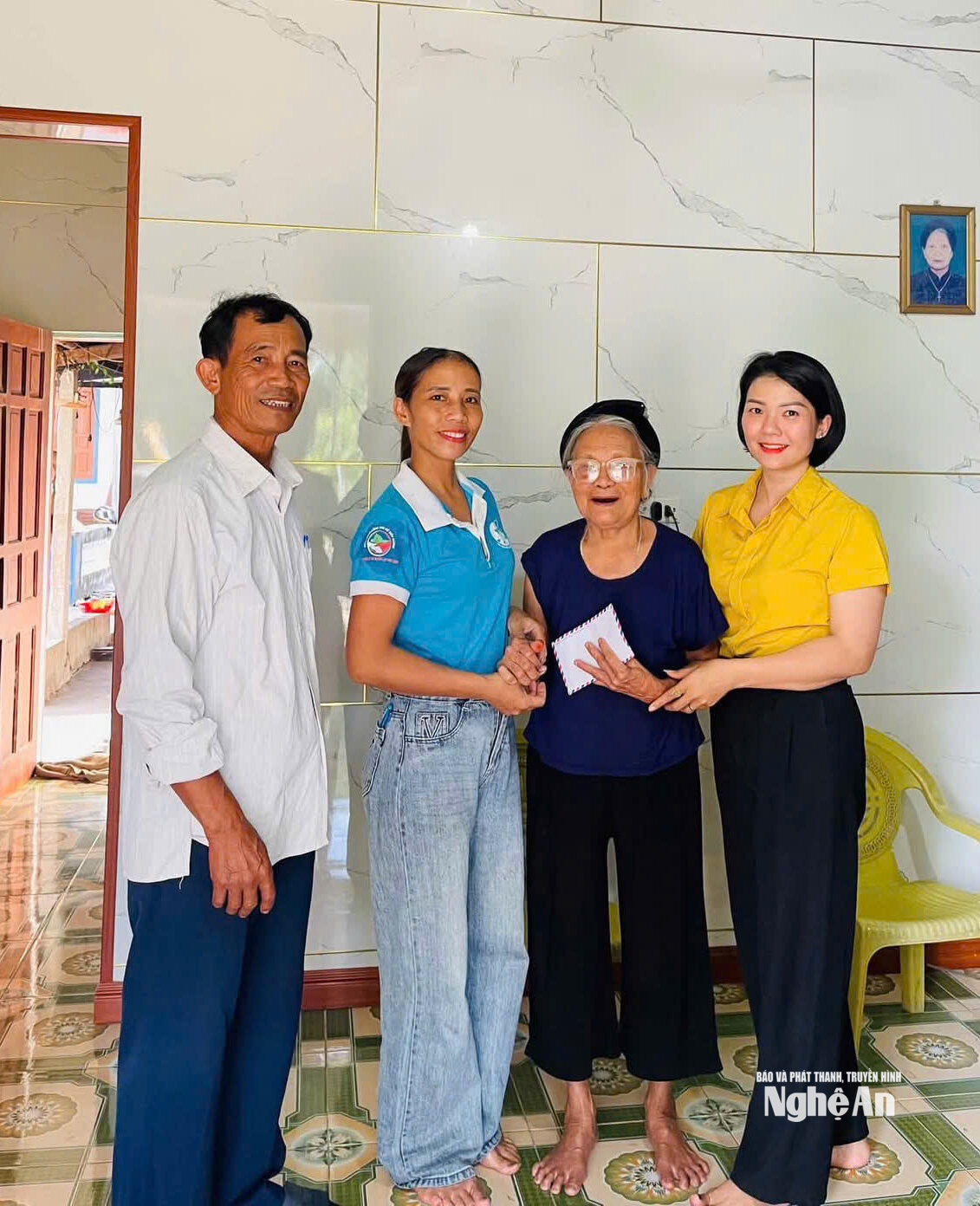
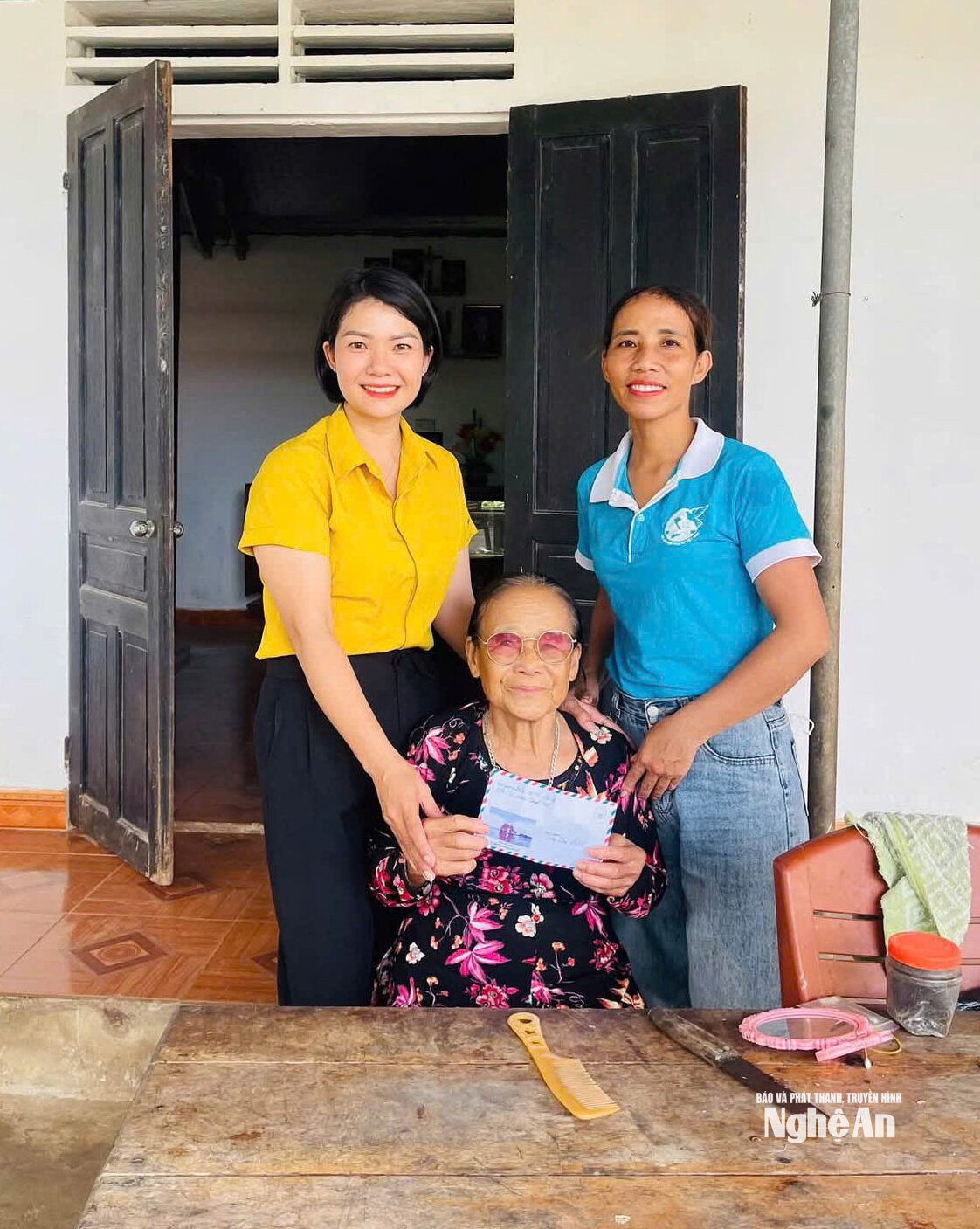
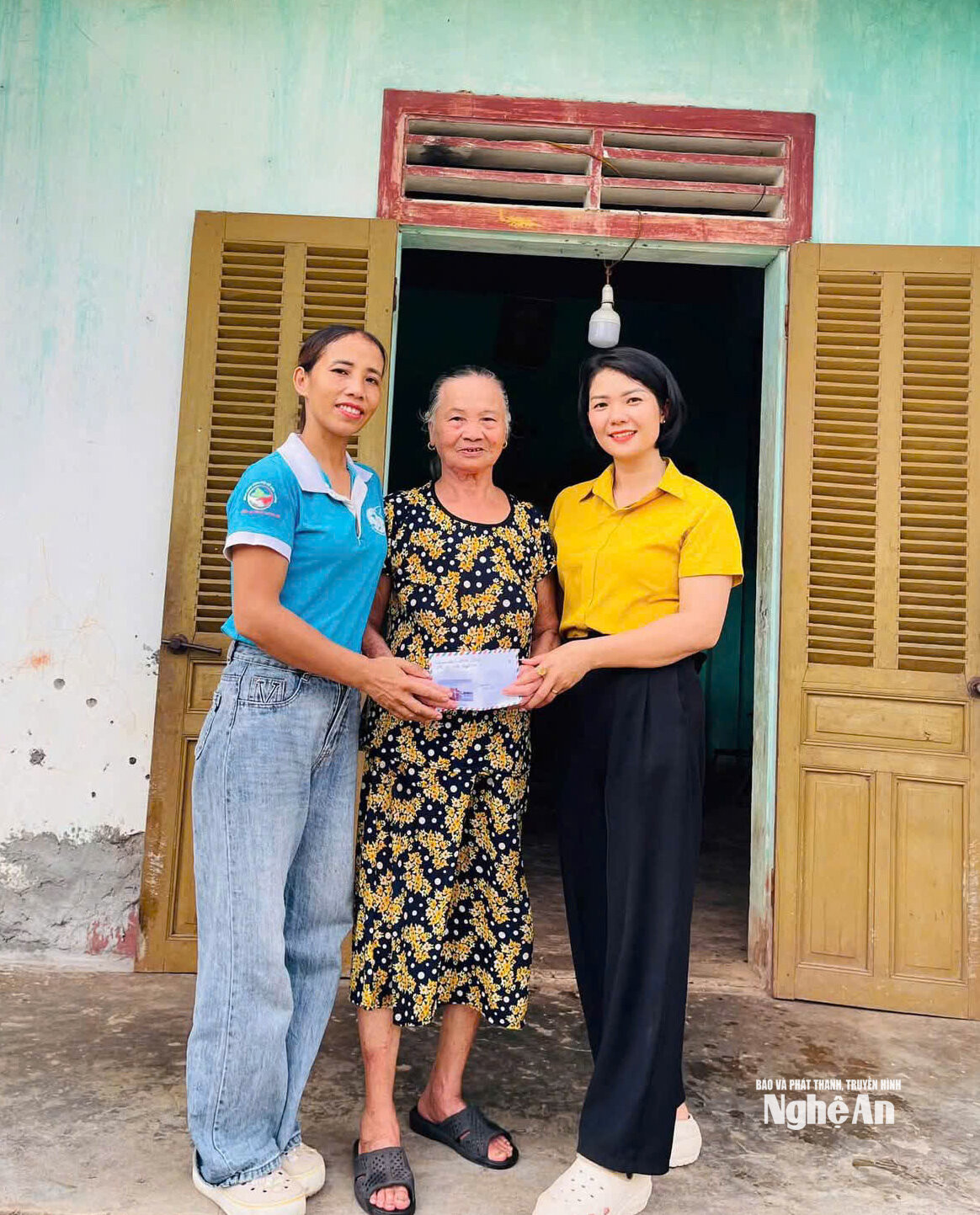
Born in 1992, after graduating with a degree in accounting from Nghe An College of Economics, Ms. Huong began working at the grassroots level in 2017 as the Vice-Head of the Women's Association. Over the years, she rose through the ranks of local movements, becoming the Head of the Women's Association, a member of the Commune's Fatherland Front Committee, and the Head of the Fatherland Front Committee in Quyet Tien hamlet. Her years of dedication to the grassroots have helped her better understand the lives and concerns of the people and have also allowed her to accumulate valuable experience in mobilizing the masses.
Leading us along the roads to Tan Nghia Parish Church, Ms. Huong explained that the rows of bright red flags in the sunlight were the result of the villagers' dedication to the August Revolution and the National Day of September 2nd. The entire hamlet had hung 150 national and Party flags. In front of the church gate alone, 20 flags were displayed prominently.
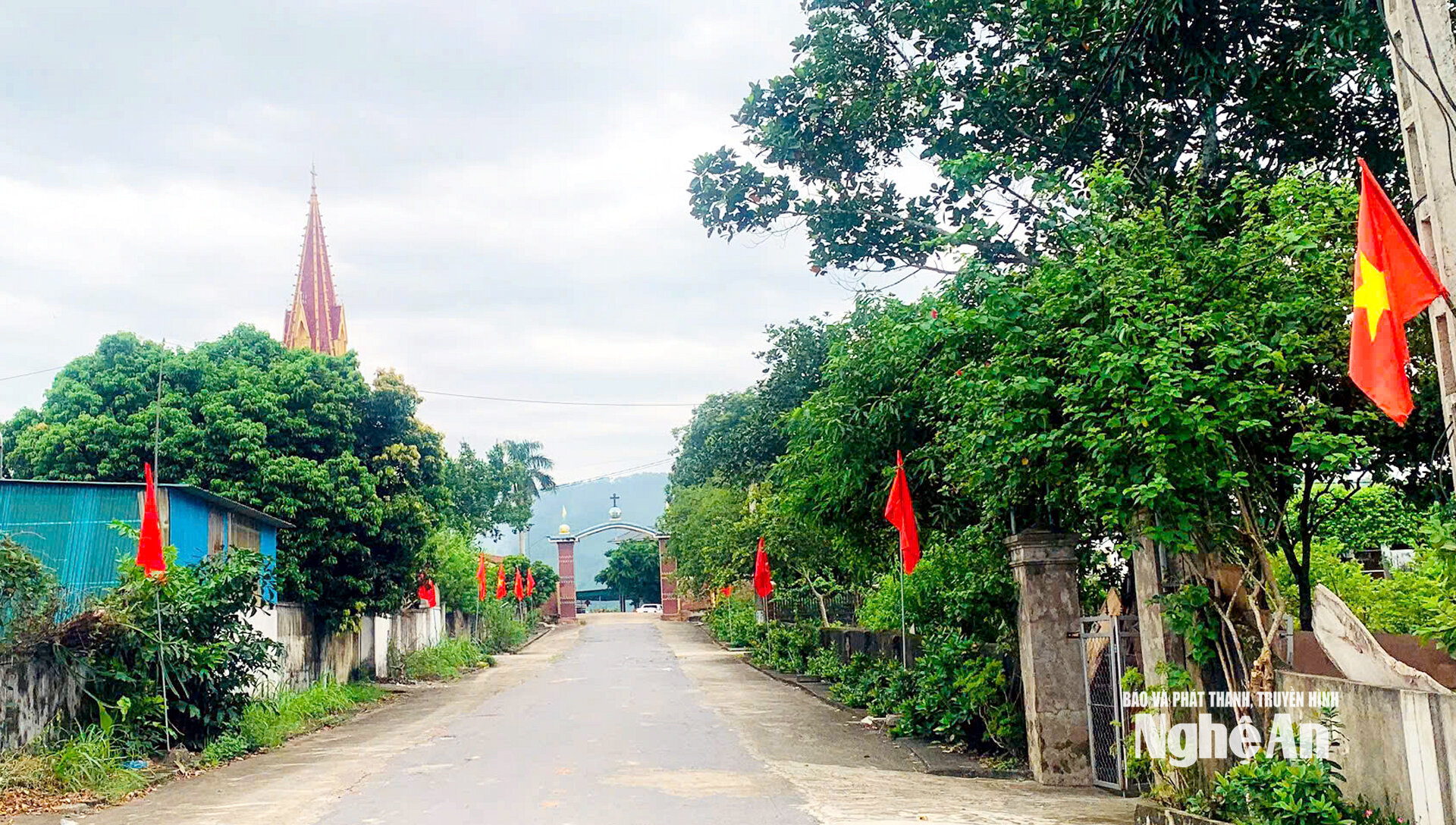
She recounted that the Quyet Tien hamlet currently has 435 households with over 2,000 inhabitants, of which Catholics account for more than 92.3%. Creating consensus in implementing policies and movements always requires the skill and dedication of those working in the Fatherland Front. For Ms. Huong, the most important thing is to be close to the people, understand them, and work together. She doesn't start with big projects, but with things close to daily life.
One of the clearest examples of consensus in Quyet Tien is the story of supporting nearly 500 officers and soldiers from 8 military units to the village to carry out the 2026 Military Region's defensive combat exercise.
With a large number of soldiers arriving and an extended training period, the need for food and accommodation was considerable. After listening to the Front Committee's coordinated efforts with local forces, the people enthusiastically supported the initiative. For example, Mrs. Bui Thi Lan's family (born in 1955) provided accommodation for 55 officers and soldiers, Mr. Dinh Van Loc's family (born in 1960) supported 50 officers and soldiers, and Mrs. Nguyen Thi Loan's family (born in 1957) supported 42 officers and soldiers... throughout the 2.5 months of the training exercise.
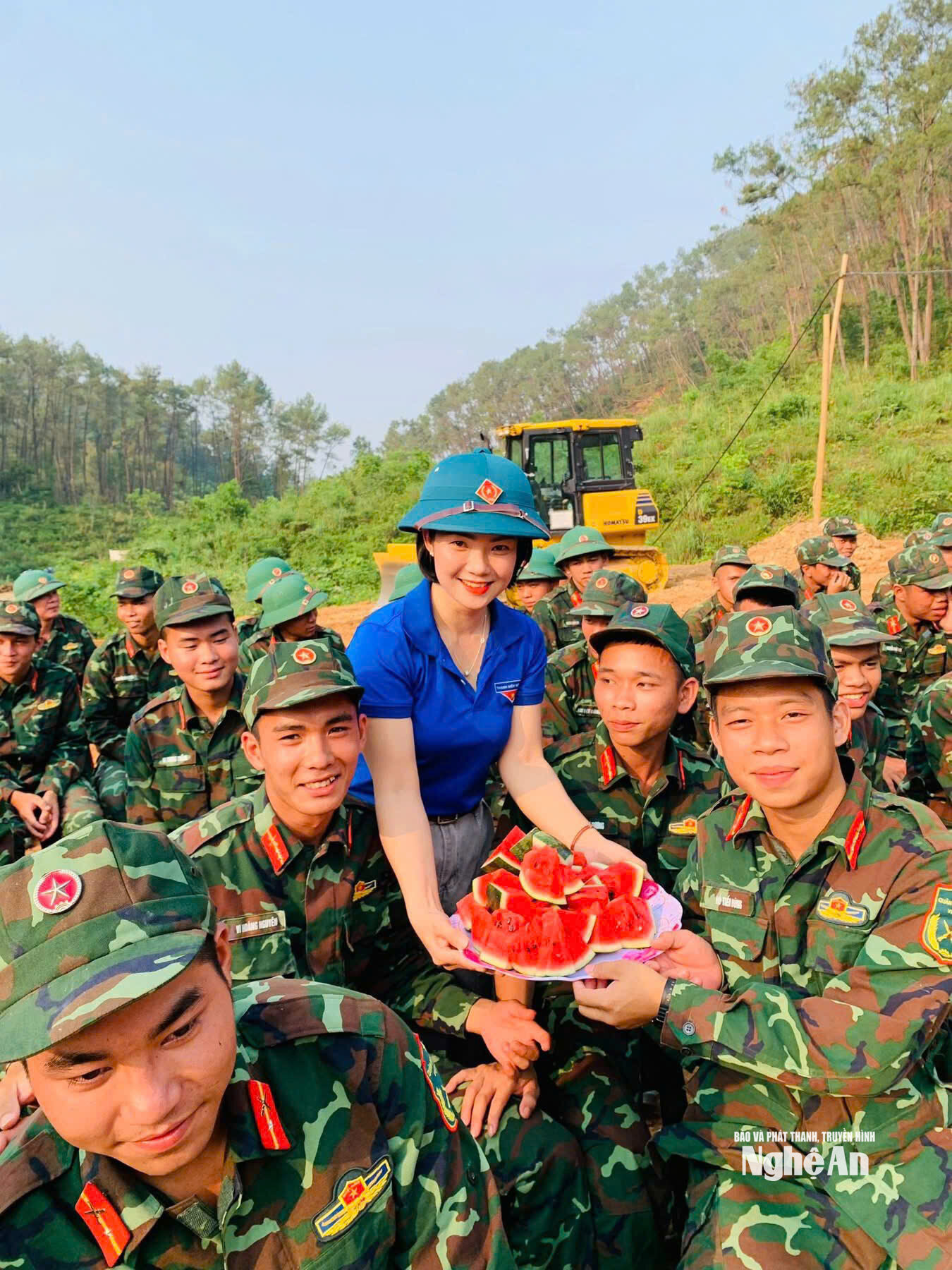
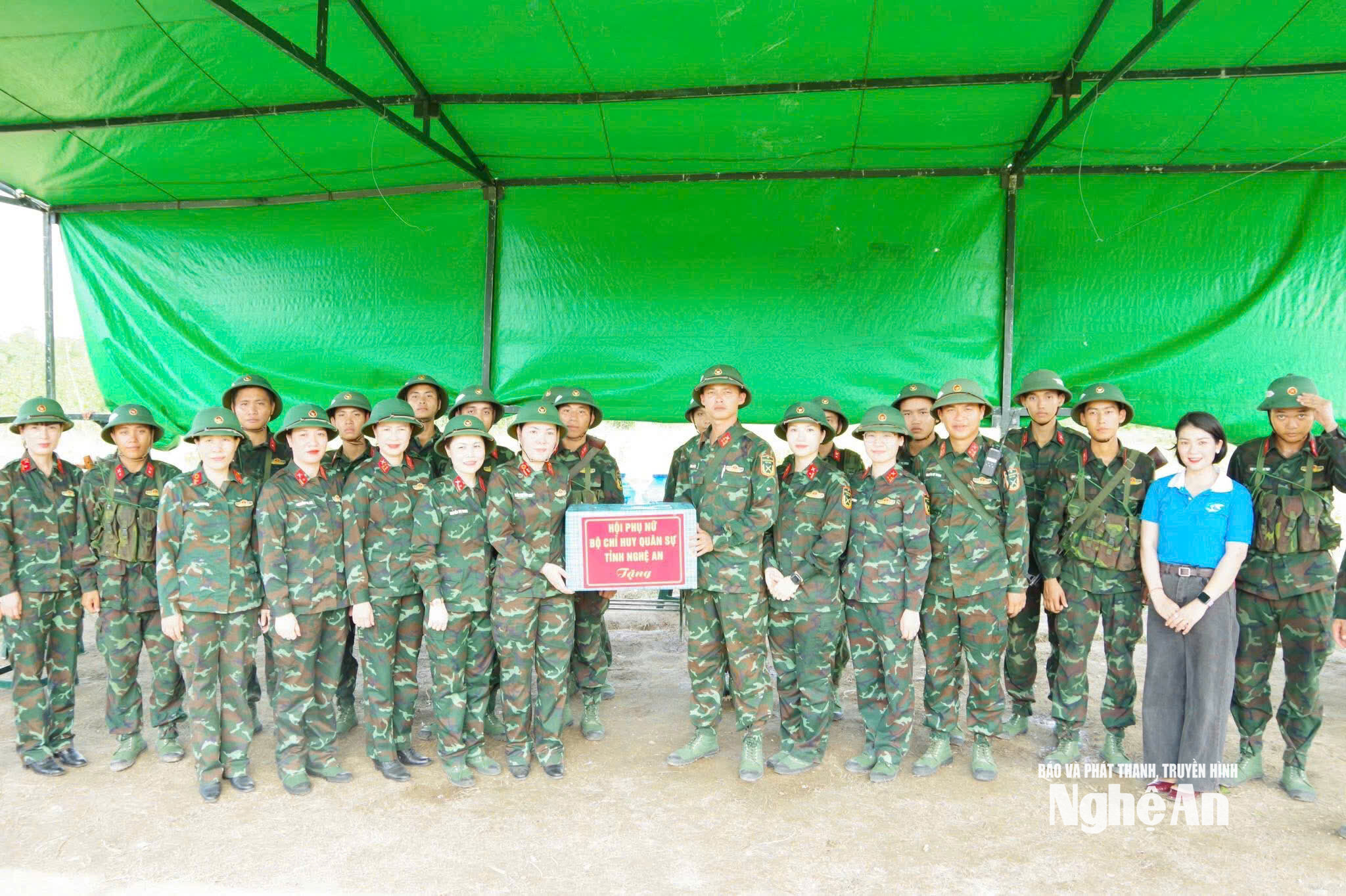
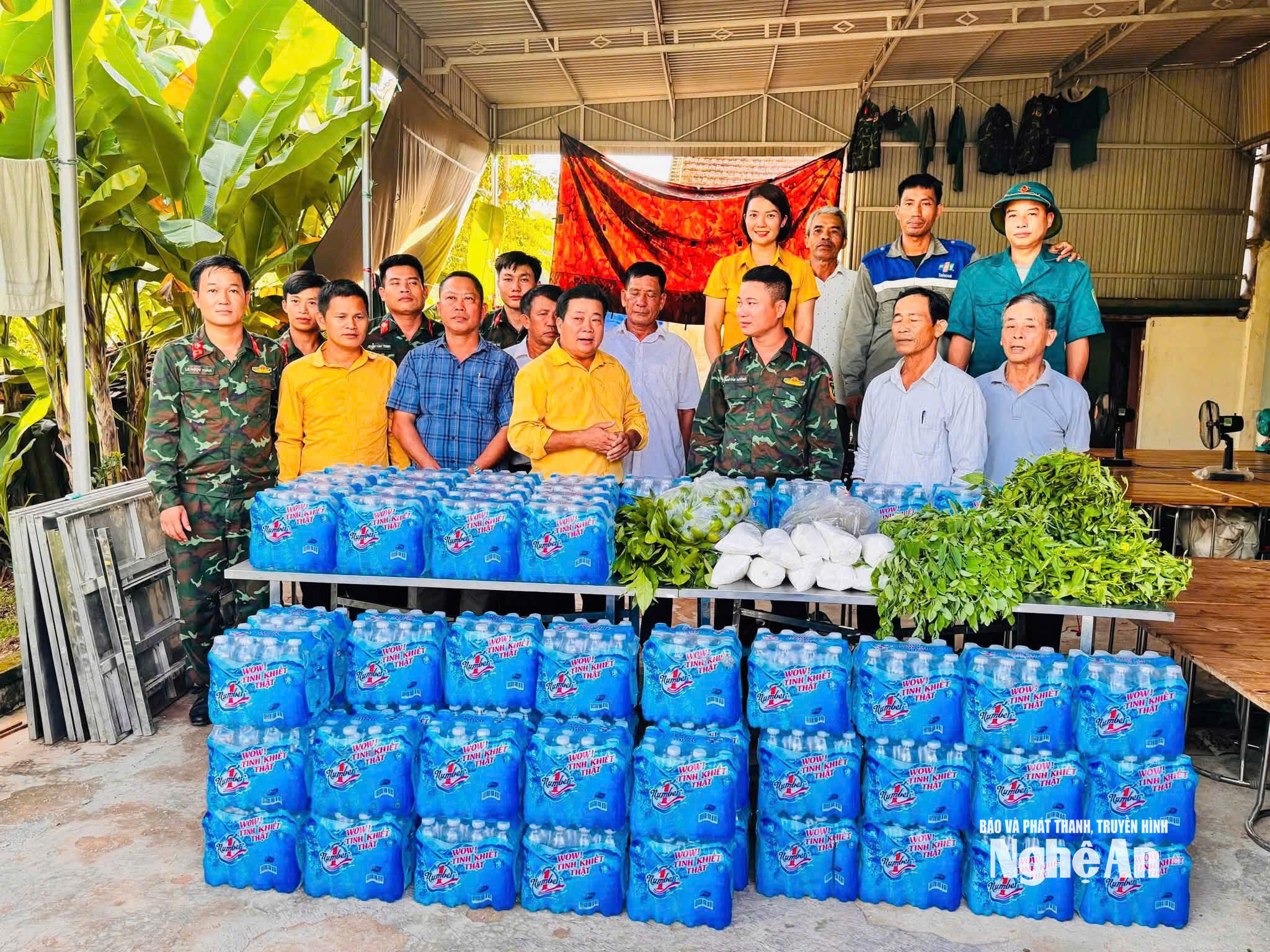
Not only did the parishioners and the Chairman of the Pastoral Council of Tan Nghia Parish open their doors to "welcome the soldiers," but they also carried out many activities to care for and support the officers and soldiers throughout the training exercise.
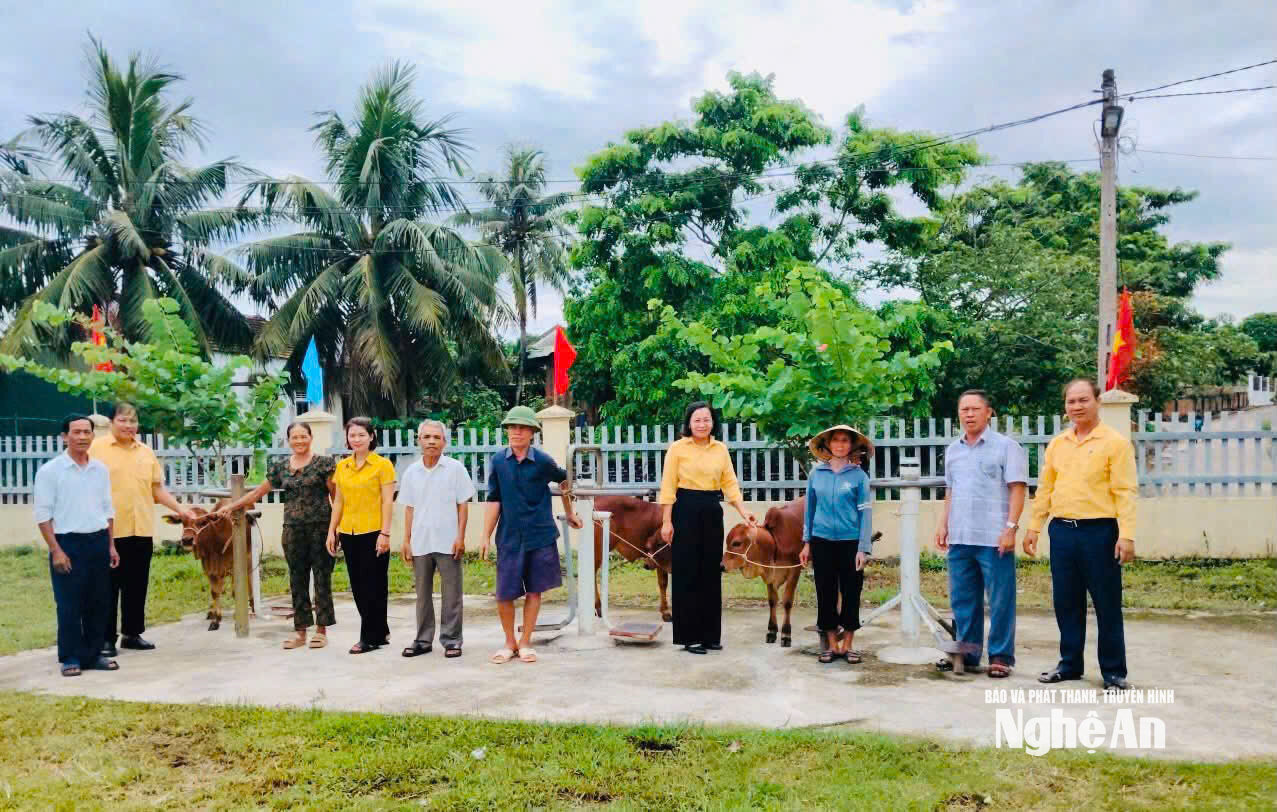
This solidarity is also demonstrated through caring for families in need. In August, with support from the Fatherland Front of the commune, the hamlet donated 3 breeding cows to 3 disadvantaged Catholic households. Ms. Huong personally worked with the local community to survey and assess the situation to select suitable families, ensuring that the support reached the right people with the right needs. Regarding activities for children, she also took the lead in mobilizing villagers to contribute 40 million VND for the commune's youth and children's football tournament.
Looking back on what she has accomplished, Ms. Huong shared that what makes her happiest is not the number of achievements a movement has made, but the fact that more and more people are actively participating. Perhaps that is also how the spirit of solidarity between Catholics and non-Catholics in Quyet Tien hamlet is being nurtured and strengthened.
Today, living in a spacious house in Quèn village, Châu Lộc commune, Mr. Lữ Văn Thành (born in 1969) expresses special gratitude to Ms. Lưu Thị Quyền - Member of the Standing Committee of the Party Committee, Chairwoman of the Vietnam Fatherland Front Committee of the commune. He recounts that his family of eight, three generations, have lived together peacefully in their stilt house.
Then tragedy struck in May 2025 when his house burned down completely, taking all his possessions with it. At that time, the whole family was left with almost nothing, with no place to live, and their already difficult lives became even harder. Understanding his situation after a meeting with local voters, Ms. Luu Thi Quyen quickly shared her support and successfully raised 120 million VND, helping his family rebuild their house.
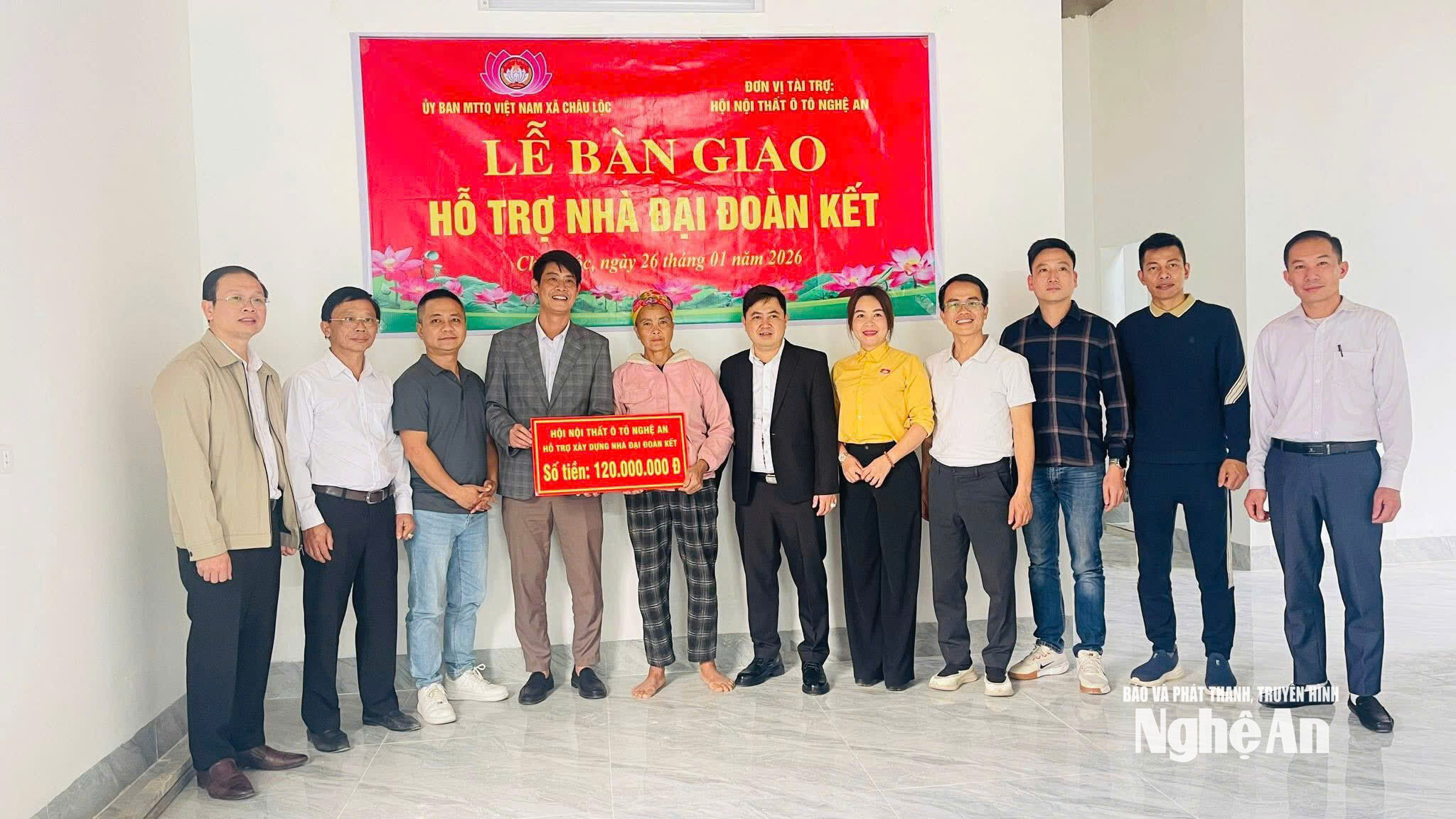
Sharing in that warm concern, Ms. Vi Thi Mai (born in 1962), from Khot Xai village, whose family worships fallen soldiers, also lived in a dilapidated and leaky house. Inspired by the generosity shown to those in difficult circumstances, Ms. Luu Thi Quyen continued to connect with and raise 120 million VND, helping Ms. Mai's family rebuild their house.
Along with many other decent homes built with resources mobilized through the connection and support of Ms. Luu Thi Quyen, disadvantaged families have gained more confidence to rebuild their lives.
These are significant milestones in the journey of the female Chairperson of the Fatherland Front Committee of Chau Loc commune, as she gets closer to the people, understands their difficulties, and finds ways to connect resources to overcome those difficulties.
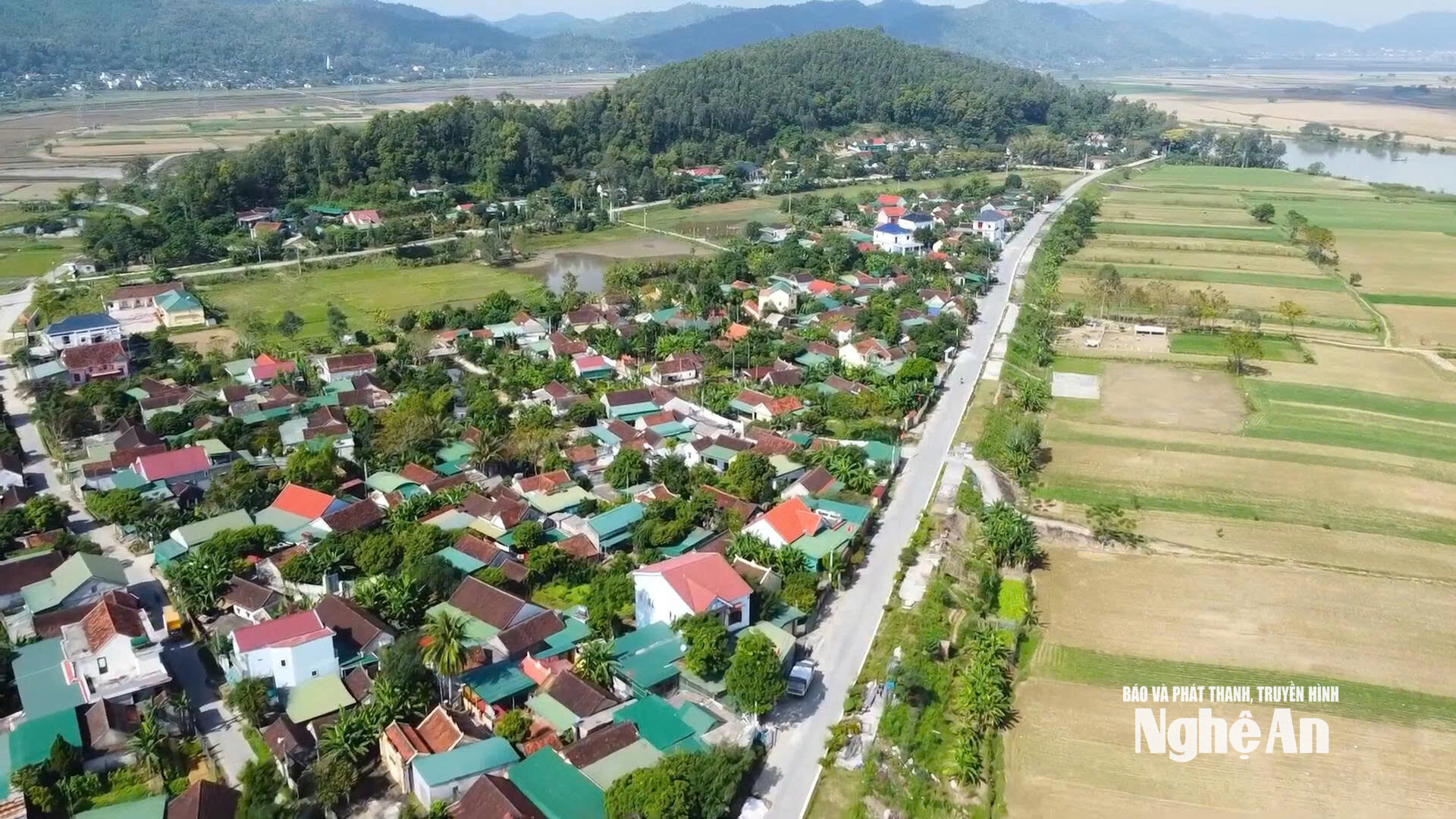
Sharing about these meaningful activities, Ms. Luu Thi Quyen said that after the merger, Chau Loc commune has 8 hamlets and villages, with the settlement of three ethnic groups: Thai, Tho, and Kinh. Of these, the Thai ethnic group accounts for about 90% of the population. This is a mountainous area still facing many difficulties, with the percentage of poor and near-poor households still close to 52%.
When the two-tiered local government system came into operation, she was transferred from her position as Vice President of the former Quy Hop District Labor Union to the position of Standing Committee Member of the Party Committee and Chairperson of the Vietnam Fatherland Front Committee of Chau Loc Commune.
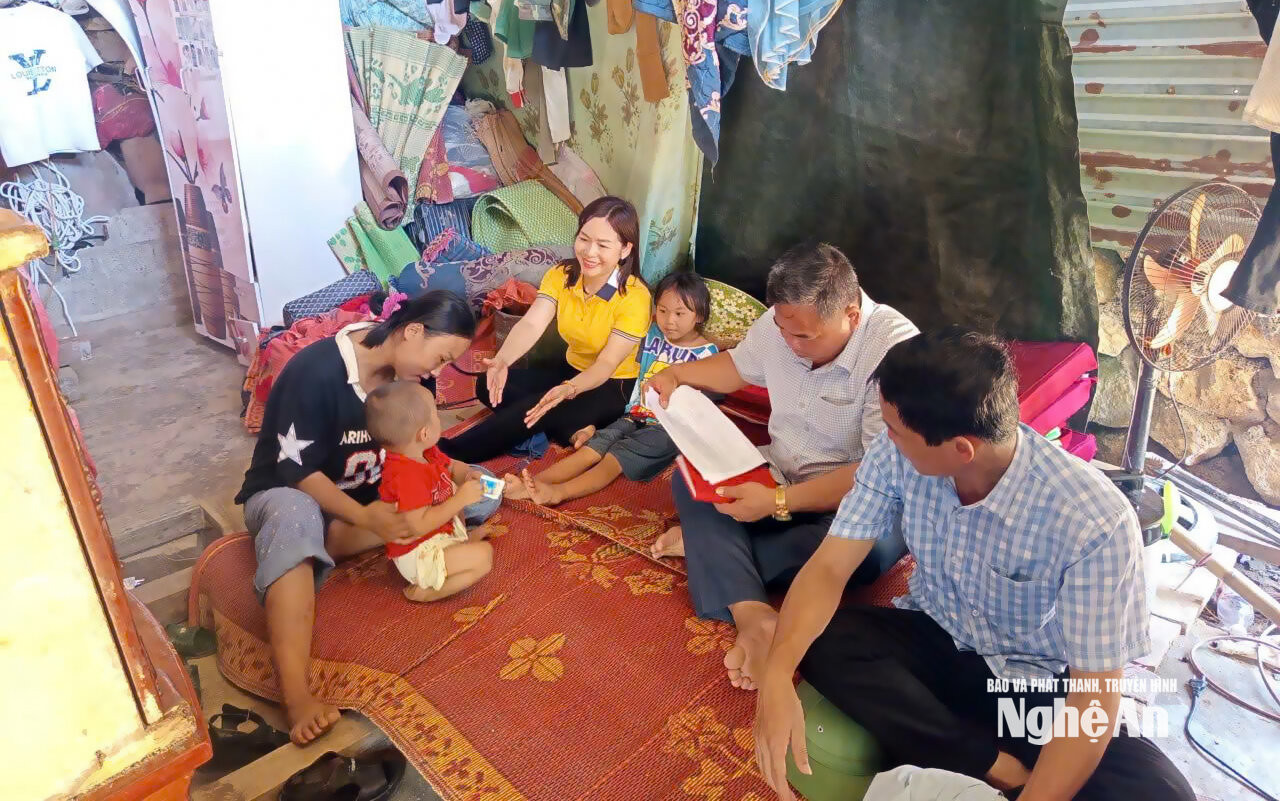
Fifteen years of dedication to trade union work gave her many opportunities to share with struggling workers. Therefore, when she transitioned to working with the Fatherland Front, that same concern followed her to the grassroots level. She spent time visiting villages and hamlets, meeting with people, listening to their needs and the difficulties they faced.
Ms. Luu Thi Quyen has proactively advised, connected, and mobilized businesses, organizations, individuals, and philanthropists to jointly support the provision of goods, supplies, necessities, and social welfare resources, totaling nearly 10 billion VND from July 1, 2025 to the present.
Of these, 65 "Great Solidarity" houses have been supported for new construction or renovation with a total value of 3.37 billion VND. The Fatherland Front Committee of the commune also implemented livelihood models, supporting 34 households to implement black sow and black chicken farming models, with a total value of 850 million VND, creating more conditions for families to gradually become self-sufficient.
In disaster relief efforts, five rural road projects were also connected and supported with a total value of 2.46 billion VND.
.jpg)
.jpg)
In addition, she, along with the Fatherland Front Committee of the commune, connected with and supported two students with particularly difficult circumstances to participate in the "Vietnamese Family Shelter" program, with a total of over 1.5 billion VND in support provided to them after the program. At the same time, she mobilized nearly 200 million VND to cover 100% of the heart surgery costs for a disadvantaged child in the commune.
These activities have fostered trust and consensus among the people, making them willing to contribute to building their homeland with many remarkable achievements.
For Ms. Luu Thi Quyen, Mr. Cao Van Thai, and Ms. Nguyen Thi Minh Huong, what is most valuable is that each time they go to the grassroots, they receive the trust, sharing, and support of the people. Through these concrete actions, the Front officials and the people become increasingly connected, and the common good of their homeland becomes something everyone wants to contribute to.
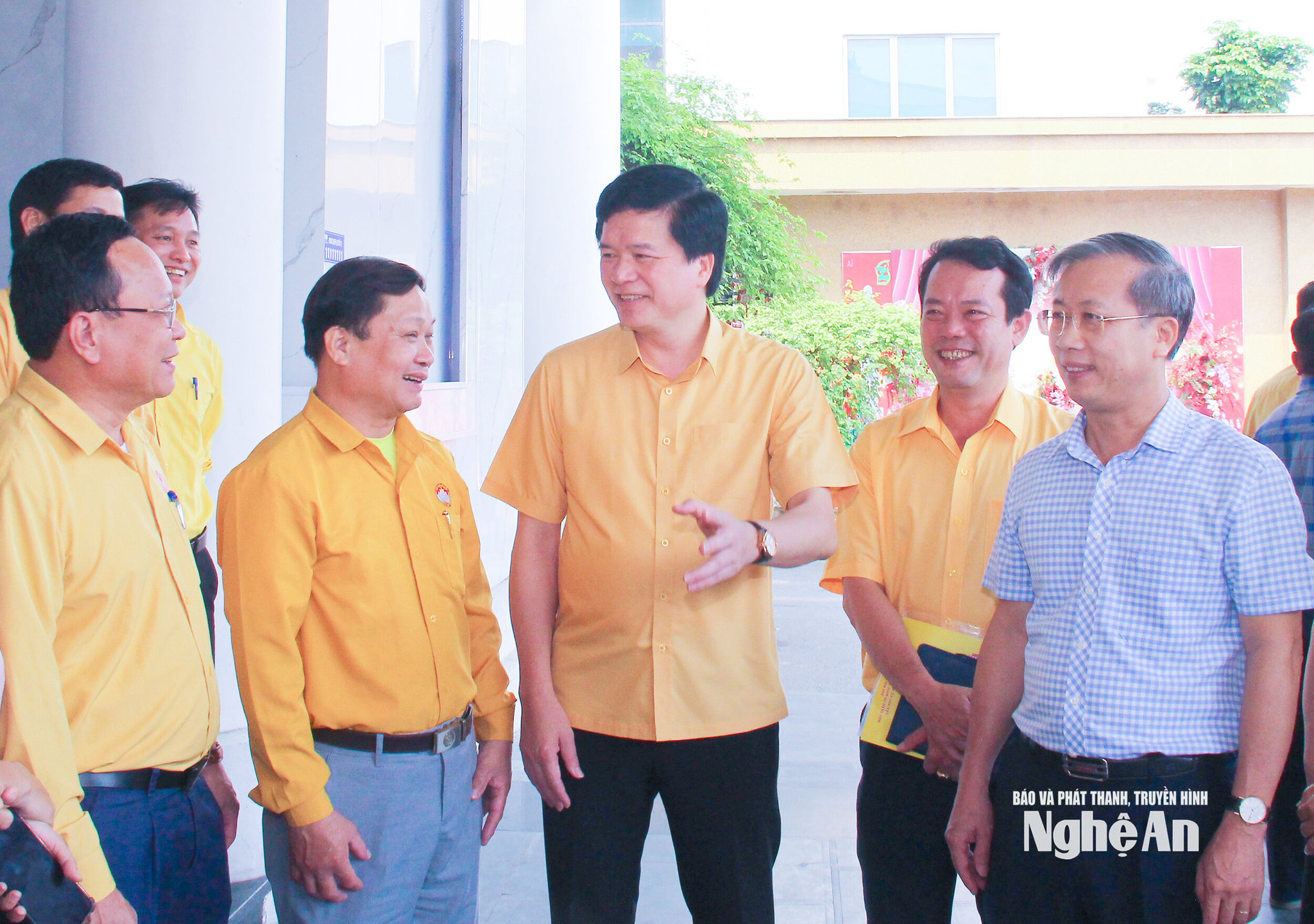
Sharing his thoughts on the role of the Fatherland Front's staff, Comrade Nguyen Dinh Hung, Standing Committee member of the Provincial Party Committee and Permanent Vice Chairman of the Vietnam Fatherland Front Committee of Nghe An province, said that currently the province has 1,341 Fatherland Front officials at the provincial and commune levels, and 2,026 heads of Fatherland Front working committees in hamlets and villages. This is a crucial force that directly conveys the Party's guidelines, the State's policies and laws, and various campaigns and emulation movements to each residential area. They are also people who are close to the people, regularly understanding their thoughts, aspirations, and emerging issues at the grassroots level to report to the Party committee, government, and higher-level Fatherland Front organizations.
This force also plays a crucial role in monitoring and providing social feedback, contributing to the building of the Party and the government, and helping to ensure the legitimate rights and interests of the people. Alongside this, the work of understanding the thoughts and aspirations of the people is increasingly being improved, with the application of digital platforms such as the Nghe An Digital Front Mini App to receive opinions and feedback from the people, promptly forwarding emerging issues to relevant agencies.
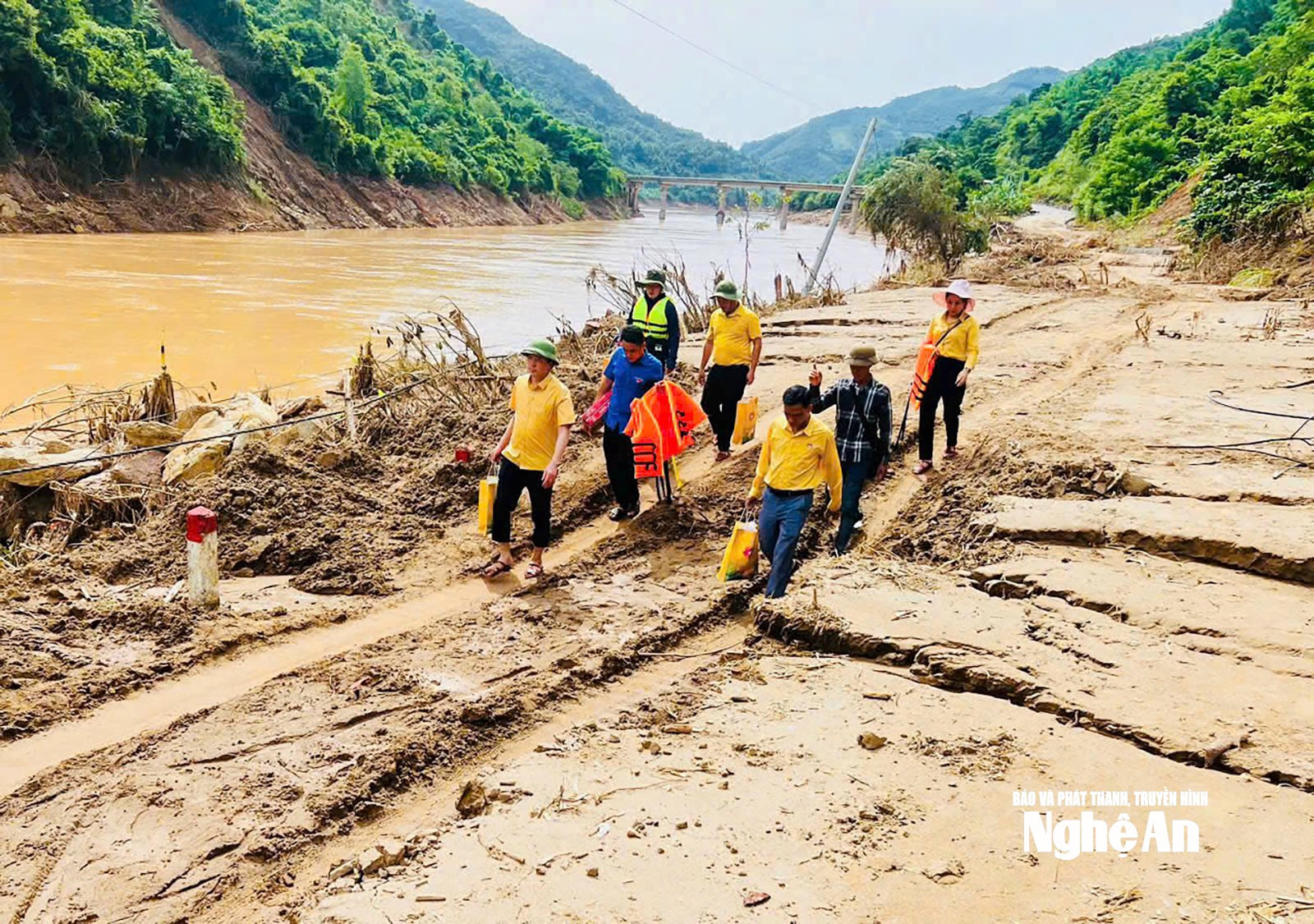
Insocial welfare workLocal Front officials play a direct role in identifying, connecting, and mobilizing resources to care for the poor, those in difficult circumstances, and vulnerable groups. From mobilizing the "For the Poor" Fund, supporting livelihoods, building solidarity houses, to disaster relief, Front officials contribute to delivering resources to the right recipients in a timely and practical manner. In Nghe An province alone, in the first six months of 2026, 191.309 billion VND was mobilized to care for the poor during Tet (Lunar New Year), build 706 new houses, and repair 105 houses for the people.
Regarding ethnic affairs, religious affairs, and people-to-people diplomacy, Front cadres continue to play a crucial role in building trust and consolidating community solidarity. Regularly meeting with, caring for, and engaging in dialogue with ethnic minorities, religious leaders, officials, followers, and influential figures helps Front cadres to promptly grasp the situation, mobilize the people to comply with the Party's guidelines, the State's policies and laws, and actively participate in patriotic emulation movements, contributing to the consolidation of national unity.
Faced with new demands from reality, those working in the Fatherland Front are gradually innovating their thinking and methods to be closer to the people, understand the people, effectively apply technology, and mobilize the people's strength, better meeting the requirements of the Fatherland Front's work in the current period.


