
The amazing uses of shallots from Nghe An
(Baonghean.vn) - Since ancient times, shallots have been used by the people as a medicine to treat illnesses and as a spice in cooking. If not properly preserved, shallots spoil very quickly, so at the end of the year, shallots are often priced 10 times higher than during the harvest season.
According to traditional Chinese medicine: Shallots are hot in nature, spicy in taste, and have a pungent smell. They are used to expel phlegm, reduce coughs, induce sweating, promote urination, disinfect, detoxify, treat colds, insect bites, and lead poisoning. When suffering from a cold, crushing a handful of shallots and adding them to hot porridge can help relieve symptoms. Eating shallot porridge after getting wet in the rain can also help prevent colds.
According to folk remedies, when suffering from a fever due to a cold, crushing a few shallots and rubbing them on the back and soles of the feet can help reduce fever. Shallots, crushed or mixed with rock sugar and steamed, can be drunk to fight respiratory infections, treat coughs, runny noses, and nasal congestion. Because shallots have good antibacterial properties, crushed shallots boiled in water can be used to wash wounds to treat injuries and hematomas. Shallots combined with soapberry fruit and broom flowers, burned in charcoal for fumigation, is also a good remedy for treating bloating in young children, successfully used by many mothers.
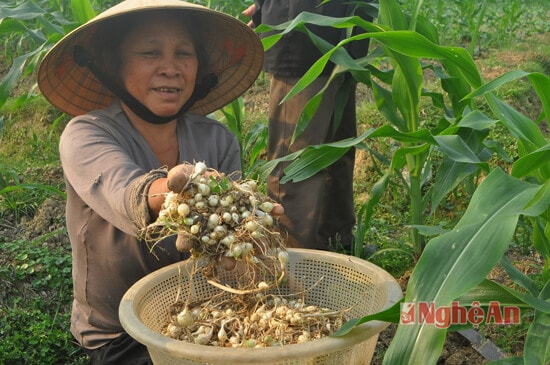 |
| Shallots are proving to be a drought-resistant crop in Nghe An province. |
Regular consumption of shallots can help prevent and treat colds. Shallots are used as a seasoning in cooking. Besides their medicinal properties, shallots are also a wonderful spice favored by many home cooks. Because shallots have a warming effect, they are often used in preparing dishes that are considered "cold" in nature, such as eel, clams, and various types of fish. Nghe An province is famous for its eel porridge and eel soup, but few people know that shallots are an indispensable ingredient in eel dishes. Shallots are used to sauté eel in oil.
Raw shallots have a strong, pungent smell, but when fried until golden brown, they become very fragrant and can neutralize the fishy smell of eel. Shallots are also widely used in preparing dishes such as fish porridge and clam porridge.
Shallots and fresh turmeric are also indispensable spices when braising freshwater fish (river fish, pond fish, or fish raised in freshwater ponds). To have a delicious pot of braised freshwater fish, in addition to marinating the fish with shallots, fresh turmeric, and other spices such as soup stock, pepper, and MSG, after braising thoroughly, you can fry some shallots and add them to the pot after turning off the heat. Shallots are also used by home cooks in combination with lime leaves, white salt, and pepper powder to prepare chicken stew (Thanh Chuong chicken stew).
Shallots have many uses in medicine as well as in cooking. However, shallots spoil quickly if not properly preserved. During the harvest season, 1 kg of shallots only costs 25-30 thousand VND, but by November-December, 1 kg can cost 100-200 thousand VND, and in some years even up to 300-400 thousand VND.
Preserve shallots so you can use them all year round.
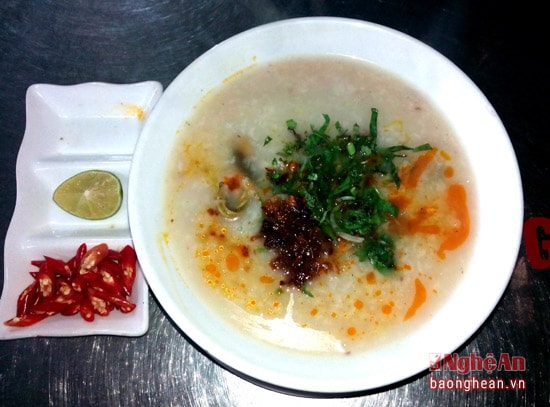 |
| Eel porridge seasoned with shallots. Photo by Mai Giang |
To preserve shallots for a long time, choose mature shallots with plump, round bulbs (harvested when the plant and roots have been destroyed). Young shallots tend to blister quickly. Ms. Nguyen Thi Tam, the owner of a shallot restaurant in Tan Ky town, said: She regularly uses shallots to prepare eel dishes. Each year, her restaurant consumes 300-400 kg of shallots. During the shallot harvest season, she usually stockpiles them for year-round use. “To preserve shallots for a long time, first, choose very mature shallots, wash them thoroughly, and dry them (not in direct sunlight, but in the shade); then store them in plastic containers in a cool, airy place,” Ms. Tam explained. After washing and drying, shallots can be stored in thin, open mesh bags or burlap sacks, elevated to prevent moisture, and can be preserved for 7-9 months without spoiling.
If you don't wash the shallot bulbs, mix them with dry sand and spread them on the floor; they can still be stored for 4-5 months. Some housewives choose to crush and dry the shallots or freeze them, but this method doesn't preserve their flavor or quality.
Thanh Tam


