
Graduates sow 'green seeds' in challenging soil.
Thanh QuynhJanuary 15, 2026
Born in impoverished regions, these young people, more than anyone else, deeply understand the value of every grain of rice and every potato that nourished them. Driven by their love for their homeland, after graduating from university, they bring their knowledge back, building new economic models to create sustainable livelihoods on the very land where they grew up.
The bright spot in Cang Bai
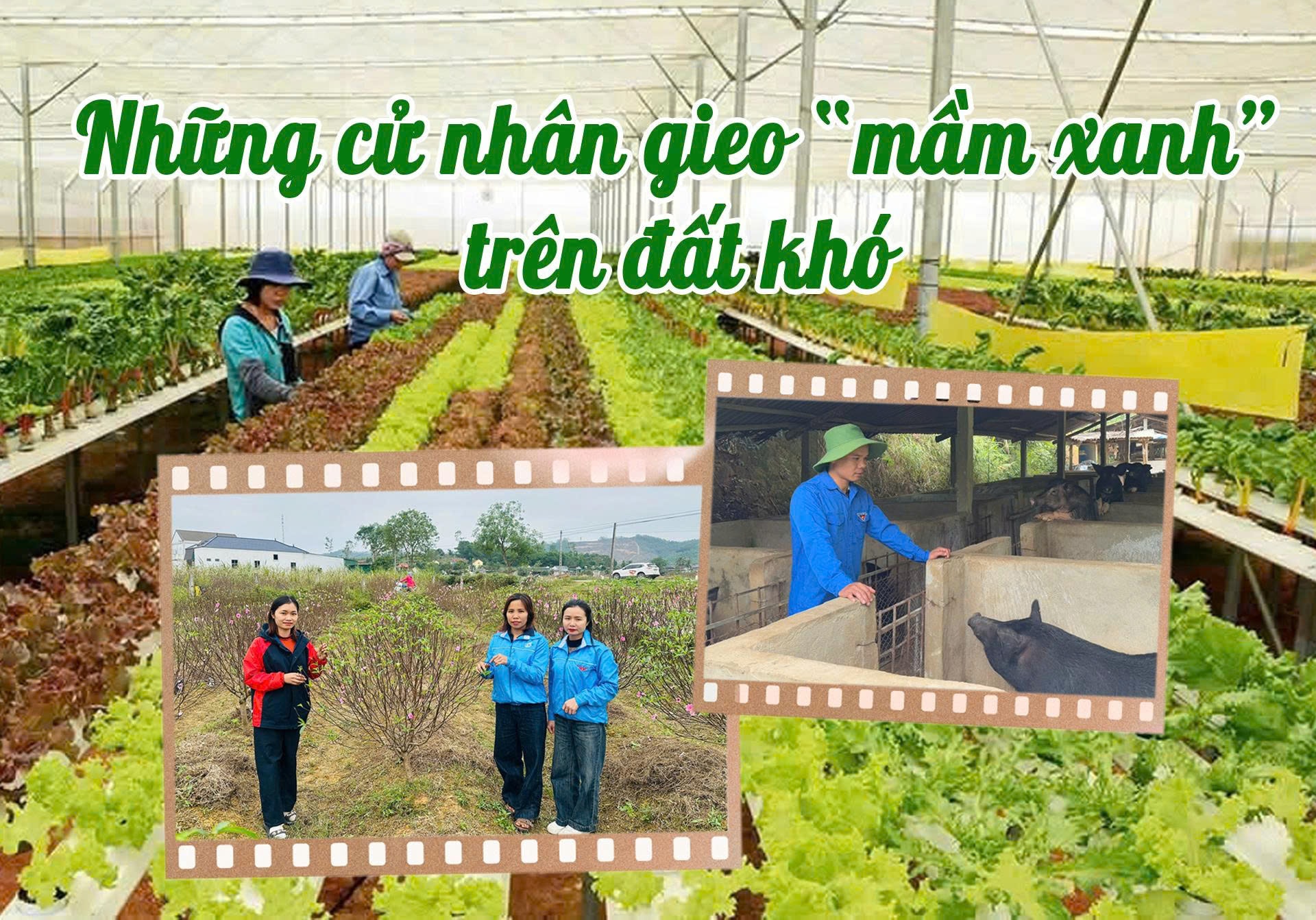
As the year draws to a close, Huynh Tien Phuoc (born in 1994) seems busier than ever, tending to his herd of nearly 40 pigs. Of these, 20 will be ready for sale during the upcoming Lunar New Year. Phuoc is a native of Hamlet 1, Quy Chau Commune, but he has established his farm in Cang Bai Village, Chau Tien Commune.
Phuoc's home is nearly 15 km from the farm, with almost 3 km of the road being hilly, so he often stays overnight at the farm to keep an eye on his livestock. Therefore, Cang Bai village is considered his second home. Few people know that he is a graduate in economics from Hue University of Economics, Faculty of Business Administration. His bachelor's degree didn't deter him from farming; instead, it helped him view livestock farming differently: he learned to calculate inputs and outputs, and most importantly, he solved the "bottleneck" in creating feed for his pigs, enabling him to develop his livestock in a commercial direction.
.jpg)
Phuoc recounted that in 2012, after graduating from high school, he passed the entrance exam to Hue University of Economics, majoring in General Business Administration. During his years studying, every time he returned to his hometown and saw the hillside in Cang Bai village, mainly planted with acacia trees, but with low yields due to his parents' advanced age and lack of resources for investment, he always pondered what he could do differently. Therefore, in 2016, after graduating from university, Phuoc chose not to stay in the city but returned to his hometown to renovate his family's hillside to develop a farm.
Initially, he both tended to the acacia forest and borrowed capital to raise cattle and goats to generate income. However, due to the relatively long capital turnover cycle for cattle and goats, the effectiveness was not yet clear, so Phuoc gradually shifted his focus to raising black pigs. This is a native breed with high adaptability, a faster time to market, and is currently popular in the market.
When Phuoc started his farm, very few people in the village raised pigs on a large scale. The common method was still manual feed, suitable for a few pigs in a home garden, but when the number increased, it became both labor-intensive and impossible to feed them quickly enough. Conversely, using only industrial feed was expensive and did not preserve the distinctive quality of the black pig's meat.
.jpg)
Driven by these concerns, and through researching and learning from successful models in various places, Phuoc discovered a method of fermenting feed from elephant grass combined with cornmeal and bran. He purchased probiotics from the Vietnam Academy of Agriculture, carefully studied the technical process, and then applied it to his farm. Simultaneously, Phuoc dedicated about half a hectare of land to growing elephant grass, proactively securing a source of green fodder for his pigs, significantly reducing costs and the pressure of purchasing feed from outside sources.
By 2019, with the feed problem solved, Phuoc began investing in a well-organized pig farm system, buying breeding sows. On average, each sow gives birth to two litters per year, with 6-8 piglets per litter. The piglets are raised to about 20 kg before being sold, while the healthy females are kept for breeding, creating a closed-loop system for the farm.
At one point, Mr. Phuoc's pig herd reached nearly 100 pigs, including sows, breeding pigs, and market pigs, but the feed supply remained secure thanks to his fermentation system and readily available elephant grass. Locating the farm far from residential areas also helped limit the risk of disease outbreaks. There was only one instance of African swine fever in 2025, but Mr. Phuoc promptly addressed the issue, rebuilded the herd, and tightened vaccination procedures, considering it a valuable lesson for maintaining a more sustainable development model.
.jpg)
To date, Mr. Phuoc's black pig farming model has become a shining example in Cang Bai village, generating an average annual income of around 200 million VND.
Combined with nearly 3 hectares of well-cared-for acacia trees, this integrated production model is opening up a more sustainable path for Phuoc's family to form a more stable livelihood for the future.
Transforming farmland into a potential economic model.
With over 400 peach trees planted on her family's garden and fields, the model of Ms. To Thi Hieu (born in 1993) in Hamlet 6, Van Du Commune, is gradually helping her stabilize her life. According to Ms. Hieu, not all the peach trees are sold every season, but the remaining trees are cared for and sold the following year, thus maintaining the value of the model. On average, the peach orchard sells about 200-300 trees each year, at an average price of about 400,000 VND per tree for peach trees over one year old. After deducting expenses, the income from peaches is 4-5 times higher than growing vegetables on the same area of land.
Interestingly, this woman, who is so dedicated to farming, is actually an Accounting graduate from Nghe An University of Economics (now Nghe An University) in 2015. After graduation, Ms. Hieu worked in various environments to make ends meet and accumulate capital and experience. In 2022, upon returning to her hometown to start a family, standing before her parents' garden and fields, she began to plan a long-term strategy using peach trees – a crop already present and well-suited to the local soil conditions.
.jpg)
“At that time, my parents planted nearly 200 peach trees in their garden, while the rice paddies were mainly used for growing vegetables. After seeing that peach trees yielded a clear economic benefit, I decided to convert the rice paddies specifically used for growing vegetables to plant another 200 trees. The seedlings are sourced locally, so I'm confident about their quality. Typically, peach growers plant seedlings at the beginning of the year and can sell them by the end of the year. These are one-year-old trees. In addition, the garden also maintains two-year-old and three-year-old trees, and those with beautiful shapes and forms increase in value over time,” Ms. Hieu said.
To ensure the peach trees grow well and bloom in time for Tet (Vietnamese Lunar New Year), Ms. Hieu and her family must closely monitor each stage of the tree's development. From preparing the soil, fertilizing, and shaping the canopy, to stripping leaves and regulating water according to the growth cycle and weather conditions. Her solid education from university has given Hieu the patience to approach technical processes scientifically, and she is not afraid to learn, take notes, and experiment to build a sustainable livelihood for herself.
Unable to conceal her joy, Ms. Nguyen Thi Tuyet, Secretary of the Youth Union and Vice Chairman of the Fatherland Front Committee of Van Du commune, said that Van Du commune was established by merging three communes: Thinh Thanh, Tay Thanh, and Minh Thanh. Although some areas of the commune still face many difficulties in infrastructure, production, and livelihoods, local youth have persevered in finding new directions, gradually forming nearly 40 economic development models, creating livelihoods and jobs right in their hometown. The locality is currently managing entrusted capital from the Social Policy Bank with a total outstanding loan balance of over 10 billion VND, supporting loans to create jobs for 45 cases, including many economic models run by young people.
.jpg)
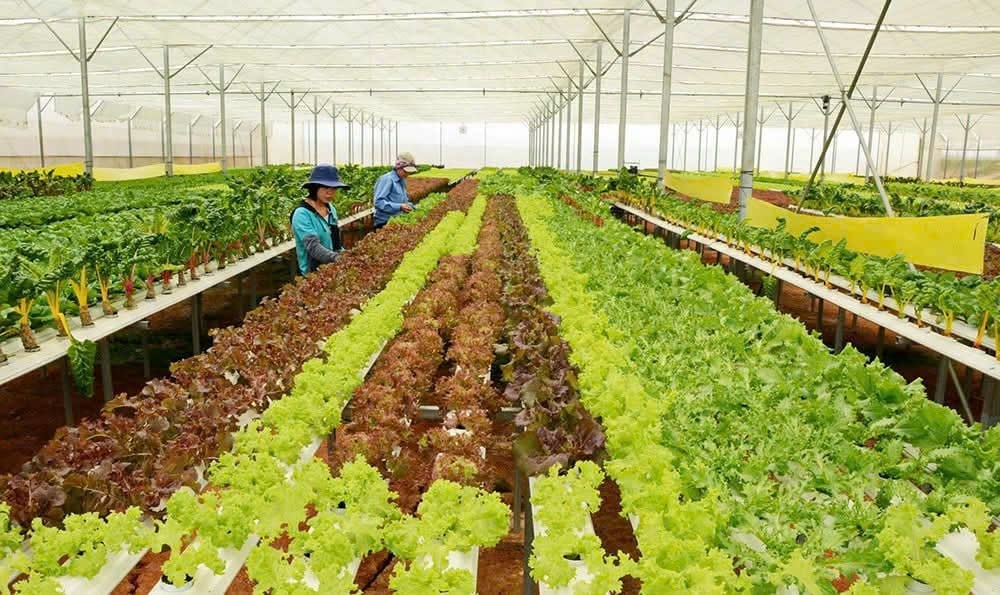
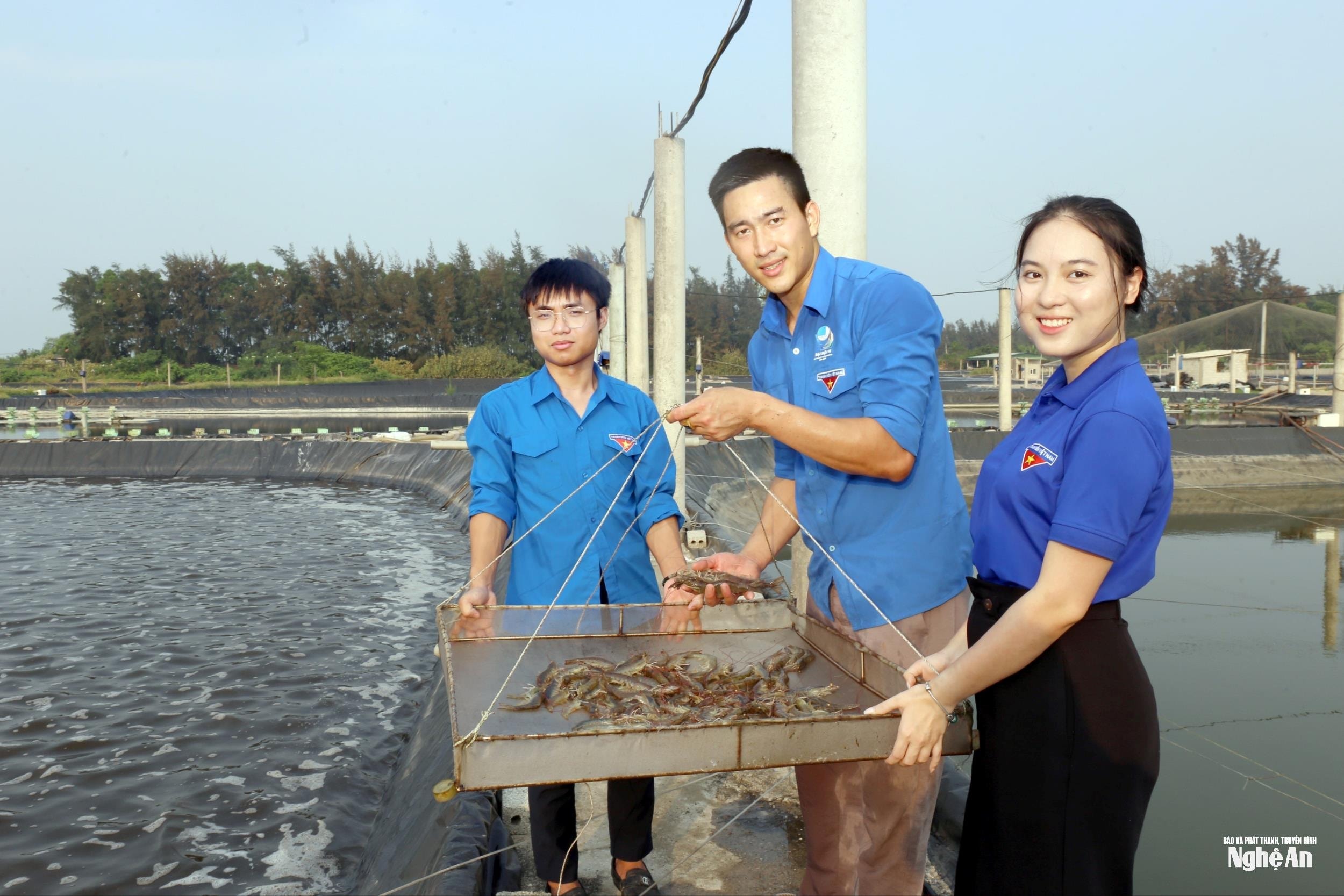
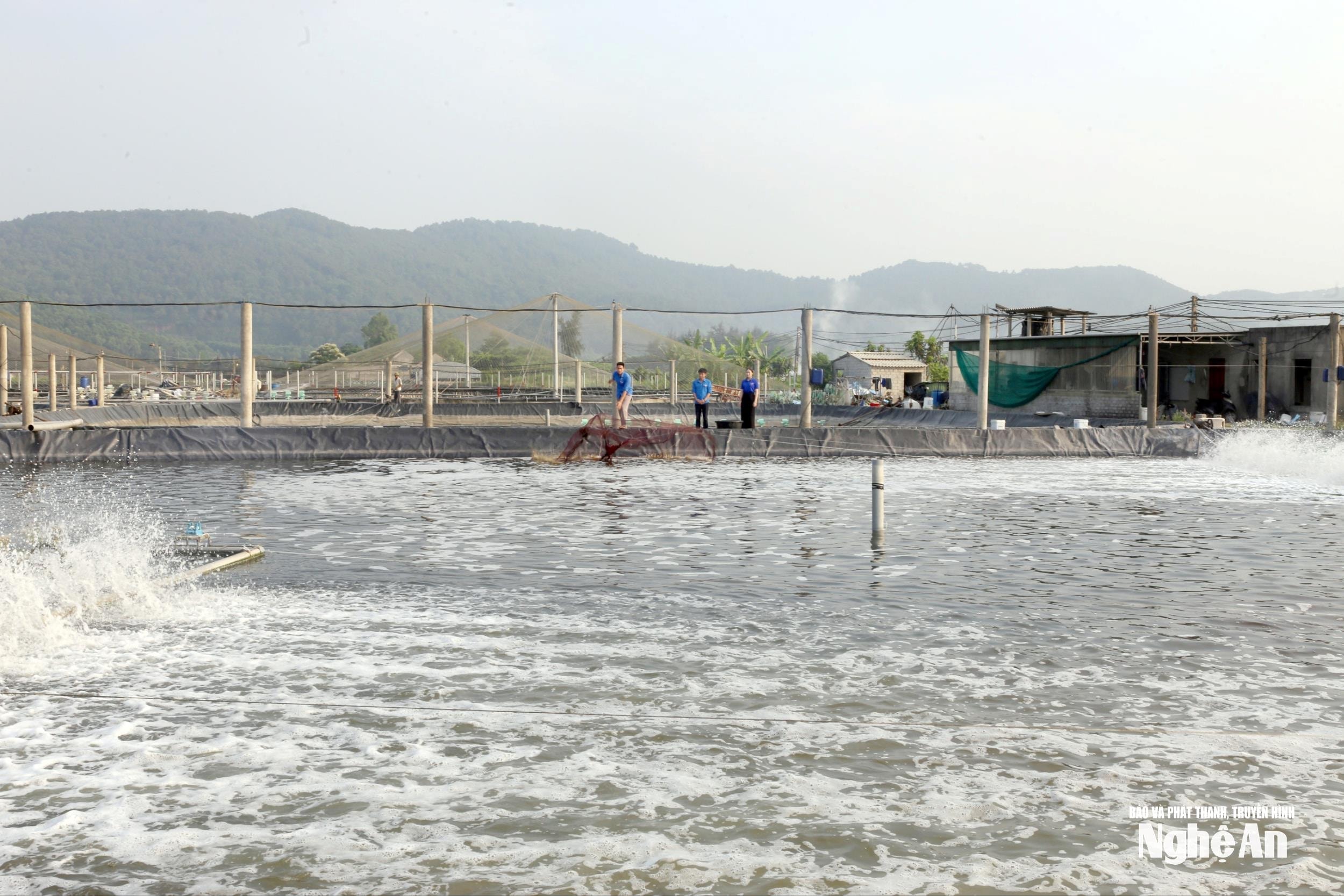
Looking across the province, Deputy Secretary of the Provincial Youth Union Ho Phuc Hai said that more and more young people with formal training at college and university levels are choosing to return to their hometowns to start businesses in agriculture. Typical examples include Nguyen Huu Thang (born in 1997, in An Chau commune), a graduate of the Aquaculture major at Vinh University, who has successfully built a high-tech shrimp farming model. He was recently awarded the Luong Dinh Cua Prize in 2025. Similarly, Le Luu Thang (born in 1994, in Nam Dan commune), a graduate of the Resource and Environmental Management major at Vinh University, has returned to his hometown to establish an agricultural cooperative, developing a model for growing green pumpkins and producing organic microbial fertilizer, applying new techniques to clean production. Or Nguyen Van Dat (born in 1992, in Lam Thanh commune), a construction engineer, has chosen the path of starting a business with a clean vegetable farming model right on his home land.
Through various paths, these young people are contributing to creating local jobs, bringing knowledge and technology into agriculture, and thereby forming new drivers for the sustainable development of rural areas.


