
The missing treasures worth $37 billion from Nazi Germany.
The treasures hidden by Nazi Germany, whose whereabouts remain unknown to this day, are believed to be worth up to $37 billion.
In 1945, following Germany's defeat to the Allies in World War II, the Nazi leaders were in utter panic and quickly sought ways to conceal the enormous treasures they had plundered over the past six years. Priceless works of art, silver artifacts, and hundreds of tons of gold were all hidden in secret mines or submerged at the bottom of lakes, according to War History Online.
Allied forces discovered several caches of treasure, but a staggering $37 billion worth of artifacts remains missing. Last year, residents of Walbrzych, Poland, claimed to have found traces of a Nazi train carrying gold. In 2012, a collection of artworks worth $1.8 billion was also discovered in an apartment in Munich. However, these figures pale in comparison to the vast amount of Nazi treasure that remains unaccounted for.
$93 million worth of silver jewelry.
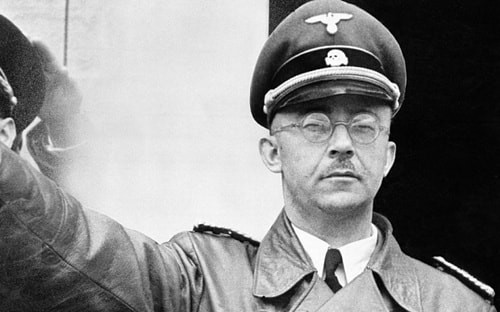 |
Heinrich Himmler, Marshal of the Nazi German Guard. Photo: AP |
Even today, treasure hunters are still searching for traces of a $93 million hoard of jewelry in the hills surrounding Wewelsburg Castle in Germany. Heinrich Himmler, a Nazi German guard marshal, bought the castle before the war broke out. When things took a turn for the worse for the Nazis, Himmler is believed to have hidden 9,200 silver rings belonging to SS members in a cave somewhere around the castle.
"I've been searching for them for the past five years. I guess the chances of success are higher than playing the lottery. Besides, I can enjoy the fresh air, and the work isn't dangerous. Who knows, maybe one day I'll get lucky," said Konrad Kienast, 44, an employee at a local gas company.
Hitler's UFOs and the Amber Room
 |
Inside the recreated Amber Room in Russia. Photo: Reuters |
Treasure hunters still believe that the Nazis hid in the Jonas Valley, Ohrdruf, in central Germany, an atomic bomb planted by Adolf Hitler, the Amber Room – a lost treasure dubbed the eighth wonder of the world, countless masterpieces of art, and hundreds of tons of gold from the Reichsbank. These were supposedly stored in a secret tunnel system dug deep into the mountain.
After liberating Ohrdruf, the Americans sorted and sealed all documents related to the aforementioned massive treasure. However, many people still flocked there in search of their fortune. Every weekend, local authorities arrested numerous treasure hunters attempting to enter the area.
Martin Stade, an experienced treasure hunter, also claims that Hitler had many disc-shaped unidentified flying objects (UFOs) manufactured in bunkers scattered throughout the area.
$100 million gold hoard
Many speculate that the Nazis threw a large amount of gold, worth approximately $100 million, into Lake Walchen. Located in a rural area near Munich, Walchen is one of Germany's largest and deepest lakes. Local residents claim that around April 1945, a month before the fall of Nazi Germany, they saw groups of soldiers gathering by the lake. Some archived video footage also shows Himmler commanding three escorted trucks traveling in the dark from Berlin to Bavaria at the exact time the locals claimed to have seen soldiers by the lake.
A hoard of gold, jewelry, and antique stamps worth $84 million.
Lake Luner is also a frequent haunt for treasure hunters. They believe it's where the Nazis hid gold and jewelry confiscated from prisoners at the Dachau labor camp. The estimated value of this treasure is around $84 million.
After the war ended, nearly 1,200 Nazi war criminals were reportedly imprisoned near the lake. Wilhelm Gross, a doctor tasked with caring for the prisoners, once recounted how one of the more than 1,000 inmates told him that there was a lot of "gold, jewelry, and rare stamps" buried around the lake.
Edward Greger, an American intelligence officer, planned a search for this treasure in the early 1950s, but in 1956, a dam in the area broke, submerging the entire lake region. The plan was therefore halted.
Gold from Reichsbank
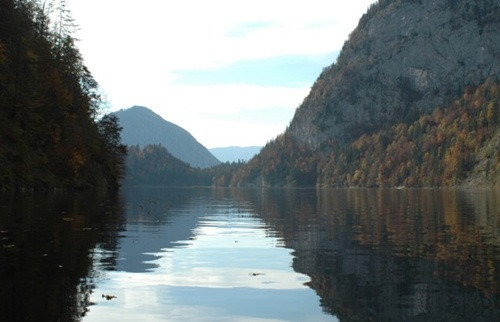 |
Lake Toplitz, Austria, the alleged location where Nazi Germany hid gold from the Reichsbank worth up to $5.6 billion. Photo: War History Online |
Treasure hunters believe that Austria's Lake Toplitz was also a hiding place for gold by the Nazis. The value of this gold could reach $5.6 billion. It is believed to have belonged to the Reichsbank, the central bank of Nazi Germany.
In 1959, several safes containing counterfeit British pounds worth approximately $134 million were also found here. Hitler had intended to use these coins to destroy the British economy. However, the aforementioned gold has remained missing.
A priceless treasure trove of art.
Many believe that a silver mine near the old border between Czechoslovakia and Germany is the burial place of hundreds of masterpieces by artists such as Monet, Manet, and Cezanne.
These paintings are primarily part of the Hatvany collection of Baron Ferenc Hatvany, one of Hungary's leading Jewish industrialists and art patrons.
Adolf Eichmann, the "chief architect" of the Holocaust, linked to the deaths of 6 million Jews in Europe, ordered the theft of between 250 and 500 works from the collection to be taken back to Germany.
Burjkhart List, a historian in Vienna, Austria, also discovered a series of documents in the Nazi archives showing that a large number of works from the Hatvany collection had been moved to secret rooms that the Nazis built in the Erzgebirge mountains. However, to date, only machine guns, gas masks, detonators, and a key to a safe deposit box have been found there.
18 barrels of gold worth $1.8 billion.
According to folklore, Lake Stolpsee, near Berlin, is where the Nazis hid 18 barrels of gold beneath its 15-meter-deep waters. Witnesses say that Polish slaves helped the Nazis throw the gold into the lake, but they were all subsequently executed.
In 1986, secret police from the German State Security Service (Stasi) attempted to locate the treasure but failed. In 2013, the German government funded an Israeli researcher to use sonar equipment to search for the gold, but this was also unsuccessful.
According to VNE
| RELATED NEWS |
|---|


