
Certain types of footwear are extremely dangerous when driving.
Experts say that wearing high heels or boots is forbidden for drivers, and driving barefoot or in flip-flops is equally dangerous.
High heels or boots
Neither of these types is suitable for driving.
Boots often restrict ankle movement due to their stiff and long shafts, making it difficult to react to unexpected situations. Boots can also cause fatigue if you have to drive for extended periods.
Meanwhile, high heels make it difficult to control the accelerator and brake pedals, and many people mistakenly press the accelerator instead of the brake, especially in emergency or dangerous situations when driving on busy roads with high traffic density.
Furthermore, high heels often lack good grip/support for the feet, easily causing drivers to be in an uncomfortable position while driving. The structure of high heels elevates the feet higher than normal, making it difficult for drivers to feel the force applied to the brake/accelerator pedals.
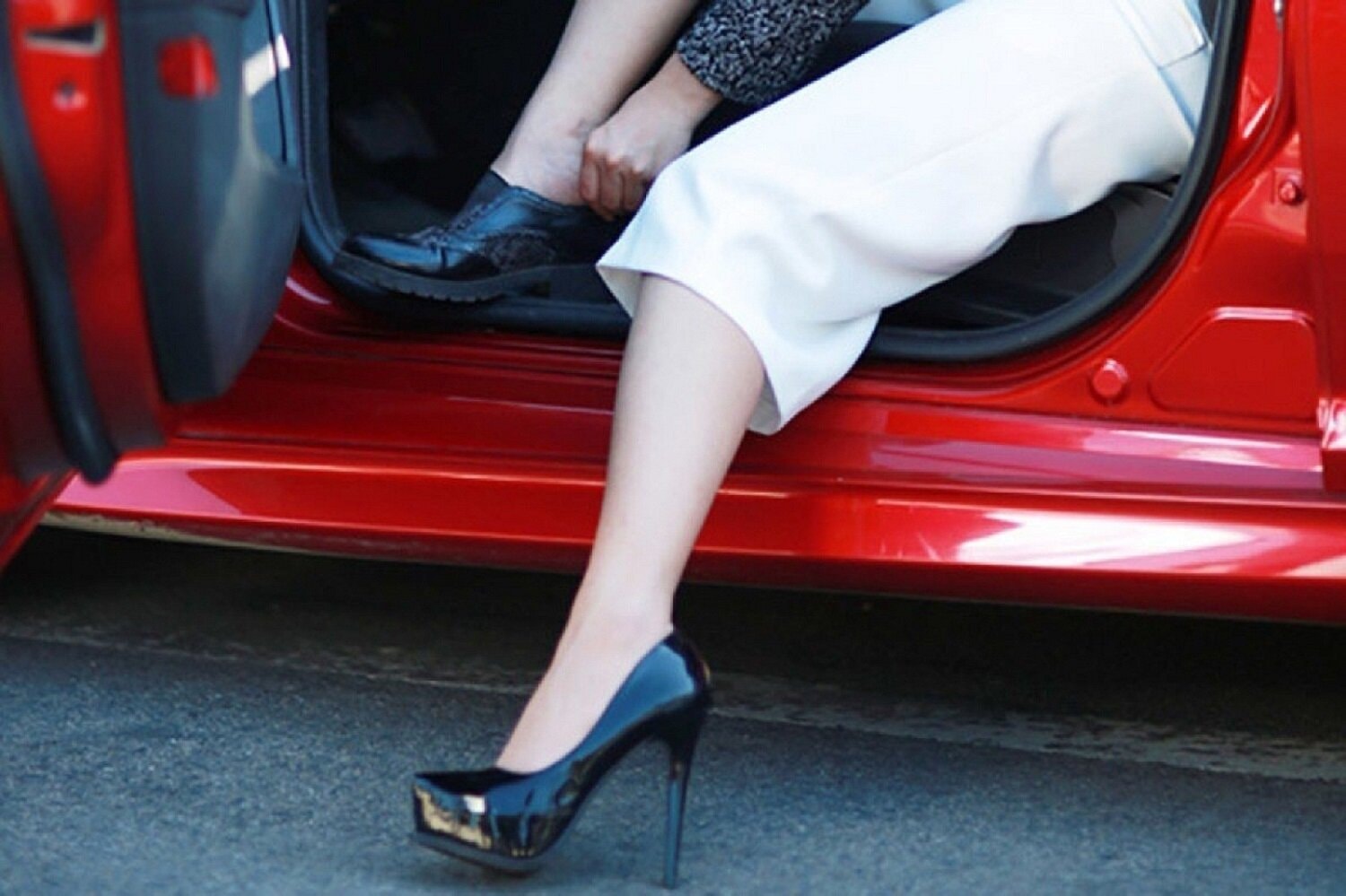
Wearing high heels also creates a gap between the foot and the pedals. This gap can cause drivers to accidentally press the brake or the accelerator instead of the brake. Furthermore, some high heels can even cause drivers to get their feet caught in the floor mats or between the pedals, reducing their ability to react in an emergency.
Flip-flops or sandals
Flip-flops and sandals are the choice of many drivers when commuting because they feel more comfortable than wearing shoes. In fact, many drivers even say that driving in flip-flops is more enjoyable than driving in shoes.
However, driving while wearing sandals makes it difficult to perform maneuvers smoothly. Sandals tend to be slippery and lack grip, making it hard to handle sudden situations. Furthermore, the slipperiness of sandals can cause them to slip off and get caught on the pedals, posing a danger to the driver. In addition, wearing sandals reduces the driver's feel when using the brakes or accelerator, potentially leading to a feeling of inability to control the accelerator due to the lightness of the sandals.
Studies have also shown that people wearing flip-flops take twice as long to move between the brake pedals. If you brake while wearing flip-flops, it slows down your driving response by 0.1 seconds. This might seem insignificant, but at 60 km/h, you'll need at least 3.3 meters or more to bring the car to a complete stop. And in emergency situations, every 0.1 second counts.
Driving barefoot
Many people think that driving without shoes eliminates all risks, but that's not actually the case. While driving barefoot might offer some advantages over wearing high heels, you have to exert more force, making your feet more prone to cramps and increasing the risk of ankle injuries.
Furthermore, when driving for extended periods, your feet will sweat and are more likely to slip off the pedals. Not to mention, bare feet don't offer the same grip as shoes, so when you need to brake suddenly, your feet are more likely to slip off the pedals.
In reality, driving instructors often require students to wear flat shoes or sneakers during practical driving lessons.


