
What types of vehicles are allowed on the highway?
People need to be aware of the regulations when traveling on highways to ensure safety and avoid being fined for violations of the Road Traffic Law.
Which vehicles are allowed on the highway?
According to Clause 12, Article 3 ofRoad Traffic Law 2008A highway is defined as a special type of road exclusively for motor vehicles. Characteristics of a highway include: Highways have a median strip separating the lanes for traffic in two distinct directions. This ensures that vehicles traveling in opposite directions will not collide and facilitates easier traffic management.
Highways do not intersect with other roads at the same level. This separation ensures that vehicles on the highway do not have to stop or intersect with traffic from other roads, thus reducing the risk of accidents.
Highways are fully equipped with traffic management facilities to ensure continuous and safe traffic flow. This includes lighting systems, signs, guardrails, road markings, and other supporting elements.
The goal of highways is to shorten travel times, helping users move more quickly and efficiently.
Highways only allow vehicles to enter and exit at specific points, ensuring that traffic control and flow management are carried out effectively.
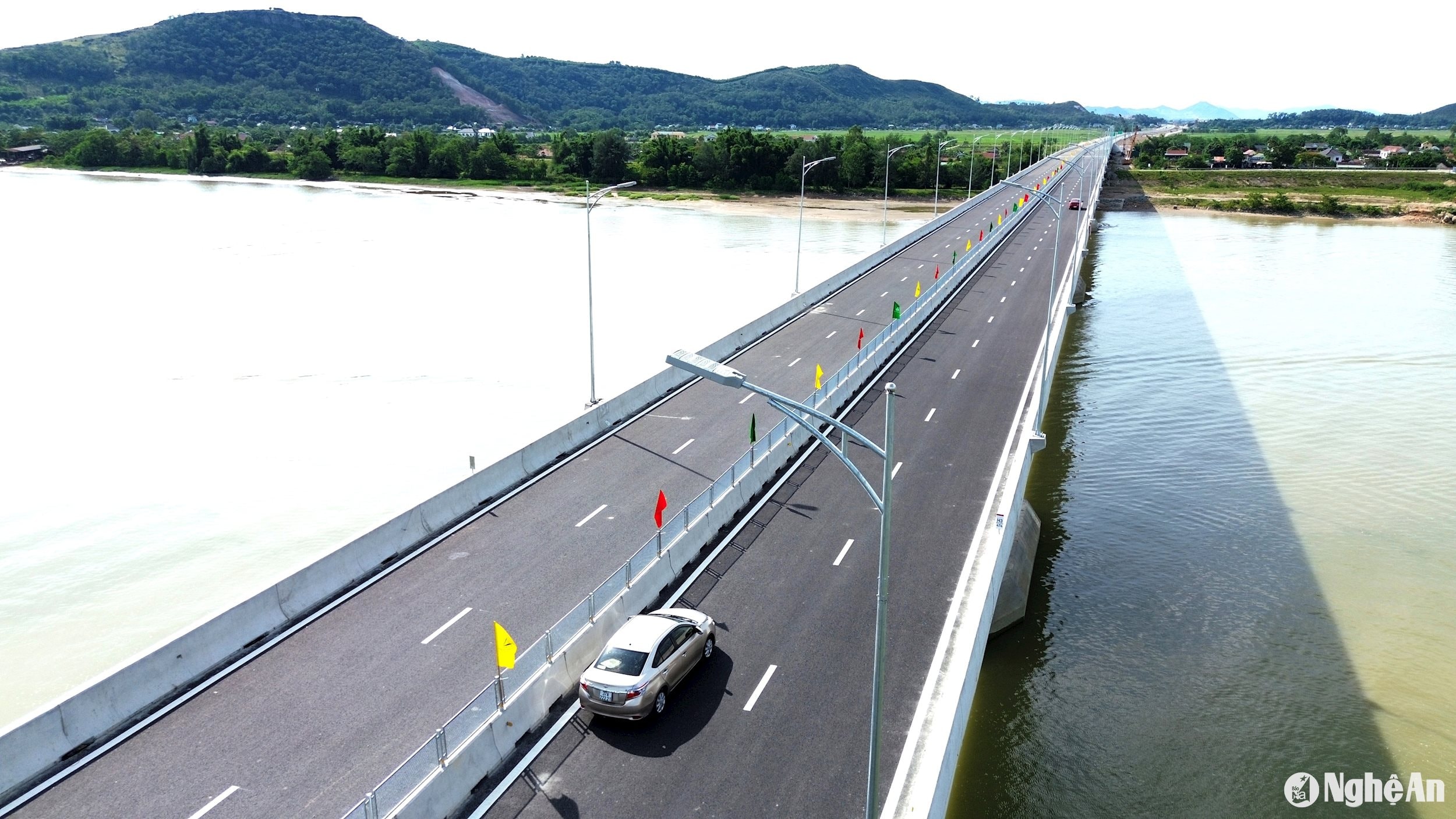
According toArticle 26 of the 2008 Road Traffic Law:Vehicles such as pedestrians, bicycles, motorbikes, and tractors, as well as specialized vehicles with a design speed of less than 70 km/h, are not permitted on expressways, except in cases related to expressway management and maintenance.
COnly cars and vehicles used for highway management and maintenance are allowed.They are permitted to enter the highway according to regulations.
Regarding traffic regulations on highways, the following are important points: When entering a highway, drivers of cars and specialized motor vehicles must comply with the following regulations:
Drivers must signal and yield to vehicles already on the highway; wait until it is safe to enter the highway, and usually in the outermost lane; if there is an acceleration lane, they must move onto that lane before entering the highway; when exiting the highway, drivers of cars and specialized vehicles must gradually move to the right lane, and if there is a deceleration lane, they must move onto that lane before exiting the highway.
Vehicles are not allowed to drive in the emergency lane or on the shoulder; vehicle speed must not exceed the maximum speed and must not be below the minimum speed indicated on traffic signs or road markings; drivers and operators must maintain a safe distance between their vehicle and the vehicle in front, adhering to the safe distance indicated on traffic signs.
When stopping or parking a vehicle, it must be done in designated areas. If it is necessary to stop or park outside of designated areas, the driver must ensure that the vehicle does not obstruct traffic, or if it is impossible to move the vehicle off the road, must signal to other drivers.
What is the penalty for cycling on a highway?
According to current regulations, bicycles are not allowed on highways, and this violation is subject to administrative penalties. This is stipulated in point a, clause 4 of Article 8 of Decree 100/2019/ND-CP on the operation of bicycles, motorized bicycles (including electric bicycles), and other non-motorized vehicles on roads. According to the regulations, drivers of bicycles, motorized bicycles (including electric bicycles), and other non-motorized vehicles will violate road traffic rules if they operate their vehicles on highways, except for vehicles used for highway management and maintenance. This violation will be subject to a fine of VND 400,000 to VND 600,000.
.jpg)
In addition to fines, drivers may face further penalties, such as vehicle confiscation, if they repeat the offense or violate the regulations. Therefore, cyclists need to comply with these regulations to avoid penalties and vehicle confiscation.
What other traffic violations are committed while driving on the highway?
Driving against the flow of traffic on the highway.
Driving against the flow of traffic on a highway is a violation of the law.
Decree 100/2019/ND-CP on administrative penalties in the field of road and rail transport stipulates a fine of 16-18 million VND for drivers who drive against the flow of traffic on highways or reverse on highways, and also have their driver's license revoked for 5-7 months.
Reversing on the highway
Except for priority vehicles on emergency duty as prescribed by law, the law strictly prohibits drivers from reversing on highways. This behavior poses a very high risk of traffic accidents and can happen at any time.
According to Decree 100/2019/ND-CP, drivers who reverse their vehicles on highways, except for priority vehicles on emergency duty as prescribed, will be fined between 16 and 18 million VND.
In addition, the driver will have their driver's license suspended for 5-7 months.
Enter the emergency lane.
The far right lane on a highway is designed for emergency stopping in case of an accident. However, many drivers are unaware of this rule or intentionally violate it.
They took advantage of this lane because it was clear and there was no traffic, using it as a lane to overtake.
Decree 100/2019/ND-CP on penalties for traffic violations on roads and railways specifies the penalties for violators in Point g, Clause 5, Article 5.
Accordingly, driving in the emergency lane on a highway, failing to yield, or obstructing vehicles displaying priority signals while on duty will result in a fine of 3-5 million VND. Violators may also have their driver's license revoked for 1-3 months.
Speeding violations on the highway.
Driving a car at speeds exceeding the legal limit on a highway will be penalized according to Government Decree 123/2021/ND-CP.
Specifically, drivers exceeding the speed limit on the highway will be fined from 800,000 VND to 1,000,000 VND if the speed limit is exceeded by 5km/h to less than 10km/h; and from 4,000,000 VND to 6,000,000 VND if the speed limit is exceeded by 10-20km/h. In addition, their driver's license will be suspended for 1-3 months.
Drivers exceeding the speed limit by 20-35km/h will be fined between 6 and 8 million VND and have their driver's license suspended for 2-4 months.
Drivers exceeding the speed limit by more than 35km/h will be fined between 10 and 12 million VND and have their driver's license revoked for 2 to 4 months.


