
Special training courses for commune police officers.
Without resorting to punishment or coercion, local police forces in many areas of Nghe An province are choosing a flexible and humane approach to educating and preventing law violations among young people. From experiential work sessions to legal libraries, these models are helping many young people "self-reflect, self-understand, and self-change," contributing to maintaining social order and safety at the grassroots level.
Education instead of punishment for teenagers.
In the early days of the year, Bach Ha commune appears to have a relatively peaceful pace of life. Taking advantage of the land behind the commune's police station, the officers, along with young people, organized activities such as planting vegetables and hands-on labor. This activity is part of an educational model aimed at preventing law violations among high-risk children.
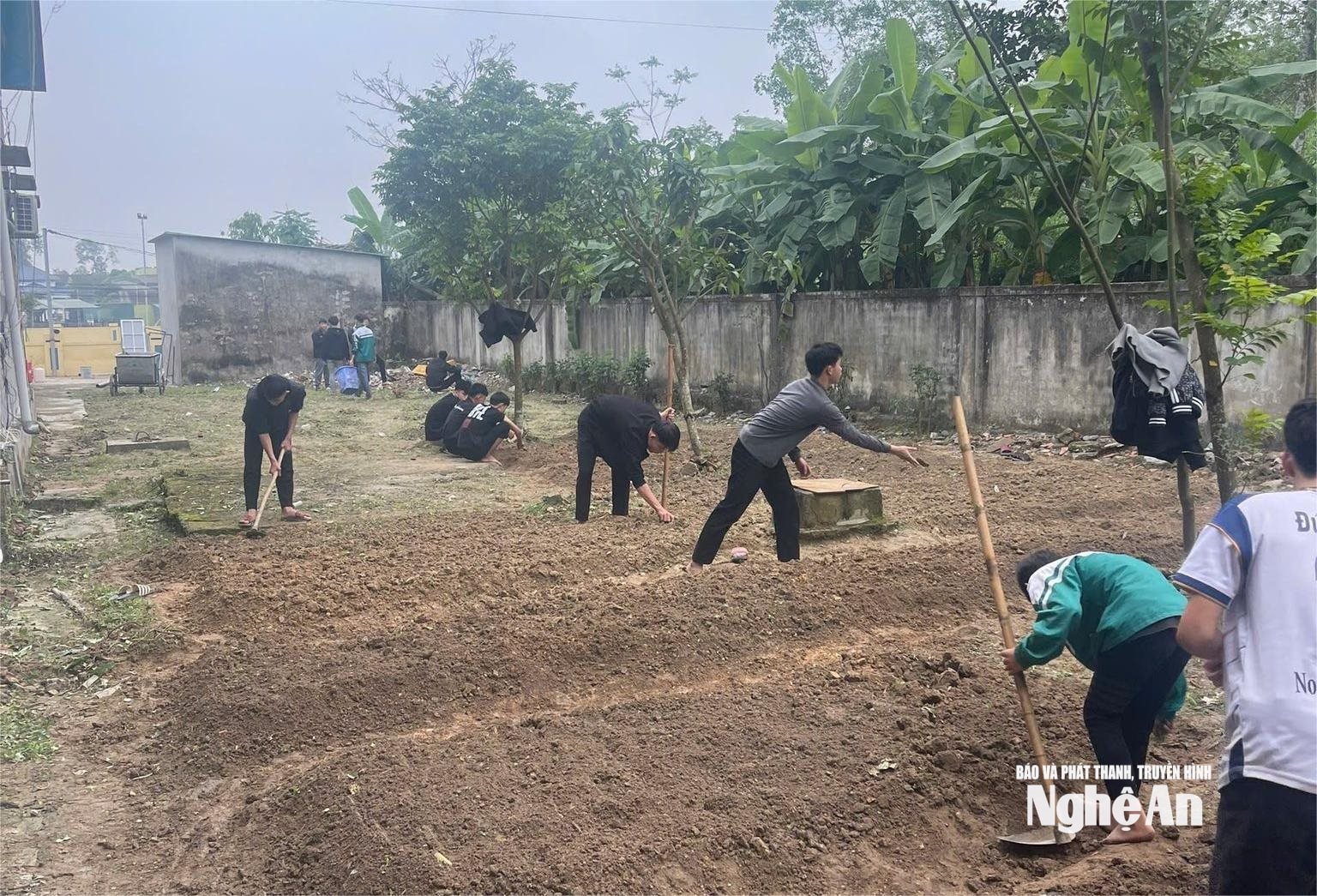
The students participating in the labor session had all previously caused concern for their families, schools, and local authorities. Some had dropped out of school to play video games, some frequently gathered to fight, and some had committed minor offenses. Instead of harsh punishments or reprimands, the commune police chose a different approach: organizing awareness campaigns and conversations about responsibility and gratitude, then inviting the students to participate in experiential labor with the message that they could learn to be good people through the smallest things.
Initially, the atmosphere was quite tense. Many children seemed reluctant, treating it like a "call to work." However, the commune police officers didn't impose orders. They rolled up their sleeves and started working first, chatting about their daily meals and their parents' hard work while they labored. This approachable manner gradually drew the children in.
From clumsy strokes of the hoe, hands accustomed to holding phones had to adapt to the rough handle, facing hard soil and weeds. Sweat soaked their shirts, and their breathing became more rapid. In this arduous process, many children began to clearly understand the value of manual labor – something they had rarely paid attention to before. When guided on how to prepare the soil, spread lime, and sow seeds, patience and carefulness became a more vivid and practical lesson than any theoretical lecture.
The work session concluded with the overgrown garden behind the commune's police station transformed into neatly arranged rows of vegetables. Looking at their mud-stained hands and the fruits of their labor, a student from Bach Ha commune shared: "Before, I never thought growing vegetables or farming would be so hard. Now I understand how hard my grandparents and parents worked, and I realize I need to change."
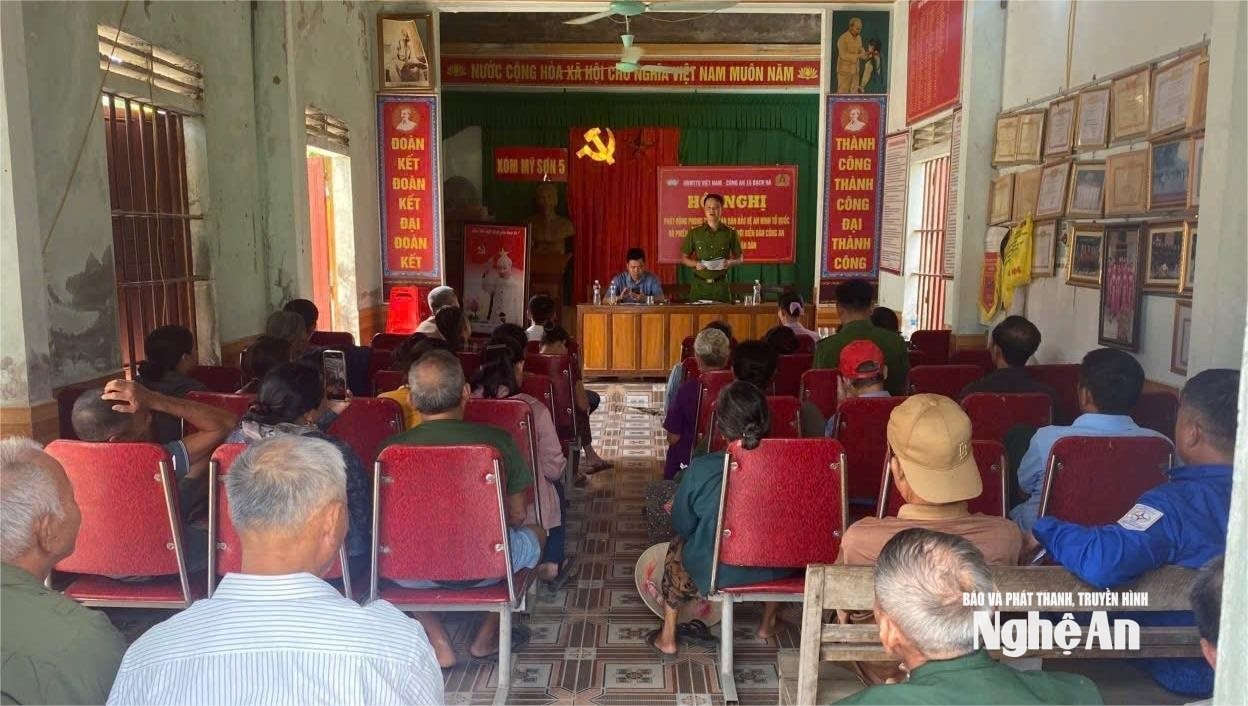
From the perspective of state management of security and order, this approach clearly demonstrates a proactive and early approach to ensuring social order and safety. In practice, many law violations among young people stem from distorted perceptions, a lack of life skills, and lax family supervision. If only administrative measures or rigid deterrence are applied, the effectiveness of education is often unsustainable and may even create a rebellious mentality.
Organizing experiential work activities, thematic discussions, or direct dialogues helps the commune police force to promptly grasp the ideological developments, family circumstances, and social relationships of each child. Based on this, appropriate management and educational measures are selected, avoiding the criminalization of mild deviant behaviors, while simultaneously creating conditions for the children to correct their mistakes and reintegrate into a normal learning and living environment.
Early prevention, fostering awareness and responsibility.
Not only in Bach Ha commune, but in recent times, the police in many communes across Nghe An province have implemented educational and law violation prevention models suitable to local realities. In Dien Chau commune, the model of a legal education library is becoming a highlight in the management and education of young people.
The library is located right at the commune police station, with many books, documents, and illustrations on law, life skills, and real-life stories related to violations committed by young people. The target audience includes not only those who have previously violated the law but also students at high risk. Through reading, discussions, and analysis and explanations from police officers, the students gradually understand the boundaries between right and wrong and the legal consequences of their impulsive actions.
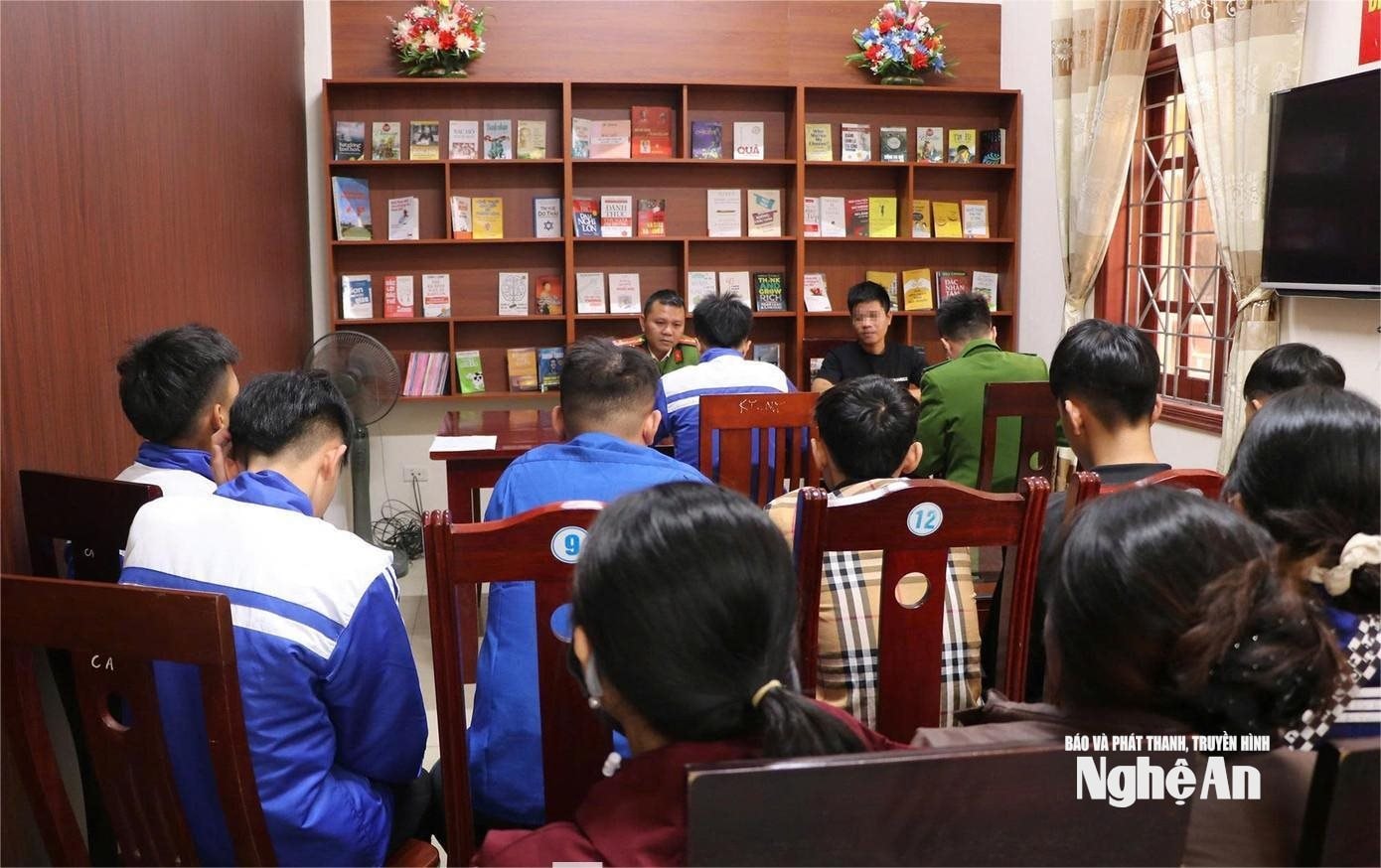
A student who used to participate in activities at the library shared: "Before, I thought a little transgression wouldn't matter. But after reading real stories, I realized that impulsiveness can affect someone's entire future. Now I try to study hard and stay away from bad things."
From vegetable gardens in Bach Ha commune to legal education centers in Dien Chau commune, a common thread in the approach of local police forces is the persistent education of young people through closeness and humanity. Instead of waiting for violations to occur before taking action, the commune police proactively create positive "channels" to help young people understand the boundaries between right and wrong and gradually adjust their behavior.
These models do not emphasize deterrence or punishment, but rather focus on influencing awareness. Through labor, children understand the value of hard work and the sacrifices of their families; through books and real-life stories, they discern right from wrong; and through dialogue, their inner conflicts are gradually resolved. More importantly, they are respected and supported, instead of being labeled or discriminated against.
The effectiveness of this approach is evident in the positive transformation of many young people. They not only comply better with school rules and reduce gatherings and fights, but also change their attitudes towards life, becoming more attentive and responsible towards their families. Many parents report that their children have shown significant changes after receiving attention, education, and support from the police force.
The core of these models lies not in form but in fostering self-awareness in each child. When children understand the value of labor, of family, and of themselves, they will adjust their behavior without pressure or coercion. Therefore, youth education must be a long-term, continuous effort, involving families, schools, and local organizations.
Lieutenant Colonel Nguyen Hoang Phi - Head of Bach Ha Commune Police
Sharing the same view, Major Hoang Thanh Hai, Head of the Dien Chau Commune Police, believes that the model of a legal education library is a "shield of awareness" that helps young people protect themselves from temptations and deviations. Through equipping them with legal knowledge and life skills in familiar ways, they gradually develop a natural and sustainable sense of respect for the law.
In Dien Chau commune, the commune police regularly coordinate and organize activities to disseminate legal information, focusing on equipping young people with life skills, emotional control abilities, and conflict resolution skills. This is an important factor in preventing minor conflicts from escalating into regrettable violations.
The experiences from Bach Ha and Dien Chau communes show that when education is prioritized over problem-solving, and when families, schools, and society work together, the "special classes" of the local police are proving highly effective. This is not only a way to maintain security and order at the grassroots level, but also a sustainable foundation for nurturing a sense of respect for the law and civic responsibility in the younger generation.


