
New "pieces" of the Dong Son culture in Nghe An province.
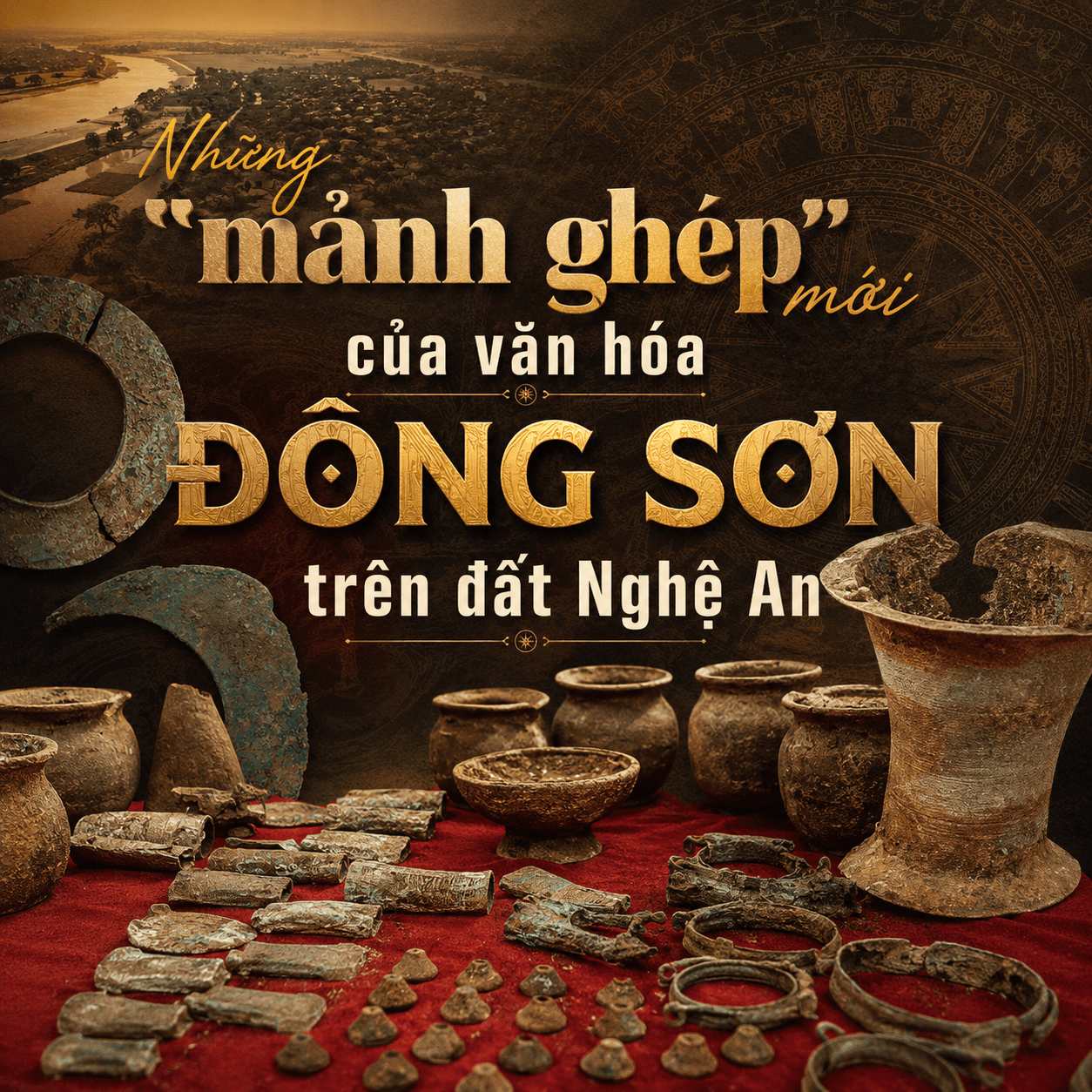
The recent assessment of Dong Son artifacts recovered from Tan Phu commune by the Nghe An - Soviet Nghe Tinh Museum is attracting considerable attention from experts.125Artifacts of various types not only supplement the documentation for local archaeological research but also contribute to the overall picture."puzzle piece”new"picture”Dong Son culture in Nghe An provinceButThis area has long been considered one of the important centers of ancient Vietnamese people in the Lam River basin.
Perform: Phuoc Anh •18/06/2026
The recent assessment of Dong Son artifacts recovered from Tan Phu commune by the Nghe An - Soviet Nghe Tinh Museum is attracting considerable attention from experts.125Artifacts of various types not only supplement the documentation for local archaeological research but also contribute to the overall picture."puzzle piece”new"picture”Dong Son culture in Nghe An provinceButThis area has long been considered one of the important centers of ancient Vietnamese people in the Lam River basin.
More evidence from beneath the ground.
In mid-June, the Nghe An - Soviet Nghe Tinh Museum organized a Scientific Council to appraise recovered artifacts in Tan Phu commune, with the participation of many experts in the fields of archaeology, museology, and cultural heritage. Through the appraisal, the artifacts were determined to belong to the Dong Son culture, dating back approximately 2,000-2,500 years. This is the result of the process of receiving, inventorying, and researching artifacts handed over by citizens in early 2026.
The collection comprises many familiar artifacts of the Dong Son culture, such as bronze bowls, basins, copper pots, battle axes, daggers, spears, lances, arrowheads, bracelets, anklets, spindle whorls, and many other ceramic and bronze artifacts. Looking at the structure of the artifacts, it can be seen that this is a fairly rich collection, reflecting many aspects of the life of the ancient inhabitants.
.jpg)
.jpg)
.jpg)
Bronze axes, knives, and other artifacts are reminiscent of the developed metallurgical techniques and weapon-making capabilities of the Dong Son people. Bracelets and anklets demonstrate an early need for adornment. Spinning weights, pots, vases, bowls, and lamp bases offer glimpses into daily life, weaving, handicrafts, and cultural practices that existed in this region more than two millennia ago.
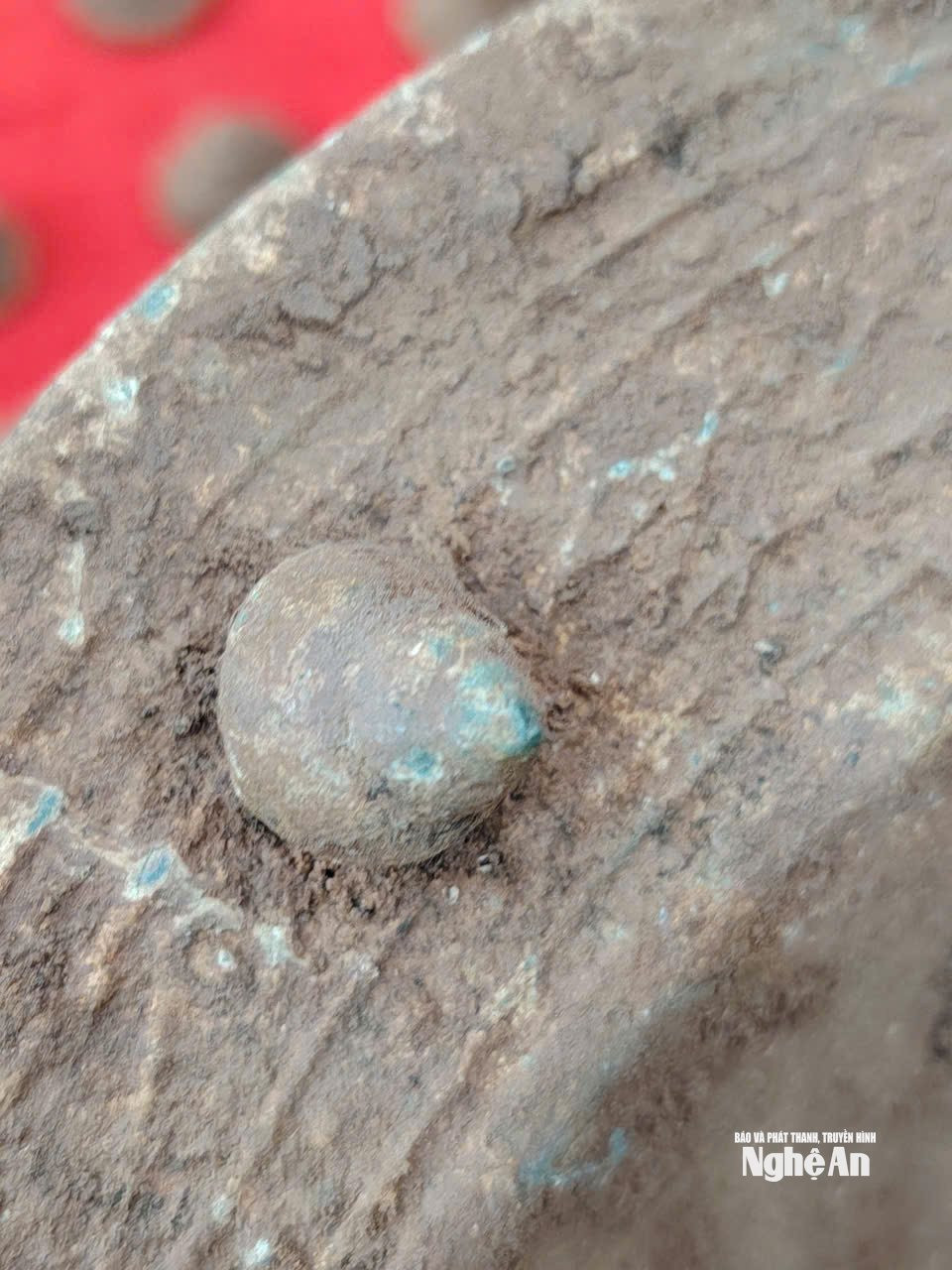
Ms. Dang Huyen Trang, Acting Head of the Collection, Inventory, and Preservation Department of the Nghe An - Soviet Nghe Tinh Museum, stated that among the artifacts assessed, the bronze bowl attracted the attention of many researchers. Although partially damaged by time and environmental factors, the artifact still demonstrates quite sophisticated craftsmanship. The tall, well-proportioned body, the wide base, and the sculpted details on the rim and body of the bowl are still recognizable. In particular, the snail-shaped decorative motif on the artifact evokes the familiar symbolic world of Dong Son art. In the art and craftsmanship of this period, spiral patterns appeared quite commonly on bronze drums, ceremonial objects, and many other artifacts. These were not merely decorative elements but also reflected the aesthetic thinking, cosmological views, and creative abilities of the ancient Vietnamese people.
While axes and daggers demonstrate the power of metallurgical technology, the bronze bowl provides a clearer picture of the artistic skill of the Dong Son craftsmen. In a single artifact, functionality and aesthetic value are harmoniously combined. From everyday objects, the ancients imbued them with a sense of beauty, creating products that were both durable and rich in artistic merit.
.jpg)
According to Ms. Dang Huyen Trang, the appraisal of artifacts is a crucial step in completing scientific documentation, determining the historical and cultural value of each artifact; and simultaneously providing a basis for the preservation and promotion of the artifacts' value in the future. After being studied and fully documented, the artifacts will contribute to supplementing the source material for research and exhibition on the Dong Son culture in Nghe An.
Associate Professor Pham Quoc Quan, a member of the National Heritage Council, assessed that "this is an extremely valuable and rare collection of artifacts," bearing special significance for local historical and archaeological research. More profoundly, this collection extends the series of archaeological discoveries that have contributed to clarifying the identity of the Dong Son culture in Nghe An province.
Literary imprintchemistryDong Son culture in Nghe An
Currently, the Nghe An - Soviet Nghe Tinh Museum is preserving and safeguarding over 1,300 artifacts of the Dong Son culture. The majority of these were discovered through archaeological surveys and excavations at the Lang Vac site and other locations in the province. This number of artifacts demonstrates that Nghe An is one of the localities in the North Central region possessing a rich collection of Dong Son artifacts.
When discussing the Dong Son culture in Nghe An, researchers always give special attention to the Lang Vac archaeological site. The exploration of this site began in 1972, when local people discovered ancient bronze artifacts during production. This initial discovery quickly attracted the attention of archaeologists. In 1973, the first excavation was conducted, opening one of the most important archaeological chapters in Nghe An. In 1981, 1990, and 1999, Vietnamese and Japanese archaeologists continued excavations and made many new discoveries, including numerous burial sites along with many beautiful bronze artifacts, glass objects, agate beads for jewelry, etc.
.jpeg)
The value of Lang Vac lies not only in the scale of its artifacts. What makes this site special is that its archaeological discoveries have contributed to adjusting our understanding of the geographical location of the Dong Son culture. For a long time, when discussing Dong Son culture, researchers often focused on the Red River and Ma River basins. The discovery of Lang Vac, with its rich system of artifacts and relics, has provided important additional evidence showing that the Lam River basin was also a thriving center of Dong Son culture.
Associate Professor Dr. Nguyen Giang Hai - former Director of the Institute of Archaeology - affirmed:"The Lang Vac archaeological site is precious and rare not only because it has contributed to our tangible heritage a series of unique bronze drums and exquisitely beautiful decorative artifacts, but also because it has helped scientists sketch a picture of contemporary history, which is extremely significant for the history of our country and the Vietnamese nation… As a brilliant milestone, the Lang Vac civilization and its people have contributed significantly to the formation of the Vietnamese nation from its very beginning, 2,000 years ago!”
.jpg)
From the excavated artifacts, a clear picture of a thriving community emerges. They practiced agriculture, possessed advanced metallurgy skills, expertly used bronze tools and weapons, and had a rich spiritual life with artistic products of remarkable aesthetic value. The patterns on bronze drums, jewelry, and ceremonial artifacts demonstrate the creativity and expressive abilities of the Dong Son people, reaching a level of sophistication rarely seen in the region at that time.
Each new discovery of the Dong Son culture in Nghe An, including the recently authenticated collection of artifacts in Tan Phu commune, contributes data to complete the historical picture that generations of archaeologists have persistently pieced together for decades. From fragments of bronze and pottery seemingly lying dormant underground, a part of Nghe An's history continues to be revealed. That is why the artifacts received today are not only significant as a collection or addition to museum artifacts, but also a continuation of the journey to explore the deep layers of culture that have shaped the face of Nghe An for thousands of years.
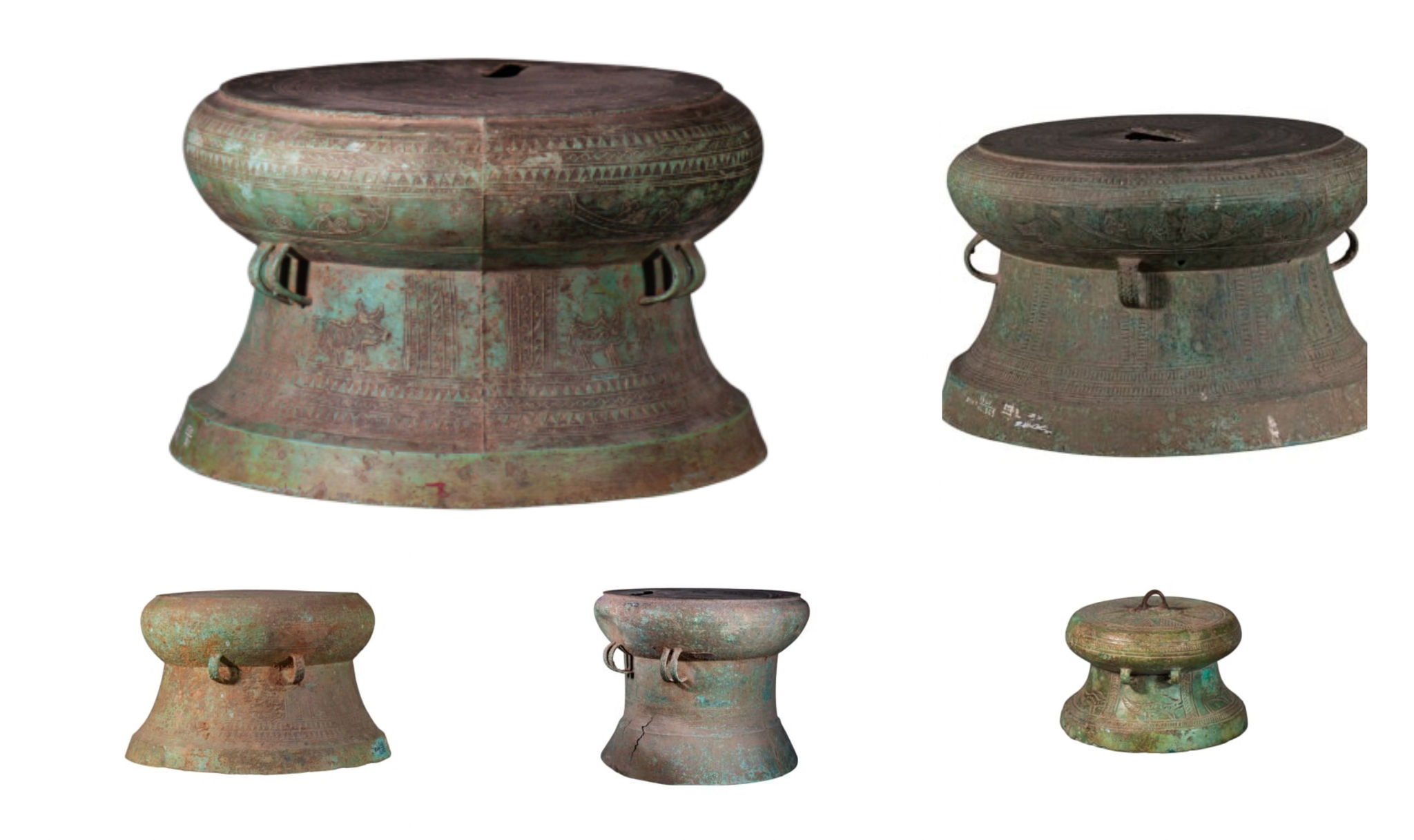
In recent years, the value of the Dong Son artifacts system in Nghe An has continued to be affirmed. The collection of bronze drums from Lang Vac, recently recognized as a National Treasure (according to Decision No. 236/QD-TTg dated February 3, 2026, of the Prime Minister), is clear evidence of this. This is an acknowledgment of the value of a specific group of artifacts and also an acknowledgment of an entire cultural space that once existed and flourished brilliantly in the Nghe An region.
Archaeological heritage always demands patience from researchers and responsibility from the community in its preservation. The Dong Son artifacts preserved today do not merely belong to the past; they are also a valuable source of information for present and future generations to better understand the origins of the nation's culture. The Dong Son tradition in Nghe An province continues to be enriched by new discoveries, contributing to affirming the historical depth and cultural identity of this region.


