
Xiaomi, Redmi, and POCO phone models will not be updated to Android 17.
Many popular Xiaomi smartphone models will remain on Android 16 to preserve performance. Check out the list of Redmi and POCO devices that will miss out on Android 17.
According to the latest software development roadmap, Xiaomi has begun categorizing devices that will remain on Android 16. The determination of models ineligible for the Android 17 upgrade is based on the support cycle of the Android Enterprise Recommended (AER) program and the actual hardware configuration of each product.
Xiaomi's software lifecycle strategy
The software lifecycle of smartphones today largely depends on the hardware's ability to meet the demands of the new operating system. From 2026, Xiaomi plans to focus its resources on long-term support for its high-end segments. Conversely, many mid-range and budget models will gradually enter the End-of-Life (EOL) phase – the end of their major update cycle.
This decision aims to prevent performance degradation. As newer generations of Android require more powerful hardware acceleration, older devices attempting to upgrade may experience lag or instability. Therefore, staying at an optimized Android version is seen as a solution to protect the user experience.
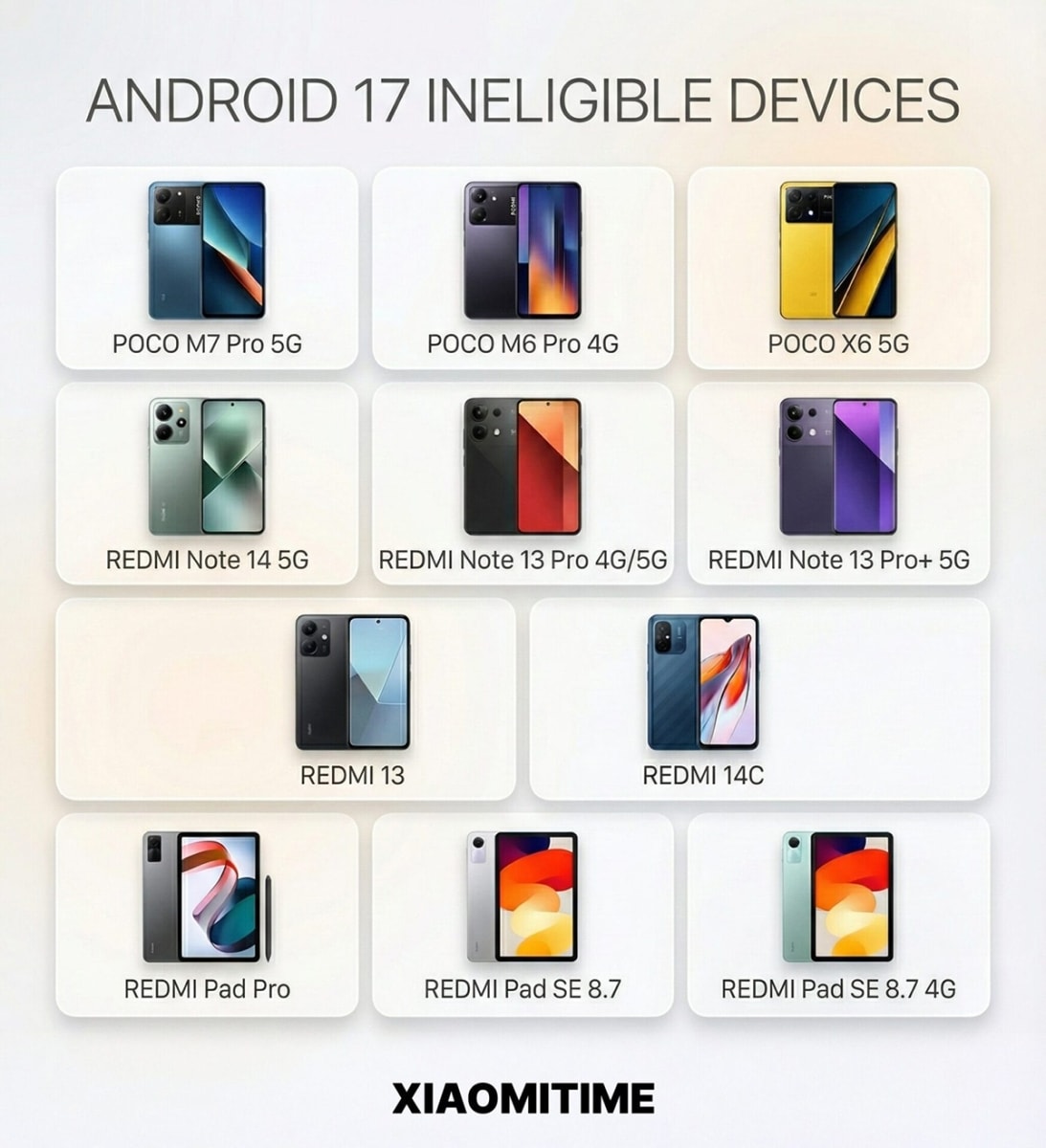
List of devices that missed out on Android 17
Based on data from the AER program and EOL status, the following devices are expected to end their major operating system update cycle with HyperOS 3 or HyperOS 4 (built on Android 16) and will not receive Android 17:
POCO phone series
- POCO M7 Pro 5G
- POCO M6 Pro 4G
- POCO X6 5G
REDMI phone line
- REDMI Note 14 5G
- REDMI Note 13 Pro 4G/5G
- REDMI Note 13 Pro+ 5G
- REDMI 13
- REDMI 14C
Tablet line (Xiaomi Pad)
- REDMI Pad Pro
- REDMI Pad SE 8.7
- REDMI Pad SE 8.7 4G
The future of devices on the EOL list.
Even though these devices won't be upgraded to Android 17, users don't need to worry too much about security. Typically, these devices will continue to receive important security patches for a certain period, depending on their specific commitments within the Android Enterprise Recommended program.
This shift reflects a general trend in the mobile industry: prioritizing long-term stability over chasing version numbers. When a device reaches its final stable software version, it guarantees that the device will maintain optimal performance for the rest of its lifespan.


