From the sugarcane fields stretching along the Con River, the people of Nghia Hanh commune carefully extract the sweetness of the earth and sky through fiery red molasses pans, creating a sweet and wholesome product that bears the brand name of their homeland: sugarcane molasses. Over the years, the molasses-making craft has been preserved and developed, thanks to the skillful hands, patience, and love for a flavor deeply intertwined with the lives and livelihoods of the people here.
Khanh Ly - Duy Nam/Present:Hong Toai •13/9/2026
*****
From the sugarcane fields stretching along the Con River, the people of Nghia Hanh commune carefully extract the sweetness of the earth and sky through fiery red molasses pans, creating a sweet and wholesome product that bears the brand name of their homeland: sugarcane molasses. Over the years, the molasses-making craft has been preserved and developed, thanks to the skillful hands, patience, and love for a flavor deeply intertwined with the lives and livelihoods of the people here.
Before the peak season, the molasses production facility of Mr. Le Van Ba (born in 1983) in Mon Son hamlet, Nghia Hanh commune, still has jars of shimmering molasses. Opening the lids of the jars releases a gentle aroma of sugarcane molasses into the air.
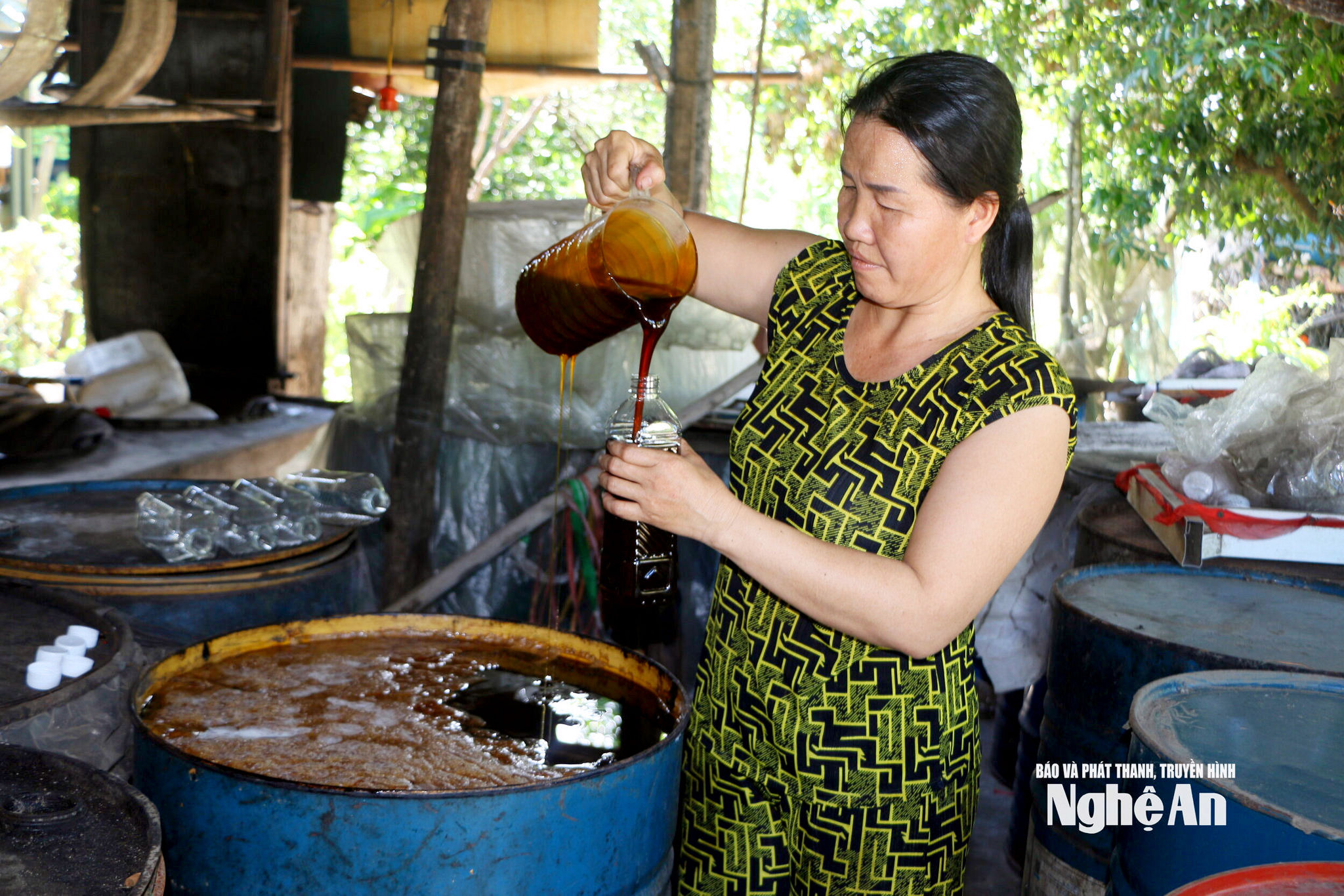
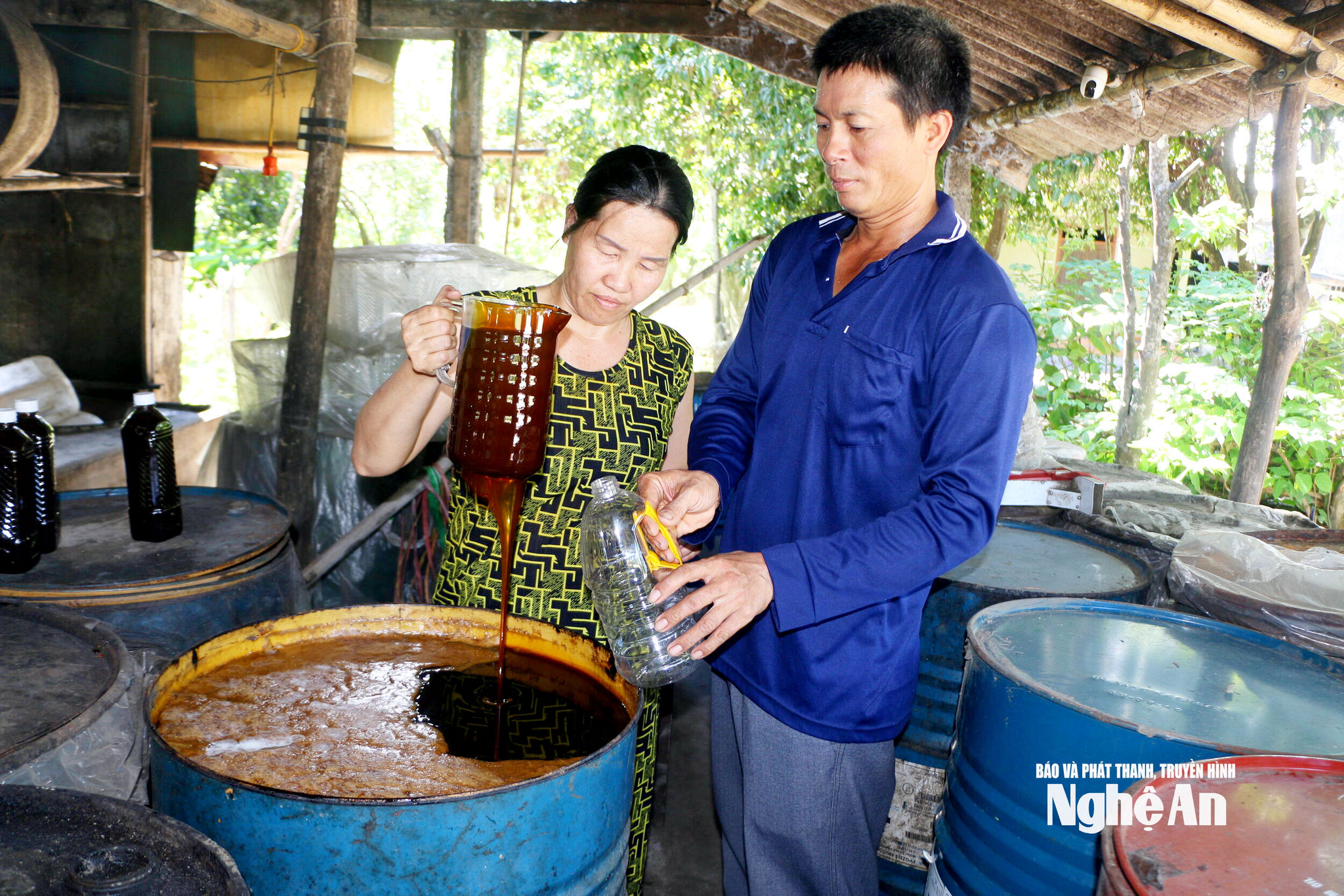
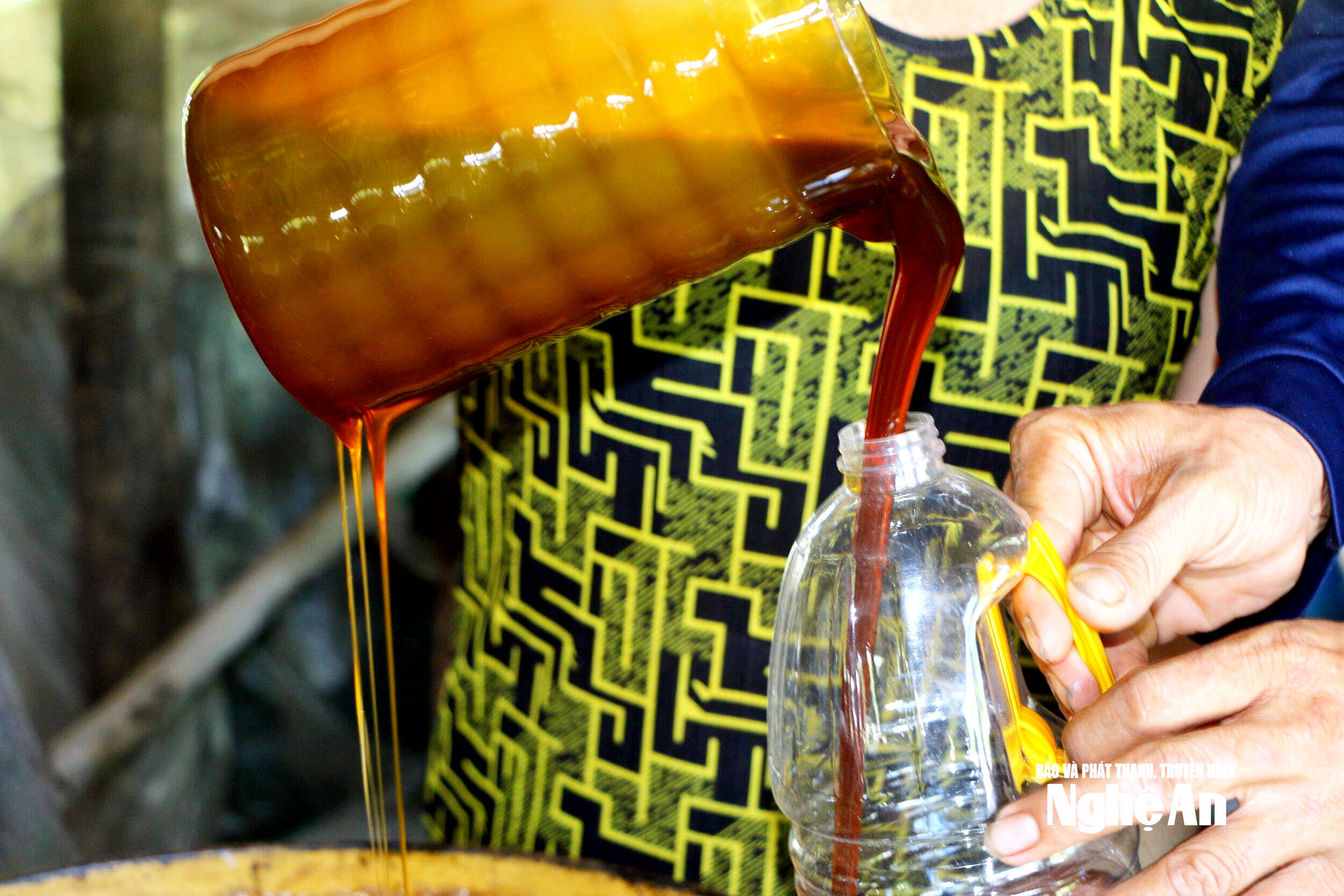
Mr. Ba carefully poured the reddish-brown honey into bottles for his customers. The thick, viscous honey flowed slowly and settled in the bottles, glistening in the light. This is one of the large honey distilleries in Mon Son village.
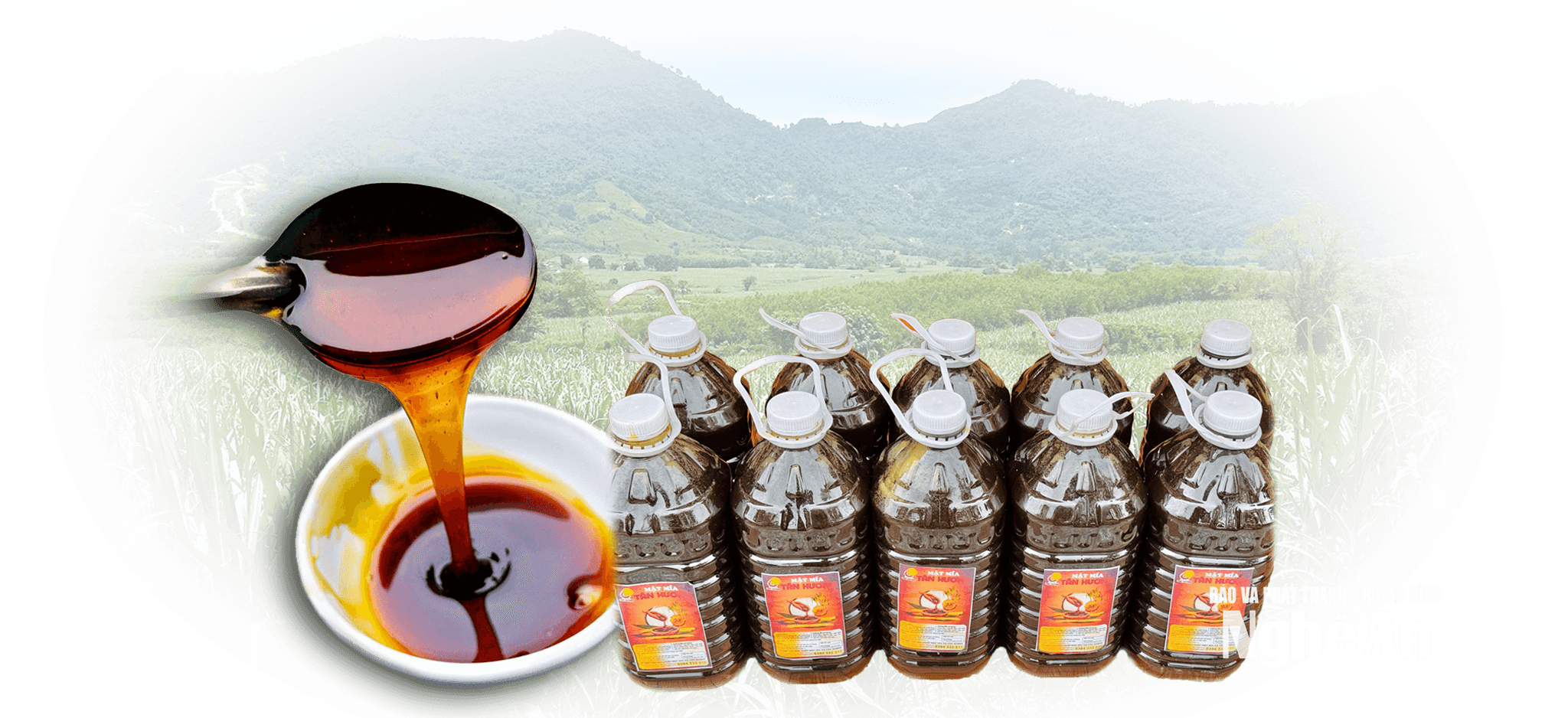
The barrels of glistening honey are preserved for year-round sale by Mr. Le Van Ba's household. Photo: TPThick, viscous honey with a fragrant aroma. Photo: KL
Ba's family originates from Hung Tien commune (formerly Nam Dan district), now Kim Lien commune. More than half a century ago, his grandparents migrated to Nghia Hanh to start a new life and have been attached to this land for three generations. The craft of making honey has become an integral part of his family's life. Ba has known how to make honey since he was a teenager.
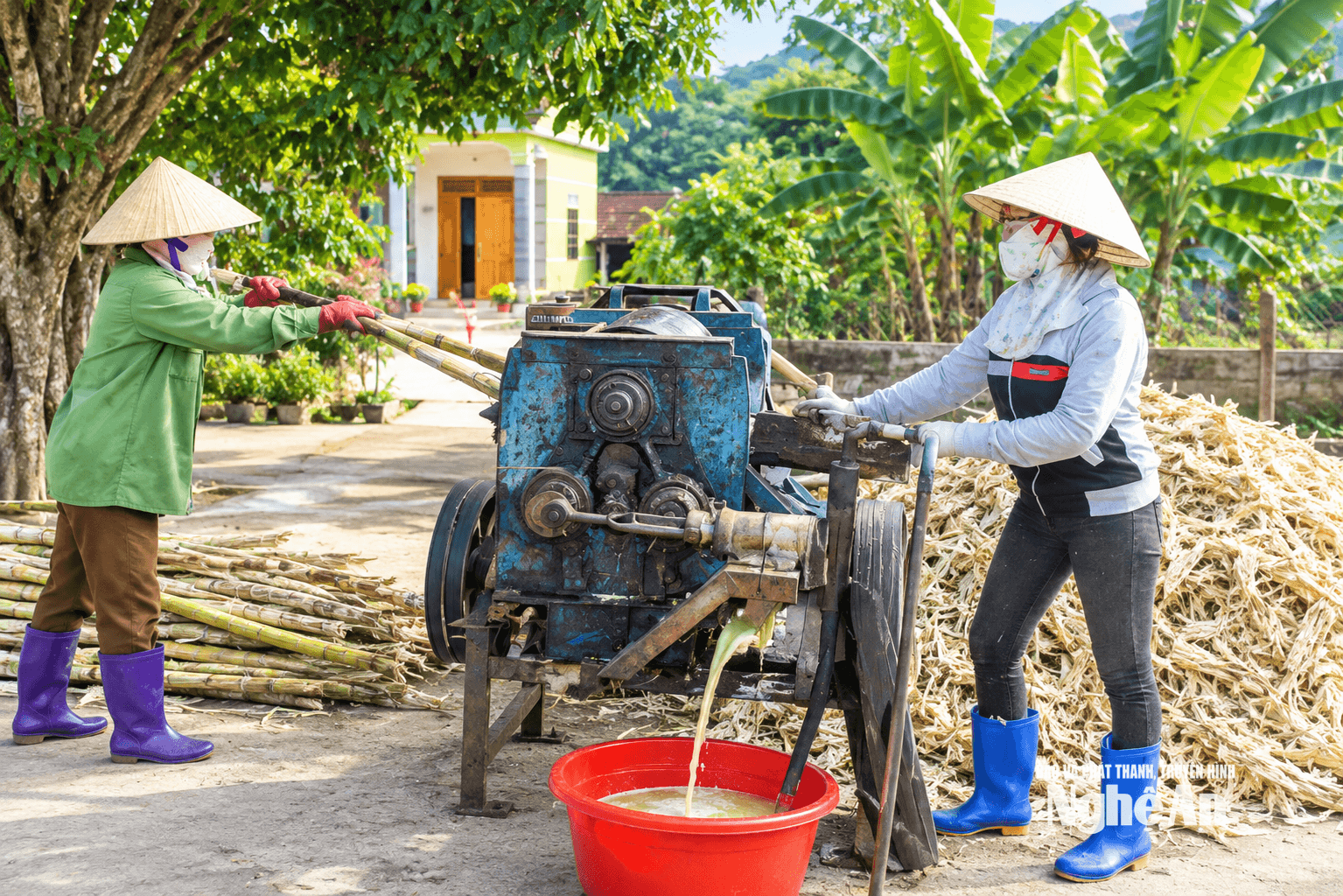
In the past, to press sugarcane, people mainly used buffaloes and oxen to pull the press; at times, they switched to generators. Now, electric presses have helped reduce labor, but the stages that determine the quality of the molasses still require the hands and experience of skilled workers.
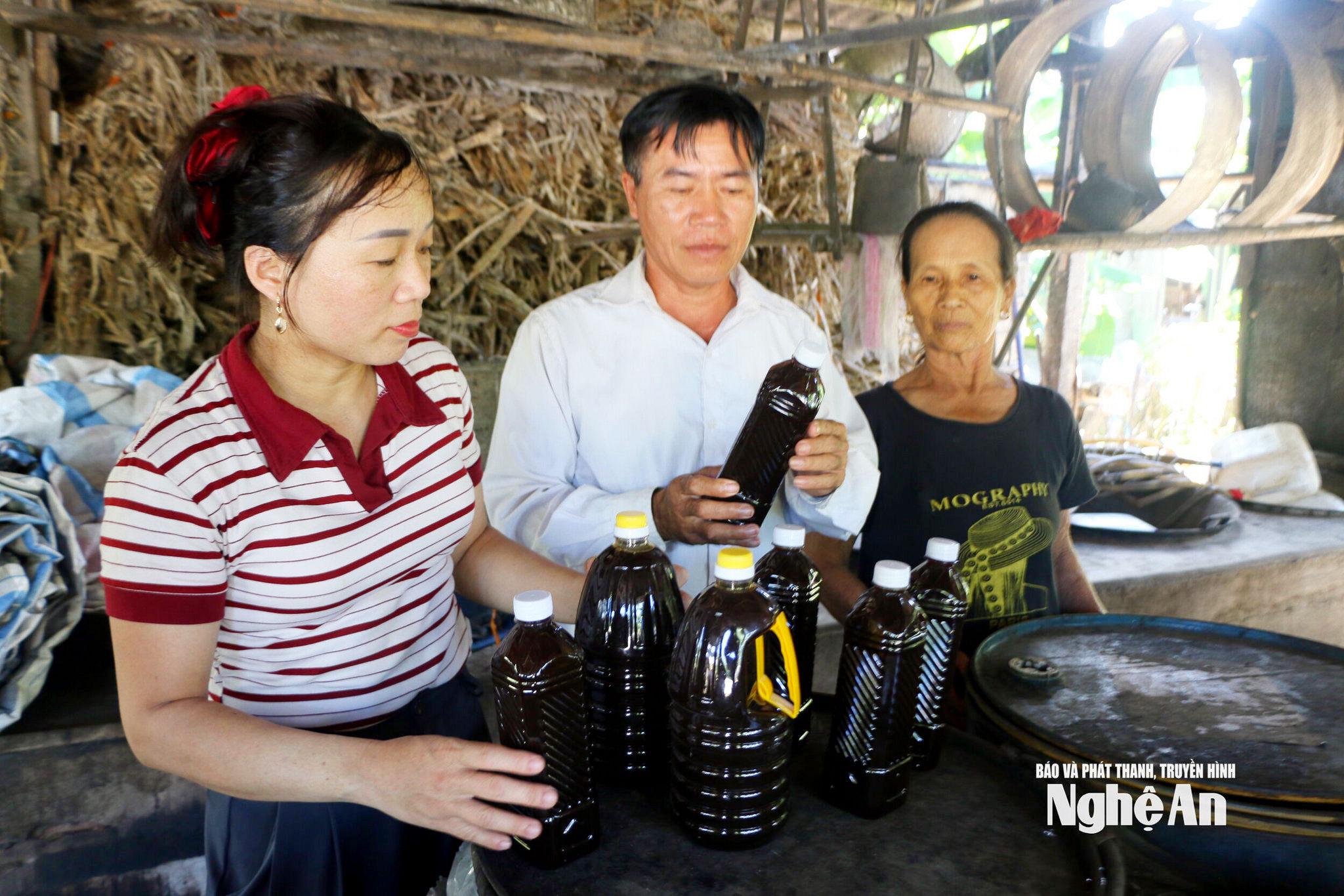
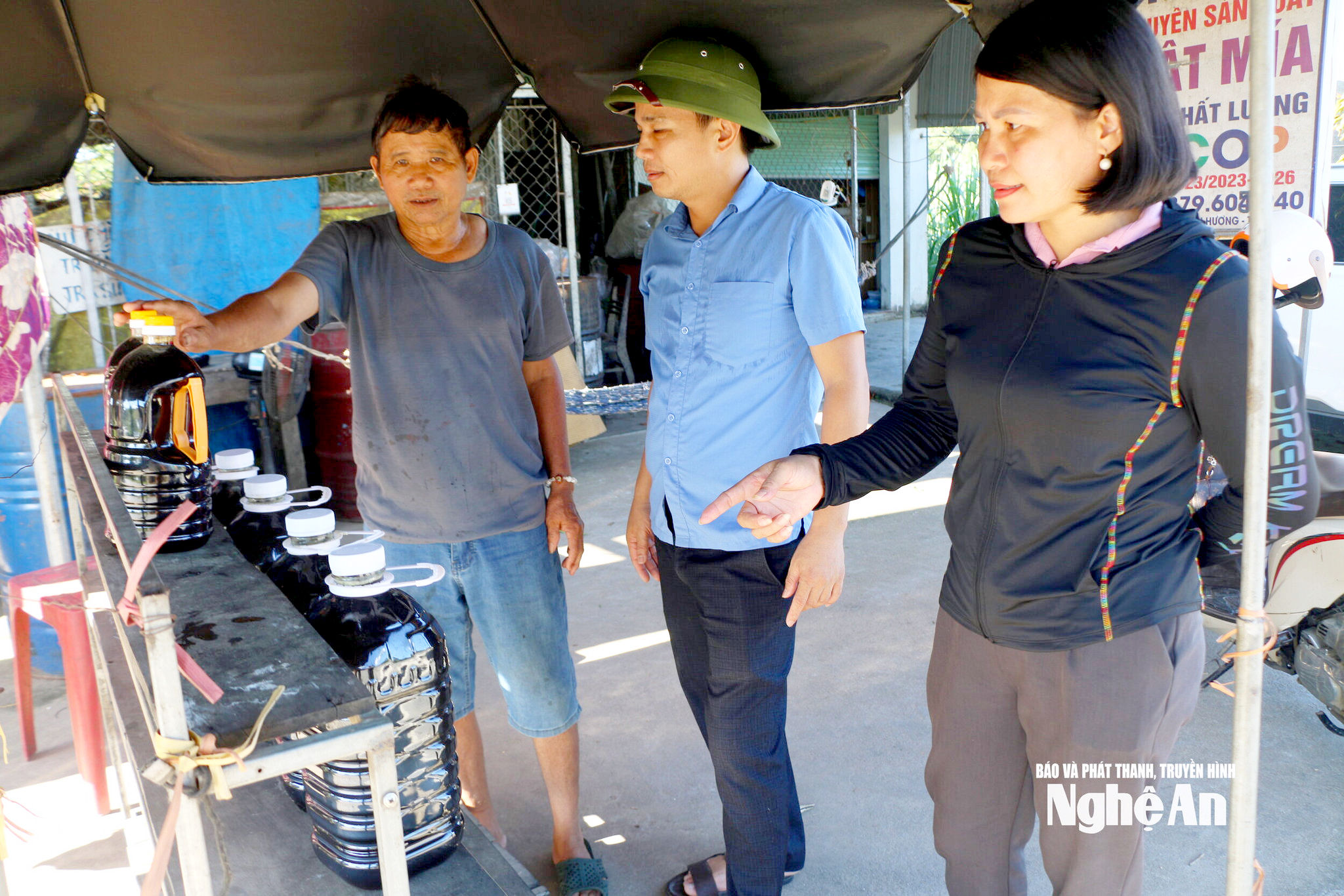
Mr. Ba (far left) shares about his sugarcane syrup making profession, which he has been involved in for nearly 40 years. Photo: KL
"
"To make delicious molasses, the sugarcane must first be of good quality."
Brother Ba said.
Sugarcane used for making molasses must be straight, have yellow bark, be free from pests and diseases, not be fallen over, and especially, must be of sufficient age. Typically, sugarcane plants are cultivated for about a year before harvesting. If the sugarcane is too young, the sugar content is insufficient, the juice is likely to be sour, and the resulting molasses will not be of good quality.
After harvesting, the sugarcane is stripped, cut into sections, and then put into a juicer to extract the juice. The juice is filtered and settled before being poured into large cast-iron pans placed in a series over a stove.
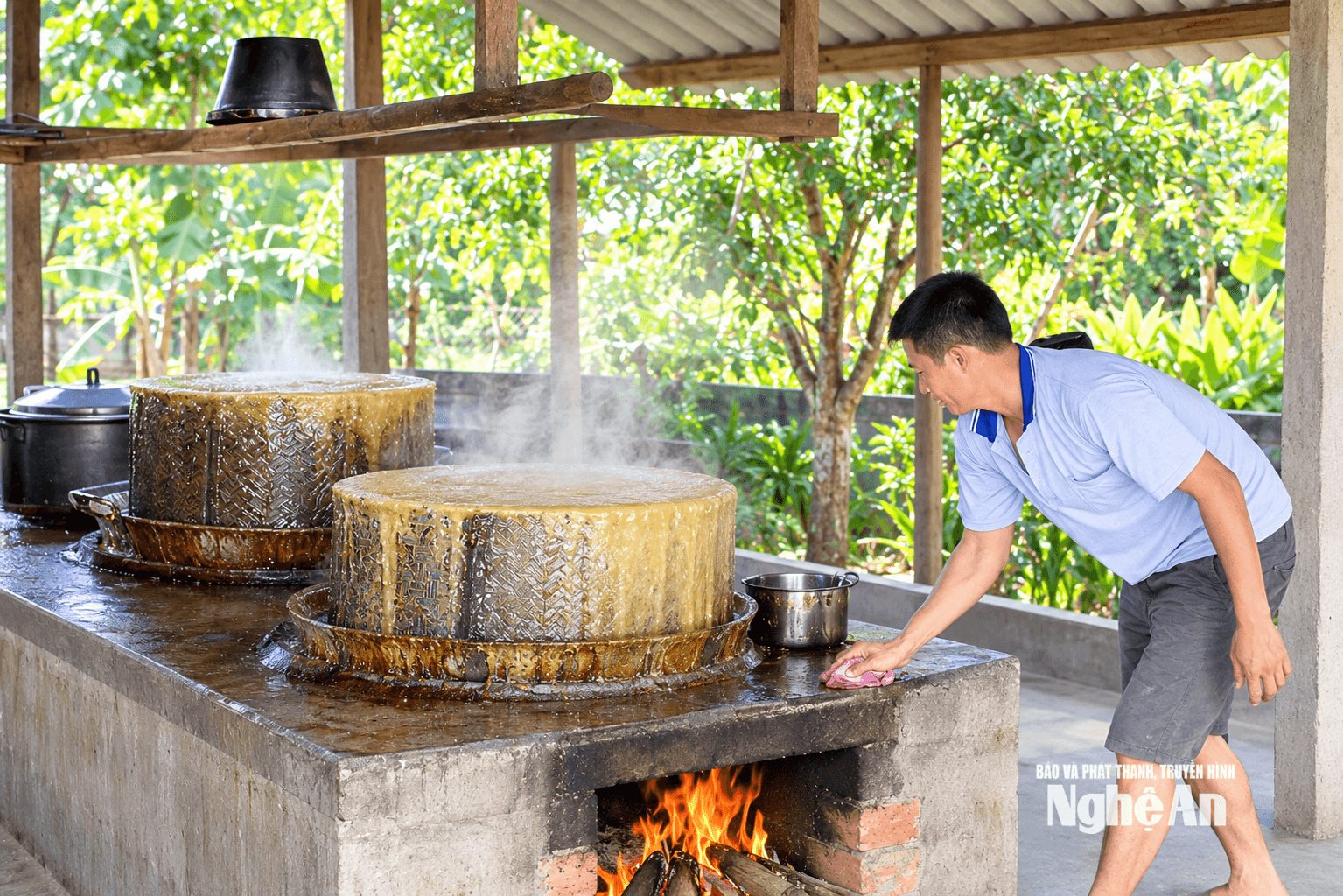
From here, what seems like a simple task requires meticulous attention to detail at every stage. The fire must be kept steady, the boiling sugarcane juice must be stirred continuously, and any foam that rises to the surface must be skimmed off.
If done too slowly, the honey's color and clarity can be affected; if done too quickly, the batch of honey may not reach the desired consistency. A batch of honey usually takes about 4 hours, which is also the amount of time the worker must stand beside large, red-hot pans, their eyes never leaving the surface of the honey.
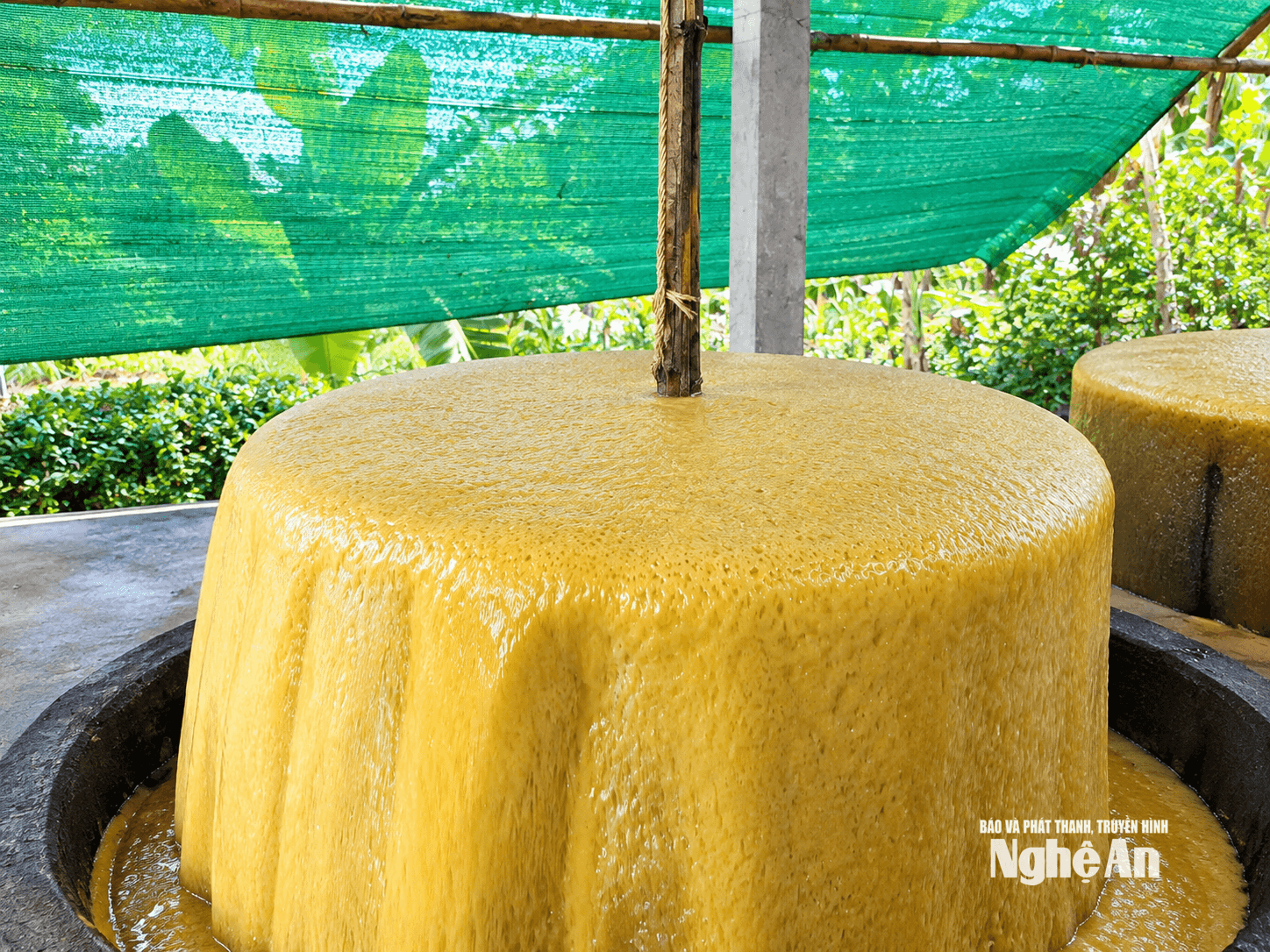
The process of making sugarcane molasses. Photo: CSCC
As the sugarcane juice gradually thickens, its initial pale yellow color turns reddish-brown, then amber. The aroma of sugarcane also intensifies, mingling with the heat from the stove.
"The most arduous part is boiling the syrup. You have to stand and watch the pot of syrup constantly, stirring and skimming off the foam. Only when the syrup reaches a certain consistency can it be finished," Mr. Ba shared. Perhaps it is these hours spent standing by the pot of syrup that have created an experience that is difficult to measure by machines.
Anh Ba's wife, Nguyen Thi Loan, originally from Can Tho, has been married into a family in Nghe An for 17 years. When she first arrived, she was unfamiliar with the process of making molasses. Under the guidance of her mother-in-law, and through each sugarcane pressing season, she gradually became proficient. Now, cooking, filtering, and measuring the molasses has become as familiar to her as a daily task.
She still remembers the early days when she first set foot in this land, most impressive were the sugarcane fields taller than a person's head lining the country roads. During the pressing season, the strong aroma of sugarcane from the molasses factories wafted through the villages on the wind.
"When I first came to live with my husband's family, I didn't know how to make molasses. Then my mother-in-law taught me, and I gradually got the hang of it. With each sugarcane season, I became more and more attached to this work without even realizing it," Loan said with a smile.
Ms. Loan, Mr. Ba's wife, has been married into a family in Nghia Hanh for 17 years and has been involved in the sugarcane syrup business for that same amount of time. Photo: TP
The family of Mr. Ba and Ms. Loan both grows their own sugarcane and buys raw materials from local people. Each year, the family produces about 200 barrels of molasses, each barrel containing about 200 liters. The molasses production season usually runs from October to March of the following lunar year. After the pressing season ends, the jars of molasses continue to be shipped out; customers from the South and the North come to buy the molasses.
In Chau Nam hamlet, Mr. Nguyen Xuan Duc, 64 years old, is also a family with three generations of experience in making sugarcane molasses. Before the merger, Chau Nam belonged to Tan Huong commune, Tan Ky district. At that time, the entire commune had about 18 households making molasses, with Chau Nam alone having more than a dozen molasses production facilities. Speaking about the craft, Mr. Duc believes that the most valuable asset a molasses maker possesses is not a book or a measuring device, but the experience accumulated over many years.
"
There's no precise measuring stick to determine when to skim off the foam or when to stir the syrup. Experienced people can tell by looking at the color, the foam, and listening to the sound of it boiling."
Mr. Nguyen Xuan Duc said.
When cooking, the cook must time the skimming of foam correctly; skimming it too early will make it difficult to achieve a beautiful color, while skimming it too late can easily affect the quality of the honey. Photo: TP
According to Mr. Duc, sugarcane used for making molasses must be mature, at least 12 months old, to have the appropriate sugar content. But choosing good sugarcane is only the first step. When cooking, the worker must time the skimming correctly; skimming too early will make it difficult for the molasses to achieve a beautiful color, while skimming too late will easily affect the quality of the molasses.
The ovens in Nghia Hanh are typically designed as a series of 4-5 large cast-iron pans, each capable of holding 170-180 liters of sugarcane juice; the pans are connected and lead to a chimney about 5-6 meters high.
Whenever the furnace is lit, several people work together: one to add fuel, one to press the sugarcane, one to skim off the foam from the pan, and another to transport and dry the sugarcane bagasse. The dried sugarcane leaves become fuel for the furnace, and the bagasse is collected and used as fertilizer for the sugarcane fields.
Customers come directly to the molasses production facility to buy it. Photo: TP - KL
During the season, along the Ho Chi Minh Highway through Nghia Hanh commune, you can easily spot numerous honey-making furnaces with blazing fires. The flames emanate from the furnaces, the rhythmic sound of sugarcane presses blends with the fragrant aroma of honey carried far by the wind. The honey makers diligently work beside the furnaces, monitoring each batch until it reaches the desired consistency.
"During the honey-making season, we often have to work through the night. It's hard work, but seeing the furnace burning brightly, the honey flowing steadily, and many people coming to buy it, makes everyone happy," Mr. Duc shared.
From the fiery red cauldrons of honey, the thick, reddish-brown drops are bottled and carried by the artisans to many kitchens and markets within and outside the province.
Ms. Le Thi Huong, 75 years old, from Mon Son hamlet, raised a spoonful of molasses to offer to guests. The molasses has a natural reddish-brown color, is viscous but not too thick; the sweetness is not harsh but mild, leaving a pleasantly rich aftertaste on the tongue. According to Ms. Huong, this is one of the characteristics that makes Nghia Hanh sugarcane molasses unique.
Currently, some stages of the sugarcane syrup making process are assisted by machinery. (Photo: Contributor)
The craft of making honey has experienced many ups and downs. Unpredictable weather, droughts, and floods directly impact the raw material sources; meanwhile, the market is increasingly flooded with other sweeteners. Prices, output, and changing consumer tastes also present new challenges to this traditional craft.
However, for those who make molasses, it's not simply a commodity but also a condiment associated with the kitchen, the sugarcane seasons, and family life.
Molasses is used to braise meat and fish, marinate grilled dishes; make sticky rice cakes, sweet soups, or as a dipping sauce. A piece of sticky rice cake, sweet potato, or cassava dipped in a bowl of molasses is enough to evoke a familiar flavor.
The red-hot honey furnaces in Nghia Hanh. Photo: CTV
That honey has also been mentioned in folk songs:"My dear, turn your face away. Tomorrow morning, when I go to the market, I'll buy you some honey and yam to eat..."Perhaps that's why, for many people from Nghe An living far from home, a bottle of reddish-brown sugarcane syrup, with its characteristic mild aroma, can evoke memories of sugarcane harvests, familiar kitchens, and beloved dishes.
But to ensure that traditional crafts are not merely remembered as stories of the past, the people of Nghia Hanh are seeking ways to increase the value of their products.
According to Mr. Pham Ngoc Tai, Chairman of the Farmers' Association of Nghia Hanh commune, the locality has established a sugarcane molasses production cooperative, guiding people to comply with production processes, ensuring food safety and hygiene, and supporting labeling and traceability. The local sugarcane molasses product has been recognized as meeting OCOP 3-star standards, creating a more solid foundation for the traditional product to access the market in a more systematic way.
Nghia Hanh sugarcane syrup has been awarded 3-star OCOP certification. Photo: TP.
Along with product standardization, farming households are gradually improving their farming methods, focusing on raw materials, using organic fertilizers, controlling pests and diseases, and linking with each other in production and consumption.
The product was showcased at trade fairs and promotional events, gradually expanding its market. Machinery replaced human labor in some stages, and bottling, packaging, and marketing became more modern, but the stages that determine the quality of the honey still require the experience of skilled craftsmen.
It's a combination of traditional methods passed down through generations with production and consumption practices that are more suited to today's market.
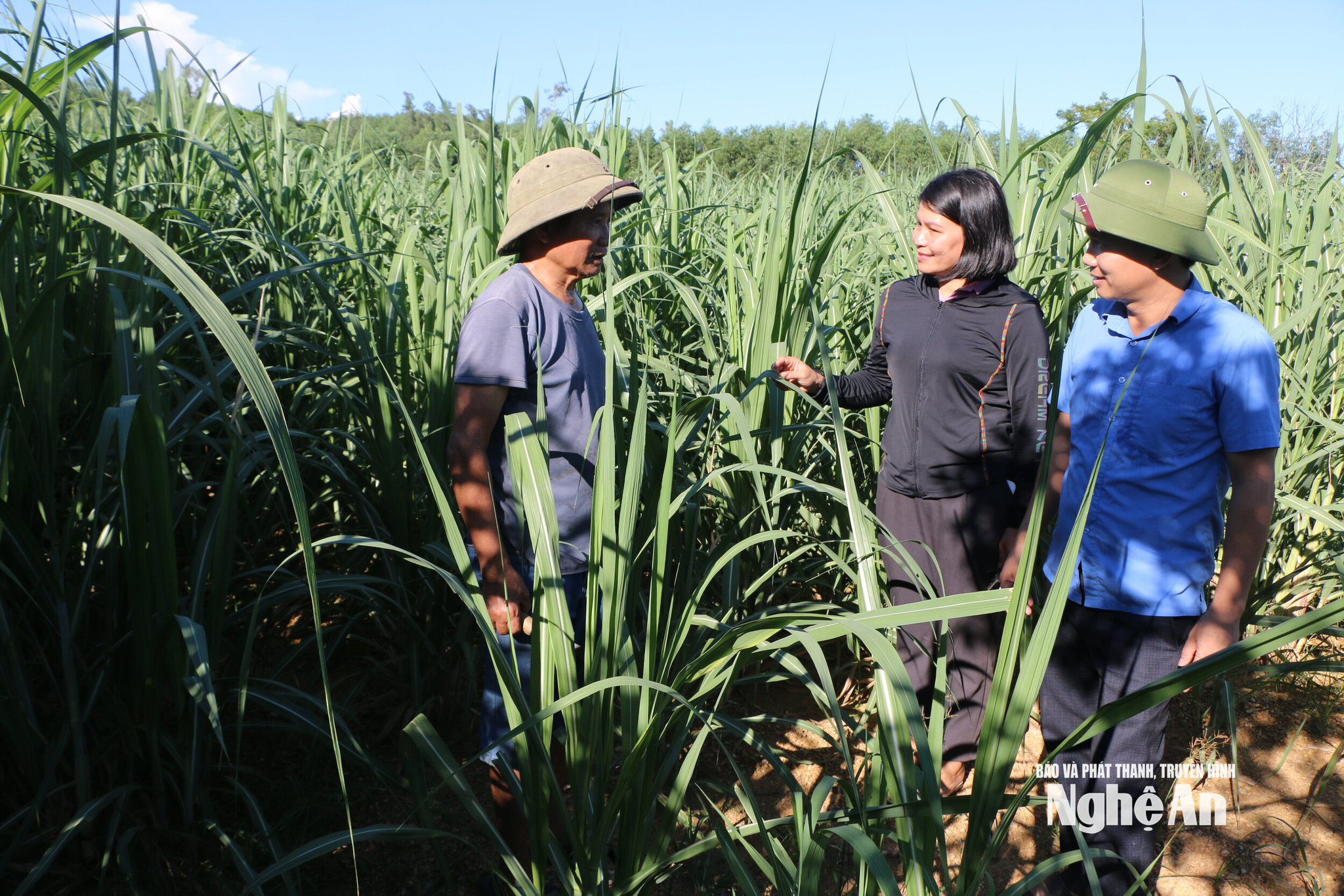
The sugarcane fields are meticulously cared for to produce the raw material for making molasses. Photo: KL
As life becomes more modern and sweeteners become more abundant, in Nghia Hanh commune, the molasses vats still burn brightly every sugarcane season.
Amidst the smoky aroma of cooking fires and the fragrant scent of honey carried on the wind, the people of Nghia Hanh continue to practice their craft in their own way, preserving traditional methods while finding ways to bring their products further afield. This is how an old craft continues to thrive in modern life, stemming from the sugarcane harvests along the Con River.
Your comment has been submitted and will be displayed after being reviewed by the editorial team. The editorial board reserves the right to edit comments to comply with the newspaper's content guidelines.



.png)
.png)