
The 'healers' at the Pù Mát wildlife hospital
The Pù Mát National Park Animal Rescue Station (Nghe An province) is devoid of the chirping of birds or the peaceful murmur of streams. It's a unique "hospital," where four staff members work day and night not only to heal the physical wounds of wild animals but also to treat a complex psychological condition called zoochosis. Their ultimate goal is to help these once-captured animals rediscover their survival instincts and... learn to fear humans.

Content:Hien LuongButPresent: Hong Toai • 31/8/2026
*****
.png)
The animals brought to the Pù Mát National Park Rescue Station come from various sources. Some are voluntarily handed over by locals after years of being kept as pets; some are rescued from illegal trafficking rings; and many are confiscated items from criminal cases. Regardless of their origin, they all share one thing in common upon entering the rescue station: emaciated bodies and severe psychological trauma.
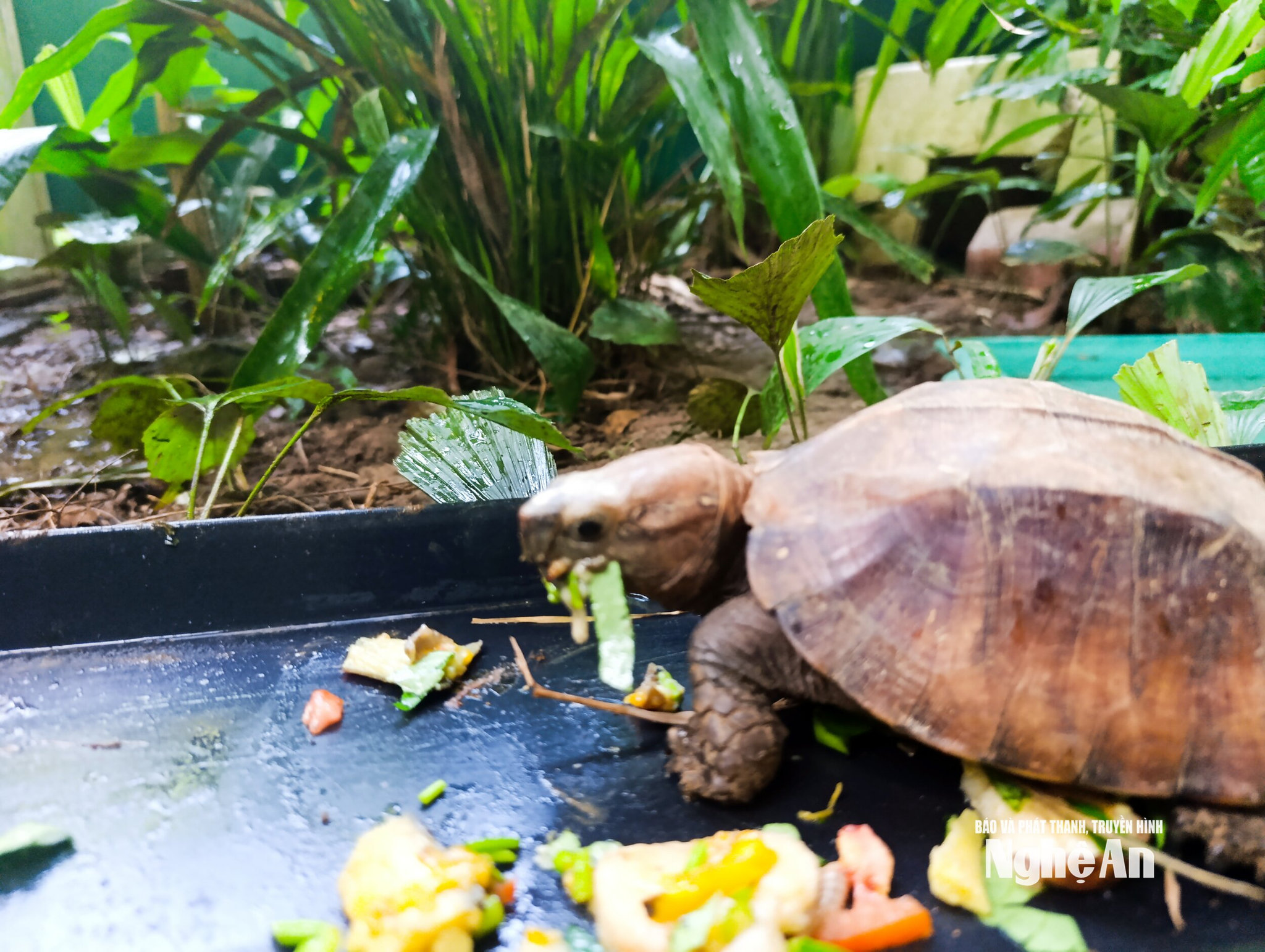
Scientists call this diseaseZoochosis(Zoochosis is a psychological disorder caused by captivity). When deprived of their natural habitat and confined to a small space for extended periods, wild animals lose their natural instincts (such as foraging, climbing, and hiding). Instead, they develop unconscious, repetitive behaviors, prolonged panic attacks, depression, or self-harm. Healing physical wounds with antibiotics only takes a few weeks, but treating zoochosis can take years.
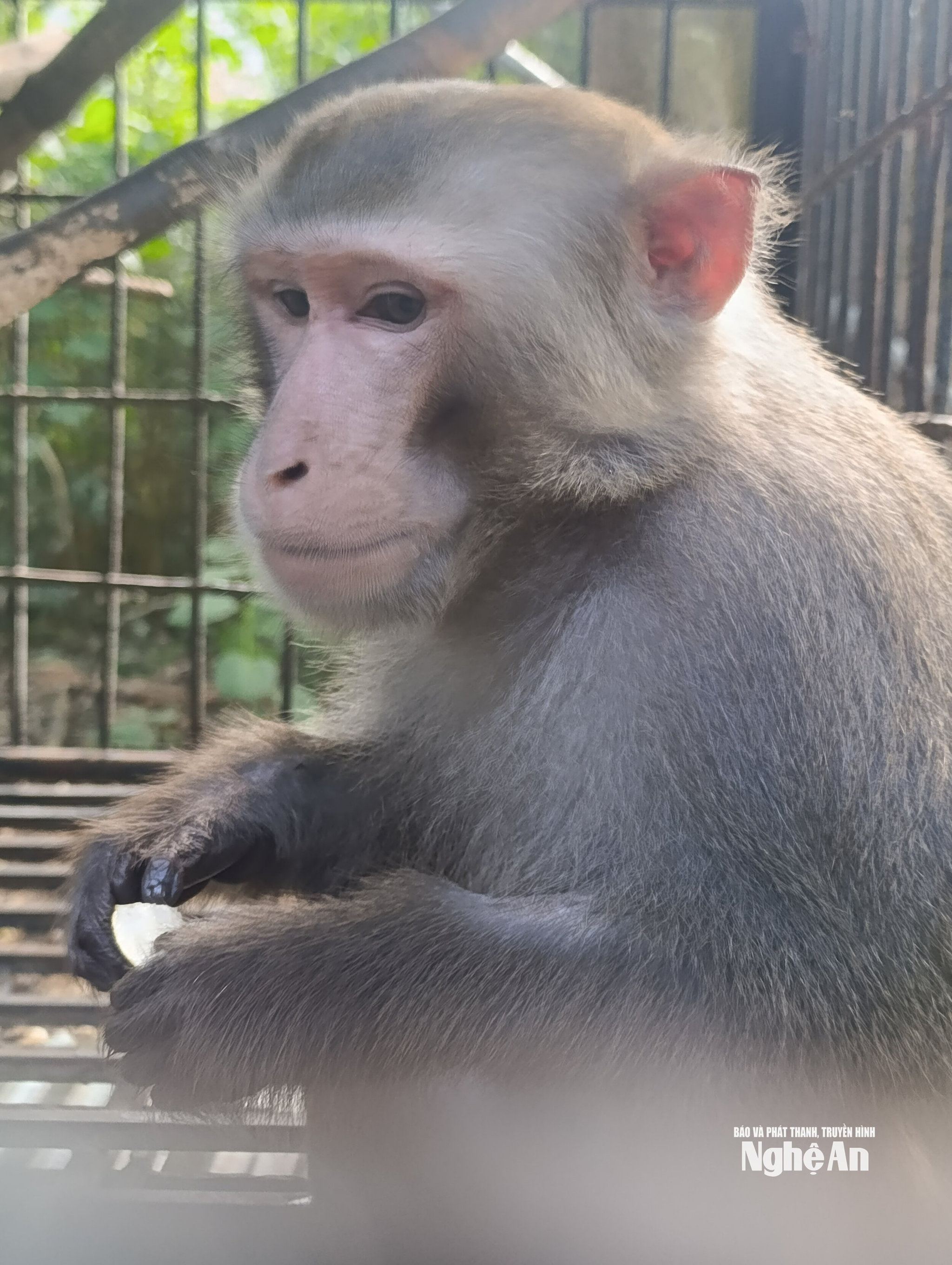
Slowing down as we passed the primate care area, veterinarian Dang Thanh Tuan subtly gestured for us to remain silent. Inside a wire mesh cage, a macaque was curled up in the corner. Seeing people approaching, it immediately recoiled, clutching its head with both hands and letting out a piercing shriek.
"It was handed over by the people after being kept in captivity for a long time.""When it first arrived, it was under severe stress. For hours on end, it would pace back and forth unconsciously in its cage, then pull out handfuls of its own fur. Those patches of smooth, red skin were the result of its own plucking. On some nights, in a panic, it even bit off chunks of skin on its own arm," Mr. Tuan recounted.
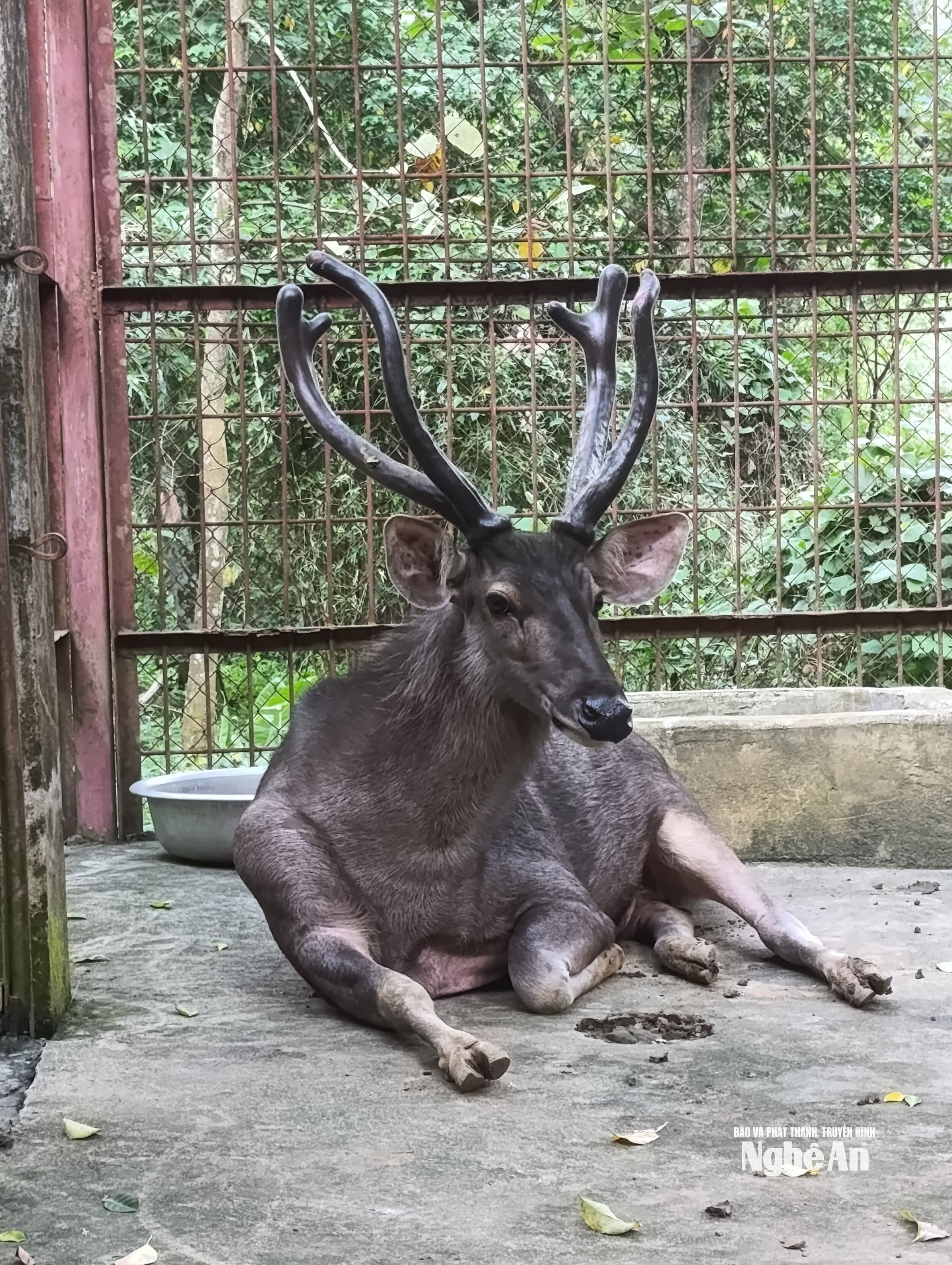
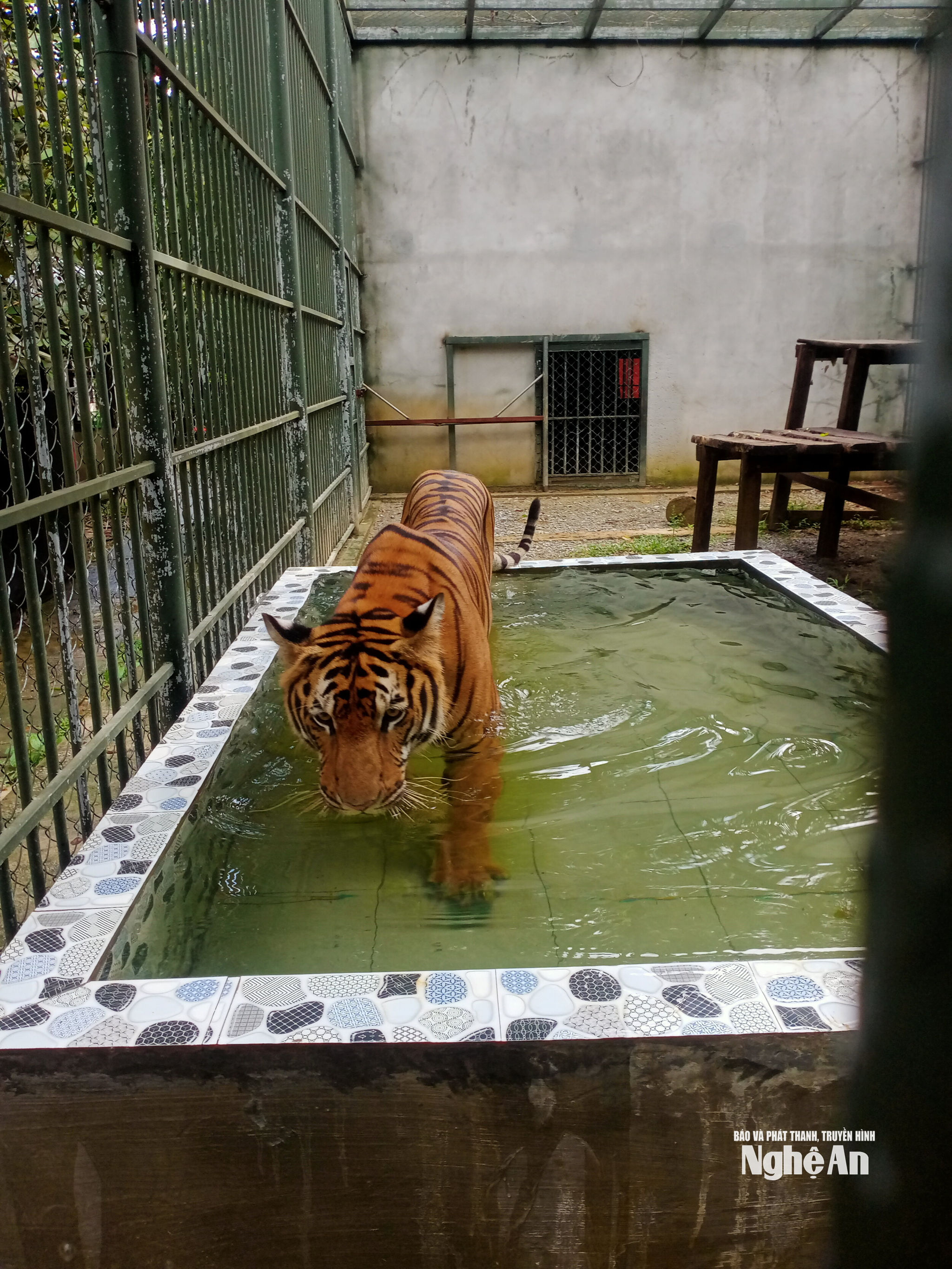
Not far away, in the quietest and least brightly lit area, was the care facility for pangolins, slow lorises, and ferrets. These animals, carrying diseases and highly alert after being rescued from illegal trafficking, were kept in sterile isolation. It was with great difficulty that we managed to dimly illuminate a tiny slow loris huddled deep in a dark corner. Upon seeing the light, its large, round eyes widened, its body stiff and motionless – an instinctive defense mechanism indicating extreme fear.
.png)
The workload at the rescue station is enormous, but currently, the team on duty, taking care of the meals and sleep of hundreds of animals, consists of only four people: veterinarian Nguyen Tat Ha and caregiver Tran Tuan Dung (both on the park's payroll), along with two officers seconded from the Wildlife Conservation Center in Vietnam (SVW): Dr. Dang Thanh Tuan and Mr. Loc Van Tao.
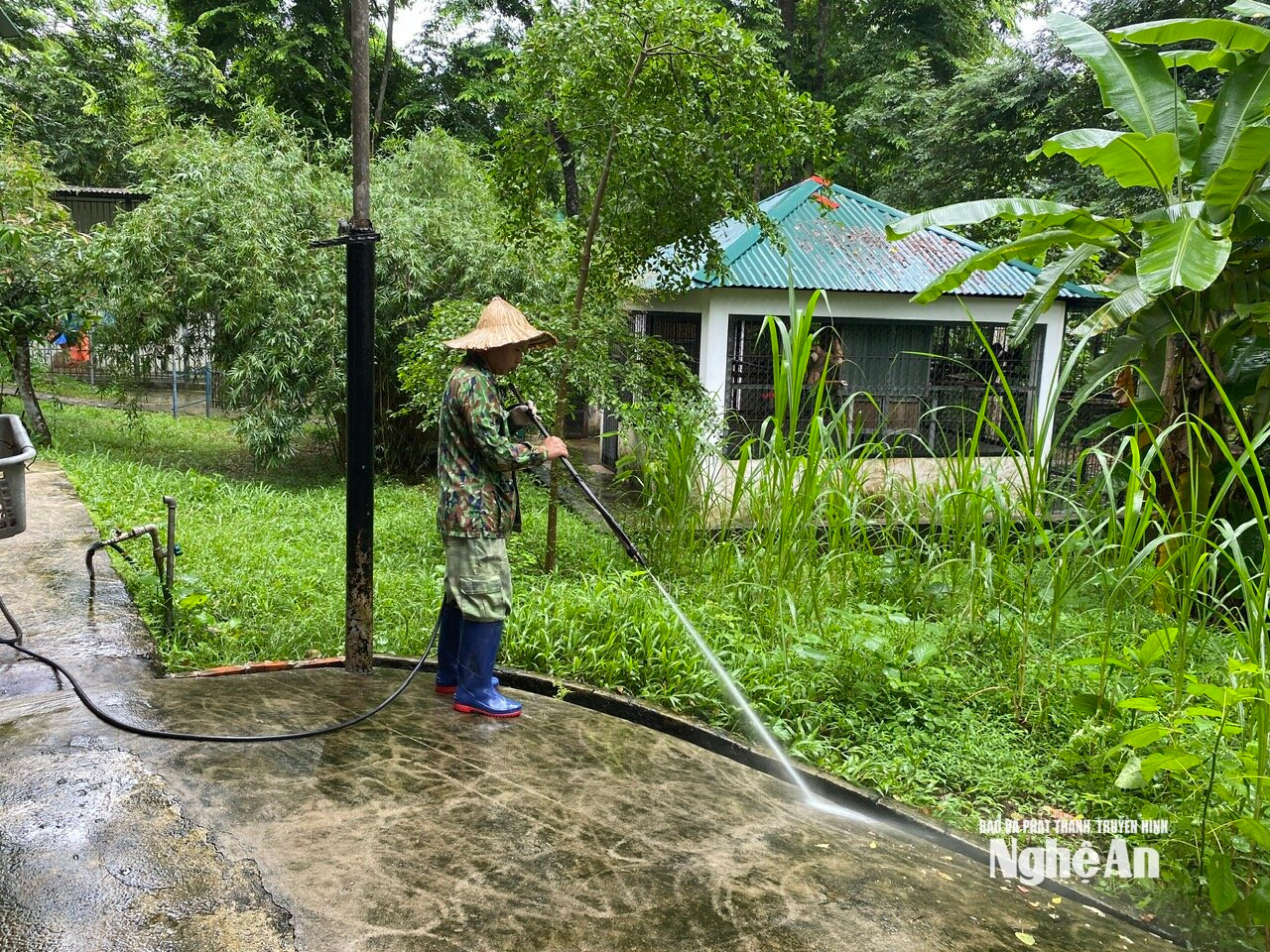
Here, animal care is more than just feeding. To prevent cross-contamination, the isolation area is always kept sterile. Each cage has its own cleaning kit. A clear plastic board outside the cage records detailed information from weight, body temperature, food intake to the amount of waste produced each day. Any abnormality is meticulously documented in the medical record.
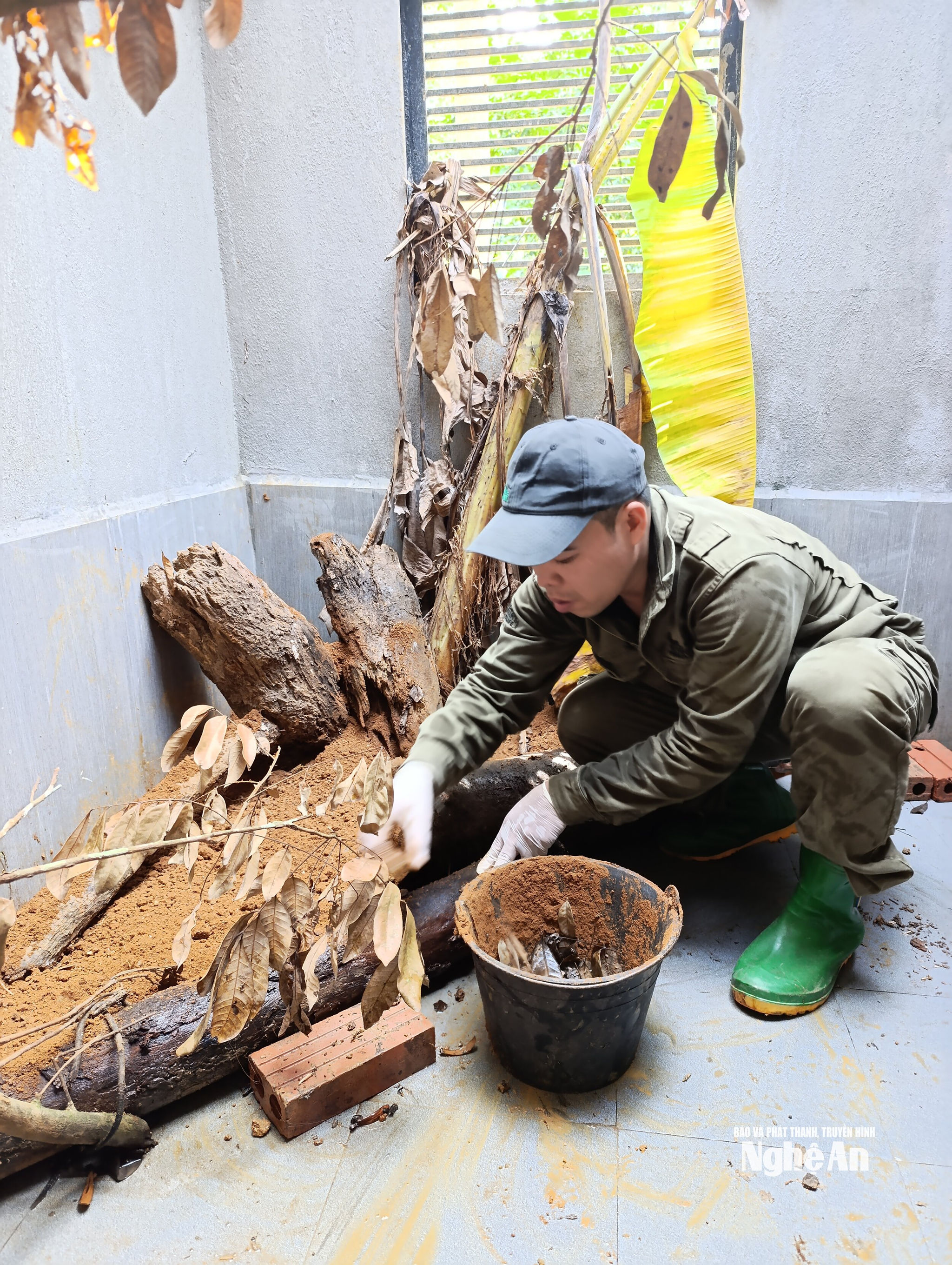
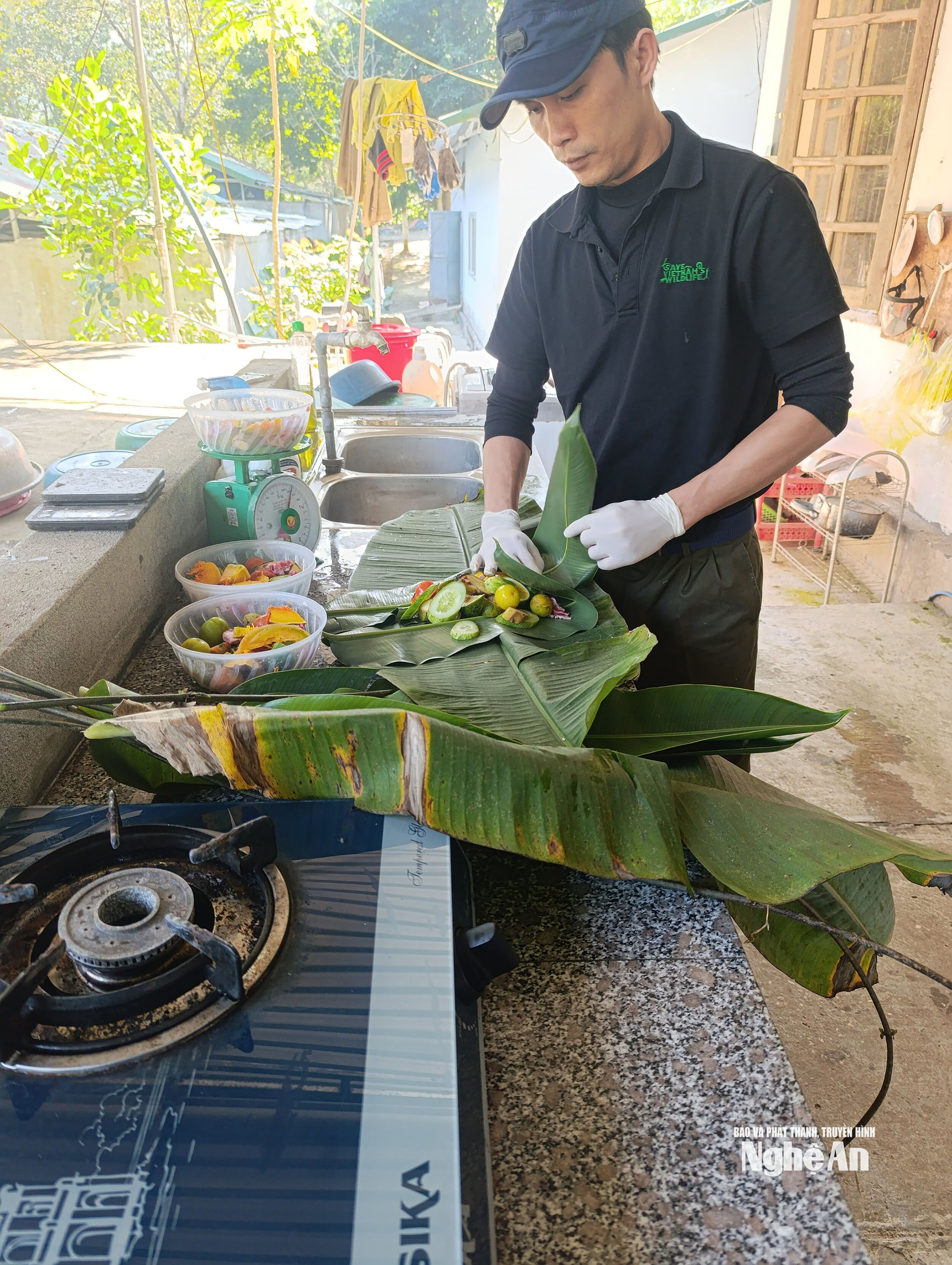
Four men take turns doing everything: from cleaning manure, carrying water to wash cages, preparing special feed rations, acting as psychologists, to examining animals under microscopes and wielding surgical knives. Among them, Dr. Nguyen Tat Ha is the "eldest" with nearly 20 years of experience in the profession. Their day begins at 7 a.m. and rarely ends at 5 p.m. During shifts, they have to get up in the middle of the night to prepare milk for orphaned young animals, or stay awake all night by the incubator monitoring the breathing of a pangolin with gangrene in its leg caused by a snare trap.
"During peak periods when we received dozens of animals from illegal trafficking operations, my colleagues and I took turns staying up all night. The animals got sick, and we were exhausted."."Although we do this job with heart and dedication, we still can't fill the manpower gap. The national park urgently needs more well-trained veterinarians to help shoulder this responsibility," Dr. Tat Ha said, wiping away a drop of sweat.
.png)
If fighting for survival against death is difficult, then the process of "detoxifying" animals from human interaction and restoring their wild instincts is an even greater emotional challenge for their caregivers.
The treatment protocol for zoochosis in Pù Mát is paradoxical: In order to love and save the animals, humans must create harsh conditions.
Food is never laid out in troughs. In semi-wild enclosures, staff have to bring rock crevices and branches from the forest to create a simulated natural environment. Ripe fruit, leaf sprouts, or honey are stuffed deep into tree hollows, buried under decaying leaves, or hung precariously on high branches. They force the monkeys and gibbons to use their sense of smell to find the food, their claws to dig, and practice swinging from branch to branch to obtain it.
The most difficult part is when doctors and caregivers have to deliberately make loud noises and cruelly chase the animal away to train it to hide and completely sever its dependence on others.
"Many times, seeing the baby monkey that used to be so affectionate with me now running away in panic at the sight of a human, its eyes full of wariness, fills my heart with a heavy feeling."But behind that heartbreak was a sense of relief, knowing that it had learned a crucial lesson: It must learn to fear humans. Only then, when it returns to the forest, will it escape the traps lurking there," Dr. Tuan shared.
The compassion shown by the officials here is a rational kind of compassion. They hide their soft hearts, accepting the role of "villains" in exchange for the chance of independent survival for the animals.
The process of psychological rehabilitation and re-wilding can take six months, a year, or even several years. Why does Pu Mat National Park, despite its manpower shortage, persevere with this costly and complex process instead of choosing to keep them in glass cages for conservation and environmental education?
“That is the fundamental principle of conservation. For wild species, once individuals have fully recovered their survival instincts, the park must reintroduce them into the forest. Conservation encompasses development. Only when returned to their natural environment will they have the real space to thrive. Although this process is arduous and costly, it remains the core objective of rescue efforts.”
Mr. Le Anh Tuan, Director of Pu Mat National Park, confirmed this.
Agreeing with this viewpoint, Mr. Vo Cong Tuan Anh – Head of the Science and International Cooperation Department, who is directly in charge of the rescue aspect of the Park, explained in more detail the immeasurable value of reintroduction.
"Each individual released back into the forest is not simply an animal set free. It is an indispensable link in maintaining the life cycle of Pu Mat.""If pangolins were absent, who would plow the land, control ant and termite nests to prevent tree roots from being gnawed away? If primate troops were absent, who would eat the fruit and carry the seeds to spread across the mountain slopes so that new forests could grow? When we make an effort to reintroduce an individual, we are essentially sustaining life for the lungs of nature," Tuan Anh analyzed.
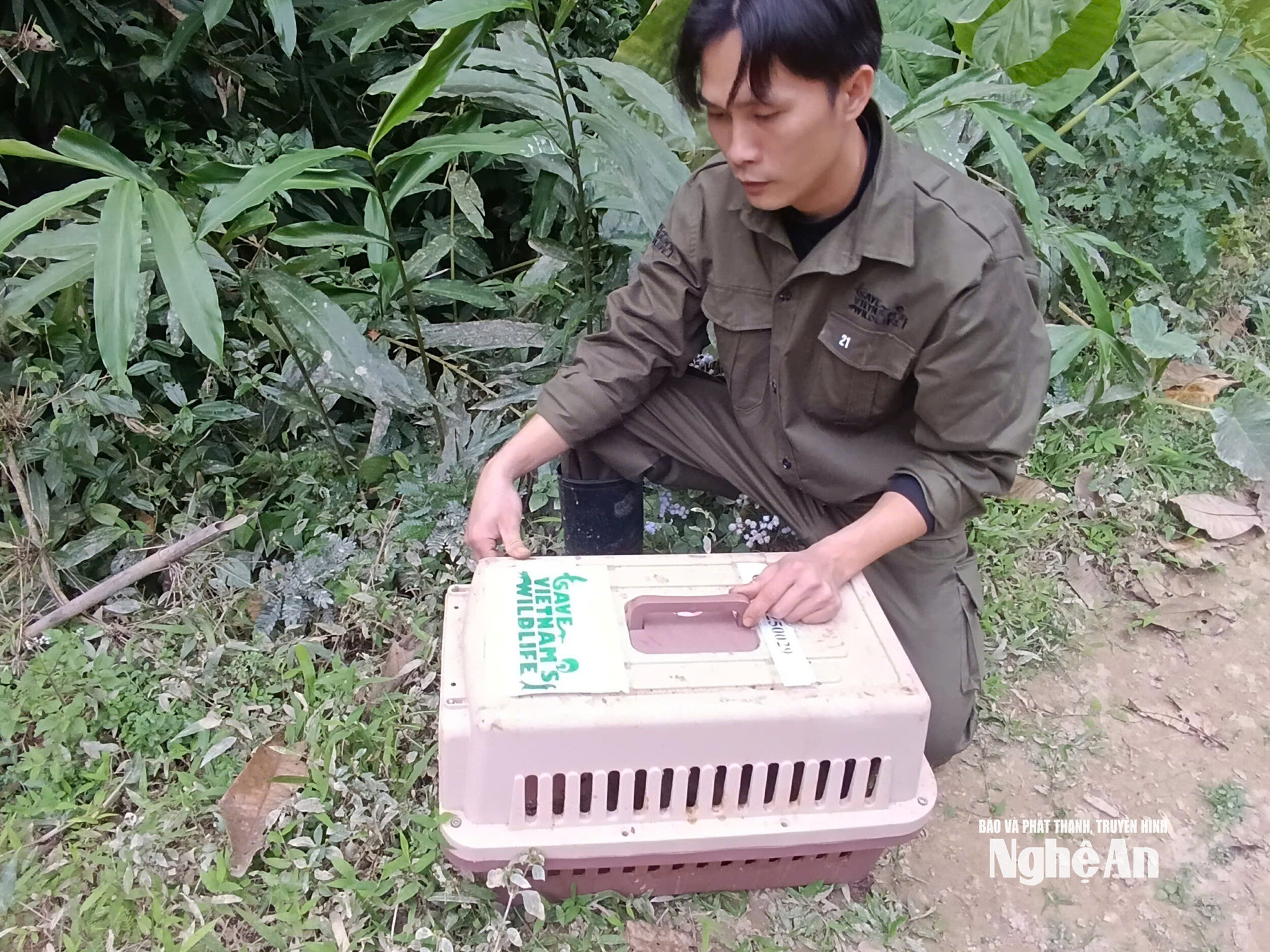
One morning in the heart of the Pù Mát forest, the door of the iron cage was slowly pulled open. The monkey, which had once bitten itself, hesitantly stepped out. It paused for a few seconds, taking a long breath of the pungent smell of damp earth and fallen leaves. Then, with a leap, it soared into the high canopy of leaves, nimbly swinging from branch to branch, and disappeared into the deep green expanse. It never once looked back.
Beneath the dew-soaked lawn, the caregivers and veterinarians stood silently, smiling. For them, that turning away was the greatest recognition, an invaluable reward for the long, exhausting nights they had spent awake.
Because they knew that from this moment on, they were finally home.


