
These women have been through the war.
(Baonghean.vn) - These are women who emerged from the war, now connected to the Nghe An War Invalids Rehabilitation Center. Each has their own fate and burdened with their own sorrows, but these women share one thing in common: they always maintain faith in life.
Optimistic despite having only 4% of life left.
At the Nghe An War Invalids Rehabilitation Center, the majority are men who returned from the battlefield with disabilities exceeding 80%, facing difficult family lives or having no one to rely on. But there are also women here who have dedicated their lives to the rooms, the grounds, and the dedicated service of the center's staff.
The first woman we met upon arriving here was Mrs. Nguyen Thi Luong (born in 1950), a war invalid with 96% disability who has been recuperating here for over 40 years.
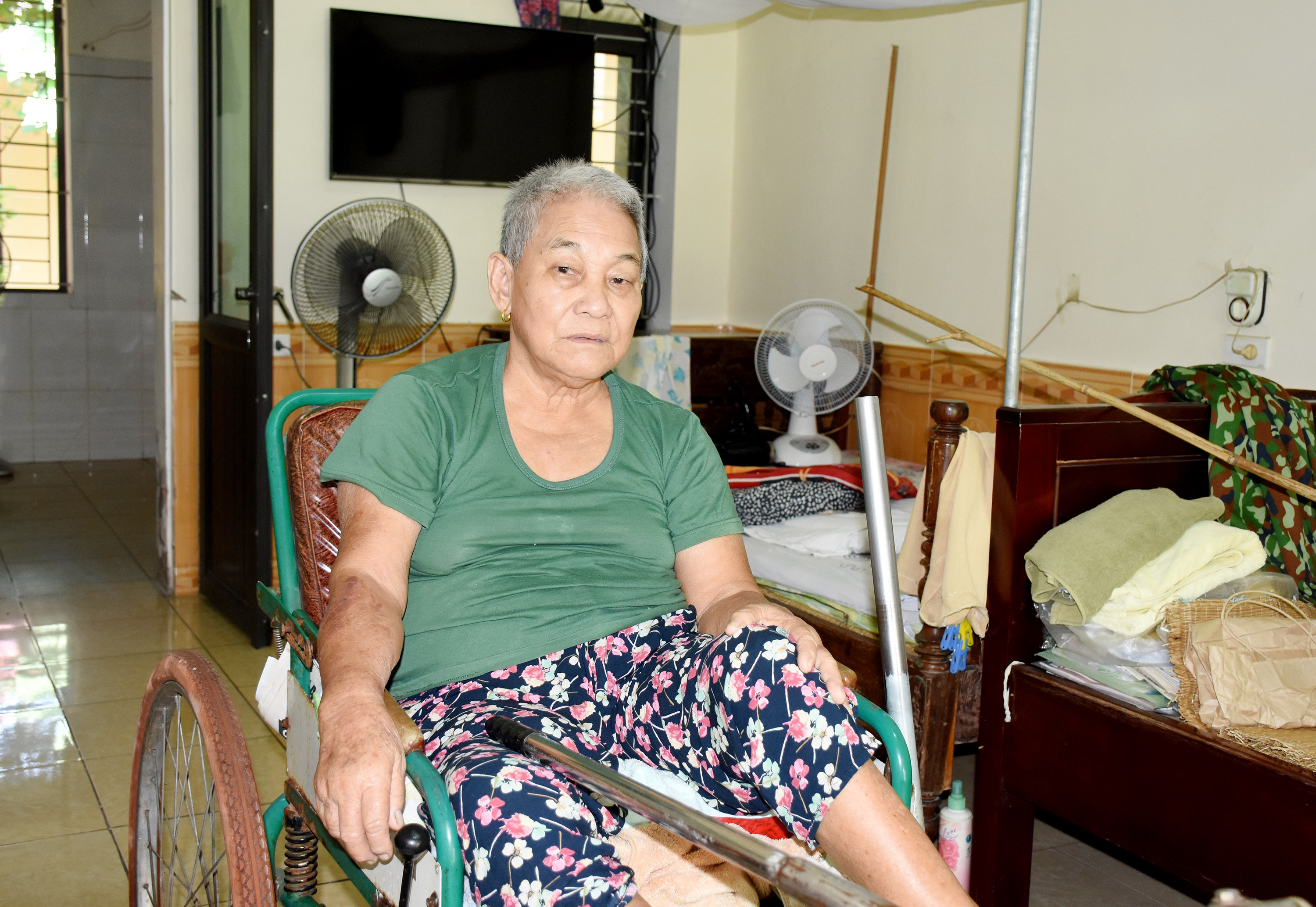
“I'm from Thanh Ngoc commune, Thanh Chuong district. When I was young, I studied medicine and was assigned to duty in the Central Highlands battlefield. We marched for months to cross the Truong Son Mountains, into fierce fighting areas to serve in combat. Once, during a mission in Gia Lai, the truck overturned, causing me serious injuries, including a spinal injury that resulted in partial paralysis,” Mrs. Luong recounted.
Female soldier Nguyen Thi Luong was taken to various hospitals for treatment, but due to the severity of her injuries, she was unable to stand up, and from then on, her life was confined to a wheelchair. After treating her wounds, in 1979, Ms. Luong was transferred to the Nghe An Center for the Care of Wounded Soldiers for Rehabilitation.
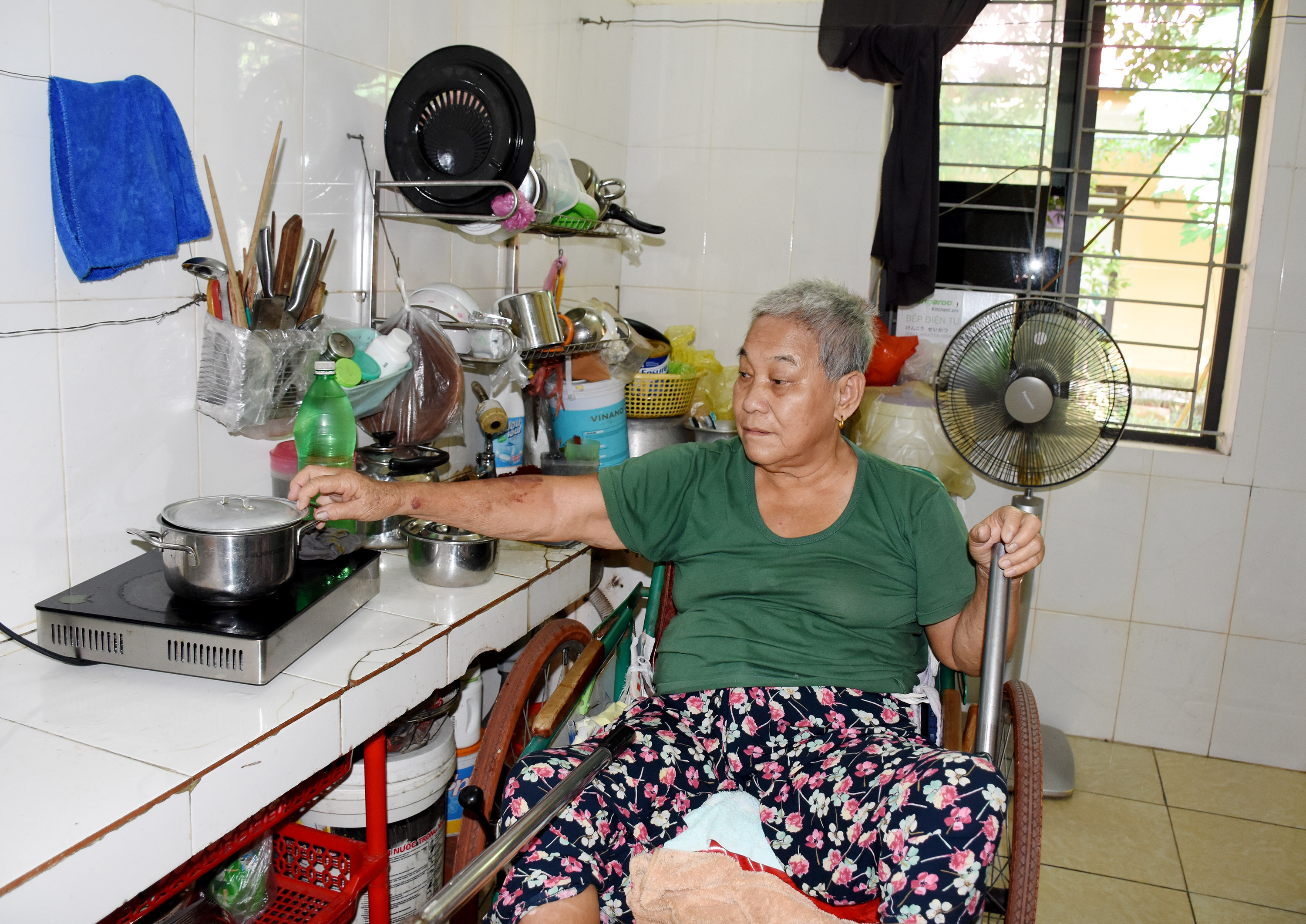
In her twenties, she marched to the battlefield, becoming severely wounded at the age of 26. This girl from Thanh Chuong never had the chance to express her love. For over 40 years, her life has been a long, lonely existence, sometimes flowing silently like a river, sometimes surging like ocean waves.
Although Mrs. Luong receives special care and attention from the center's staff, she still experiences moments of loneliness. Especially on stormy nights, alone in her small room, she feels bitter and resentful. At such times, she tries to hold back her tears, but they still stream down her face.
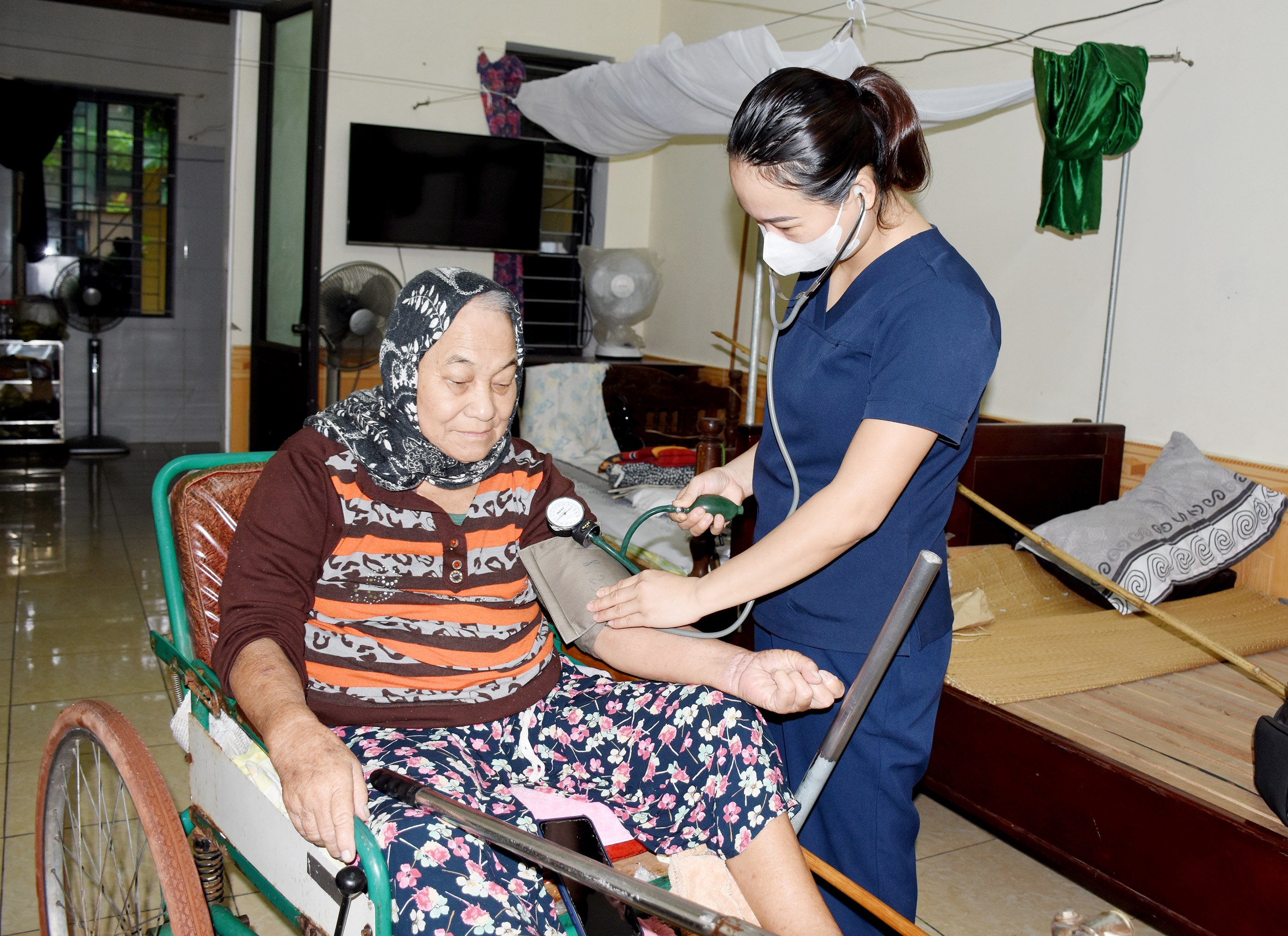
Ms. Luong confided: "I still have siblings and relatives in my hometown, the closest being my younger sister's family. The happiest times are when I go back home to see my relatives or when relatives from my hometown come to visit, because those moments make me feel the warmth of family and kinship."
Ms. Nguyen Thi Luong was highly praised by the leaders of the Nghe An War Invalids Rehabilitation Center for her resilience and compassion towards those in similar circumstances. Despite her severe injuries, she still tries to be proactive in her daily life, cooking her own meals because she sees the staff as very busy.
Whenever someone was ill, Mrs. Luong would kindly visit their room to inquire about their well-being, offer encouragement, and provide assistance to help them fight their illness. Her efforts were recognized with a Certificate of Commendation from the Chairman of the Provincial People's Committee for her outstanding achievements in the work of showing gratitude and repaying kindness.
Nearly 60 years of mourning her husband.
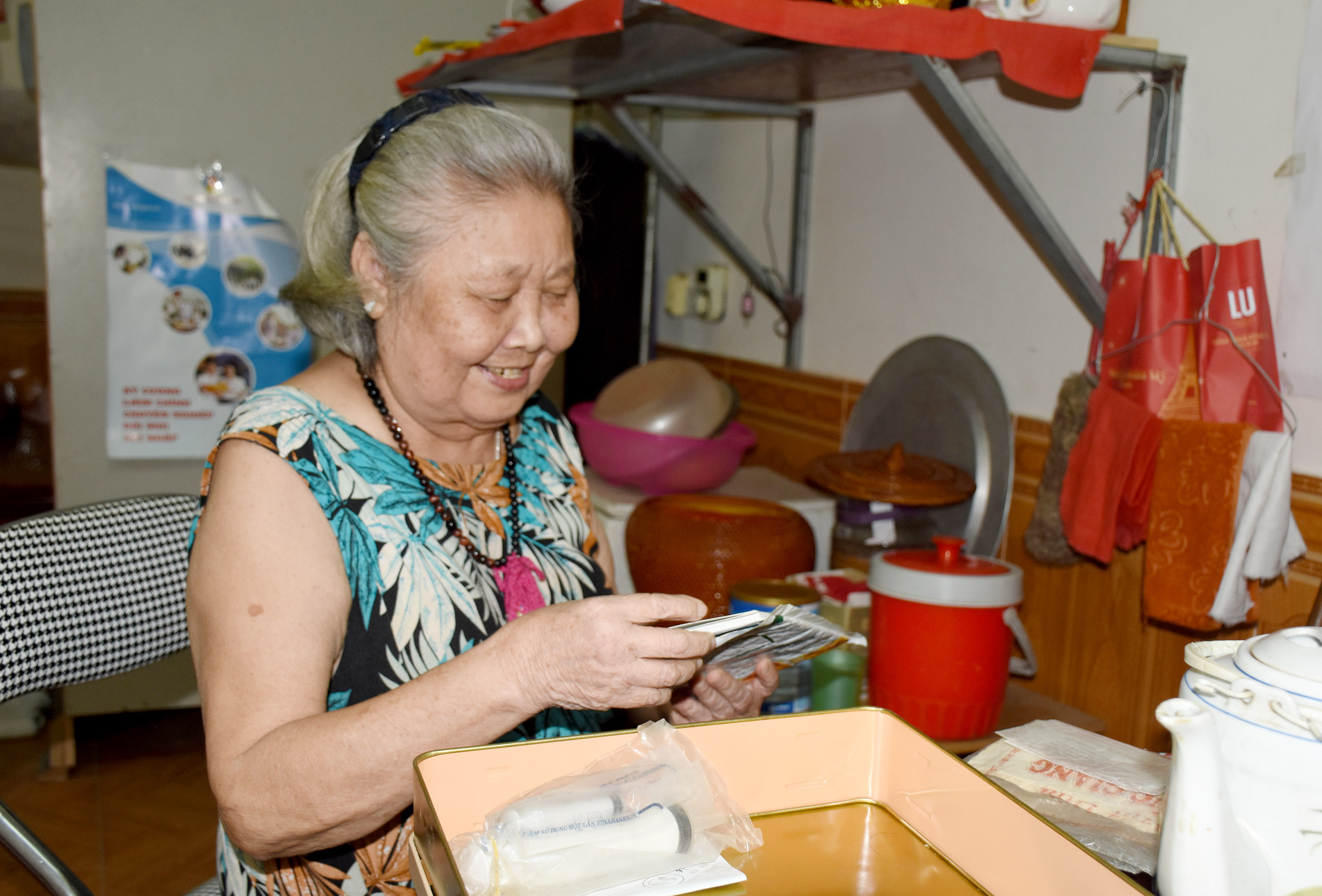
Although she didn't directly fight on the battlefield, Mrs. Lang Thi Ngoc (born in 1946), from Ly Thanh commune (Yen Thanh district), bears the heavy scars of war. The war with the American imperialists took everything from her, leaving her, now approaching eighty, to live alone in a small room at the Nghe An War Invalids Rehabilitation Center for widows of fallen soldiers who have no one to rely on.
“I got married in 1961, when I was just 15 years old. After the wedding, my husband immediately went back to the battlefield, and five years later I received news that he had been killed in action. Everyone advised me to remarry, but I decided to remain single to honor my husband. In my final years, with my old age and weak health, I had to rely on the State,” Mrs. Ngoc recounted her life story.
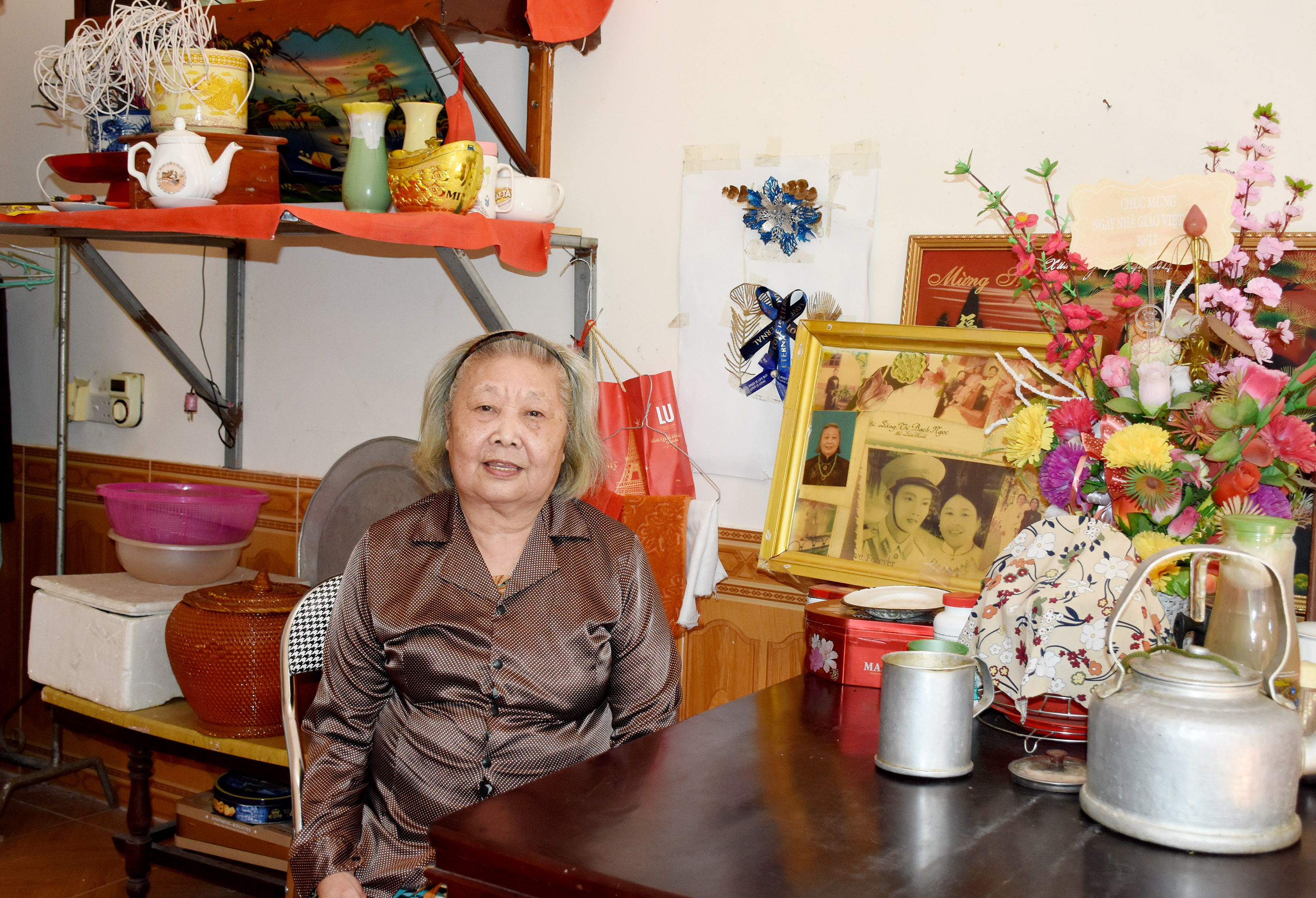
Ms. Ngoc's husband was the martyr Nguyen Dang Niem. They were from the same hometown and fell in love. When the war against the US broke out, Mr. Niem quickly enlisted and went to fight in the South.
In 1961, during a work trip that took him near his home, the soldier stopped by to marry the young woman. As soon as the wedding was over, the soldier hastily bid farewell to his young wife and set off with his comrades.
After her wedding, Lang Thi Ngoc was given the opportunity by her husband's family to study pedagogy, and a few years later she graduated and became a teacher. During the years when the US Air Force bombed North Vietnam, causing so much suffering, Teacher Ngoc continued to stay at her classroom and school every day, caring for her young students.
By day she toiled away preparing lesson plans, by night she helped her in-laws with chores, and in the quiet solitude of the night, her longing for her husband intensified. In mid-1966, a fellow soldier came home to inform her that her husband had been killed in action. The young wife was devastated, unable to utter a single word.
Later, several people came to inquire about her, and her husband's family encouraged her to remarry, but Teacher Ngoc shook her head.
As time quietly passed, both her parents-in-law and her own parents grew old and passed away one after another. The once young teacher's hair gradually turned gray, and she became an old woman. With no children or grandchildren, and no other relatives, Mrs. Lang Thi Ngoc had no choice but to rely on the care of the State. For several years now, she has been a member of the Nghệ An War Invalids Rehabilitation Center.
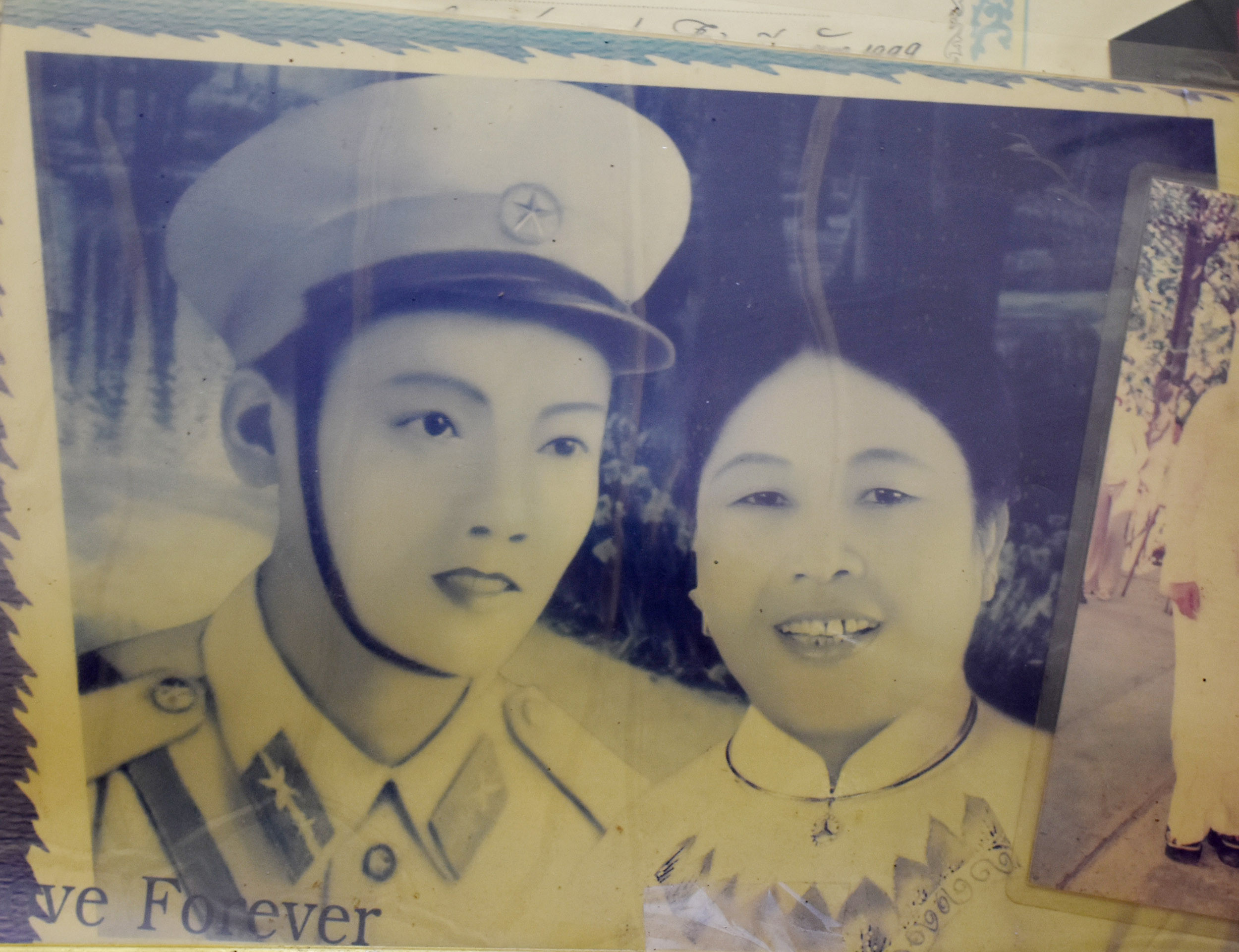
"Here, I always receive special support and care from the staff, which helps alleviate the loneliness of old age. But when I'm alone, I can't avoid feeling sad and dejected, forcing me to remind myself not to be weak, to be strong enough to be worthy of being the wife of a soldier who sacrificed his life for the cause of national liberation," Mrs. Ngoc confided.
Currently, the center is caring for seven women who are war invalids or relatives of fallen soldiers. They are always cared for and supported attentively by the staff, treated like family members, helping them to alleviate some of the loneliness of old age.


