
Outstanding teachers from Nghe An are remembered in history.
(Baonghean.vn) - On the occasion of Vietnamese Teachers' Day, November 20th, Nghe An Newspaper would like to highlight the profiles of outstanding teachers from Nghe An province who have made significant contributions to the development of Vietnamese education and culture.
1. Educator Phan Boi Chau (1867–1940)
Phan Bội Châu was born on December 26, 1867, in Dan Nhiem village, Nam Hoa commune, Nam Dan district, Nghe An province. Coming from a poor family, he earned a living by teaching and studying for the imperial examinations. In the Dinh Dau year examination (1897), he passed the second-highest level, but his friend Tran Van Luong secretly placed several books in his examination box. As a result, he was accused of "carrying documents in his clothing" and sentenced to a lifetime ban from taking further examinations.
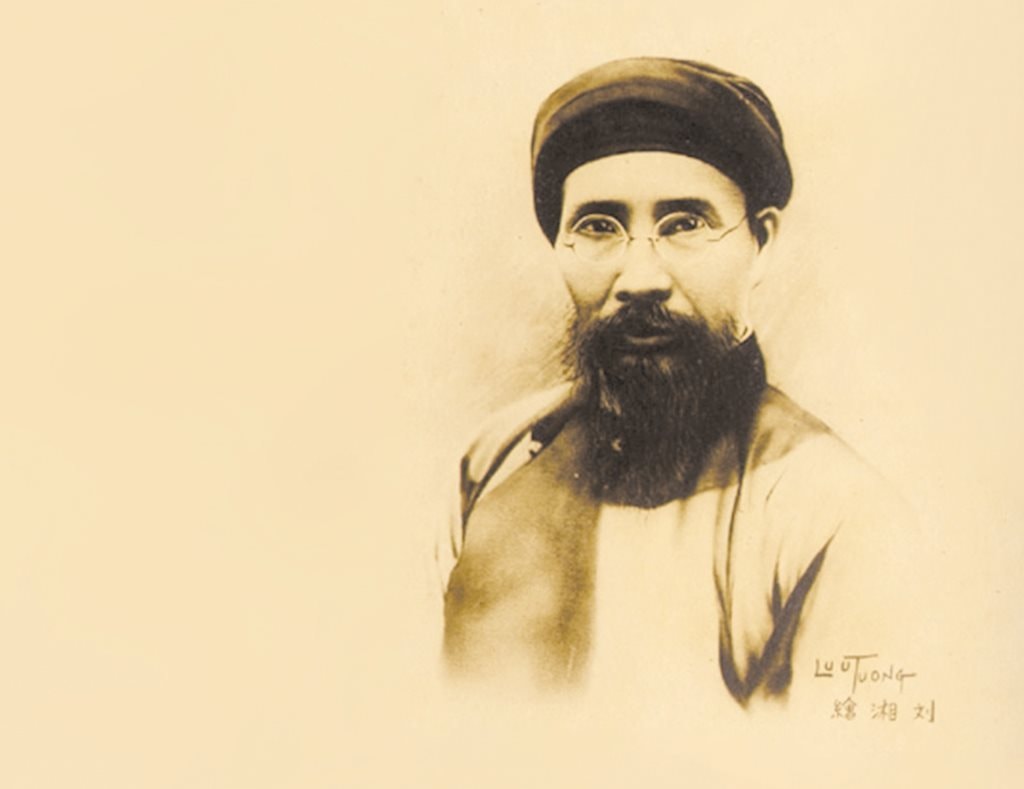 |
| Educator Phan Boi Chau (1867–1940). Photo: Internet |
After this incident, Phan Bội Châu went to Huế to teach. Because of his talent, the officials asked King Thành Thái to pardon him. Thanks to this, in the very next provincial examination, in the year Canh Tý (1900), he passed with the highest score (Giải nguyên).
Phan Bộ Châu was a critic of the French colonialists' ban on teaching Vietnamese history, replacing it with French history, with the intention of erasing the influence of traditional Vietnamese culture and spreading French culture to assimilate the Vietnamese people.
In 1904, he, along with Nguyen Ham and about 20 other comrades, founded the Duy Tan Society in Quang Nam to fight against the French. In 1905, he, along with Dang Tu Kinh and Tang Bat Ho, went to China and then to Japan to seek Japanese assistance in driving out the French.
In Japan, he met Liang Qichao, a Chinese revolutionary, and was advised to use poetry and literature (following Phan Boi Chau's writings on the history of Vietnam's loss of sovereignty) to awaken the patriotism of the Vietnamese people. He also heard two important figures of the ruling Progressive Party in Japan, Ōkuma Shigenobu (Count Oi Chongxin) and Prime Minister Inukai Tsuyoshi (Inukai Tsuyoshi), advise encouraging young people to study abroad so that they could return to help their country.
In 1905, Phan Bội Châu and Đặng Tử Kính brought back to Vietnam a number of books on the history of Vietnam's loss of sovereignty. In Hà Tĩnh, he and his core comrades in the Duy Tân Society discussed and devised a plan to select a number of intelligent, studious young people who could endure hardship and send them to study abroad. Subsequently, the Đông Du movement was launched by the two men, gaining widespread participation and support from people in all three regions, especially in Southern Vietnam.
2. Teacher Nguyen Tat Thanh (1890-1969)
President Ho Chi Minh (whose childhood name was Nguyen Sinh Cung, his school name was Nguyen Tat Thanh, and for many years during his revolutionary activities he used the name Nguyen Ai Quoc), was born on May 19, 1890, in Kim Lien village, Nam Lien commune (now Kim Lien commune), Nam Dan district, Nghe An province, and died on September 2, 1969, in Hanoi.
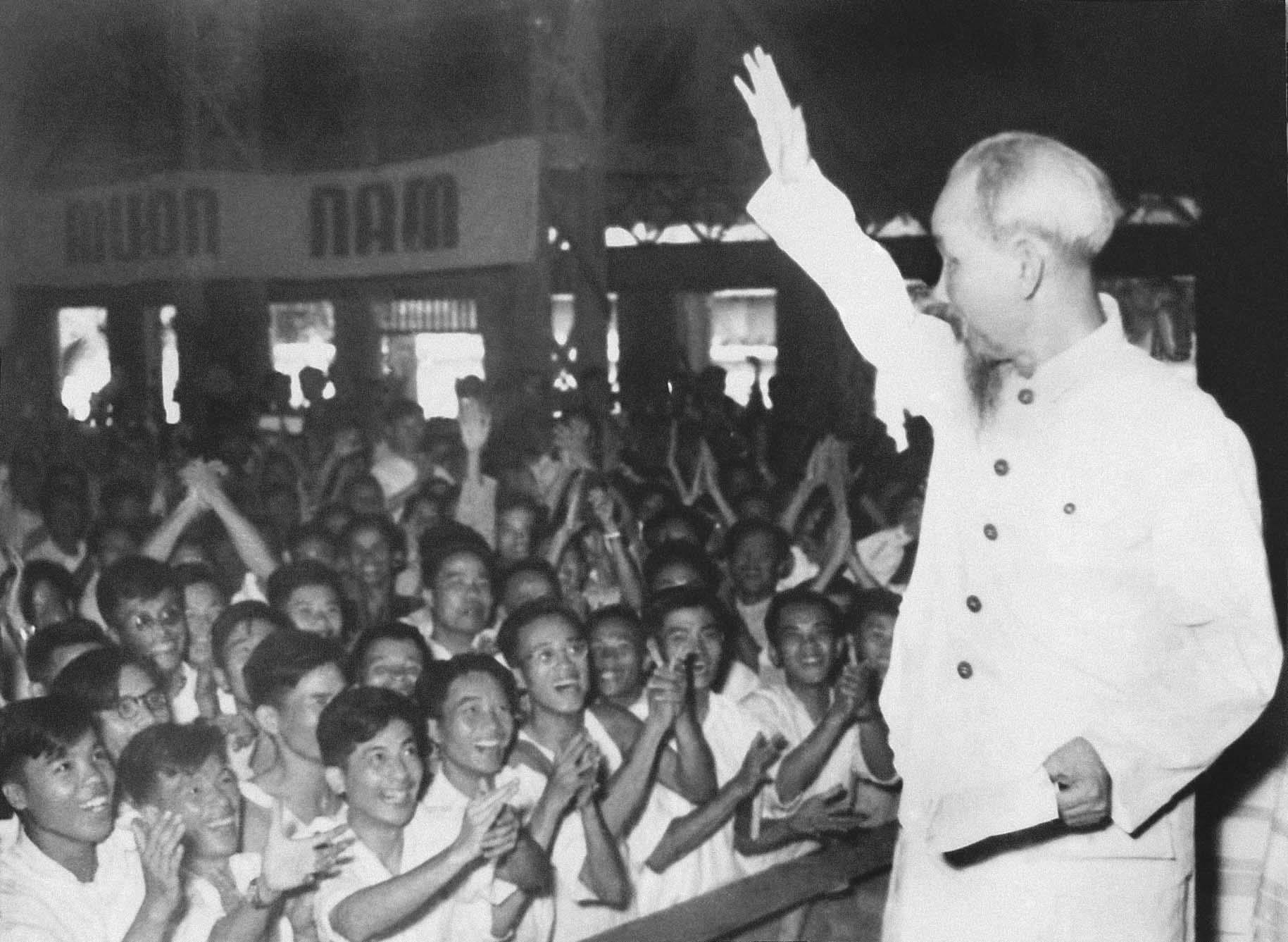 |
Visiting a political training class for secondary and high school teachers throughout North Vietnam, President Ho Chi Minh instructed: "For the benefit of ten years, plant trees; for the benefit of a hundred years, cultivate people" (September 13, 1958). Photo: Internet |
On his arduous journey to find a way to save the country and become the leader of the Vietnamese nation, Nguyen Tat Thanh taught at Duc Thanh School. The mark of his role as a teacher and his teaching profession only depicts a small part of President Ho Chi Minh's immense contributions – a life dedicated to the nation and its people. However, that contribution has been, is, and will forever remain an invaluable asset to our country's education system and has become a profound and timeless educational philosophy.
For Nguyen Tat Thanh, teaching was only a temporary job, but he still wholeheartedly devoted himself to instilling in his students patriotism and thoughts about the nation's destiny.
Teacher Nguyen Tat Thanh was beloved by his students because he loved them immensely and had a gentle yet profound teaching style. He always kindly advised them: "Writing is like eyes; a person without writing is like being blind." Without writing, a person is insignificant before everything under the sun, and an illiterate person will forever be an object of manipulation, a sacrifice for the rulers. Therefore, students sitting in class should ask themselves: "Should I learn to write to become a better person, to help the people and save the country, or to enrich myself and my family?"
He was also a dedicated teacher who guided and trained outstanding communist fighters and produced many excellent literary works.
3. Teacher Dang Thai Mai (1902-1984)
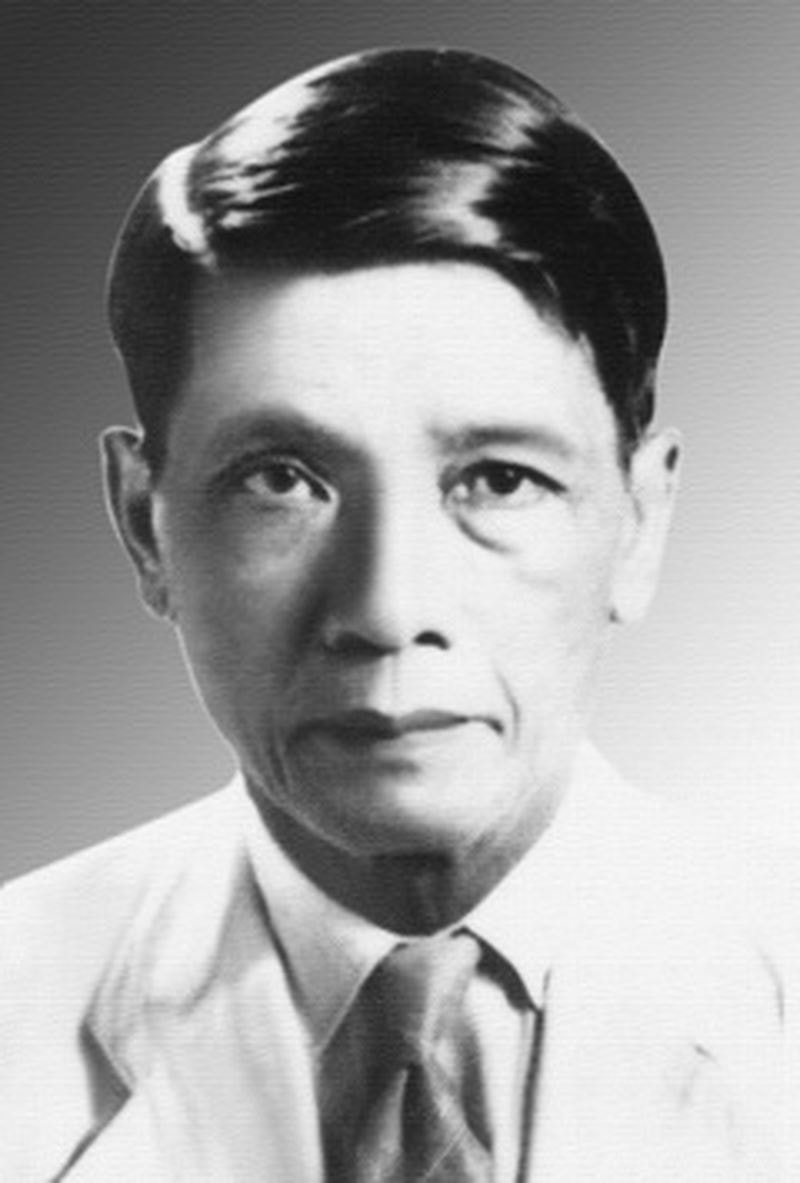 |
Professor Dang Thai Mai was also known by the name Dang Thai Mai and the pen names Thanh Tuyen and Thanh Binh. Photo: Internet |
Dang Thai Mai was born on December 25, 1902, in Luong Dien village (now Thanh Xuan), Thanh Chuong district, Nghe An province, into a scholarly family. His father, Dang Nguyen Can, passed the second-highest level of the imperial examination and participated in the Duy Tan movement along with Phan Boi Chau, Phan Chu Trinh, Ngo Duc Ke, and Huynh Thuc Khang. He was arrested by the French colonialists and exiled to Con Dao Island. He was a descendant of Prime Minister Dang Dung, belonging to the branch of the Dang Cong Thiep family, both of whom were Doctors of Philosophy.
In 1925, while studying at the Indochina Teacher Training College in Hanoi, he participated in the movement demanding "amnesty" for Phan Boi Chau, commemorating Phan Chu Trinh, and simultaneously joined the Tan Viet Party.
In 1928, he became a professor at Hue National School. In 1929, when the Tan Viet Party collapsed, he received a one-year suspended sentence, after which he returned to teaching in Hue. He was arrested again in 1930 and sentenced to three years for participating in the Red Cross movement. After his release from prison, Dang Thai Mai moved to Hanoi and taught at the private Gia Long School (1932).
By 1935, Dang Thai Mai, along with his friends Phan Thanh, Hoang Minh Giam, Vo Nguyen Giap, and others, established the Thang Long Private School. In 1936, he, along with Nguyen Van To, Vuong Kiem Toan, Phan Thanh, Vo Nguyen Giap, and others, founded the Association for the Promotion of the National Script.
After the August Revolution, he taught at the university level and conducted literary criticism research. In 1946, he was elected a delegate to the first National Assembly, a member of the Constitution Drafting Committee of the Democratic Republic of Vietnam, and also served as Minister of Education in the coalition government during the resistance war...
4. Teacher Le Van Thiem (1918-1991)
Teacher Le Van Thiem, originally from Duc Tho district, Ha Tinh province, was renowned as a very intelligent student. He passed the full baccalaureate exam and was admitted to Indochina University.
Professor Le Van Thiem is famous for being associated with many "firsts." He was the first Vietnamese person to pass the entrance exam to the Ecole Normale Superieure de Paris - a leading school for training scientists in France.
He was the first Vietnamese scientist to earn a national doctorate (the highest academic degree in France). He was also the first Vietnamese person to become a professor of mathematics at a European university.
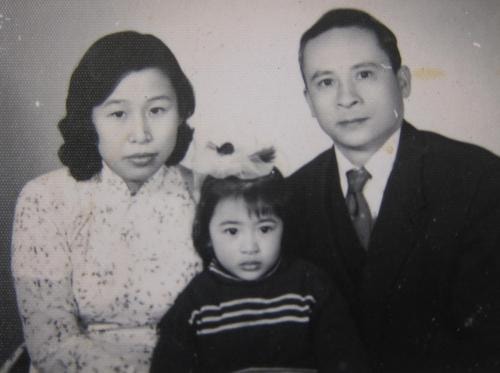 |
Teacher Le Van Thiem with his wife Vo Thi Le Hong and daughter Le Minh. Photo: Internet |
He was the first President of the Vietnam Mathematical Society, the first Director of the Vietnam Institute of Mathematics, and the first Editor-in-Chief of two Vietnamese mathematics journals: Vietnam Journal of Mathematics and Acta Mathematica Vietnamica...
The Ho Chi Minh Prize, the First-Class Independence Medal, and other awards bestowed upon him are well-deserved proof of this.
5. Teacher Hoang Xuan Han (1908-1996)
He was from Yen Ho village, La Son district (now Duc Tho district, Ha Tinh province). Teacher Hoang Xuan Han was a special case, an outstanding educational scientist.
As a scholar with excellent knowledge of classical literature, he mastered both Chinese and Vietnamese characters and invested in the study of literature and history. Hoang Xuan Han was the first to collect and preserve the manuscripts of King Quang Trung. Therefore, it is known that the "Chinh Phu Ngam" (Lament of the Warrior's Wife) has seven translations.
|
Professor Hoang Xuan Han. Photo: Internet |

Hoang Xuan Han's contribution lies in his comprehensive collection of documents on Ly Thuong Kiet's resistance against the Song Dynasty, containing a wealth of data and events. In particular, he conducted extensive research on Ho Xuan Huong, the Song Tinh story, Nguyen Bieu, and the late Dien, earning high praise from the scientific community.
His research subjects were viewed through a scientific lens, not from a subjective perspective. In his book "Vietnamese Teachers of Ten Centuries," scholar Vu Ngoc Khanh remarked: "...Today, tomorrow, no matter what our position is, reading Hoang Xuan Han can always provide reassurance."
6. Teacher Le Thuoc (1891 - 1975)
Teacher Lê Thước was born in Trung Lễ village, Đức Thọ district, Hà Tĩnh province. His family has a renowned tradition in both literature and martial arts, including Lê Văn Huân, Lê Minh, Lê Nghệ, Lê Võ, Lê Trực, and others.
At the age of 27, he topped the provincial examination and was invited to become an official. However, Le Thuoc refused the position to continue his studies. At the age of 30, he graduated from the literature department of the Teacher Training College with a thesis entitled "The Study of Chinese Characters in Vietnam".
|
Teacher Le Thuoc. Photo: internet |
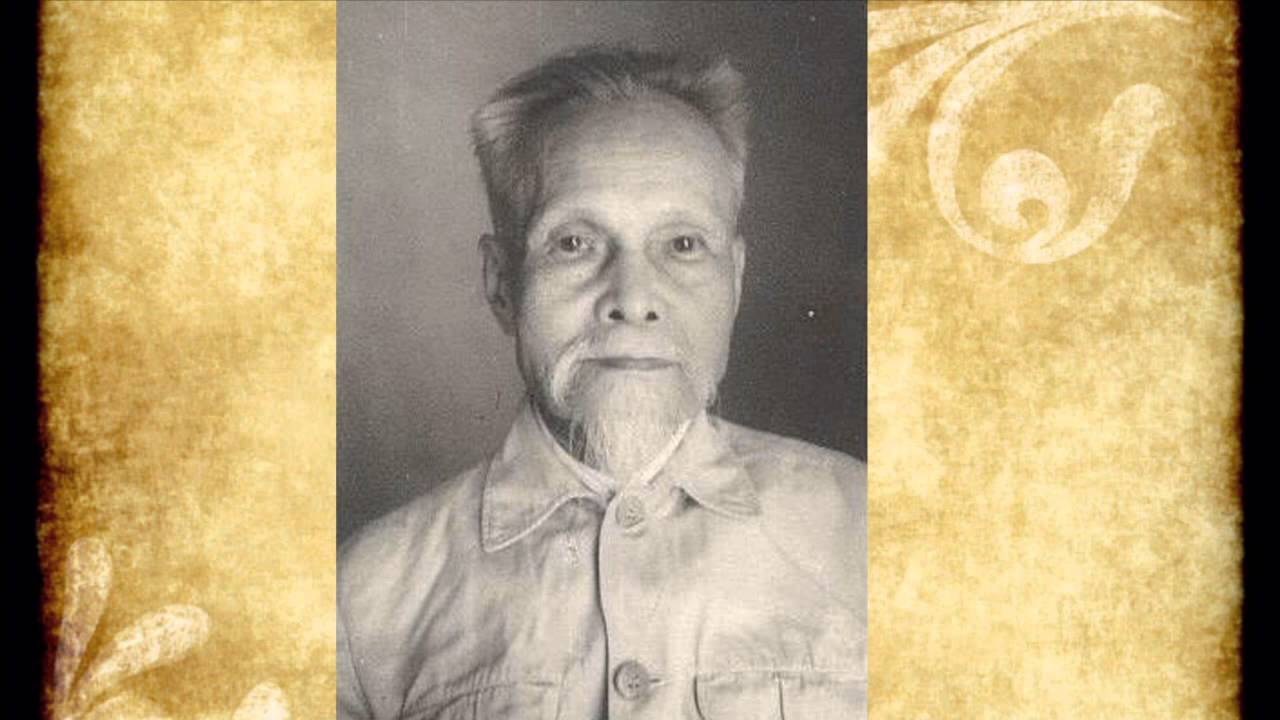
Teacher Lê Thước was also a cultural figure, a researcher, and an active social activist. His works include "The Story of Nguyễn Du" (co-authored with Phan Sỹ Bàng) and "The Career and Poetry of Uy Viễn General Nguyễn Công Trứ".
Teacher Le Thuoc's life has left behind many achievements that inspire generations of students to continue developing his ideas and bring glory to the Vietnamese education system.


