
The worst locations for installing security cameras that many people still make mistakes in.
Security cameras are becoming increasingly common in modern homes. However, even expensive models can be ineffective if installed incorrectly, and may even pose a risk to the privacy and safety of homeowners.
Privacy: The biggest mistake when installing cameras in your home.
One of the places where you absolutely shouldn't install a security camera is in private areas like bedrooms or bathrooms.
The purpose of security cameras is to enhance a family's sense of safety, not to make family members feel watched in their own living spaces.
Besides psychological factors, placing cameras in sensitive areas also poses serious risks if the system is hacked or cloud-stored data is leaked.
Experts recommend that if you want to monitor family members, young children, or pets, you should install cameras in common areas such as the living room or kitchen.
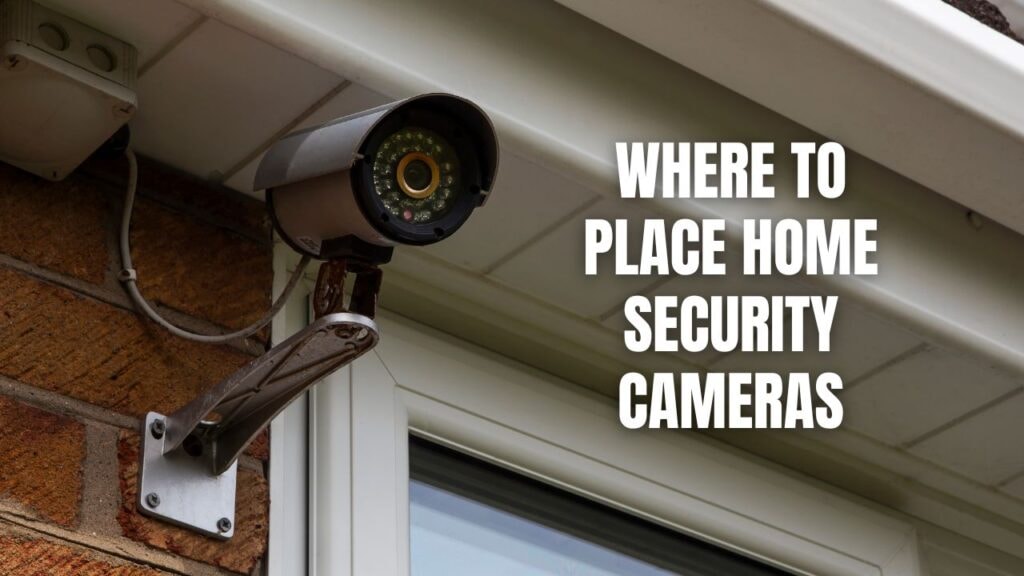
For enhanced security against intrusion, door sensors and motion sensors are more suitable options than cameras in private areas.
Another common mistake is positioning indoor cameras facing outwards towards windows in an attempt to save money on outdoor cameras.
In reality, window glass often reflects light strongly, especially at night, causing the captured images to be glaring or lacking detail. Additionally, inappropriate camera angles can inadvertently film a neighbor's property, leading to privacy concerns.
If you need to monitor your garden or outdoor area, a better solution is to use a dedicated outdoor camera with waterproof and dustproof capabilities and a suitable viewing angle.
These locations significantly reduce the camera's observation effectiveness.
Many people believe that simply installing cameras in high positions or with a wide field of view is sufficient. However, in reality, there are many locations that significantly reduce surveillance effectiveness.
A typical example is placing cameras at the end of narrow passageways or small corridors. Even though modern cameras have wide viewing angles and the ability to rotate horizontally and vertically, placing them in such a confined space will still result in most of the frame only capturing walls or blind spots.
When monitoring hallways or areas where pets move, a corner location is often more effective because it allows for a wider field of view in multiple directions.
Lighting is also an often overlooked factor when installing security cameras. Placing the camera directly under a strong light or facing direct sunlight can cause the image to be overexposed, lose detail, or have color distortion.
For indoor cameras, users should test their visibility after turning on all the lights. Meanwhile, outdoor cameras should avoid being pointed directly at the sun, especially at sunrise or sunset.
Another mistake is installing the camera too high or too low.
If placed too high, the camera may have a wider coverage area but may have difficulty identifying faces or license plates due to the steep angle of view. Conversely, a camera placed too low will be easily detected and vandalized.
According to recommendations from many security experts, the ideal height for outdoor cameras is usually between 2.4 and 3 meters from the ground. This distance is sufficient for clear detail observation while minimizing the risk of physical interference.
The surrounding environment can cause the camera to malfunction more quickly.
Although many outdoor cameras are currently advertised as being waterproof and dustproof with IP65, IP67, or IP68 ratings, this does not mean the device can operate reliably in all environmental conditions.
Installing cameras in locations directly exposed to heavy rain, snow, or high humidity for extended periods can still affect component durability, image quality, and device lifespan.
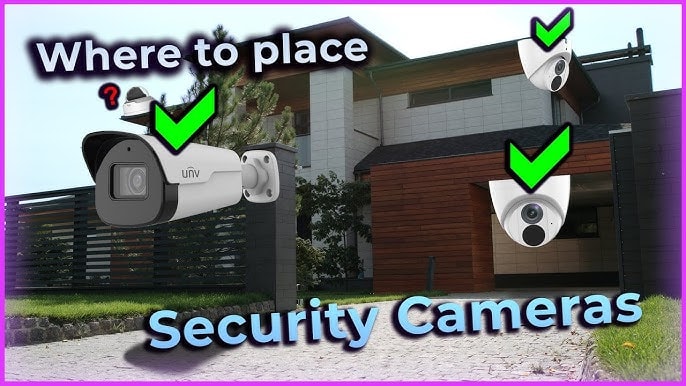
A better solution would be to install cameras under eaves or in areas with natural shelter to minimize the impact of the weather.
Besides the outdoor environment, the indoor temperature is also a factor to consider. Many people often choose a location above or near the fireplace because this is the central viewing angle of the living room.
However, the continuous heat generated can damage the sensor, battery, or other electronic components inside the camera.
Furthermore, dust and hot air from the heater can also accumulate on the lens, causing image quality to degrade over time.
Experts recommend placing cameras in a high corner of the room rather than near a heat source to ensure a wide viewing angle and extend the device's lifespan.
A seemingly small obstacle can render a camera ineffective.
One of the most common mistakes when installing security cameras is failing to account for potential future obstructions.
Initially, the installation location might offer a perfect view, but over time, trees may grow and obstruct the camera, doorways may block the frame, and curtains or furniture may create blind spots.
Especially with outdoor cameras, constantly shaking branches or leaves can trigger false motion alerts, which can be annoying for users.
Therefore, before installing the camera, users should carefully assess the entire monitoring area to ensure there are no elements that are likely to change or evolve over time.
A good installation location not only helps the camera record clearly in the present but also ensures stable monitoring effectiveness over the long term.
In short, security cameras are only truly effective when installed in the right location. An improper placement angle not only reduces monitoring effectiveness but can also cause privacy issues, affect equipment durability, and even render crucial video footage useless.


