
Say no to cigarette smoke, so the planet can breathe.
Tobacco smoke not only poisons people, but it is also suffocating the environment. Trillions of cigarette butts are discarded every year, hundreds of thousands of hectares of forest are destroyed to serve tobacco production, and the air around us is becoming increasingly heavy with toxic fumes.
Medical science has provided ample evidence showing that tobacco has very negative effects on health, and its use also impacts family finances, society, and the living environment.
Smoking is a major cause of air pollution indoors, in workplaces, schools, public places, and outdoors, as cigarette smoke releases thousands of toxic chemicals into the air.
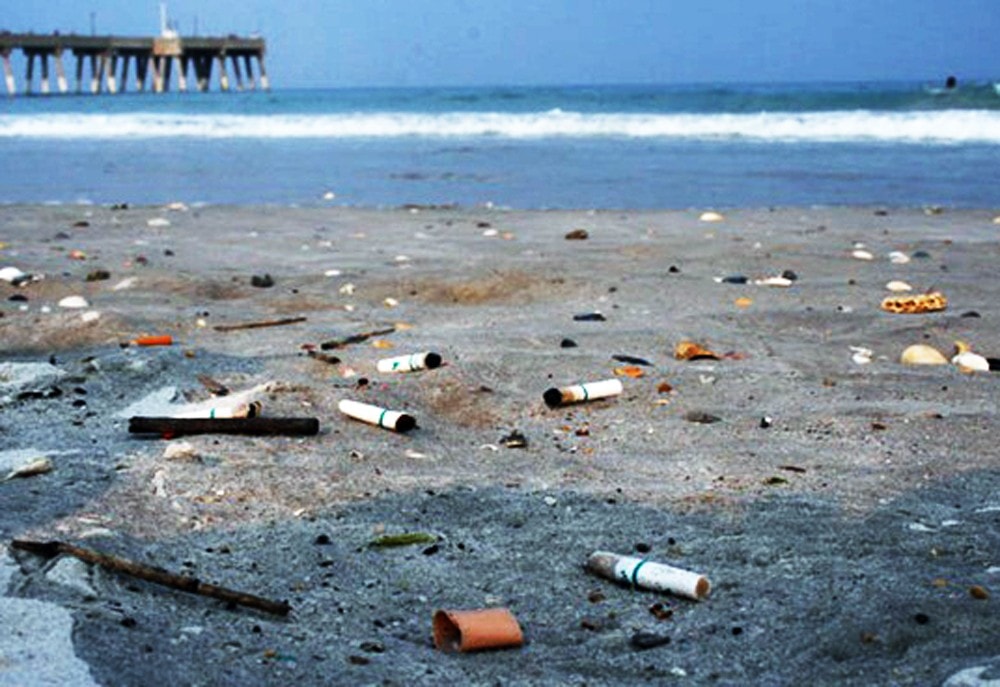
Besides its harmful effects on health, tobacco also contributes significantly to environmental damage. Cigarette butts and packaging generate a huge amount of waste; it is estimated that up to 4.5 trillion cigarette butts are discarded into the environment each year.
Besides being dirty waste, cigarette butts also harm aquatic life if left on beaches, rivers, lakes, or washed down drains because it takes 5-7 years for them to decompose completely.
Each year, an estimated 1.4% of forest area is destroyed for timber used in drying tobacco, in addition to being used to build drying ovens, make cigarette paper, and cigarette packaging.
The tobacco manufacturing process releases a large amount of waste into the environment, including solvents, coal sludge, oil, resins, paper and wood, as well as other toxic chemical waste.
Tobacco plants are heavy soil nutrient users. No other plant absorbs as much soil nutrients (potassium, phosphorus, and nitrogen) as tobacco, leading to increasingly rapid soil erosion due to soil degradation.
Tobacco cultivation requires the use of many types of pesticides and herbicides. The toxic substances in these chemicals seep into and accumulate, polluting water sources and soil. In addition, cigarette butts can be one of the causes of forest fires and large-scale conflagrations because they tend to burn for a long time and smolder.
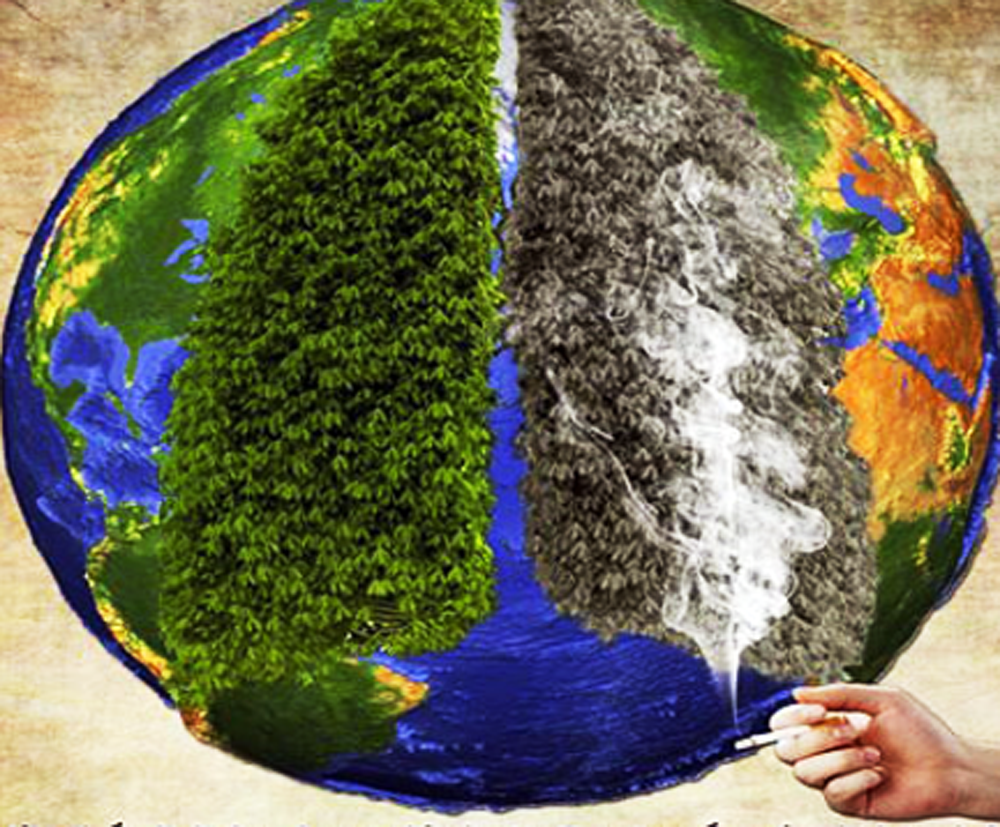
The World Health Organization recommends that there is no safe level of exposure to secondhand smoke, so to protect public health from the harmful effects of secondhand smoke exposure, indoor air must be completely smoke-free.
Similarly, the Law on Prevention and Control of Tobacco Harm, enacted by the National Assembly on June 18, 2012, states that "All citizens have the right to live and work in a smoke-free environment, and smokers are required not to smoke in places where smoking is prohibited," such as healthcare facilities, schools, workplaces, entertainment venues, and areas with a high risk of fire and explosion.
Tobacco causes many diseases and deaths, but these are entirely preventable if everyone strictly adheres to the regulations of the Law on Prevention and Control of Tobacco Harm.
Establishing smoke-free environments has been proven to be a simple and effective approach to preventing exposure to and harm associated with tobacco. Therefore, working together to create smoke-free environments is an effective measure to protect everyone from exposure to tobacco smoke.


