
Farmers face difficulties due to 'discontinuous' field roads.
A concrete rural road in Vinh Loc ward is under construction, but a section had to be excavated due to obstacles related to agricultural land that had not been agreed upon with local residents. Nearly a year has passed, and the road remains interrupted, leading to numerous problems for production and transportation.
The road is unfinished, and the drainage ditch is "cut in pieces".
In early April, in the Dong Trot area of Thai Hoc hamlet (Vinh Loc ward, Nghe An province), many corn fields were ready for harvest. However, the only road leading to this area remained unfinished and "broken" midway. Not only the road, but the irrigation canal running along the construction site was also interrupted, directly affecting irrigation. Therefore, the transportation of agricultural products and the movement of people faced many difficulties.
"I don't understand why the road was left unfinished like that. Not only is production affected, but transportation is also dangerous and looks very unsightly," said Ms. Tran Thi Loan (56 years old), expressing her frustration.
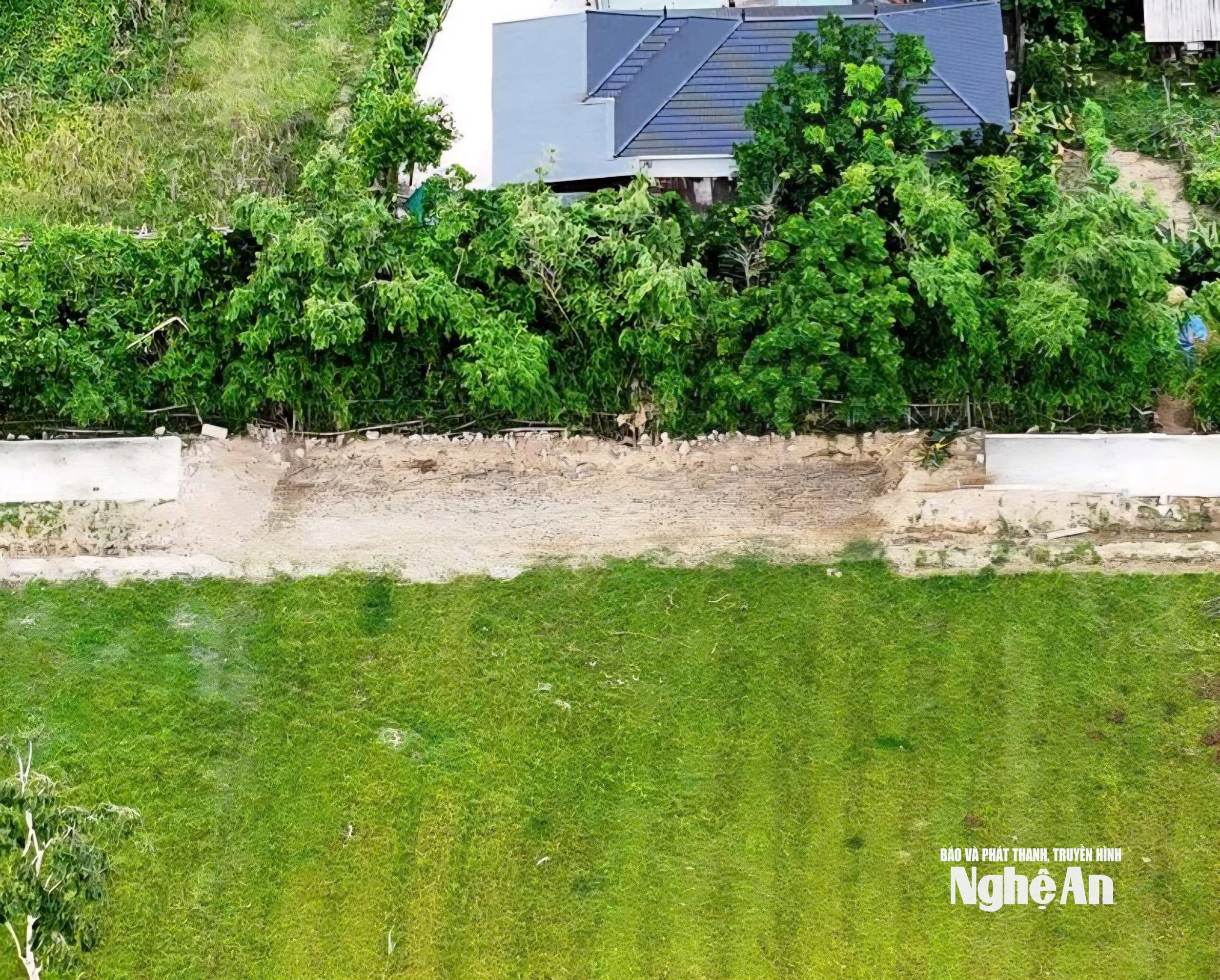
According to our investigation, in June 2025, a nearly 350-meter-long, approximately 4-meter-wide concrete road was under construction, with Thai Hoc Hamlet as the investor. Of this, 140 tons of cement were provided by the former Nghi Thai commune, with the remainder mobilized through social contributions from local residents. The road follows the Dong Trot area, bordering the agricultural production area of Thai Hoc Hamlet on one side and the residential area of Thai Hung Hamlet on the other. However, when the embankment was completed, two households with land in the area protested, claiming that construction was taking place on their agricultural land without their consent or compensation.
Subsequently, the developer was forced to use machinery to excavate and remove the entire section of the roadbed that passed through the land of the two households. The remaining part of the road continued to be constructed, resulting in the road being "broken" when it passed through this area.
Notably, the excavated section is over 22 meters long and dug deep without any barriers or warning signs, posing a potential safety hazard. "Especially at night, if you don't know the way, it's very easy to fall into the hole," said a resident living near the area.
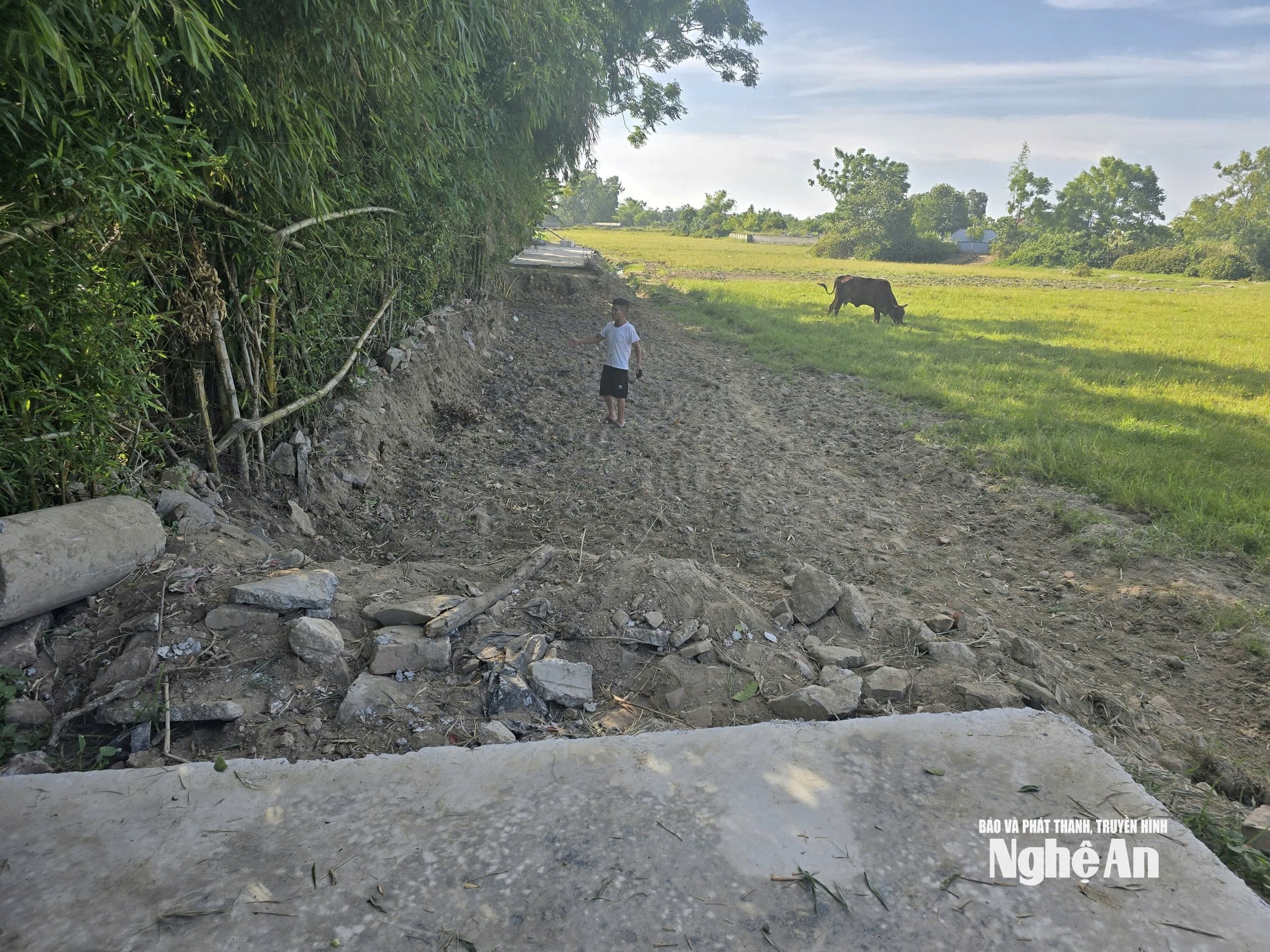
The issue has dragged on for nearly a year but has yet to be resolved. Both households whose land is affected, Ms. Vuong Thi Loan and Mr. Vuong Dinh Khanh, claim that the road construction has encroached on their family's farmland.
Ms. Vuong Thi Loan (65 years old), residing in Thai Hoc ward, stated that her family owns a rice field measuring 360 square meters.2 In the Dong Trot area, they have been cultivating the land for decades. “This field is very fertile; we usually use it to transplant rice seedlings and grow crops. When they built the road, they didn't ask for permission. We only found out in June 2025, when the road foundation was completed, so we requested that they remove the part of the road that runs through our fields,” said Mrs. Loan, asserting that her family has cultivated this field for over 40 years, and previously there had never been a road, only a small irrigation ditch.
Similarly to Ms. Loan, Mr. Vuong Dinh Khanh (65 years old), residing in Thai Hoc ward, stated that previously, this area only had irrigation ditches for agricultural production and lacked roads. The lack of coordination in road construction has affected his family's rights.
"After the road was removed, the irrigation ditch was also affected. Every time it rains, water flows into the fields, making farming very difficult," Mr. Khanh said.
The two households stated that they had repeatedly submitted petitions to the Vinh Loc Ward People's Committee, requesting that their issue be considered and resolved.
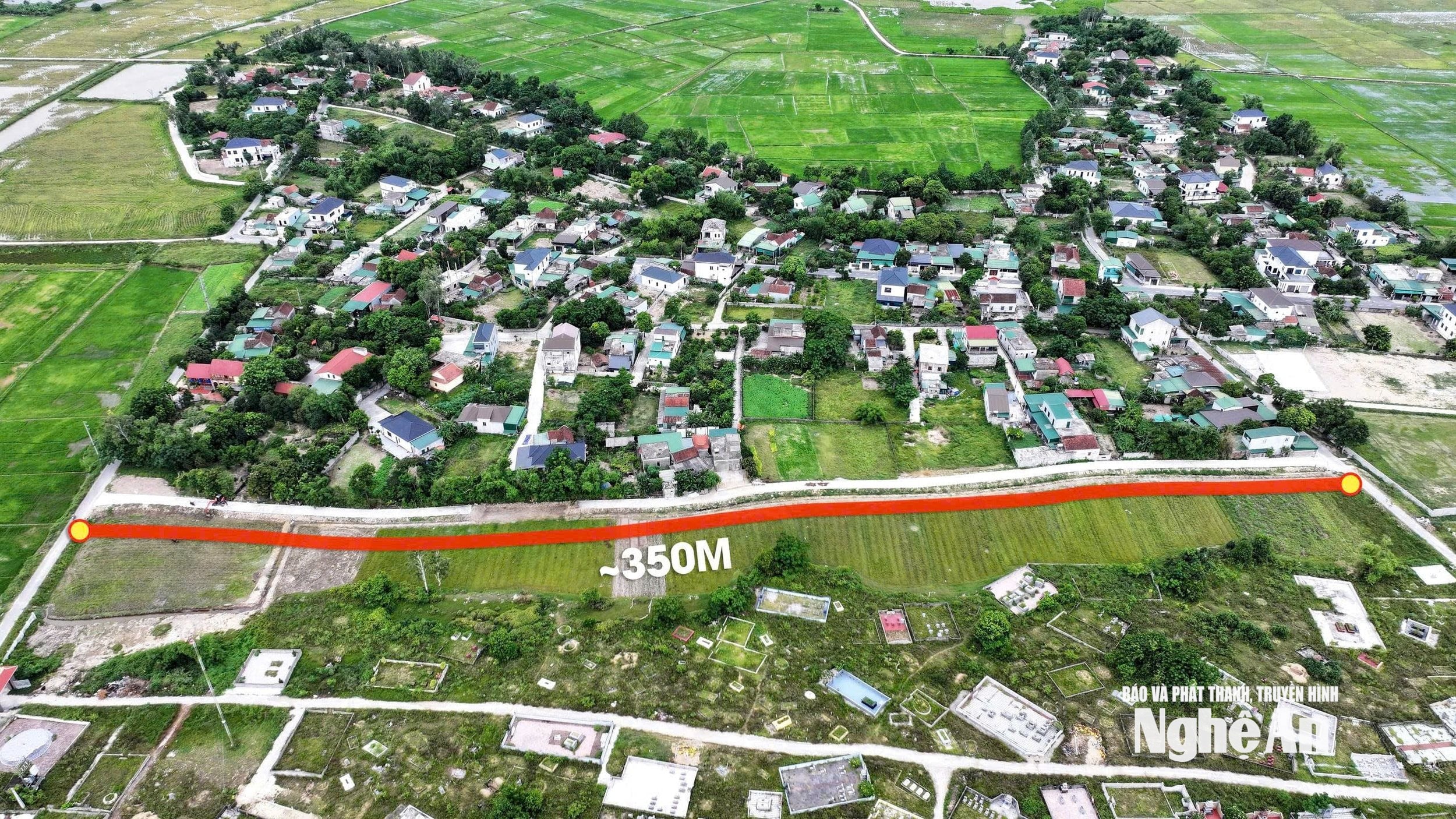
The project is stalled due to compensation issues.
Regarding this matter, a leader of the Vinh Loc Ward People's Committee stated: "This road was constructed during the implementation of Directive 08 of the Provincial Party Committee on land consolidation and exchange. After receiving petitions from residents, the Vinh Loc Ward People's Committee worked with Thai Hoc Hamlet and Nghi Thai Commune (formerly). Upon reviewing and checking the records, it was found that this road is included in the planning. The current situation shows that construction has begun from Thai Hoc Hamlet to Thai Hung residential area, but it has stopped at the land of two households and cannot continue."
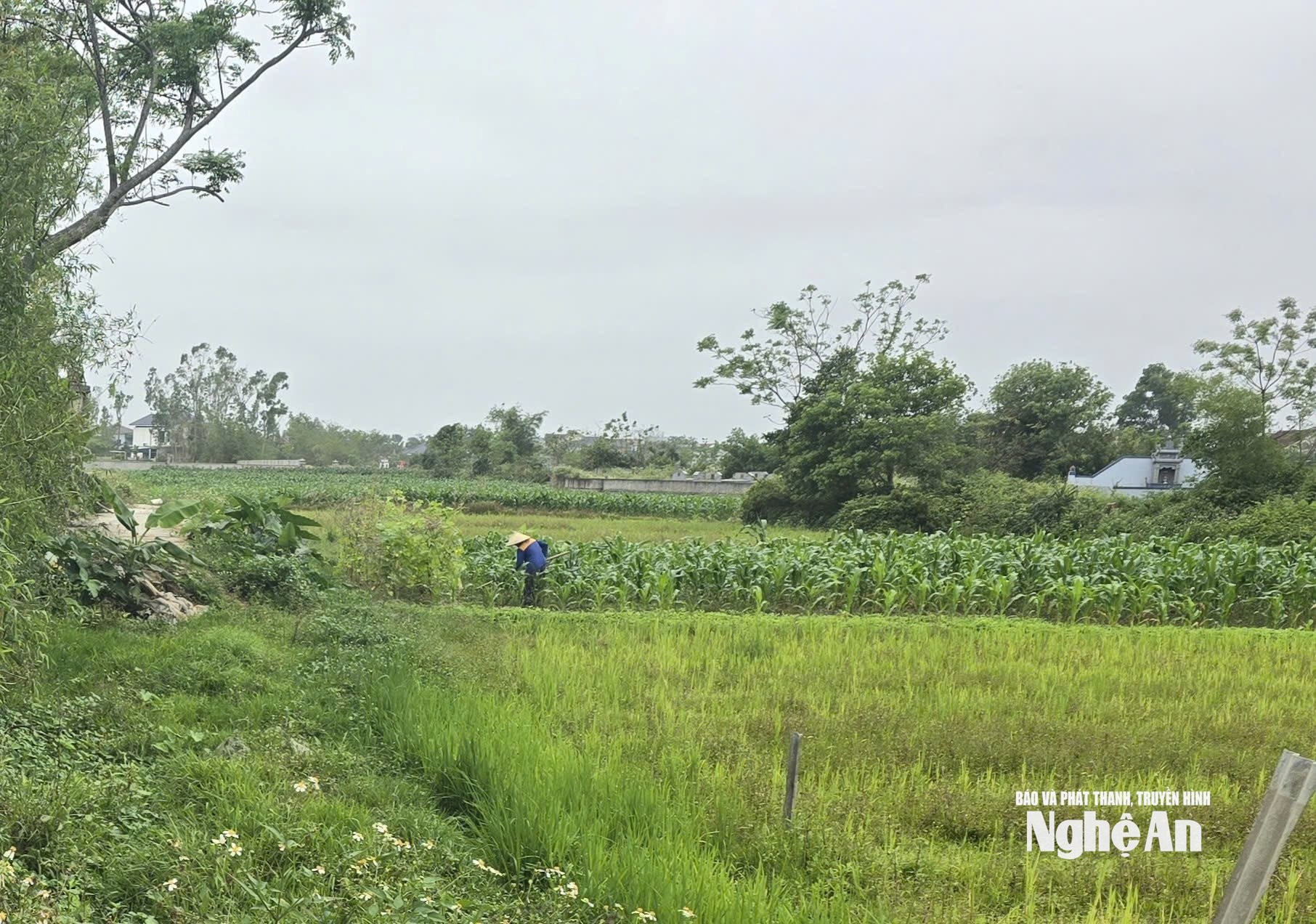
According to the ward leaders, the purpose of building the road is to serve the production and transportation needs of the people, with no element of self-interest. During the implementation process, 10 households agreed to exchange land, while 2 households have not yet agreed and are demanding monetary compensation.
"Currently, the ward has requested the relevant departments to review the documents and plans related to soliciting public opinion during the implementation process," this person said.
Meanwhile, Mr. Nguyen Ngoc Nguyen, head of the Thai Hoc block in Vinh Loc ward, said that before implementation, the block had held several meetings with residents. The proposed plan was to consolidate and exchange land plots to compensate for the affected land. "All households with land along the road agreed, except for these two households who did not accept, only requesting monetary compensation. However, the block's funding comes from social contributions, and there are no funds available for payment, so it cannot be implemented," Mr. Nguyen said.
The fact that an agricultural road serving production has been "disrupted" for nearly a year not only causes difficulties for the people but also poses a potential safety risk and wastes invested resources. While the authorities argue that the project is included in the planning and serves the common good, the people whose land is affected demand that their land rights be protected. This lack of consensus in the implementation process is leaving the project unfinished.
The issue is that a concrete solution is needed soon, one that ensures the legitimate rights of the people, avoids wasting resources on the project, and addresses shortcomings in the implementation process to prevent similar situations from recurring.


