
Farmers in Nam Dan are accelerating the production of OCOP products to serve the Lunar New Year.
(Baonghean.vn) - The period leading up to the Lunar New Year is also when people in Nam Dan district accelerate the harvesting and consumption of OCOP-certified agricultural products to meet the increased consumer demand. At the same time, this is also the time to prepare raw materials for the next production season.
Speed up raw material harvesting.
Nam Dan district's cassava starch has been recognized as meeting OCOP standards since 2022, with the main cassava starch production area concentrated in Nam Anh commune. Here, in addition to rice, corn, and potatoes, farmers in Nam Anh commune also earn a significant income from growing cassava. After 11 months of cultivation, cassava is harvested from November to the end of February each year. Of the 300 hectares of cassava grown in Nam Dan district, over 250 hectares are in Nam Anh commune alone. This plant thrives in the sandy loam soil of Nam Dan's fields, especially in the Nam Anh area at the foot of Dai Hue mountain.
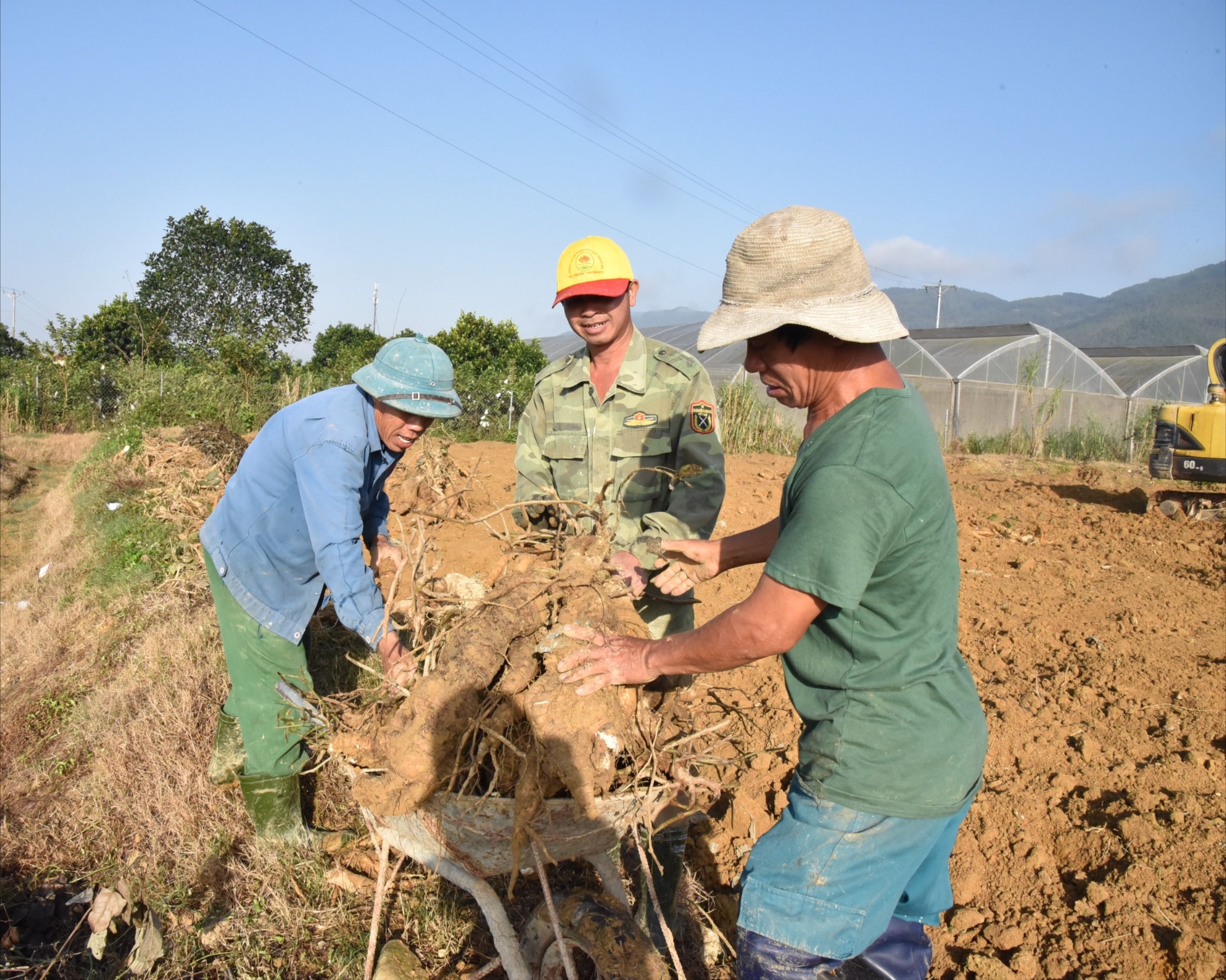
In the 2023 crop season, Mr. Tran Dinh Son's household in Hamlet 4, Nam Anh Commune, planted 14 hectares of kudzu. During the harvest season, he hired an excavator to help dig up the kudzu tubers. Mr. Son said that this year, farmers had a bumper crop of kudzu, with large tubers and almost no pests or diseases thanks to the warm weather and little rain. Kudzu growers in Nam Anh reported a good harvest, with many plants yielding 20-30 kg of tubers. With the current purchase price of 19,000 VND/kg from Dai Hue Cooperative, each plant brings in an income of 400,000 - 600,000 VND.
Mr. Bui Van Xuan cultivates 2 hectares of kudzu. He said that this year's kudzu harvest, close to Tet (Lunar New Year), provided his family with a considerable income for the holiday. At current prices, each hectare planted with approximately 180-200 kudzu plants will yield an income of about 100 million VND/hectare. In Nam Anh commune, many households earn high incomes from growing kudzu, such as Mr. Nguyen Huu Huong in Hamlet 5; and the households of Mr. Bui Van Xuan, Mr. Nguyen Huu Ha, Mr. Doan Que Long, and Mr. Tran Van Hai in Hamlet 4. Some households cultivate 1-3 sao (approximately 1000-300 square meters), while others cultivate 1.5-3 hectares.
For the 2023 harvest, expected to be completed in early 2024, Nam Dan district is projected to produce nearly 200 tons of fresh kudzu root. After harvesting, the kudzu is washed, ground, and filtered to extract the essence, producing kudzu starch that meets the OCOP 3-star provincial standard. During the Tet holiday, demand increases sharply, so Mr. Son's kudzu starch production facility operates at full capacity, hiring four more workers than usual to meet Tet orders.
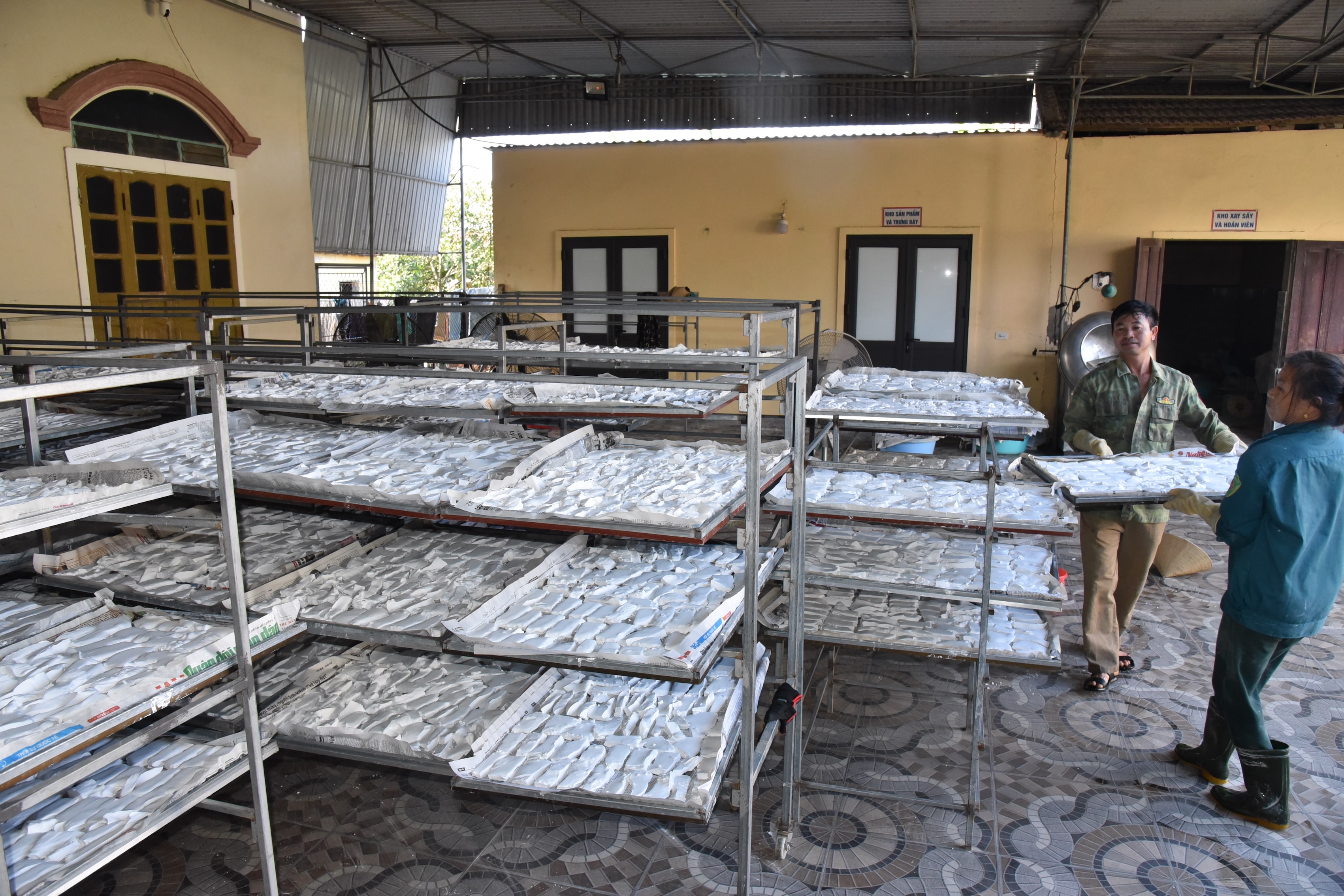
OCOP agricultural products are selling well.
For many years now, with its advantages in agricultural production, coupled with Nam Dan district's promotion of science and technology application, and the dynamic and adaptable nature of its people to market demands, the district's agricultural economy has flourished in a commodity-oriented direction, especially in the development of OCOP-certified agricultural products. Currently, Nam Dan district leads the entire province in both the quantity and quality of OCOP products, with a total of 73 products achieving 3 to 4-star ratings. These are mainly processed agricultural products such as cassava starch, soy sauce, pork sausage, honey, brown rice, rice vermicelli, salt-cured chicken, and products made from lotus from Uncle Ho's hometown…
One of Nam Dan's signature products is soy sauce, traditionally produced by many farming households. For example, Ms. Chu Thi Ha in Hamlet 4, Nam Giang Commune, has been familiar with the taste of Nam Dan soy sauce made from soybeans by her mother since childhood. She has developed her family's product into a marketable commodity, introducing it to consumers nationwide. Her mother, Ms. Nguyen Thi Tuyet, now 85 years old, has difficulty walking due to old age and weakness, but she still "visits" the soy sauce fermentation vats daily, working alongside her daughter in the production process of this distinctive Nam Dan soy sauce. Ms. Tuyet has passed on the meticulous, diligent, and experienced techniques of soy sauce production to her daughter, always supporting and encouraging her to preserve the family's ancestral craft.
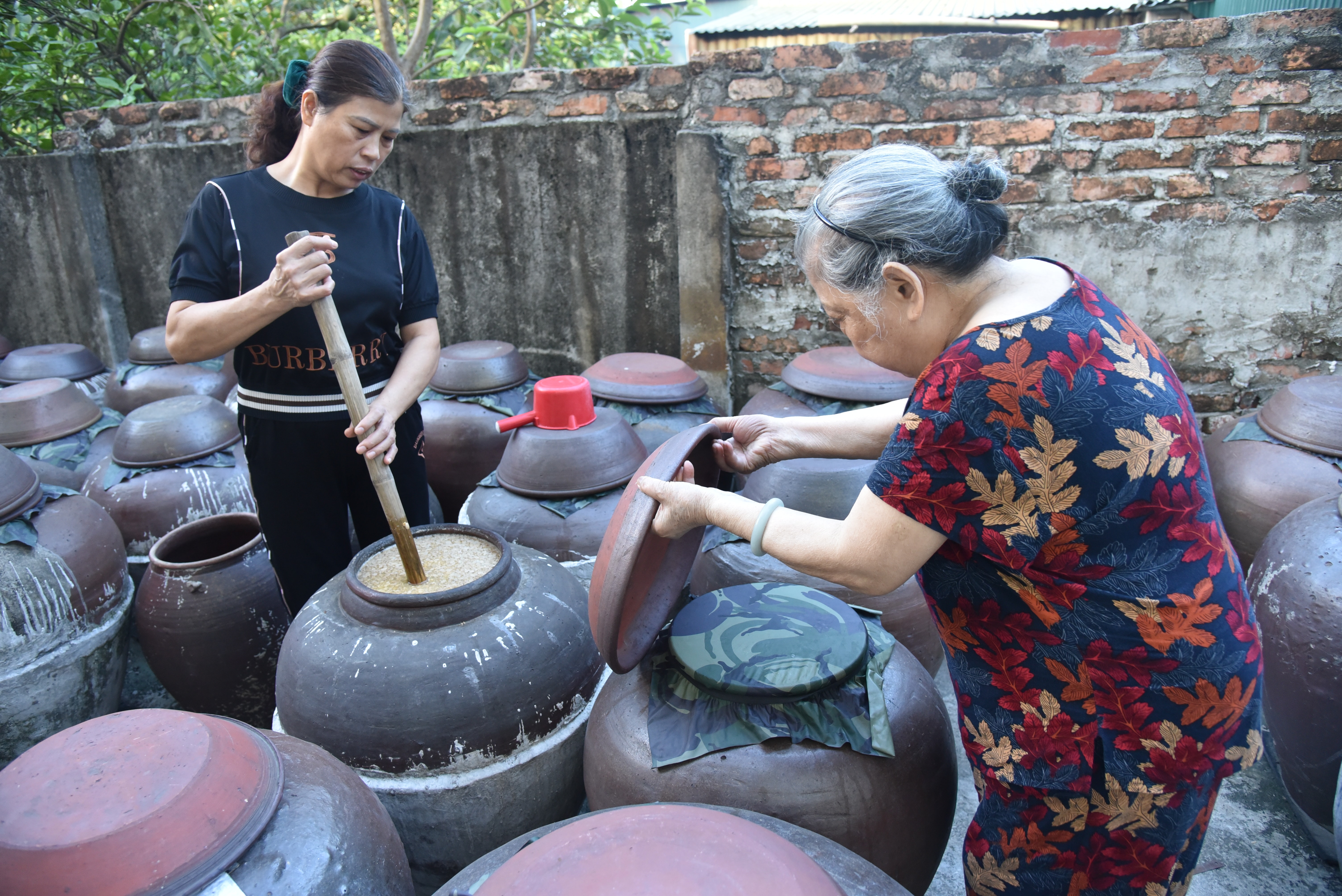
Currently, with the dedication and coordinated efforts of all levels and sectors in preserving and developing the OCOP brand of Nam Dan soy sauce, Ms. Chu Thi Ha's production facility is gradually bringing its products to consumers nationwide. During the period leading up to Tet (Lunar New Year), soy sauce orders increase sharply, doubling or tripling compared to normal days. Each day, she ships 30-50 liters of soy sauce to districts within the province and other provinces nationwide, with peak days reaching nearly 100 liters. "Around the 27th of the lunar month, we temporarily stop fulfilling Tet orders, which is also when the jars of soy sauce are almost empty. After Tet, the family starts making the next batches of soy sauce," Ms. Chu Thi Ha shared.
Ms. Ha expressed that, in addition to supplying products to distributors and grocery stores in the commune, district, and some neighboring districts, and selling to tourists and passersby in the area, she is making efforts to promote her products on social media platforms to reach customers in provinces and cities nationwide, especially those from Nam Dan who live and work far from home. Ms. Ho Thi Huong – Chairwoman of the Board of Directors and Director of the Sa Nam Huong Duong Agricultural Production and Processing Cooperative – shared: In the two months leading up to the Lunar New Year, the number of Sa Nam soy sauce orders from customers increased two to three times compared to normal days. Not only is it consumed domestically within the province, but it is also spreading to many other provinces and cities, and in the future, Sa Nam soy sauce will be available in many supermarkets nationwide.
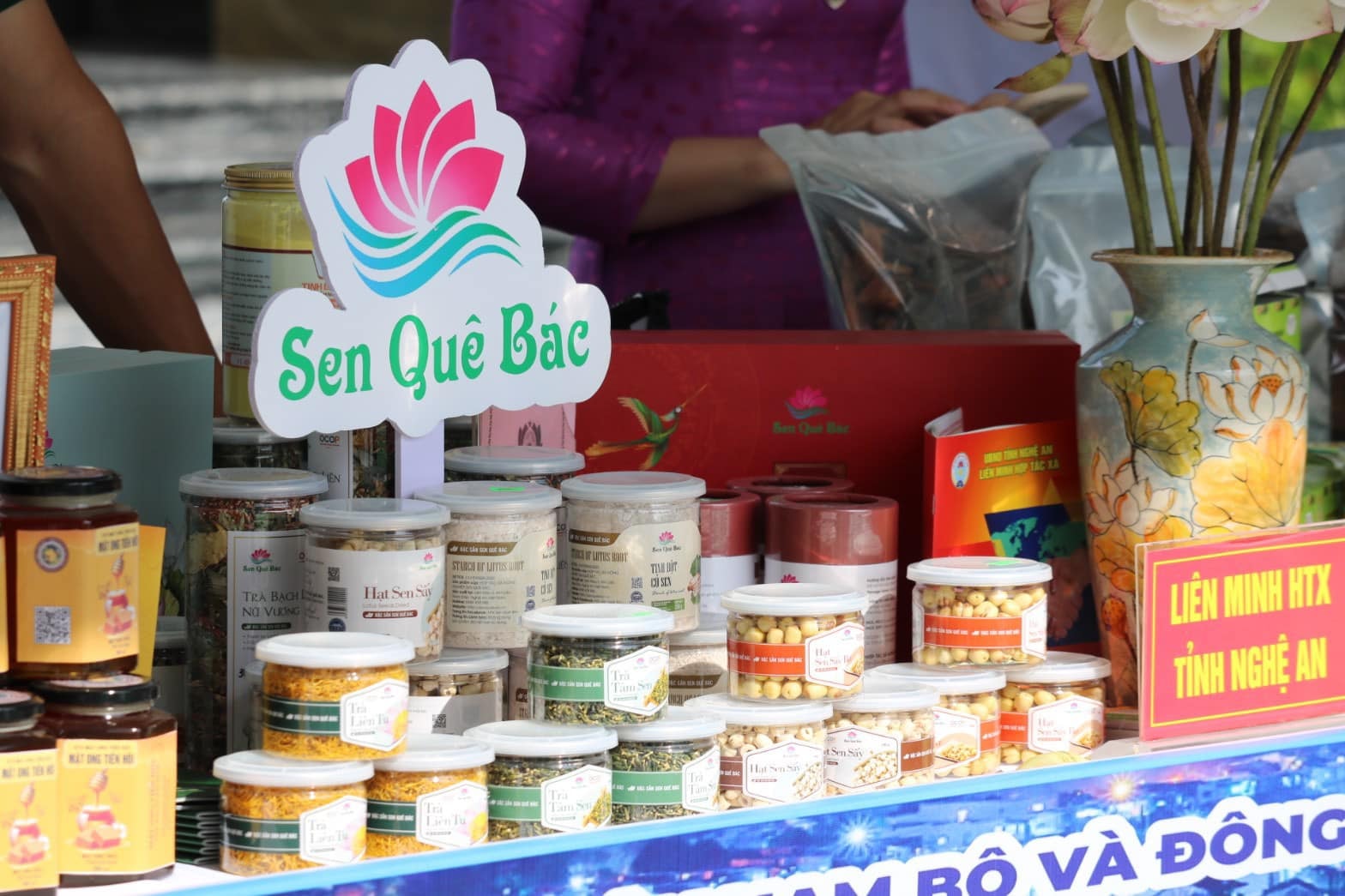
Furthermore, OCOP products made from lotus, with their good quality and attractive packaging, have become a popular Tet gift choice. With 27 lotus varieties grown in the birthplace of President Ho Chi Minh in various communes such as Nam Anh, Nam Thanh, Nam Giang, Thuong Tan Loc, and Khanh Son, farmers in Nam Dan district have processed lotus into many valuable and healthy products, including 11 OCOP-certified products such as lotus leaf tea, lotus heart tea, and lotus jam.
Mr. Nguyen Hong Son, Deputy Secretary of the District Party Committee and Chairman of the People's Committee of Nam Dan District, said that the district always pays attention to supporting people in developing OCOP products that ensure quality and have unique local characteristics. Not only serving consumption, OCOP products also aim to serve tourism, contributing to increasing people's income. Therefore, the products selected for the OCOP product development roadmap are key products with established brands and markets within the district, with the aim of expanding to markets outside the district and province. Currently, Nam Dan district has 19 out of 19 communes and towns with OCOP products, totaling 73 products.


