
Farmers in Nghe An province stayed in the fields throughout the Tet holiday to ensure timely planting.
During the 2026 New Year's holiday, in many fields of Nghe An province, farmers were still diligently working in their fields. The spring planting season doesn't wait; delays in sowing and planting will directly affect yield and the harvest.
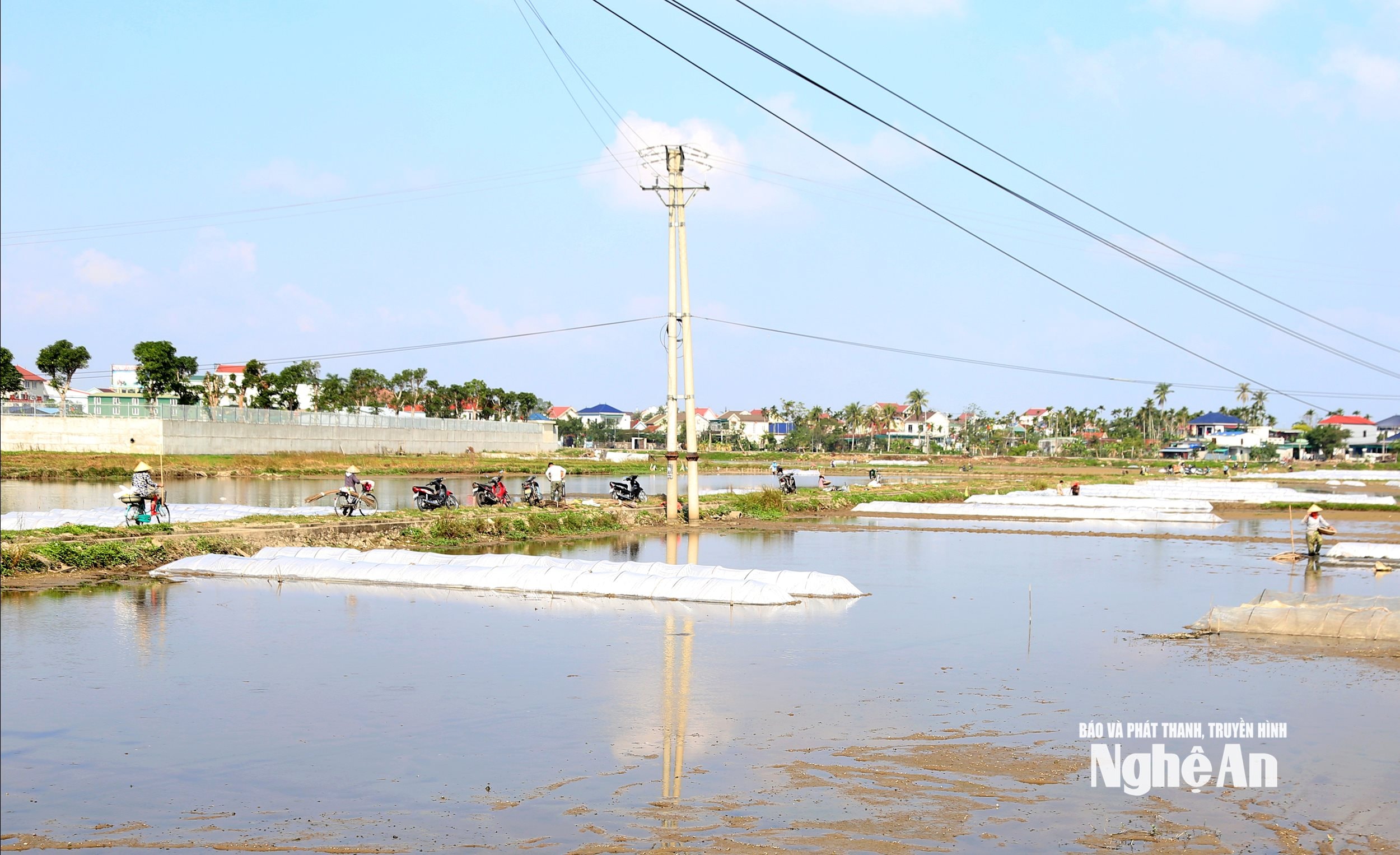
In the early days of the new year, the atmosphere of hard work continues in the fields of many localities. People are tilling the land, irrigating, sowing seedlings, and tending to each row of seedlings… everyone is busy and working in harmony. The Tet holiday did not interrupt the work in the fields. Under the cold weather, the figures of people diligently working in the fields create a simple yet warm picture of labor.
According to many farmers, the spring crop is the most important production season of the year. The growing season is long, and weather conditions are relatively favorable; adhering to the planting schedule will yield high productivity. Therefore, even though it coincides with the New Year's holiday, farmers proactively arrange their family affairs to dedicate time to their fields.
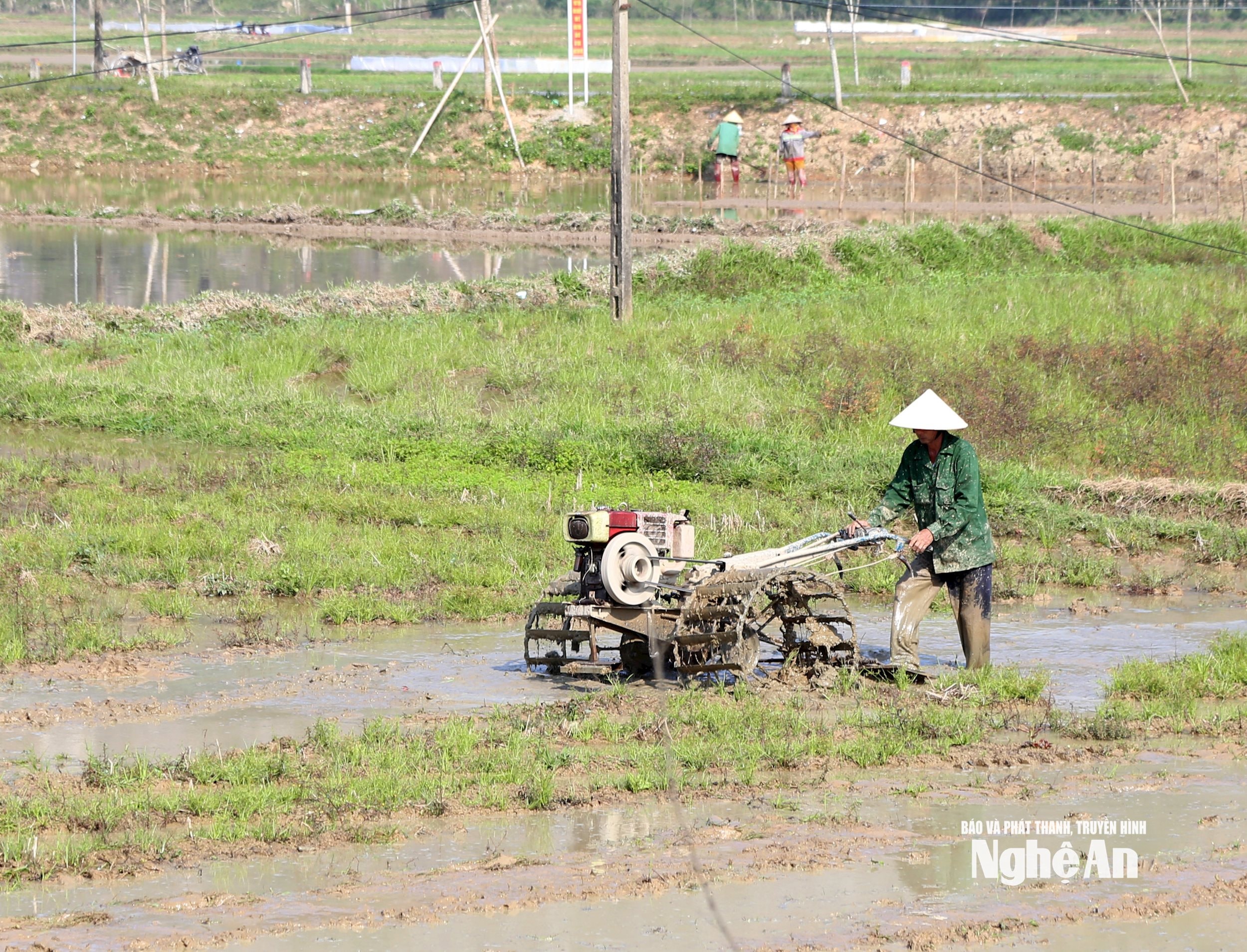
Present in the fields from early morning on January 1-2, 2026, Mr. Nguyen Van Huong from Minh Chau commune, a farmer with more than 4 sao (approximately 0.4 hectares) of rice paddies, shared: “Even though it's the New Year's holiday, I still take the time to drive my machine to the fields to prepare the land for my family and neighbors. After plowing, the fields still need to be soaked with water for a sufficient amount of time before planting, so even a delay of a few days means the soil will not meet the technical requirements.”
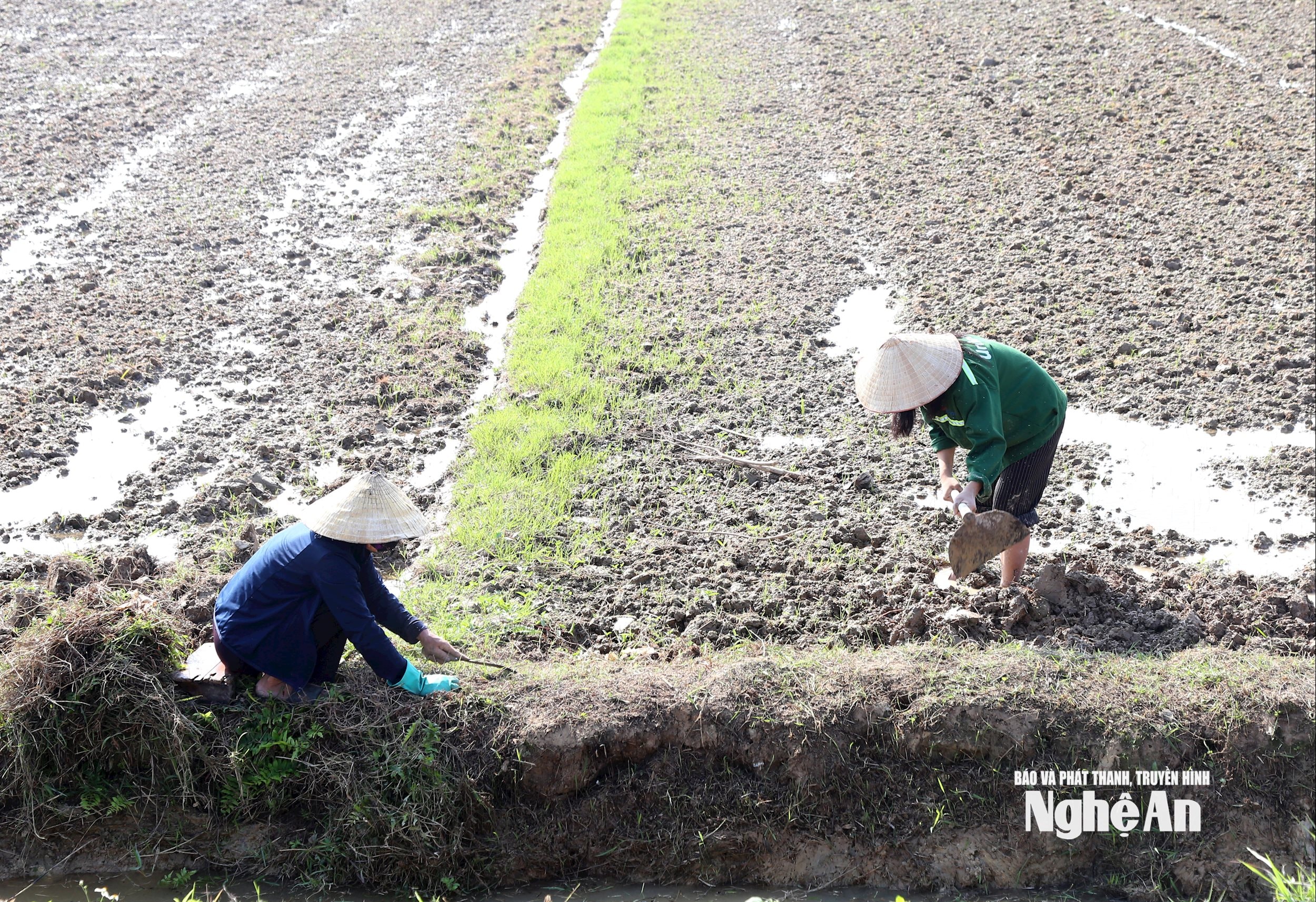
Besides focusing on tilling the land, many farmers are also taking advantage of the time to dig and reinforce field boundaries, clear weeds, build embankments to retain water, and prepare for the upcoming planting season. Ms. Nguyen Thi Lan, from Van Tu commune, said that even though she is on a long Tet holiday, she and her children are still going to the fields to repair the field boundaries, clear weeds, and get ready for the spring planting season.
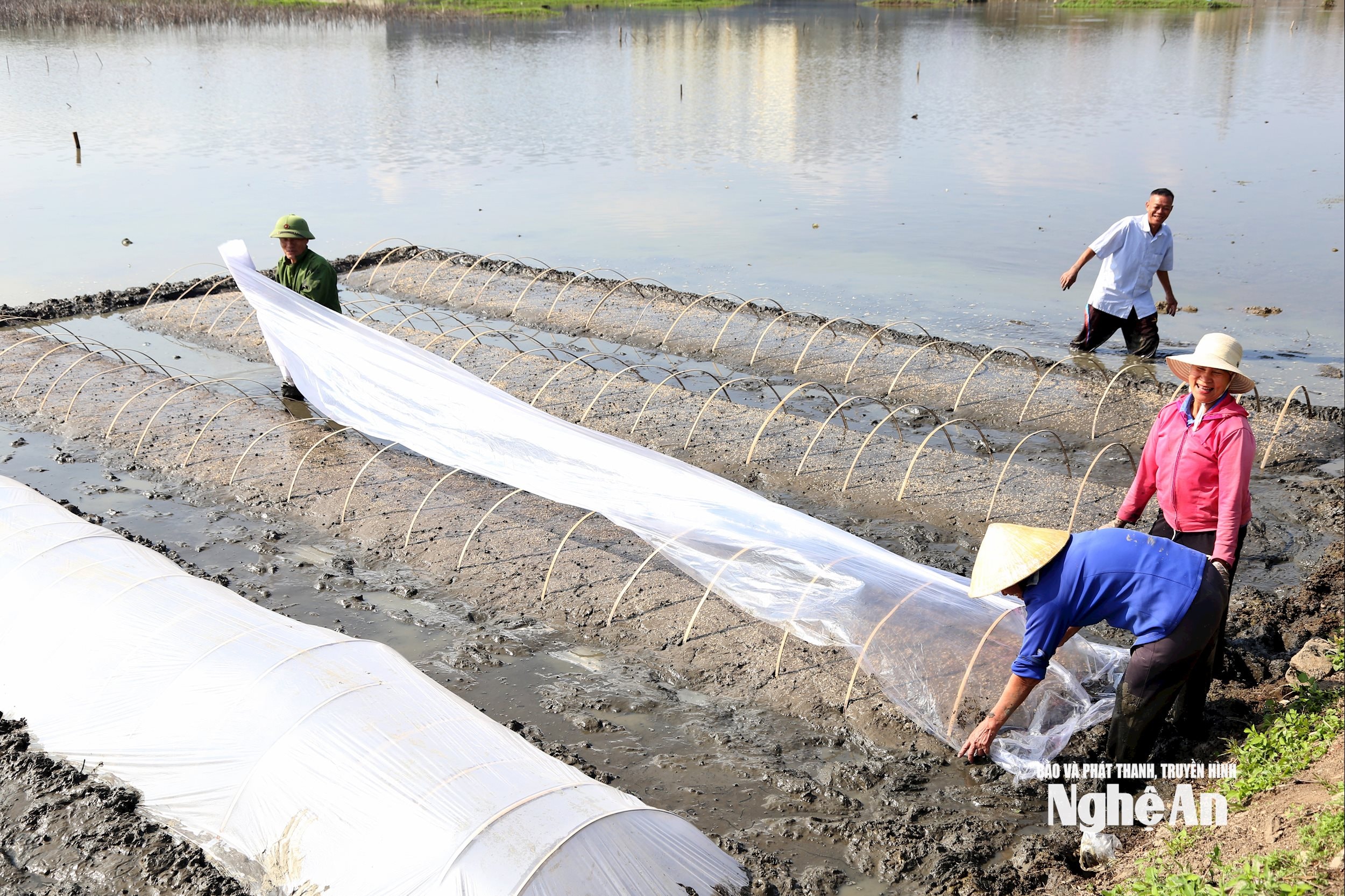
Meanwhile, in the fields of Dien Chau commune, farmers are busily preparing the land for sowing rice seedlings for the spring crop. Mr. Dinh Van Lan from the former Dien Ngoc commune said that his family is planting 4 sao (approximately 0.4 hectares) of rice this spring. To ensure safety at every stage, from land preparation to sowing, his family decided to plant the Thai Xuyen rice variety. The entire area of seedlings is carefully covered with plastic sheeting.
"Covering rice seedlings with plastic sheeting is labor-intensive and costly, but it's an effective solution to protect them from the cold, limit rodent damage, help them grow well, and ensure quality for the spring planting season," Mr. Lan shared.
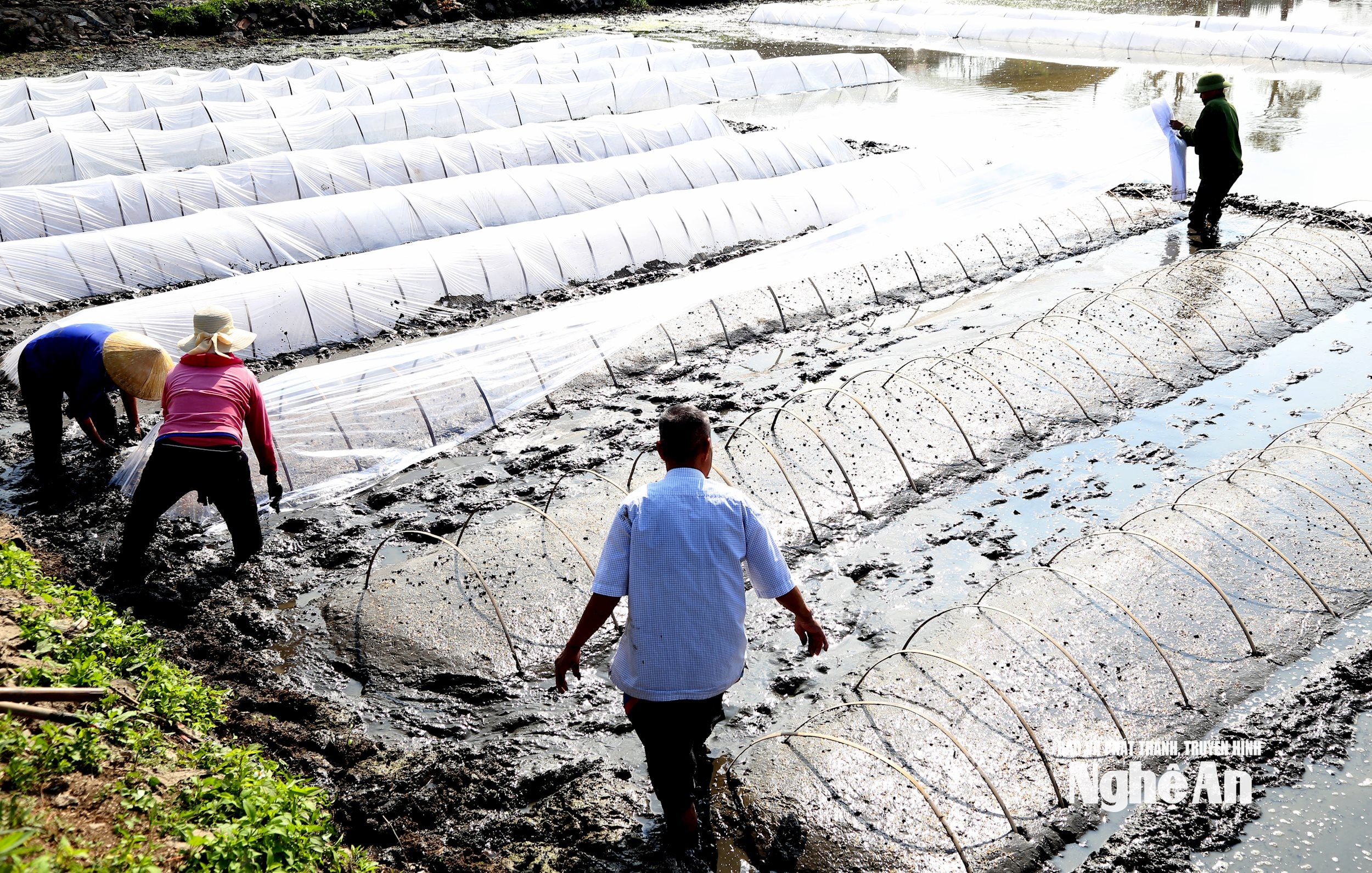
Photo: Xuan Hoang
This spring, Nghe An province aims for a food production target of approximately 1.2 million tons in 2026, including an estimated 75,175 tons from the 2025 winter crop and 708,850 tons from the 2026 spring crop. Accordingly, the province aims to cultivate 90,500 hectares, including 44,600 hectares of hybrid rice and 45,900 hectares of purebred rice.
The agricultural sector advises that the 2026 spring crop production is predicted to face many difficulties due to temperatures being 0.5-1 degrees Celsius lower than the average for the same period in previous years; severe cold spells and frost are expected to appear from the second half of December 2025 and continue strongly in January-February 2026, coinciding with the seedling and transplanting periods, affecting production progress and posing a potential risk of damage. Therefore, farmers need to strictly follow the province's planting schedule to ensure the safe development of the rice crop.
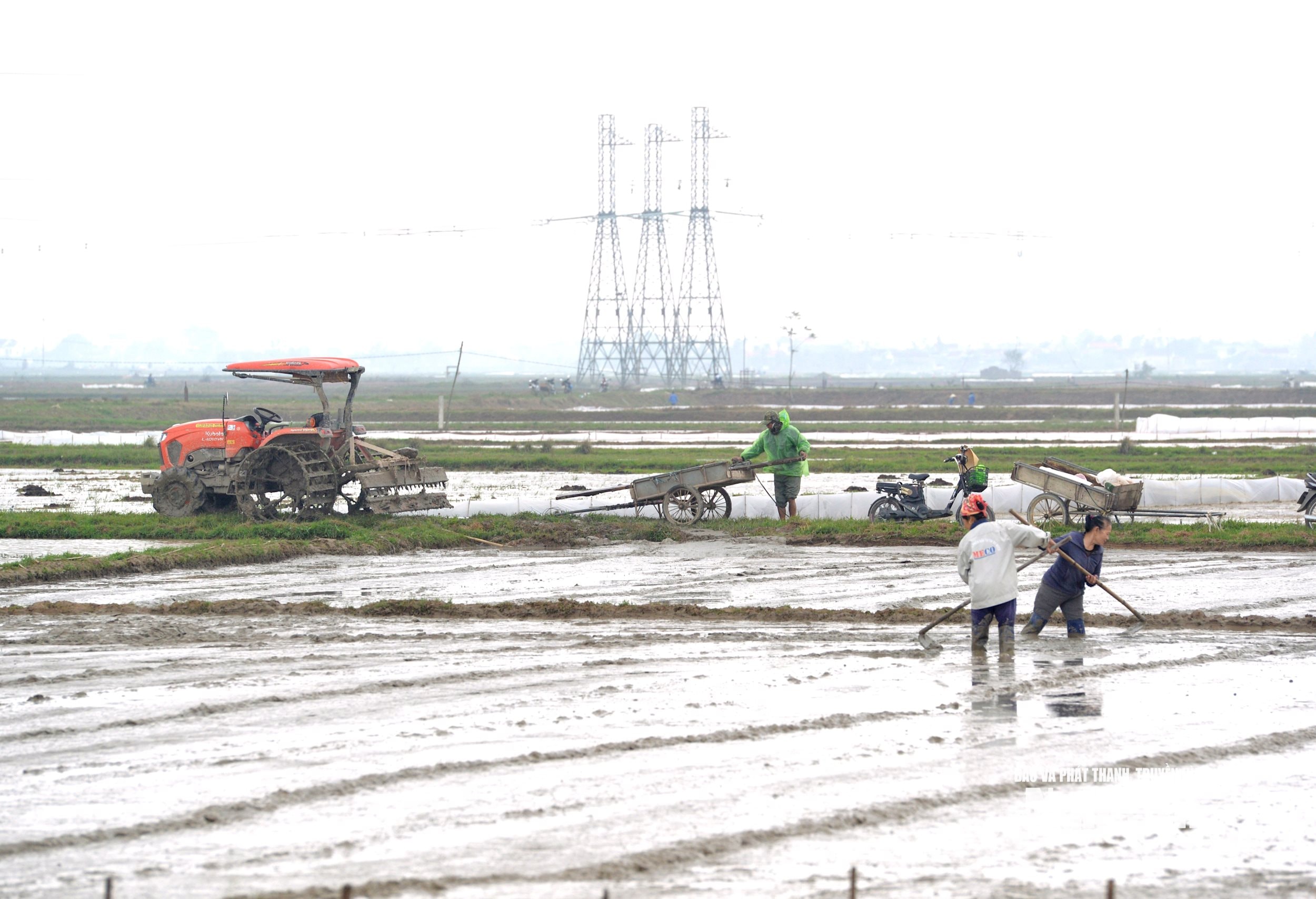
Staying close to the fields not only demonstrates the farmers' production awareness but also reflects a shift in agricultural thinking. Instead of waiting and relying on others, farmers are becoming increasingly proactive in understanding the planting schedule, applying technological advancements, selecting suitable seeds, and preparing all necessary supplies well in advance.
Amidst the atmosphere of people welcoming the new year, the image of farmers diligently working in the fields is not only a story of production, but also a beautiful symbol of labor and a strong bond with the land. This is also the solid foundation for the continued development of agriculture, contributing to building an increasingly prosperous rural area.


