
Farmers in Nghe An province invent rice dryer from memories of poverty and hunger.
At the end of May 2025, Mr. Tran Hoai Nam in Kim Lien commune, Nam Dan district (Nghe An province) created the first rice drying machine in the locality. Not in a laboratory or a modern factory, but right in his own yard, this farmer is gradually realizing his dream of increasing the value of his hometown's rice with the drying machine he invented.
At 60 years old, Mr. Tran Hoai Nam is still covered in mud, rolling up his sleeves in the yard, but in the eyes of the villagers, he is the "engineer of the village." Originally an ordnance soldier, after leaving the army, Mr. Nam worked as an auto mechanic in Vinh City before returning to his hometown to engage in agriculture. But one thing always weighed heavily on his mind: the hardships of the past, the lean season when the rice in the fields only had a few ears of grain, and his parents would harvest each branch, thresh by hand, and roast each grain to make rice for meals to stave off hunger.
.jpg)
“Back then, roasting rice in a cast-iron pan and then pounding it with a mortar and pestle was incredibly hard work. But strangely, the rice cooked from that roasted rice tasted better and smelled more fragrant than rice dried in the sun,” Mr. Nam recounted, his eyes distant. Later, having traveled to many places, from the Mekong Delta to Thailand, he realized a common point: the quality of good rice depends greatly on post-harvest drying technology.
Without hesitation, in 2024, he began researching and developing a rice dryer – something few believed a farmer could do. Without capital, a standard design, or modern equipment, he painstakingly learned the principles, watched videos online, photographed models of dryers from factories, meticulously noted down information in old notebooks, and experimented.
"The difficulty for farmers in inventing things isn't the mindset, but rather the capital and design; otherwise, as long as they understand the principles, they can do it," Mr. Nam shared.
.jpg)
For an entire year, his yard was filled with the constant sounds of harvesting machines, the smell of welding fumes, and piles of scrap metal. He hammered, welded, assembled, tested, and then disassembled and adjusted everything. By the end of May 2025, his first rice dryer officially began operating smoothly. Unexpectedly, his machine was put to the test precisely when Nghe An province was experiencing prolonged periods of unseasonal rain, rendering vast areas of rice unsuitable for drying, causing mold, and even sprouting.
While people were struggling to save their rice crops, Mr. Nam's drying machine became a "lifesaver." "When we heard that Mr. Nam had successfully invented the drying machine, everyone was overjoyed. Thanks to his machine, my 5 tons of rice avoided sprouting," said Mrs. Nguyen Thi Huong from Hung Son hamlet, Kim Lien commune.
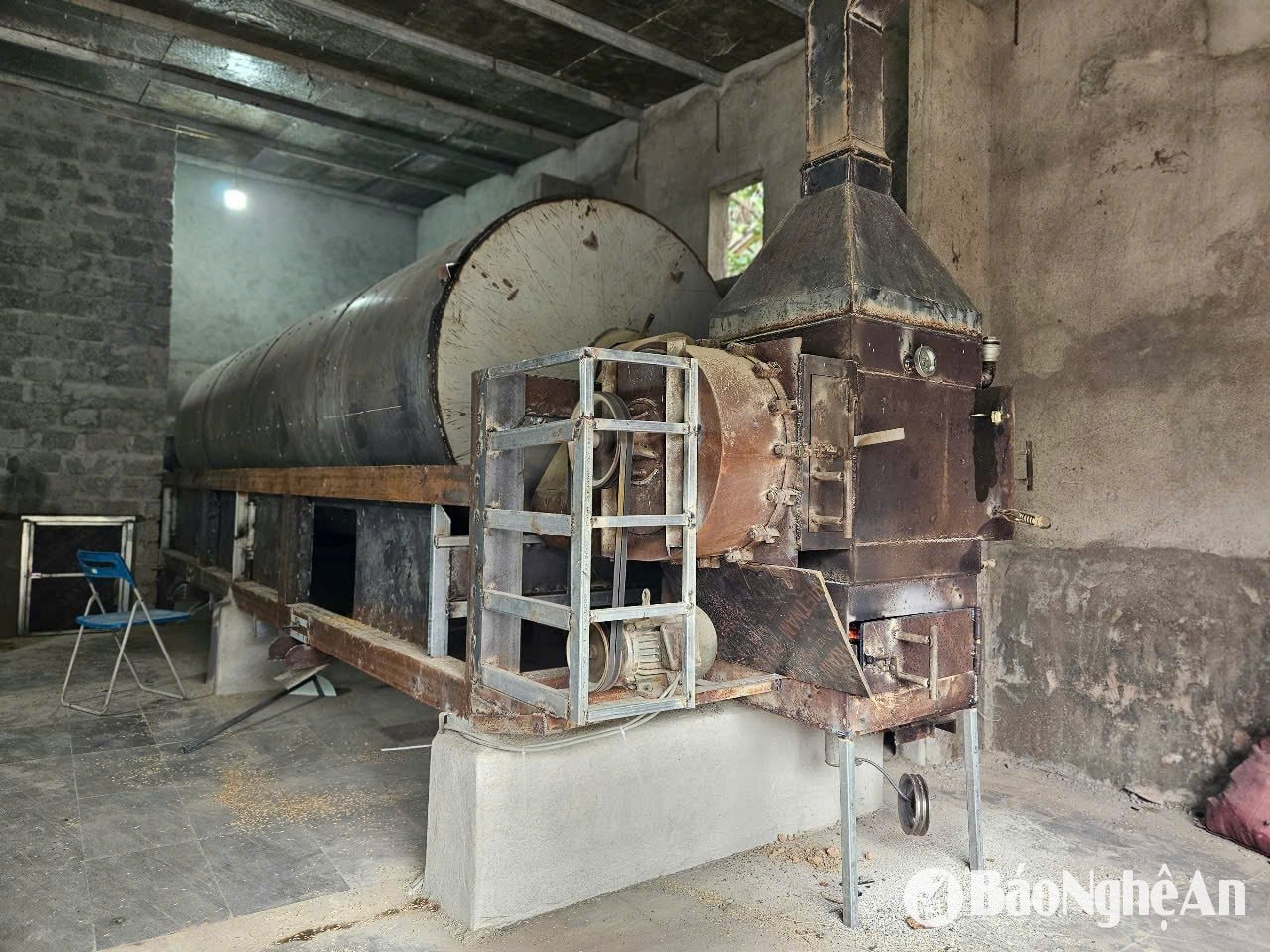
Mr. Nam's rice dryer has a capacity of 1.5 tons per batch, a drying time of 4 hours, and uses charcoal as fuel. However, it is designed with a closed-loop heat collection system, producing no smoke and causing no environmental pollution. The dryer has a fan system that blows hot air, which passes through an inverter and removes moisture to dry the rice grains evenly. Each batch only consumes about 15 kg of firewood and a few kilowatt-hours of electricity, significantly lower than other dryers on the market.
Mr. Nguyen Duc Thuan, a trader specializing in buying and exporting rice, shared: "I took the first batch of rice to try drying it using Mr. Nam's machine. The results were unexpected: the rice reached the ideal moisture level, the grains were fragrant, sticky, firm, beautiful, and yielded more rice than sun-drying. If an automatic pouring and unloading mechanism were added, it would be absolutely fantastic."
.jpg)
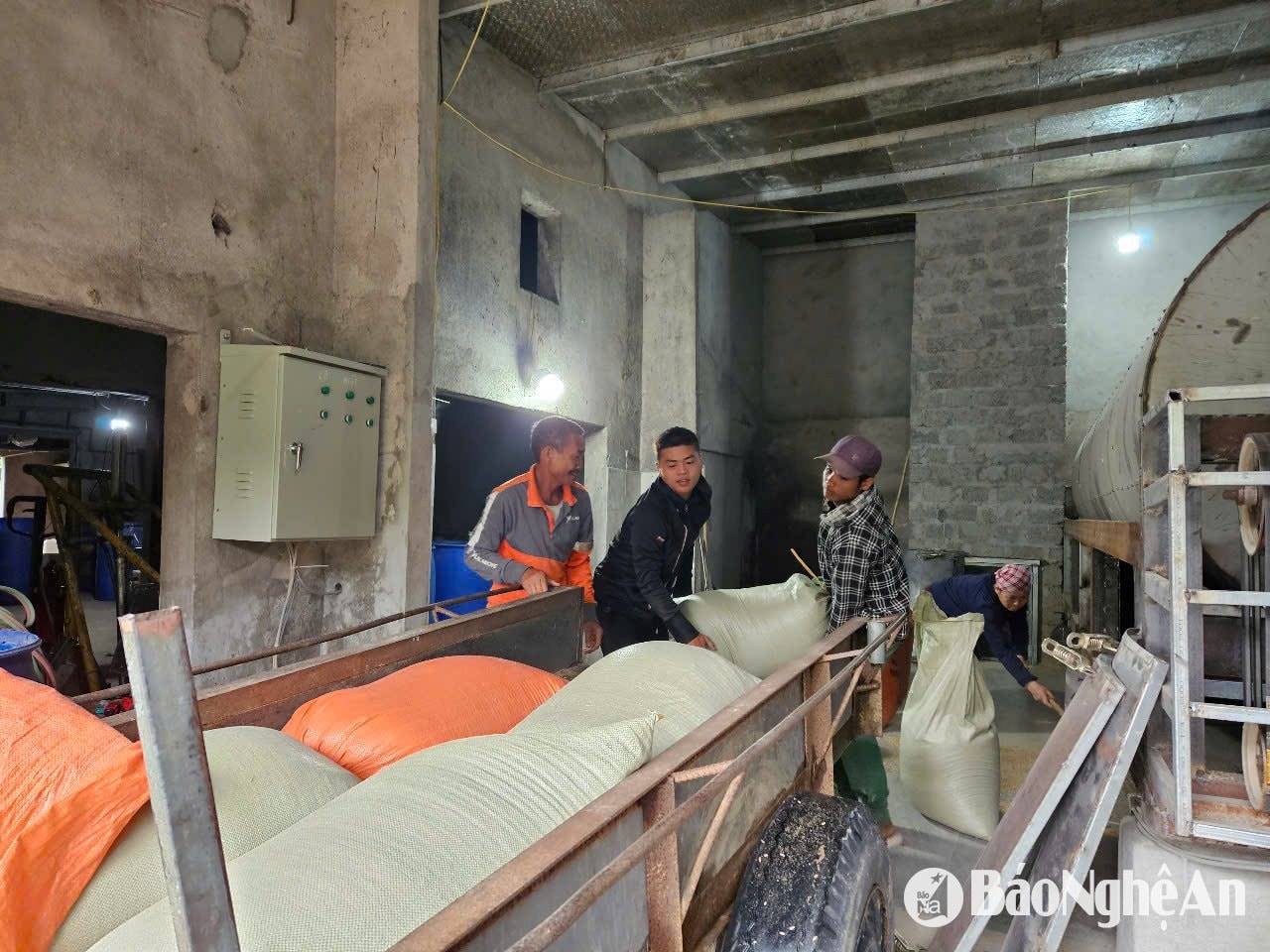
While the machine was undergoing a trial run, the entire village flocked to see it, all expressing their admiration. Some brought sacks of rice to be dried, others took photos and videos to share. Mr. Nam operated the machine while simultaneously adjusting the temperature and monitoring the gauges, ensuring neither too much heat nor too little steam. Despite operating the machine under heavy load and without any help, Mr. Nam never refused any requests from the villagers. He understood that each grain of rice represented the fruits of an entire harvest, and throwing away rice that had been soaked in steam and sprouted due to rain would be heartbreaking.
Beyond just a technical solution, the drying machine has also changed farmers' perceptions of cultivation and post-harvest preservation. "The deliciousness of rice comes from the bran layer. When dried correctly, the rice bran turns into essential oils, which penetrate the rice, making it more chewy and fragrant. Drying also helps kill germs, prevent insect infestation, and increase shelf life," Mr. Nam explained.
.jpg)
Mr. Tran Van Thien, Chairman of the Kim Lien Commune Farmers' Association, affirmed: "Mr. Nam's invention of the drying machine is a great step forward for rice farmers. During the rainy season, without a drying oven, hundreds of tons of rice could be ruined. We are preparing a dossier to propose that he be recognized as a 'Scientist for Farmers'."
As for Mr. Nam, after a year of meticulous work and invention, his only wish is simple: “The machine is currently undergoing trial runs and is gradually being perfected. I am willing to share the entire design and operating procedures of the rice dryer. I only hope that every village and every cooperative has one such dryer, so that people no longer have to worry about the rice grains changing color in the yard during the rainy season, and our local rice can reach further markets.”
Amidst unpredictable weather and the ongoing dilemma of "good harvest, low prices - high prices, poor harvest," Mr. Nam's invention not only dries rice but also proves that farmers can fully master technology and create value from their own fields.


