
Farmers in Nghe An province are applying technology to improve irrigation efficiency for their crops.
As an industry directly affected by complex climate change, prolonged heatwaves, and droughts, farmers in Nghe An have increasingly invested in and applied irrigation technology in production in recent years. This is not only a solution to the water shortage problem but also a revolution in enhancing the value of local agricultural products.
Developing smart irrigation technology
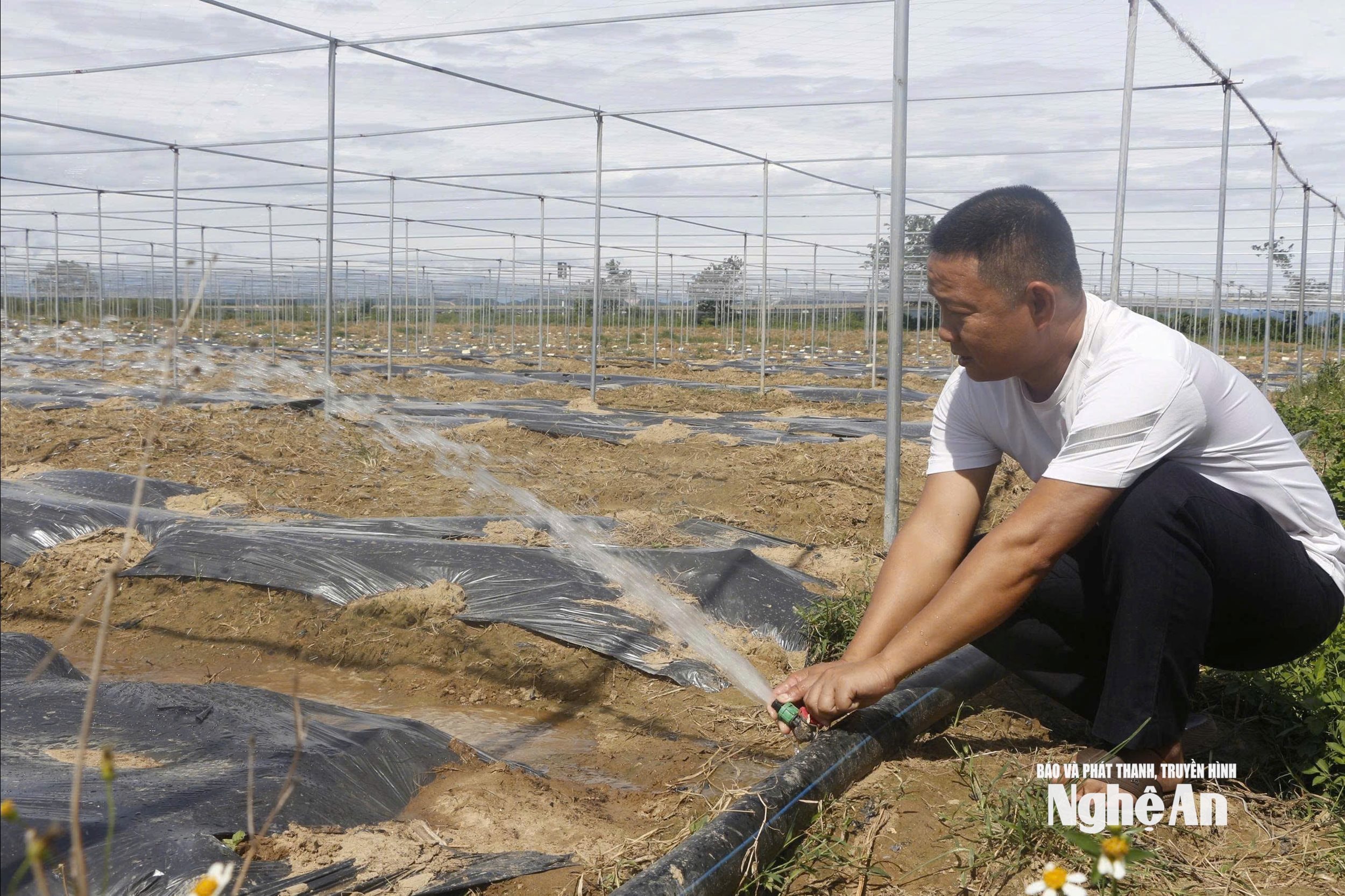
To efficiently manage 7 hectares of alluvial land, right from the start of establishing the farm in the barren alluvial area of Hung Nguyen Nam commune in 2019, Mr. Nguyen Van Thanh (director of Thanh Vinh Cooperative) boldly invested nearly 500 million VND just in a synchronized automatic drip and mist irrigation system; including a pumping station, electrical network, shelter, central filter, and a complex network of pipes leading directly to the roots of the trees.
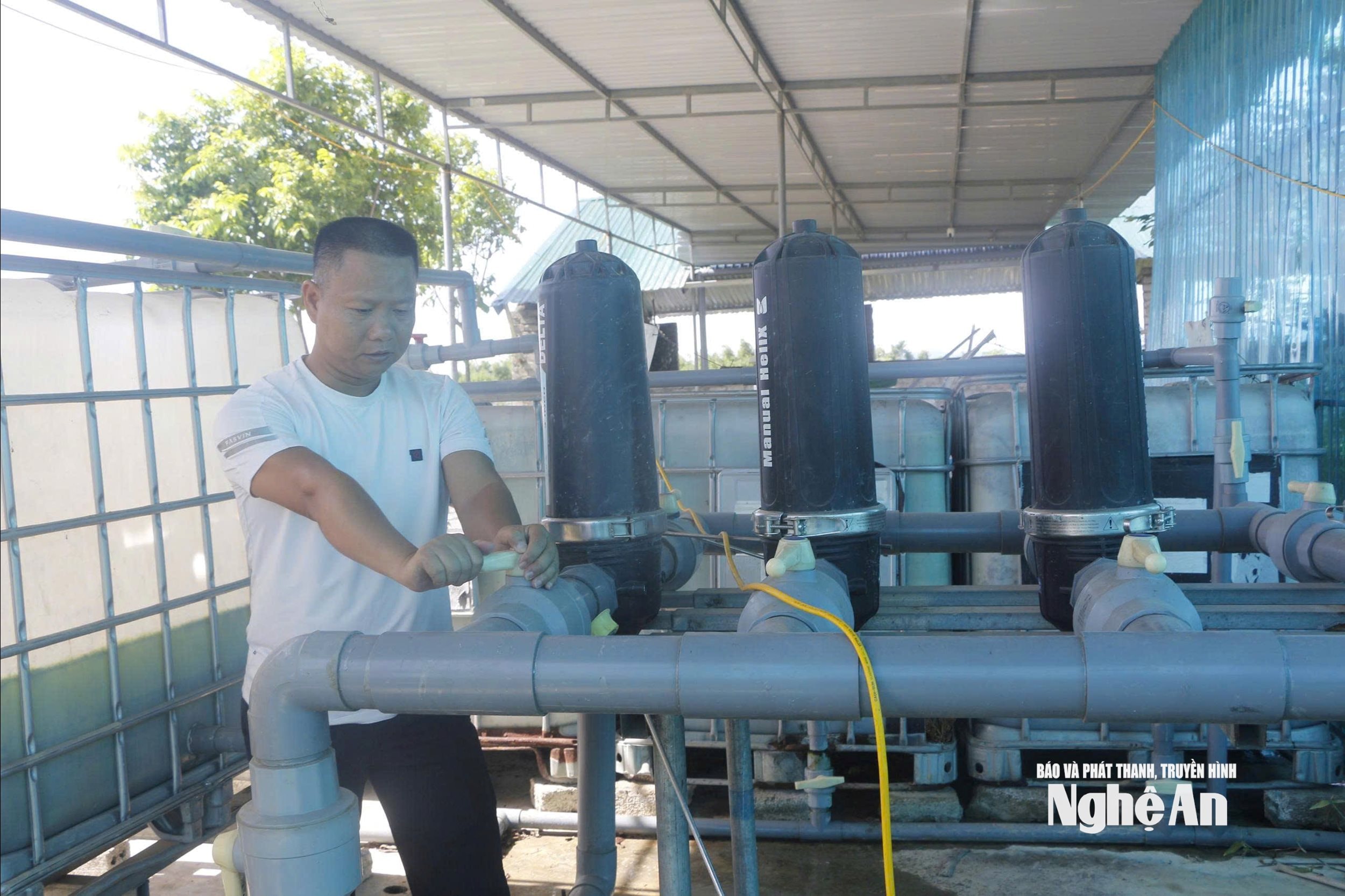
Despite its large size and lack of smartphone-controlled technology, the system operates mechanically to ensure accuracy. As a result, only one worker is needed for about an hour to irrigate the entire 7 hectares, while also proactively regulating the water supply to suit the needs of each crop. According to Mr. Nguyen Van Thanh, this technology offers many benefits. First, the sprinkler irrigation method helps maintain ideal soil moisture, absolutely preventing waterlogging and localized root rot.
Furthermore, instead of requiring 50-70 workers for each manual fertilization, Mr. Thanh only needs to dissolve the fertilizer into the irrigation system. With savings of approximately 10 million VND per fertilization, on average over a crop cycle (7-8 fertilizations), the farm has saved a significant amount of money. Not only that, it offers superior biological efficiency; the dissolved fertilizer through the irrigation system allows for immediate absorption by the plants, instead of the time needed for absorption as with traditional fertilization methods. In particular, the even spraying system can also "wash away" frost and eliminate pathogens on the leaves, protecting the crops from harsh weather conditions.
Having invested in planting 8 hectares of VietGAP-certified oranges in Quang Dong commune since 2015, along with other scientific and technological advancements, one of the priorities of Mr. Nguyen Dinh An (owner of An Thom orange farm) is investing in a smart drip irrigation system. In his vast orange orchard, there is no longer the need to manually water hundreds of orange trees with hoses; with just a gentle valve opening, the entire orchard receives sufficient water within a few hours.
"The best thing about this system is its ability to save more than half the water compared to manual irrigation. That's very valuable, especially during dry periods, as I can still maintain the moisture level for my orange orchard to thrive," shared Mr. Nguyen Dinh An.
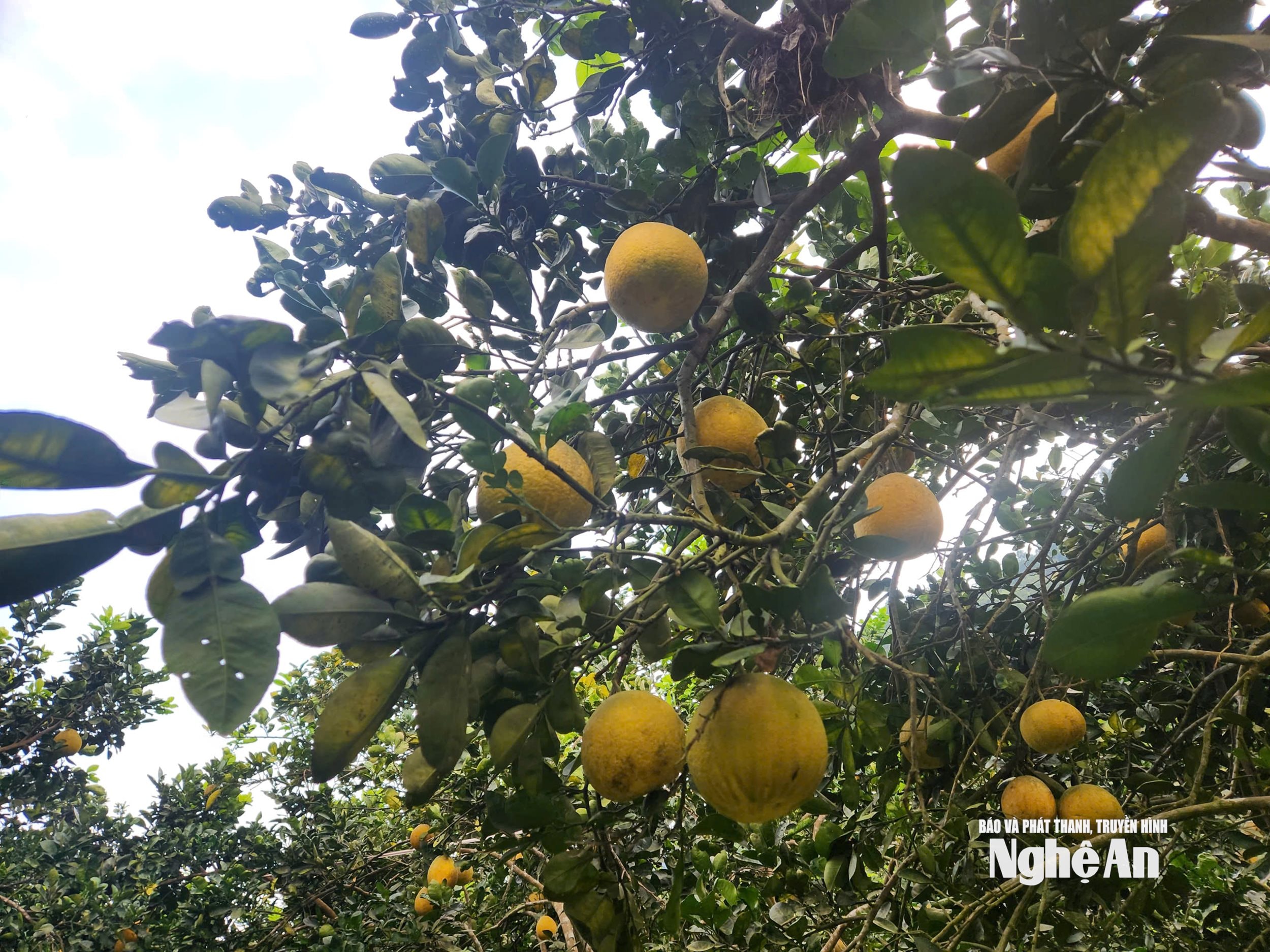
Beyond simply providing water, this irrigation technology also facilitates easy and efficient fertilization. Through a mixing tank attached to the main control valve, easily soluble fertilizers such as nitrogen, potassium, or liquid fertilizers are mixed with water and delivered directly to each tree root. This method of fertilization not only minimizes labor costs but also ensures that the orange trees absorb nutrients evenly and accurately. This is the secret to the high yields, beautiful appearance, and delicious flavor of the oranges at An Thom Orange Farm.
Not only on large farms, but also at organic rice cooperatives in Yen Thanh commune, the alternating wet and dry irrigation technique is being widely adopted, paving the way for the sale of agricultural carbon credits in the future.
Upgrading the irrigation system
Nghe An province has a large agricultural production area with diverse topography, but it also faces many challenges. Especially in recent years, as climate change has become increasingly complex, production has faced increasingly severe impacts, particularly droughts. Meanwhile, the practice of flood irrigation and manual watering has not only wasted water but also resulted in disproportionately low irrigation efficiency.
In recent years, the application of water-saving technologies in crop irrigation has increasingly attracted the attention and investment of farmers, with the development of smart irrigation systems. In areas growing oranges, tea, and medicinal plants, drip irrigation technology from Israel has begun to spread across the hillsides. Instead of intermittent, heavy watering sessions, this system delivers water and nutrients in liquid form, mixed with irrigation water, directly to the plant's root system at a calculated level. This helps the plants maintain optimal growth and ensures stable soil moisture.
Mr. Nguyen Truong Thanh, Head of the Provincial Irrigation Department
In vegetable-growing areas of communes such as Quynh Anh, Vinh Hung, and Dien Chau, the sprinkler irrigation system proves its versatility. Ms. Nguyen Thi An, who has 3 sao (approximately 0.3 hectares) of various vegetables in Quynh Anh commune, said that thanks to the sprinkler irrigation system, not only is the water supply appropriate, preventing damage to the vegetables, but the fine mist also washes away frost, cools the plants, and repels leaf diseases, significantly reducing the amount of pesticides needed.
The commune has over 1,522 hectares of vegetables and scallions, with a projected production of over 63,844 tons in 2025. Along with the introduction of high-yield, high-quality varieties, new scientific and technological advancements have been widely applied in production, linked to a closed-loop product consumption chain. The commune's vegetables are now sold on e-commerce platforms. Drip and sprinkler irrigation systems have been installed by farmers across most of the land, significantly contributing to improved production efficiency.
Mr. Bui Xuan Truc - Head of the Economic Department of Quynh Anh Commune
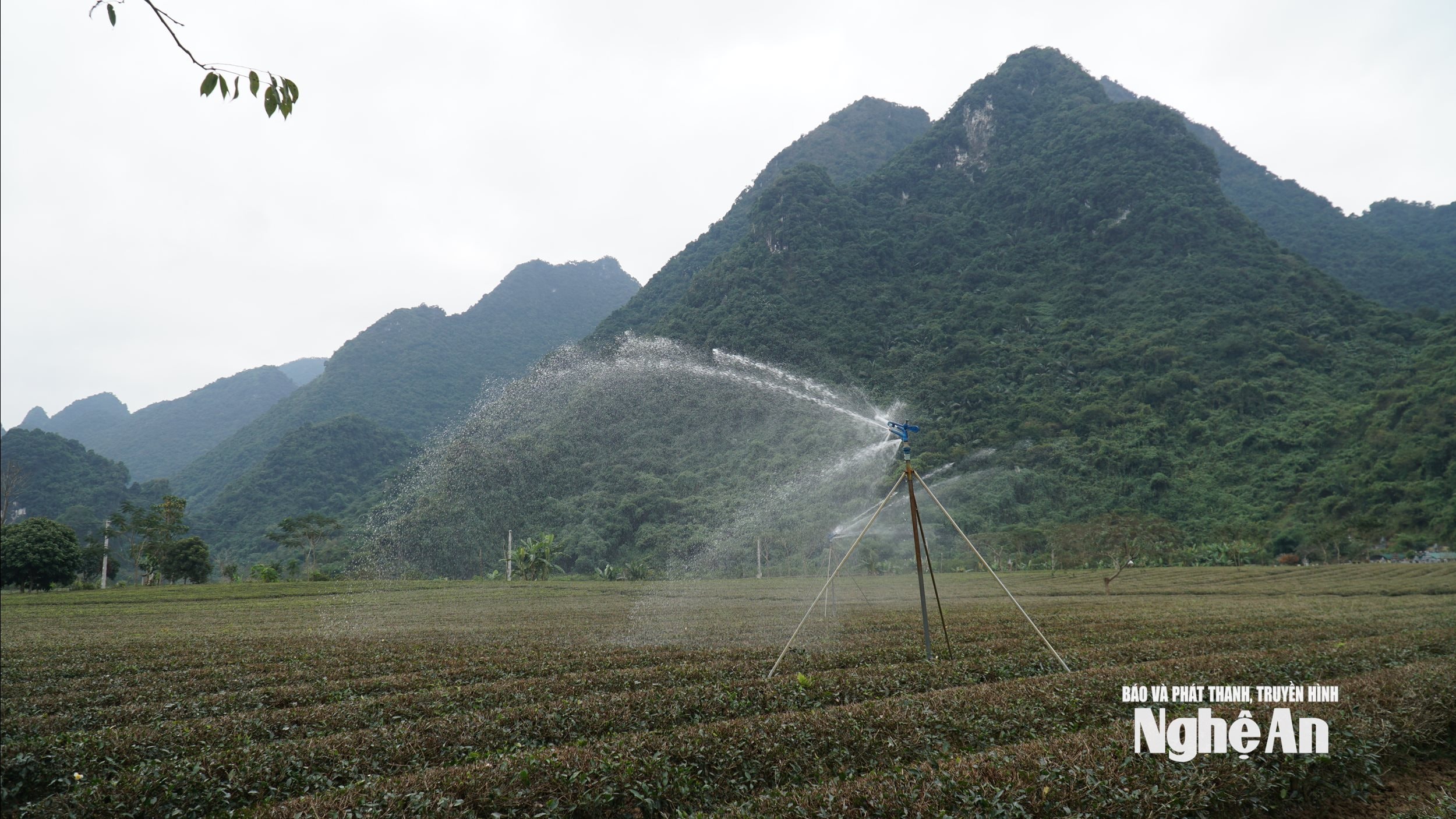
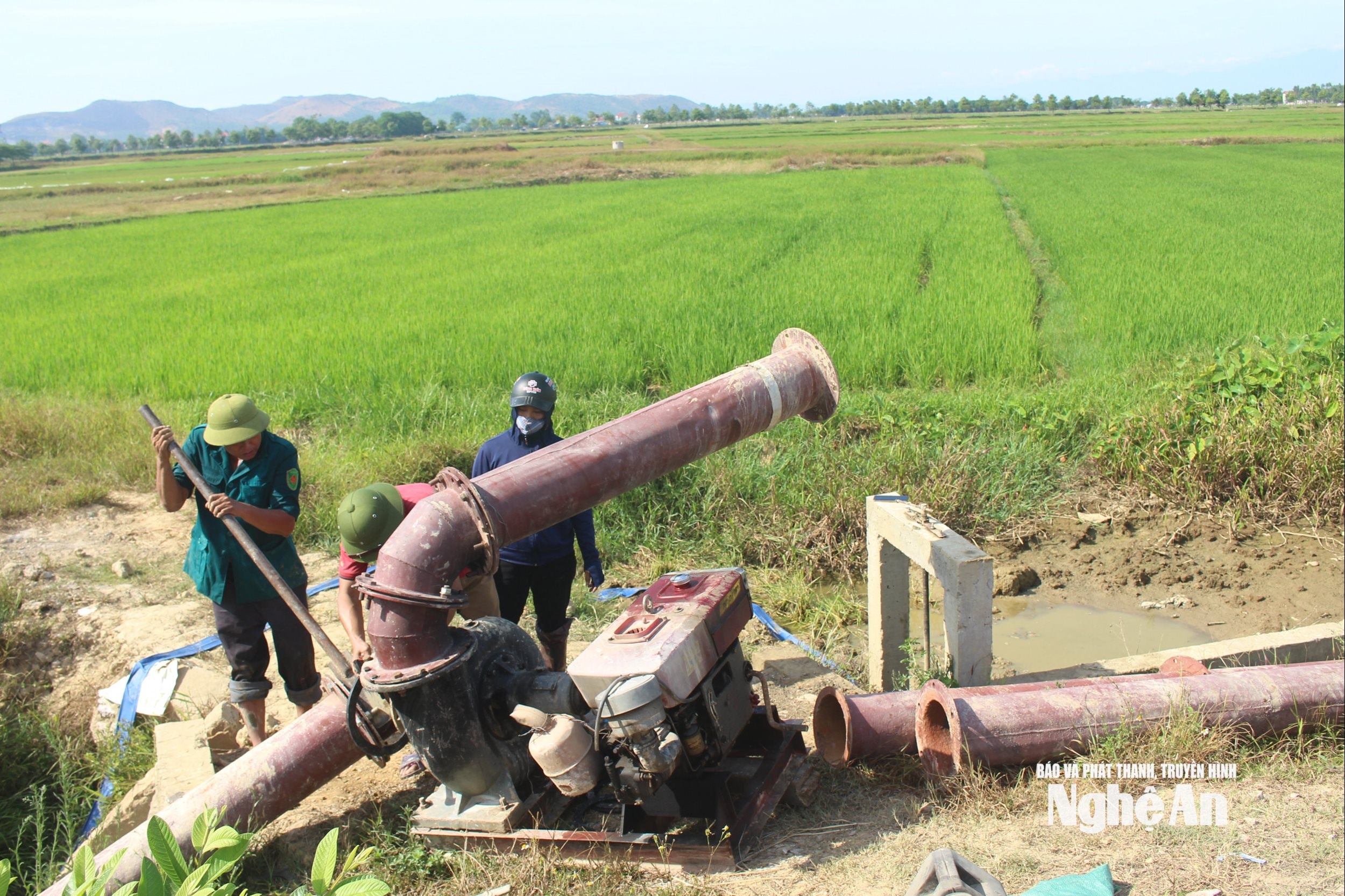
Along with focusing on investing in the construction and upgrading of large-scale irrigation works, in recent years Nghe An has also prioritized allocating capital to upgrade the closed-loop system of inland canals, combined with small reservoirs and automatic electric pumping stations. Upgrading saltwater intrusion prevention and freshwater retention sluices using remote monitoring and control technology has also helped to manage water resources more effectively on a large scale.
The government needs to provide more preferential credit support packages so that farmers and cooperatives can access high-tech irrigation equipment. At the same time, it is necessary to promote training and technology transfer for operating mechanical and automated irrigation systems. In particular, we also need to focus on applying irrigation water treatment technology to remove heavy metals and pathogens before introducing them into drip irrigation systems. This should be considered a mandatory requirement to improve the quality of agricultural products for export and meet stringent standards such as GlobalGAP or organic certification.
Ms. Vo Thi Nhung - Deputy Director of the Department of Agriculture and Environment


