
How often should car coolant be replaced?
Coolant is a special fluid that is indispensable for every car, serving to cool and maintain a stable engine temperature, helping the car run smoothly.
For vehicles not equipped with a coolant temperature monitoring system, excessive engine overheating can lead to engine stalling, vehicle inoperability, or even fire and explosion. Therefore, vehicle owners need to change the coolant in their cars regularly to help the engine run optimally and efficiently.
What is automotive coolant?
The engine, often referred to as the "heart" of a car, is typically housed within an airtight chamber and frequently generates significant heat during operation. Therefore, coolant is used to regulate engine temperature, reducing the risk of overheating, expansion of parts leading to jamming, and ultimately, fire or explosion.
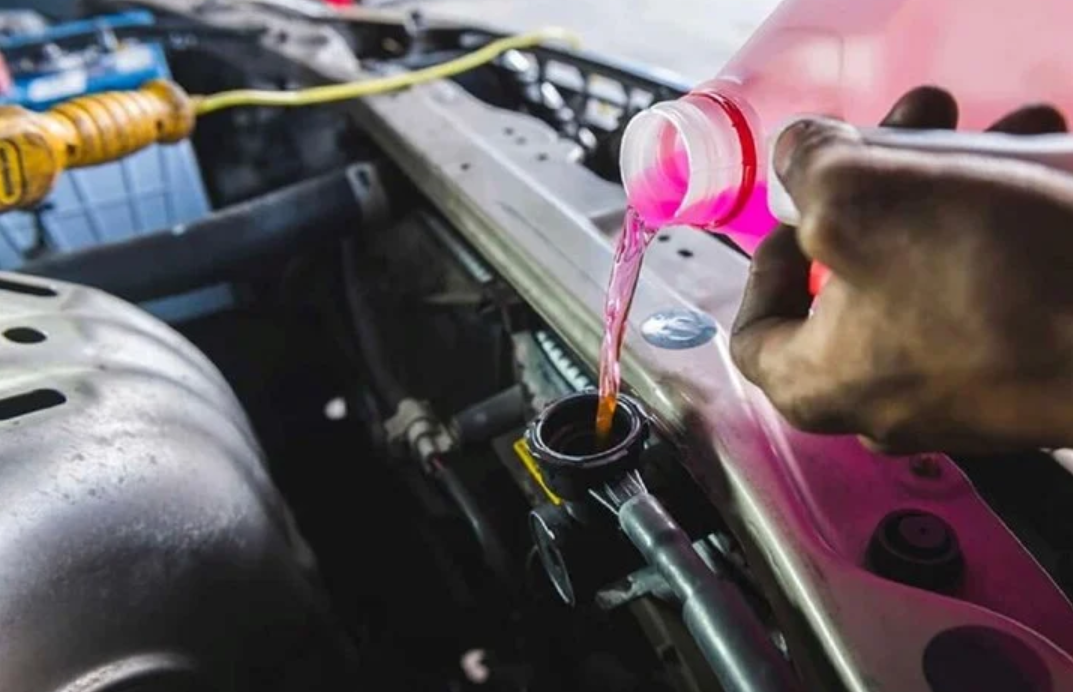
Automotive coolant is a solution consisting of distilled water and ethylene glycol, along with other substances that help limit corrosion and prevent evaporation. Furthermore, this solution can withstand low temperatures that cause freezing in winter weather; freezing will not occur if the correct type of coolant is used for ambient temperatures below 0°C.
How often should I change my car's coolant?
To ensure the engine and other components operate normally within acceptable temperatures, car owners should regularly check the coolant level. The coolant reservoir is usually located under the hood, inside the engine compartment.
Vehicle owners must ensure that the coolant level in the radiator is always within the permissible range. The permissible coolant level is when it is between the "Low" and "Full" or "Min" and "Max" marks.
On the other hand, during operation and driving, the driver can monitor the condition of the engine cooling system using the digital instrument cluster. If the needle is at the C (Cool) mark, it means the engine compartment temperature is fairly stable. However, if the needle is at the H (Hot) mark, the driver should consider checking the cooling system and replacing or topping up the coolant.
Like other fluids a car engine needs to operate, coolant also needs to be replaced regularly. Depending on the type of vehicle and the length of use, the coolant frequency varies, but typically, a car needs a coolant replacement after approximately 40,000 to 80,000 km of operation.
Additionally, if you notice large oil slicks floating inside the coolant reservoir, whether rust-colored or colorless, you need to replace the coolant immediately. Make sure to flush out any rust particles and dirt that could clog the system before adding new coolant.
According to the manufacturers' instructions, users should clean the radiator and change the coolant every 2-3 years (or after every 40,000-60,000 km of operation).


