
What will America be like under Biden or Trump?
The economic plans of the two presidential candidates have similarities in terms of spending, but differ significantly in areas such as taxes, labor, and trade.
The world's largest economy is struggling to emerge from its deepest recession in decades. At the same time, new Covid-19 cases continue to rise, and a nail-biting presidential election remains undecided.
However, regardless of who the next occupant of the White House is, reviving the American economy will remain a top priority. Many scientists have studied the campaign proposals of both US President Donald Trump and his Democratic opponent Joe Biden to predict the future of the American economy.
The economy under Biden
ForbesIt is argued that the US economy under Biden will not be significantly different from that under Trump. This is because presidents typically do not fulfill all their campaign promises. Campaign promises are made with various purposes, from inspiring supporters to winning over undecided voters. Biden, however, is considered a flexible politician who knows how to adjust his message to suit the current situation.
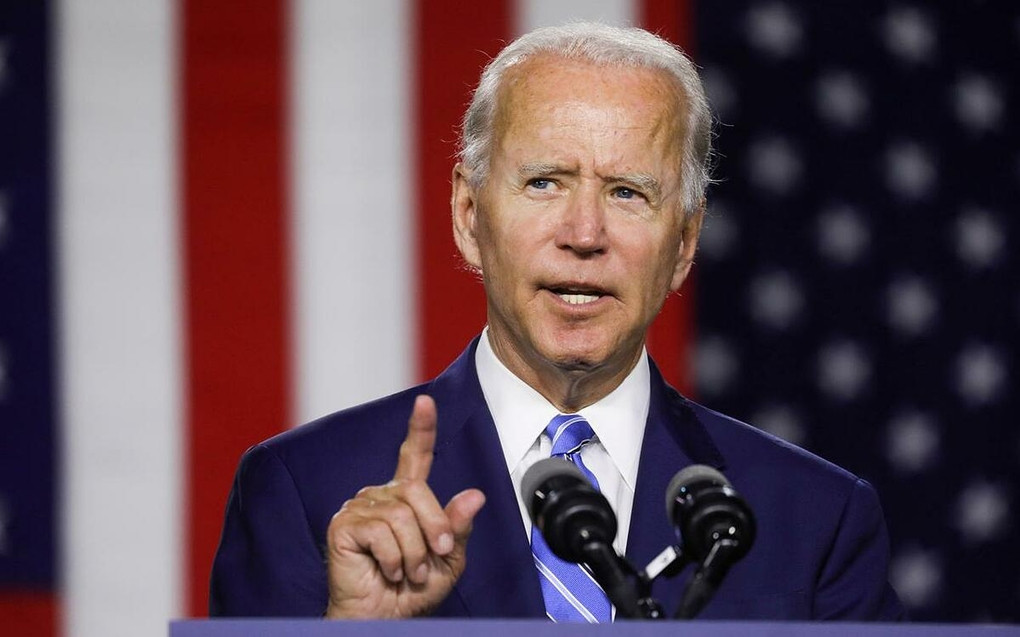 |
| Democratic presidential candidate Joe Biden. Photo: Reuters |
Furthermore, even if the President fulfills his promise, it will still take time. The changes the President proposes will need to be passed by Congress, overcome potential legal hurdles in court, and then face challenges in implementation. With the Republican Party likely to retain control of the Senate, Biden will find it difficult to realize major changes.
This is also what would happen to Trump if he were re-elected. Of course, Biden's policies would still have an impact on the economy, but the effects wouldn't be immediately apparent.
Covid-19 will undoubtedly continue to have the biggest impact on the economy in 2021 and 2022. Public policies are unlikely to change this, except for the approval of vaccines and drugs. The Biden administration could accelerate this process and choose a less politically charged approach than Trump.
The most impactful policy during Biden's term is likely to be tax increases. Biden wants to raise corporate income tax from 21% to 28%, increase personal income tax for households earning over $400,000, and reduce tax breaks for businesses and the wealthy.
The House of Representatives will almost certainly support the new president. However, the Senate will be difficult to persuade if it remains Republican-controlled. And even with tax increases, the impact will take years to become apparent. Over time, the rate of economic growth will slow somewhat.
In addition, the new administration will almost certainly launch another stimulus package. The previous stimulus package, implemented at the beginning of the year, has expired, causing the US recovery to stall. New capital will likely prioritize landlords with affordable housing, banks with large consumer loan portfolios, and companies serving those who lost their jobs during the pandemic.
Oxford Economics assesses that Biden's overall plan would increase income and create more jobs than a scenario where policies remain unchanged. Biden proposes large spending packages, including $1.7 trillion for healthcare, $1.4 trillion for education, $775 billion for aged care and childcare, and $700 billion for infrastructure and other programs.
However, Oxford suggests that Biden may only be able to pass spending and tax increase policies that are half the size of the proposed amount. In this case, consumption would not be under as much pressure as the wealthy would still have substantial disposable income.
Oxford forecasts that Biden's plan will boost real US GDP growth in 2021 from 3.7% to 5.8% – the strongest since 1984. The economy will recover from the pandemic-induced recession by mid-2021 – six months faster than without the stimulus measures. By the end of Biden's term, the unemployment rate will fall to near 3%. The budget deficit will continue to widen, but will not exceed its current level, as tax revenues are expected to increase with the rise in the workforce.
Labor policies under Biden are also predicted to be more favorable than under Trump. Some of Biden's proposed law-reversal measures may not be passed by Congress. However, the National Council on Labor Relations will certainly tilt the playing field more in favor of unions. The minimum wage may also be raised, though not to the $15 an hour level Biden proposed. Businesses will have to work harder to retain and recruit talent.
Immigration policies could also be eased under Biden, giving tech giants more breathing room. However, even Democratic lawmakers frequently worry that foreign workers will compete with American workers, driving wages down.
On trade policy, Biden has a much more conciliatory stance than Trump. However, the Democratic Party has long supported import tariffs and trade restrictions. Therefore, while the Biden administration is predicted to follow Trump's path, policies will be implemented more slowly and predictably. This will make it easier for businesses to plan, even if the policy direction is unfavorable to them. Well-managed companies will still be able to make profits.
The US economy if Trump remains President for another four years.
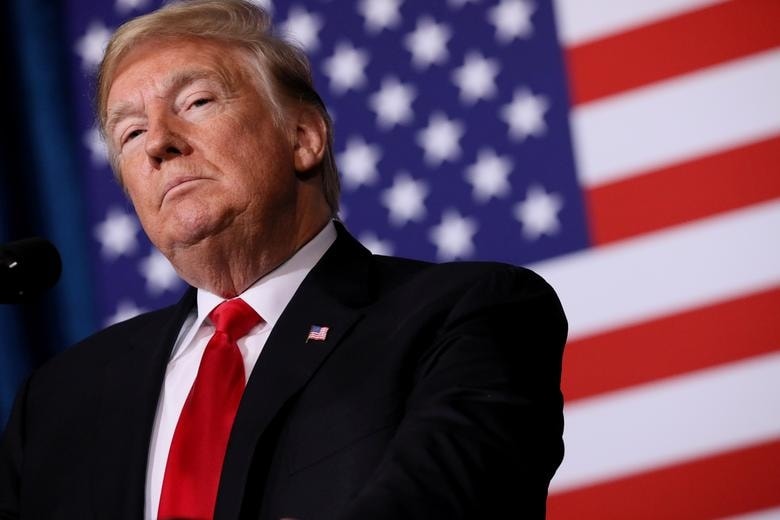 |
| US President Donald Trump. Photo: Reuters |
ForbesIt is argued that if Trump is re-elected, the economy will be virtually unchanged from its current state. The Trump administration will still focus on the private sector and supply-side economics. His view is that the private sector, not the government, is where jobs, productivity, and prosperity are created.
Covid-19 will remain a major obstacle to the economy for the next two years. Furthermore, the Democratic-controlled House of Representatives will make it difficult for Trump's new policies, at least for the first two years.
The most likely change after the election is the passage of a new stimulus package. Both Democrats and Republicans want another stimulus package. However, negotiations have been stalled for months, and neither side has been able to compromise on the size and content of the package. Once the election is over, the prospect of passing it will be much greater. The biggest beneficiaries will be low-income workers who have lost their jobs. Some industries, such as airlines, are also likely to receive higher subsidies.
Over the next two years, a major infrastructure spending bill could also be passed. Biden's proposal differs in detail from Trump's plan, but both sides agree on the idea. Construction would take place nationwide.
However, Forbes argues that it will not be effective in reviving the entire economy. The problem in the US is not weak spending, but a lack of services that encourage people to spend, such as outdoor restaurants, hotels in entertainment and travel-oriented areas. In addition, the US is also facing shortages of labor and construction materials, limiting the economic effectiveness of this policy.
Trump also wants to extend the tax cuts that have been in place since 2017. This is unlikely to happen if the Democrats control the House of Representatives. But if the Republicans regain control of the House in 2022, an extension could occur.
The list of policies that will remain unchanged is very long. U.S. international trade relations with other countries will continue to decline. Immigration policies will continue to be tightened. The Trump administration will continue to reduce regulations, such as those on the environment and labor. The U.S. federal budget will continue to be in deficit for the next four years.
Research by the Committee for a Responsible Federal Budget shows that Trump's proposals for a second term would increase the US debt by an additional $4.95 trillion by 2030. The national debt would also be equivalent to 125% of GDP that year. Under a Biden victory, these figures would be $5.6 trillion and 125%, respectively.
Moody's Analytics forecasts that a Trump re-election and a split in control of both houses of Congress would lead to an average US GDP growth of 2.4% over the next decade, with 13.9 million jobs created. These figures, compared to 2.9% and 21.7 million jobs under a Biden administration, are projected to be 2.9% and 21.7 million respectively.
Both candidates claimed the election was crucial for the economy. However,ForbesThey argue that nothing will stop the pandemic or prevent Americans from waking up every morning and going to work. Changes will still occur, but they will be minor, and the overall economy will be little different. Businesses focused solely on serving customers will still perform better than those preoccupied with politics.


