
Russia - shades of light and dark
The Russian Federation is the world's largest country with abundant valuable resources. Despite this, during Putin's 18 years in power, Russia has faced numerous socio-economic challenges, both subjective and objective.
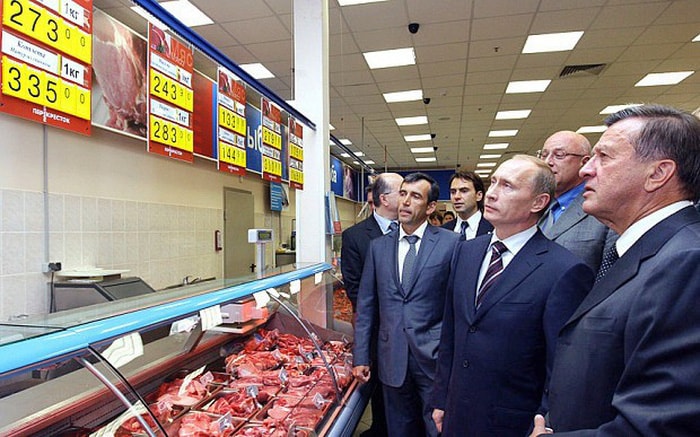 |
| The Russian economy has been struggling since 2014 due to falling crude oil prices and Western sanctions. In the photo, President Putin observes meat prices in Moscow. Photo: Ria Novosti |
143.4 millionThis is the population of the Russian Federation. Since 2009, the Russian population has increased again after many years of decline, reaching 148.689 million in 1992.
Since Vladimir Putin came to power, the birth rate, which had declined sharply since 1987, has started to rise again, but the increase is still not significant. The average birth rate in 2015 was only 1.75 children per woman.
1,469.3 billion USDThis is Russia's GDP according to data from the International Monetary Fund (IMF).
Russia ranks 12th in the world by GDP, between South Korea ($1,529.7 billion) and Spain ($1,307.2 billion) but far behind the United States ($19,362.1 billion). Russia's GDP accounts for nearly 2% of the world's GDP.
+1.8%This is the economic growth rate of Russia in 2017 according to the IMF's assessment. According to the Chairwoman of the Central Bank of Russia, Elvira Nabiullina, growth in 2018 is estimated to reach between 1.5% and 2%.
Russia has yet to emerge from the recession that began in 2014, compounded by falling crude oil prices and Western sanctions. The economic recovery is precarious, with industrial production experiencing a sudden slowdown in November 2017.
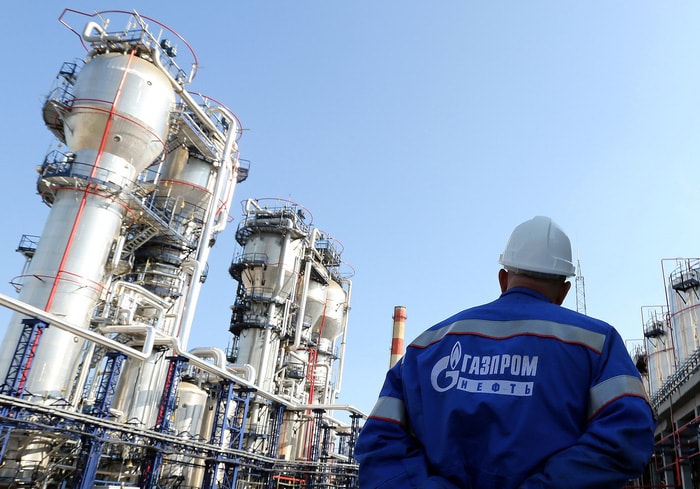 |
| Russia's national budget relies heavily on oil and gas revenues. (Photo: Financial Tribune) |
-8.4%This is Russia's budget deficit in 2017, excluding oil revenues, according to IMF data. If oil revenues are included, the deficit is only 1%. This demonstrates that Russia's national budget is heavily dependent on oil and gas revenues.
10,307 USDThis is Russia's per capita income in 2016, according to World Bank data. After nearly stable growth for about 10 years, per capita income declined from 2013. In this indicator, Russia ranks between 55th and 60th (depending on the calculation method), higher than Kazakhstan but lower than Poland and Hungary.
71.3 years oldThis is the average life expectancy of Russians in 2015, according to the Organization for Economic Cooperation and Development. There is a significant difference in life expectancy between men (65.9 years) and women (76.7 years). Compared to most developed countries, life expectancy in Russia is lower than in most developed countries such as France (82.4 years) or the United States (78.8 years).
Putin's family subsidy policy, aimed at supporting children from the second child onwards, has not been implemented effectively in cities and has only been successful in rural areas.
Professor Philippe Pelé-Clamour at the Paris-France Higher School of Commerce.
103,438 casesThis is the number of new HIV infections recorded in 2016 according to the Joint United Nations Programme on HIV/AIDS (UNAIDS), while the number of new infections in 2010 was only 62,581. The HIV/AIDS epidemic is developing at an alarming rate.
19.8 millionThis figure represents the number of people living below the poverty line in 2016, according to Russian government statistics, and was recently acknowledged by President Vladimir Putin in his State of the Union address on March 1st.
Thirteen percent of the Russian population lives below the minimum income of 9,691 rubles ($196.7). This is the highest percentage in the past 10 years. In 2014, only 16.1 million people lived below the poverty line before Russia entered a period of economic recession.
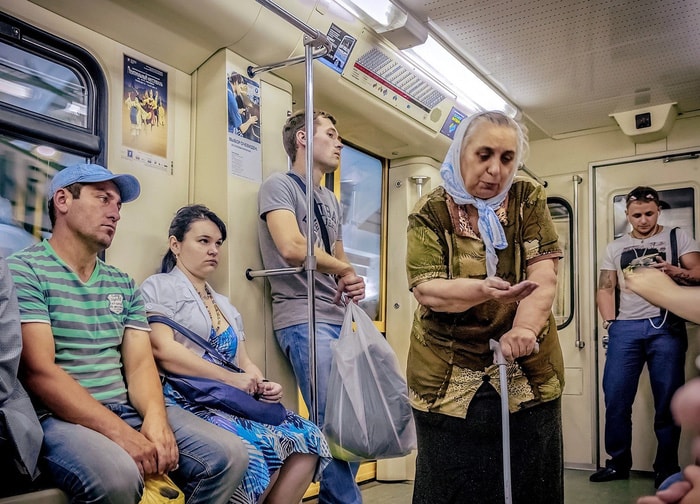 |
| Thirteen percent of the Russian population lives below the minimum wage. Pictured is a beggar on a Moscow subway train. Photo: Kommersant |
Russia enters the official election period.
To date, preparations for the Russian presidential election have been completed and are considered to be very good, thorough, and meticulous.
With the aim of ensuring maximum openness and transparency in the election, the Russian Central Election Commission (SIK) implemented several measures, including granting permission to 1,455 observers from 86 countries and 14 international organizations to monitor the election, double the number compared to the 2012 presidential election.
The SIK committee also encouraged various domestic social and political organizations to participate in monitoring the election process. In addition, the observer force included over 5,560 journalists representing domestic mass media and 367 foreign journalists.
In particular, Russia spent nearly 3 billion rubles to install voter ballot scanning systems, automatic vote counting machines, surveillance cameras, and live video streaming equipment at almost all of the more than 97,000 polling stations nationwide.
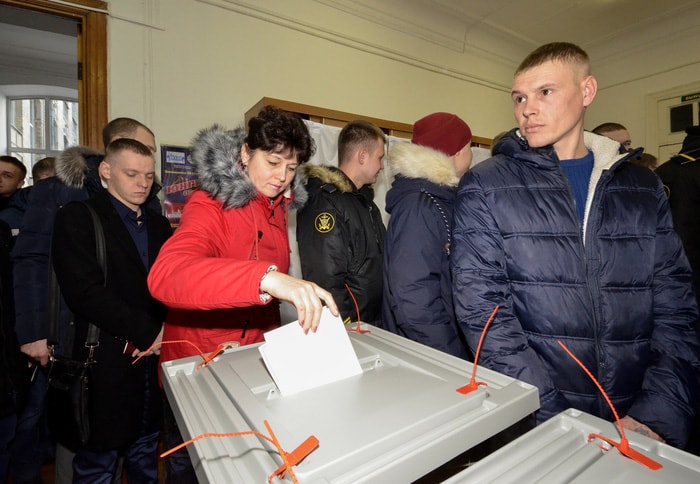 |
| Residents of Vladivostok cast their early votes on the morning of March 18. Photo: Reuters |
Security measures for the election have been strengthened with the involvement of most relevant law enforcement agencies.
The Russian Ministry of Emergency Situations announced it will deploy 115,000 personnel and nearly 19,000 pieces of equipment to ensure security in all polling stations across the country.
In Moscow alone, authorities have mobilized more than 17,000 public servants to ensure order on election day today (March 18). Traffic in the capital remains normal on election day, but patrols and security checks have been tightened.
Early voting in Russia began on February 25th in remote, hard-to-reach areas, on ships that were scheduled to be at sea on March 18th.
As of March 16th, approximately 153,500 voters had cast their ballots, including over 30,000 voters in 50 countries worldwide.


