
Nvidia aims to achieve $1 trillion in revenue from AI chips by 2027.
CEO Jensen Huang predicts Nvidia will become the first company to reach trillion-dollar revenue from AI hardware, surpassing the combined size of Apple and Amazon.
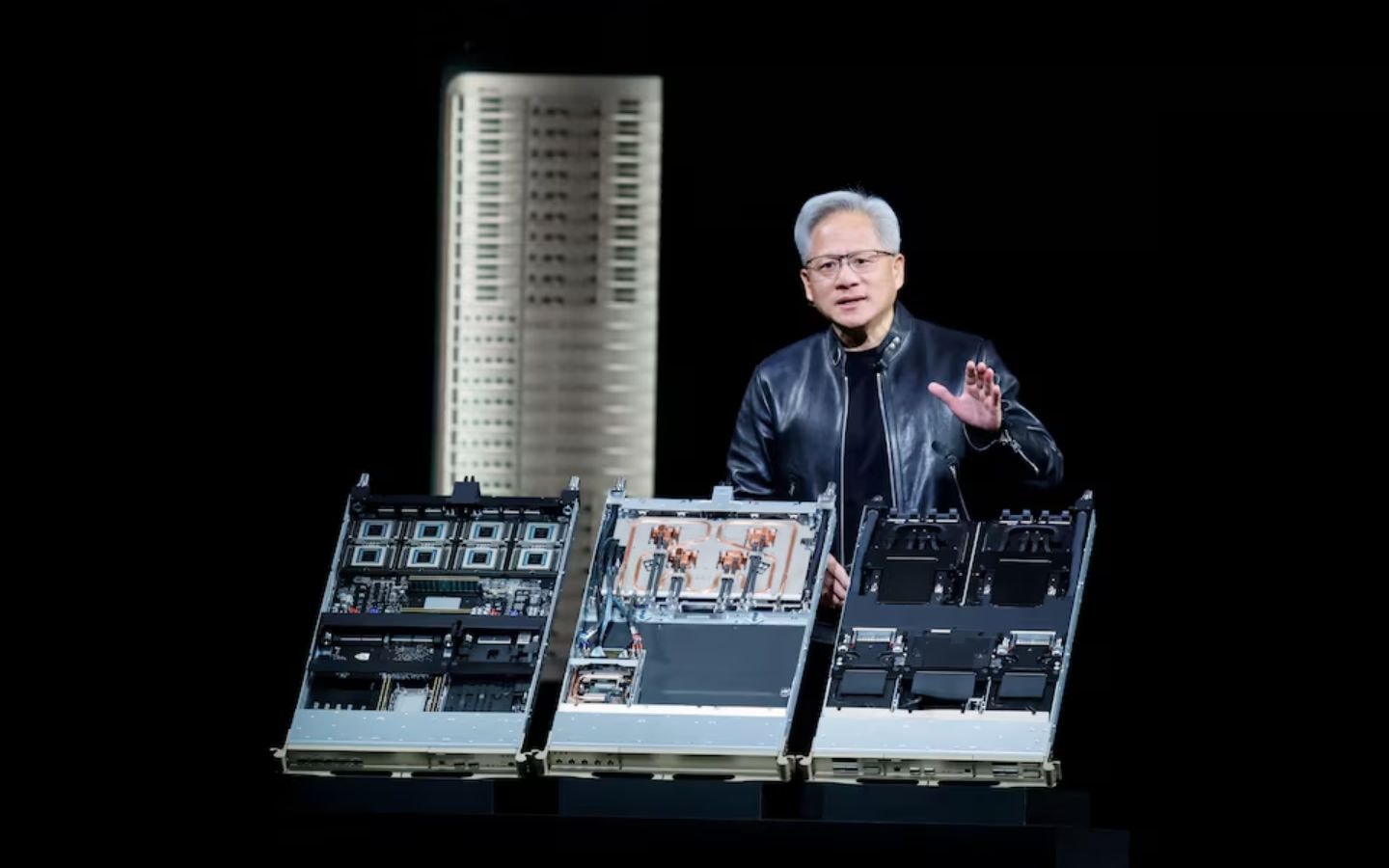
At the GTC 2026 event, Jensen Huang, CEO and co-founder of Nvidia, announced an ambitious goal: to bring the company's AI hardware revenue to $1 trillion by 2027. If this figure is achieved, Nvidia will become the first company in history to record annual revenue in the trillion-dollar range solely from artificial intelligence devices, an unprecedented milestone in the global technology market.
Far exceeding the scale of retail and technology giants.
To fully grasp the scale of the $1 trillion figure, one needs to look at the business results of the world's largest corporations today. In the last fiscal year, Walmart – the world's largest retailer – achieved $681 billion in revenue. Tech giants like Amazon and Apple recorded $638 billion and $391 billion respectively. Forecasts suggest that if Nvidia achieves its goal by 2027, this revenue could surpass the combined revenue of both Apple and Amazon in 2025.
| Business / Index | Revenue (Billion USD) | Note |
|---|---|---|
| Nvidia (2027 Forecast) | 1,000 | Specifically in the AI hardware segment. |
| Walmart | 681 | most recent fiscal year |
| Amazon | 638 | most recent fiscal year |
| Apple | 391 | most recent fiscal year |
Rapid growth rate and a new hardware strategy.
Nvidia's actual business results are showing strong growth momentum. The company achieved $215 billion in revenue in fiscal year 2026 (ending January 31, 2026), a significant increase from $130.5 billion in fiscal year 2025. In the first quarter of fiscal year 2027, Nvidia expects revenue to reach $78 billion, nearly double the $44.062 billion of the previous year. If it maintains its 164% annual growth rate, the company's revenue could reach $578.264 billion as early as fiscal year 2028.
The key to reaching the trillion-dollar mark lies in upgrading the chip architecture. The Rubin Ultra AI GPU generation is expected to increase the number of compute chiplets from two (on the Blackwell and Rubin lines) to four. This change allows Nvidia to increase the average selling price (ASP) of the product. The upcoming Feynman AI graphics card generation is also expected to maintain the four-chiplet design, solidifying its leading position in the high-performance segment.
Supply chain challenges and long-term prospects
Despite a clear technical roadmap, Nvidia still faces questions about supply capacity. Currently, TSMC – its primary chip manufacturing partner – is expanding its production capacity at a rather cautious pace. This raises the question of whether Nvidia can adequately meet the trillion-dollar demand for AI hardware in the coming years.
Some analysts believe that reaching the $1 trillion annual revenue milestone may become more realistic around 2030, when global spending on AI infrastructure truly explodes and reaches trillions of dollars. However, as a provider of core infrastructure for the AI revolution, Nvidia has the greatest advantage in realizing this record-breaking goal.


